Justice Department Posts Over 3 Million Epstein Files, Highlighting Elite Contacts and Ongoing Redactions
Updated (10 articles)
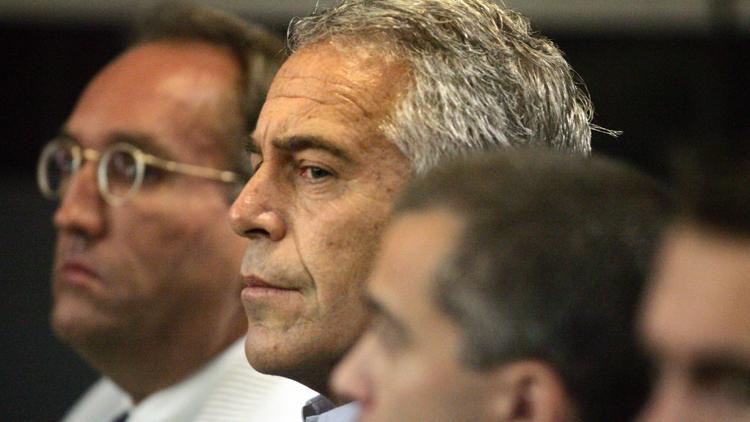
January 2026 Release Adds Over 3 Million Pages The Justice Department uploaded more than 3 million document pages, over 2,000 videos and 180,000 images to its website on Jan 30‑31 2026 under the Epstein Files Transparency Act [1][2][3]. This tranche follows an earlier upload of roughly 500,000 pages and represents about half of the roughly 6 million pages identified for possible release [4][5]. Deputy Attorney General Todd Blanche said the massive review required hundreds of attorneys and caused the agency to miss the Dec. 19 congressional deadline [6][7].
Redactions Target Victim Identities and Sensitive Material DOJ attorneys removed victim names, medical records, any woman appearing in videos except Ghislaine Maxwell, and graphic child‑sex‑abuse content [1][2][5]. Approximately 200,000 pages were withheld or heavily redacted on grounds of attorney‑client privilege, privacy and ongoing investigations [3][8][9]. The department emphasized that no material was excluded for national‑security reasons and that redactions were not intended to shield any political figure [5][10].
Emails Reveal Epstein’s Links to Politicians and CEOs The newly released files contain an invitation from Epstein to Commerce Secretary Howard Lutnick to visit Little Saint James in Dec 2012 with his family [1][2][3]. Elon Musk exchanged messages in 2012‑13 asking about helicopter transport to the island, and later posted in 2025 that he had refused Epstein’s invitation [2][5]. Steve Bannon’s texts include a March 29 2019 request for a private plane and discussion of a documentary [1][2][3]. Flight logs confirm Donald Trump flew on Epstein’s jet in the 1990s and photographs of former President Bill Clinton appear, though both men deny wrongdoing [10].
Survivors and Lawmakers Criticize Partial Disclosure Virginia Giuffre’s publicist called the release a betrayal that “exposes survivors” while shielding abusers [1][2][5]. Rep. Ro Khanna (D‑CA) noted that only about 3.5 million of the identified 6 million pages are public and has subpoenaed Attorney General Pam Bondi for the remaining material [1][3][4]. Rep. Robert Garcia (D‑CA) labeled the limited release “outrageous and incredibly concerning,” and the House Oversight Committee continues to press for full transparency [3][4][5].
Sources
-
1.
AP: DOJ releases over 3 million pages of Jeffrey Epstein files: Highlights the bulk upload, redaction policy, and survivor backlash, emphasizing Howard Lutnick’s 2012 island invitation and Steve Bannon’s March 2019 plane request .
-
2.
AP: Justice Department Releases Over 3 Million Pages of Jeffrey Epstein Files: Adds Elon Musk’s 2012‑13 island‑visit messages and Musk’s 2025 X statement refusing Epstein .
-
3.
AP: Justice Department Releases Over 3 Million Pages of Jeffrey Epstein Files: Notes attempts to interview Prince Andrew and correspondence with the U.S. embassy in London .
-
4.
AP: Justice Department Releases Over 3 Million Pages of Jeffrey Epstein Files: Reiterates high‑profile contacts and congressional criticism of the half‑release .
-
5.
AP: DOJ releases over 3 million pages of Jeffrey Epstein files: Explicitly denies any special protection for President Trump while detailing redactions .
-
6.
AP: DOJ Releases Over 3 Million Pages of Jeffrey Epstein Files: Features attorney Jay Clayton’s comment that some documents remain withheld pending court guidance .
-
7.
AP: DOJ Releases Over 3 Million Pages of Jeffrey Epstein Files: Stresses that the release is mandated by the Epstein Files Transparency Act after sustained public pressure .
-
8.
AP: DOJ Releases Over 3 Million Pages of Jeffrey Epstein Files: Repeats the agency’s claim of no national‑security exemptions and describes the review as “unprecedented” .
-
9.
AP: DOJ releases over 3 million pages of Jeffrey Epstein files: Highlights the ongoing dialogue with victims and the balance between transparency and privacy .
-
10.
King5 (Seattle, WA): Justice Department Releases Over 3 Million Pages of Jeffrey Epstein Files: Adds flight‑log evidence of Donald Trump’s 1990s trips on Epstein’s jet, photos of Bill Clinton, and grand‑jury transcripts detailing FBI interviews .
Documents (7)
justice.gov Email exchange between Elon Musk and Jeffrey Epstein about island party (cited 5 times)
Elon Musk and Jeffrey Epstein Email Discuss Helicopter Party Plans
Key Facts
- Elon Musk asks about the wildest party timing on island Musk emailed Jeffrey Epstein on November 25, 2012, asking “What day/night will be the wildest party on our island?” indicating plans for a social event involving both parties【1】.
- Jeffrey Epstein inquires about helicopter capacity for island trip In a prior email dated November 24, 2012, Epstein asked Musk “how many people will you be for the heli to island,” seeking details on passenger numbers for a helicopter transfer【1】.
- Email includes confidentiality disclaimer stating privileged content The messages contain a notice that the communication is confidential, possibly attorney‑client privileged, and unauthorized use may be unlawful【1】.
- Metadata shows email timestamps and internal identifiers The embedded XML plist records a received timestamp of 1353803783 (Unix epoch) and includes keys such as “EFTA_R1_00067835” and “EFTA01762434,” suggesting internal tracking numbers【1】.
- Reference to “Talulah” likely denotes Musk’s partner at the time Musk’s line “Probably just Talulah and me” implies that Talulah Riley, his then‑partner, would accompany him to the island event【1】.
- The exchange reveals informal planning of a private island gathering The correspondence between Musk and Epstein centers on logistics for a private party, highlighting personal connections between the two high‑profile individuals【1】.
Who Said What
- Elon Musk – “Probably just Talulah and me: What day/night will be the wildest party on our island?” (email to Epstein)【1】.
- Jeffrey Epstein – “how many people will you be for the heli to island” (email to Musk)【1】.
Some Context
- Heli – Short for helicopter, used here to transport guests to a private island.
- Talulah – Refers to Talulah Riley, a British actress who was Musk’s partner during 2010‑2012.
- EFTA_R1_00067835 / EFTA01762434 – Internal reference codes likely used for email tracking or archival purposes within the communication system.
- Confidentiality disclaimer – Legal notice indicating the message may be privileged and prohibiting unauthorized distribution, common in sensitive communications.
justice.gov Email confirming Howard Lutnick scheduled to attend SPM meeting on Sunday (cited 5 times)
Howard Lutnick Scheduled to Appear at SPM on Sunday, Email Shows
Key Facts
- Howard Lutnick scheduled to attend SPM on Sunday – The email from Lesley Grom, dated April 27 2011, states that Howard Lutnick will come see you at SPM on Sunday, indicating a planned meeting without further agenda details. [1]
- Email includes reference numbers EFTA_R1_00273025 and EFTA01868626 – Two identifiers, EFTA_R1_00273025 and EFTA01868626, appear in the message, likely serving as internal tracking or case numbers for the correspondence. [1]
- Message sent to Jeffex Epsteinieevacalong – The recipient line shows the email was addressed to Jeffex Epsteinieevacalong, identifying the intended participant for the SPM meeting. [1]
- Sender identified as Lesley Grom – Lesley Grom is listed as the sender, suggesting responsibility for coordinating the meeting with Howard Lutnick. [1]
- Date and time stamp of the email – The communication was sent on Wednesday, April 27 2011 at 2:15:16 PM, providing a precise timestamp for the notice. [1]
- Mention of “May” without further context – The final line of the email simply reads “May,” which may refer to a month or related item, but the email does not clarify its meaning. [1]
Some Context
- SPM – Likely an abbreviation for a scheduled meeting or event; the email does not define it, but it is the venue where Howard Lutnick is expected.
- EFTA – Appears in the reference numbers; while EFTA commonly denotes the European Free Trade Association, in this context it likely serves as an internal code unrelated to the trade organization.
- Howard Lutnick – A business figure referenced in the email; the message indicates his attendance at the upcoming SPM meeting.
- Lesley Grom – The sender of the email, presumably acting as a coordinator or liaison for the meeting.
- Jeffex Epsteinieevacalong – The email’s recipient, presumably the party expected to meet with Howard Lutnick at SPM.
justice.gov Email exchange on Musk planning visit to Epstein’s island (cited 5 times)
Elon Musk’s 2013 Email Talks About Visiting Jeffrey Epstein’s Island
Key Facts
- Musk proposes a New Year’s island visit – In a December 25, 2013 email, Elon Musk tells Jeffrey Epstein he could fly back early, will be in St Barths, and asks when to head to Epstein’s island on the “Znd” (Sunday)【1】.
- Epstein offers pickup on Jan 2‑3 – Epstein replies that “the 2 or 3 would be perfect” and says he will come and get Musk, indicating a concrete plan for early January【1】.
- Earlier messages confirm holiday timing – On Dec 13 and Dec 15, Musk asks if there is time to visit the island during the holidays, showing the discussion began before the final dates were set【1】.
- Lesley Groff is copied on the exchange – The email chain includes Lesley Groff in the CC field, suggesting a third party was kept informed of the travel arrangements【1】.
- Musk mentions a return flight to Los Angeles – In a later note Musk states he needs to fly back to LA on the night of the Sunday, indicating a tight schedule around the island visit【1】.
- The email carries confidentiality warnings – Both the header and footer stress that the communication is confidential, possibly attorney‑client privileged, and may contain inside information, underscoring the sensitivity of the correspondence【1】.
Who Said What
- Elon Musk – “Actually, I could fly back early on the Jrd. We will be in St Bart's. When should we head to your island on the Znd?” (Dec 25, 2013)【1】.
- Jeffrey Epstein – “the 2 or 3 would be perfect. I will come and get you.” (Dec 25, 2013)【1】.
- Elon Musk (earlier) – “Will be in the BVLSt Bart'5 arca ovvr the holidays. Is there a time t0 visit?” (Dec 13, 2013)【1】.
Some Context
- St Barths – A Caribbean island (Saint Barthélemy) popular with wealthy travelers; Musk mentions staying there before the proposed island trip.
- Attorney‑client privileged – A legal protection that keeps communications between a client and lawyer confidential; the email’s disclaimer claims this status, implying legal counsel may have been involved.
- EFTA reference numbers (e.g., EFTA_R100401671) – Internal filing codes likely used by Epstein’s organization for record‑keeping; they appear in the email footer but have no public explanation.
justice.gov Email invitation to Howard Lutnick for weekend lunch on JE’s island (cited 5 times)
Howard Lutnick Invited to Lunch on JE’s Island, Dec 2012
Key Facts
- Invitation sent to Howard Lutnick for weekend lunch – An email dated December 20, 2012, at 1:00 PM asks whether Howard Lutnick can meet for lunch on Saturday or Sunday on JE’s island, indicating a scheduling request for the weekend. [1]
- Sender and recipient details omitted – The message header lists generic fields “To:” and “From:” without specifying names, suggesting internal or informal communication where participants are known by context. [1]
- Subject line labeled “Alert” – The email’s subject line reads “Alert,” implying the sender considered the lunch invitation time‑sensitive or noteworthy within the correspondence chain. [1]
- Reference codes included at bottom – Two identifiers, EFTA_R1_00818090 and EFTA02152992, appear at the end of the note, likely serving as internal tracking or filing numbers for the organization’s records. [1]
- Abbreviated signatures and initials – The note contains fragments such as “FH,” “cam,” “dd,” “Cn,” and “JF 9,” which appear to be shorthand for senders, recipients, or related parties, though their exact meanings are not clarified. [1]
Some Context
- Howard Lutnick – Founder and CEO of Cantor Fitzgerald, a global financial services firm; his involvement often signals high‑level business or personal engagements.
- JE’s island – Refers to a private or exclusive location owned or frequented by an individual identified only as “JE,” used here as the proposed venue for the lunch.
- EFTA codes – Internal reference numbers (e.g., EFTA_R1_00818090) likely used by the organization’s document management system for tracking correspondence.
justice.gov Email evidence on confidential dinner with Woody Allen and guests (cited 5 times)
Confidential Dinner Plans with Woody Allen and Others Detailed in 2011 Email
Key Facts
- Email chain reveals confidential dinner planning – The message dated Wed 4/27/2011 6:40 PM discusses a privileged and confidential dinner, listing participants and cost inquiries, indicating a private gathering of notable figures. [1]
- Rosalyn Fontanilla asks about dinner cost – In a reply to Lesley Grofil, Fontanilla writes “What $ for dinner??”, showing concern over the expense of the upcoming event. [1]
- Schedule includes multiple appointments before dinner – The note lists a 9:30 am breakfast with Terje Roed‑Larsen, a tentative 1:00 pm meeting with Nick Ribis, and later meetings with Michael Wolff, Steve Bastone, Joe, and Howard Lutnick, indicating a packed day leading to the evening event. [1]
- Evening dinner slated with Woody Allen and guests – At 6:30 pm the plan calls for dinner with Woody Allen, Soon‑Yi, Professor Steve Kosslyn, Katherine and Alexandra Keating, and possibly Glenn Dubin, initially for eight people with additional guests possible. [1]
- Buffet dinner and after‑party at 740 Park Ave – An 8:30 pm buffet is scheduled at the home of Vera on 740 Park Avenue, followed by an after‑party for the production “L’Amour Fou”. [1]
- Reference numbers suggest financial or regulatory tracking – The email includes codes “EFTA_RI00886310” and “EFTA02189586”, likely internal identifiers related to the event’s budgeting or compliance. [1]
Who Said What
- Rosalyn Fontanilla – Sent the line “What $ for dinner??” while asking Lesley Grofil about the dinner’s cost.
Some Context
- BlackBerry – Mobile device used to send the email, popular in the early 2010s for its secure messaging capabilities.
- 740 Park Avenue – Prestigious New York address known for luxury apartments, indicating a high‑status venue for the buffet dinner.
- L’Amour Fou – Title of a theatrical or artistic production; the after‑party is tied to this event.
- EFTA reference numbers – Internal codes (e.g., “EFTA_RI00886310”) that likely track expenses or regulatory filings for the gathering.
- Nick Ribis – Individual referenced for a tentative appointment, suggesting a business or advisory role in the day’s schedule.
justice.gov Email correspondence on scheduling lunch visit via boat Excellence (cited 5 times)
Allison Lutnick Schedules Lunch Visit with Lesley Groff via Boat “Excellence”
Key Facts
- Allison Lutnick confirms morning departure from Caneel – In a December 21, 2012 email, Lutnick tells Lesley Groff her party will leave Caneel that morning aboard the vessel named Excellence and seeks lunch details [1].
- Group includes two families, eight children and two girls – The message notes two families each have four kids aged 7‑16, plus two additional girls, making ten minors in the party [1].
- Proposed lunch time is 1:00 p.m. or 1:30 p.m. on Sunday – Lutnick asks whether a 1 p.m. or 1:30 p.m. lunch on Sunday would work and requests the exact docking location for the boat [1].
- Lesley Groff asks Jefffrey Epstein to coordinate the visit – Groff forwards the request, asking Epstein to “refer the Lutnick’s and entire clan at 1 or 1:30 on Sunday,” indicating she is handling the scheduling [1].
- Boat registration numbers EFTA_R1_01659498 and EFTA02521951 are listed – The email includes two codes, likely vessel identifiers for Excellence and its captain, to aid coordination [1].
- Multiple recipients and carbon copies are included – The original message was sent to Jefffrey Epstein with a cc, and the forwarded note copies “vexcll@aolcom” and “Gilbert Matthew,” showing a broader distribution [1].
Who Said What
- Allison Lutnick (sender) – “We are looking forward to visiting you… We would love to join you for lunch… Please advise on timing and exactly where our boat should go.”
- Lesley Groff (forwarder) – “do you refer the Lutnick’s and entire clan at 1 or 1:30 on Sunday?”
Some Context
- Caneel – The departure point mentioned; likely a resort or marina in the Caribbean used as a launch location for private vessels.
- Excellence – Name of the private boat that will transport the Lutnick party; such vessels often require advance docking arrangements.
- EFTA numbers – Identification codes (e.g., EFTA_R1_01659498) commonly used for vessel registration and tracking under maritime authorities.
- Lesley Groff – Individual coordinating the visit, acting as an intermediary between the Lutnick family and Jefffrey Epstein.
- Jefffrey Epstein – Recipient of the original email, presumably a contact who can facilitate the meeting logistics.
justice.gov Email chain on planning Jeffrey Epstein island lunch (cited 5 times)
December 2012 Emails Detail Planning of Jeffrey Epstein Island Lunch
Key Facts
- Lesley Groff coordinates lunch on Epstein’s Little St. James island – In an email dated Dec 20, 2012, Groff writes to Matthew Gilbert asking if Howard Lutnick and his family could join Jeffrey Epstein for lunch on Saturday or Sunday, describing the venue as Little St. James near Chrisman’s Cove【1】.
- Gilbert offers flexible availability for the meeting – Gilbert replies that they have time to coordinate, can handle anything that isn’t arranged today or tomorrow, and are even available on weekends, emphasizing quick scheduling【1】.
- Earlier November email requests phone numbers for island contacts – On Nov 20, 2012, Groff emailed Howard Lutnick and others stating that Epstein understands Lutnick will be in St. Thomas, asks to pass along phone numbers, and notes that island contacts are cc’d【1】.
- Emails list senior Cantor Fitzgerald officials as participants – The correspondence references Howard Lutnick, Chairman of Cantor Fitzgerald, his wife Allison Lutnick, and includes Cantor’s New York office address and fax numbers, indicating corporate involvement【1】.
- Confidentiality notice marks the messages as proprietary – Each email carries a disclaimer that the content is confidential, property of Cantor Fitzgerald, and must not be disseminated, reflecting the private nature of the arrangement【1】.
- The chain shows multiple attempts to finalize logistics before holidays – The messages stress urgency, mention “the holidays,” and seek to confirm plans quickly, suggesting the meeting was intended before year‑end travel breaks【1】.
Who Said What
- Lesley Groff: “Jeffrey Epstein understands you will be down in St. Thomas… please pass along some phone numbers.” (email to Howard Lutnick, Nov 20, 2012)【1】.
- Lesley Groff: “Jeffrey is asking if Howard and family could join me on his island for lunch this Sat. or Sun.” (email Dec 20, 2012)【1】.
- Matthew Gilbert: “We still have time to coordinate… we are extremely capable… handle anything we don’t get to today/tomorrow and even available on the weekends.” (email Dec 20, 2012)【1】.
- Howard Lutnick (via email): “I’m fine with you CC‑ing me or forwarding any plans.” (reply quoted in Dec 20 chain)【1】.
Some Context
- Little St. James: Private island owned by Jeffrey Epstein in the U.S. Virgin Islands, frequently used for private gatherings.
- Cantor Fitzgerald: Global financial services firm; Howard Lutnick is its chairman, and the firm’s email system was used for the correspondence.
- St. Thomas: One of the U.S. Virgin Islands, a common travel hub for visitors to Little St. James.
- Confidentiality notice: Legal disclaimer stating the email’s content is proprietary and must not be shared, typical for corporate communications.
- Chrisman’s Cove: Geographic reference on Little St. James island used to locate the proposed lunch site.
Timeline
Aug 2019 – Jeffrey Epstein dies by suicide in a New York jail cell, a month after his federal sex‑trafficking indictment, sparking worldwide calls for full disclosure of his network [10].
2021 – Ghislaine Maxwell is convicted of sex‑trafficking and begins serving a 20‑year sentence in Texas, underscoring the ongoing legal fallout from Epstein’s crimes [10].
2025 – Commerce Secretary Howard Lutnick tells a 2025 interview that Epstein was “gross,” distancing himself after earlier documents show Epstein invited Lutnick and his family to Little Saint James in December 2012 [1].
2025 – Elon Musk posts on X that Epstein tried to get him to visit the island and that he refused, recalling a 2012 message “Probably just Talulah and me” and a December 2013 note that there was “always space for you” [1].
Dec 2025 – The Justice Department releases a preliminary batch of tens of thousands of pages just before Christmas, consisting mainly of photographs, interview transcripts, call logs and court records, many heavily redacted [6].
Dec 19, 2025 – Congress’s deadline for full disclosure under the Epstein Files Transparency Act passes unmet as federal attorneys continue reviewing roughly six million pages for victim‑privacy and investigative redactions [6].
Jan 30, 2026 – Deputy Attorney General Todd Blanche announces the DOJ uploads more than 3 million document pages, over 2,000 videos and 180,000 images to its website, marking the largest public release of Epstein‑related material to date [1][2][3][4][5][6][7][8][9][10].
Jan 30, 2026 – Blanche explains that redactions remove victim names, medical records, any woman’s face (except Ghislaine Maxwell) and child‑sex‑abuse material, stressing the cuts “protect victims, not political figures” and denying any special protection for President Trump [1][2][3][4][5][6][7][8][9][10].
Jan 30, 2026 – A publicist for Virginia Giuffre condemns the release, saying it “is being sold as transparency, but what it actually does is expose survivors,” and vows to keep pressing until every perpetrator is held accountable [1][2][3][4][5][6][7][8][9][10].
Jan 30, 2026 – Newly released emails reveal high‑profile contacts: Epstein invites Lutnick to his island in Dec 2012 (after a 2011 drinks meeting), Musk exchanges 2012‑13 messages about helicopter transport, Steve Bannon texts about a private plane on March 29 2019 and a planned documentary, and prosecutors seek interviews with Prince Andrew and correspond with the U.S. embassy in London [1][2][3][4][5].
Jan 30, 2026 – Flight logs confirm Donald Trump flew on Epstein’s private jet in the 1990s, and photographs of former President Bill Clinton appear (with women’s faces blacked out), though neither Trump nor Clinton faces formal accusations [10].
Jan 30, 2026 – Grand‑jury transcripts released by the DOJ detail FBI agents describing interviews with girls who said they were paid to perform sex acts for Epstein, adding new insight into the federal trafficking investigation [10].
Jan 30, 2026 – The House Oversight Committee subpoenas Attorney General Pam Bondi for the unredacted files; Rep. Ro Khanna notes only about 3.5 million of the identified 6 million pages are public, while Rep. Robert Garcia calls the partial release “outrageous and incredibly concerning” [2][4][5].
Jan 30, 2026 – The DOJ opens a dedicated email inbox for victims to flag concerns about redactions and promises additional releases after receiving further court guidance [2][5].
Jan 30, 2026 – U.S. Attorney Jay Clayton tells New York federal judges that some documents remain temporarily withheld pending civil and criminal court direction, indicating the review is still ongoing [6][8][9].
2026‑future – The Justice Department signals that more documents may be released once courts issue guidance, and victims can continue requesting further redactions, extending the transparency effort beyond the current tranche [2][5].
External resources (10 links)
- https://www.justice.gov/epstein/files/DataSet%2010/EFTA01762434.pdf (cited 5 times)
- https://www.justice.gov/epstein/files/DataSet%2010/EFTA01868626.pdf (cited 5 times)
- https://www.justice.gov/epstein/files/DataSet%2010/EFTA01942151.pdf (cited 5 times)
- https://www.justice.gov/epstein/files/DataSet%2010/EFTA02152992.pdf (cited 5 times)
- https://www.justice.gov/epstein/files/DataSet%2010/EFTA02189586.pdf (cited 5 times)
- https://www.justice.gov/epstein/files/DataSet%2011/EFTA02521951.pdf (cited 5 times)
- https://www.justice.gov/epstein/files/DataSet%209/EFTA00398721.pdf (cited 5 times)
- https://x.com/elonmusk/status/1972005867580281038 (cited 5 times)