El Mencho’s Death Triggers Nationwide Roadblocks, Arson and U.S. Counter‑Terror Actions
Updated (4 articles)
El Mencho Killed in Military Raid Across Jalisco Mexican forces wounded cartel founder Nemesio Rubén Oseguera Cervantes during a raid in Tapalpa on 23 February 2026 and he died while being air‑lifted to Mexico City [1][2][3]. The Ministry of Defense confirmed his death, ending a decade‑long reign over the Jalisco New Generation Cartel (CJNG). U.S. intelligence supported the operation, according to White House statements [4].
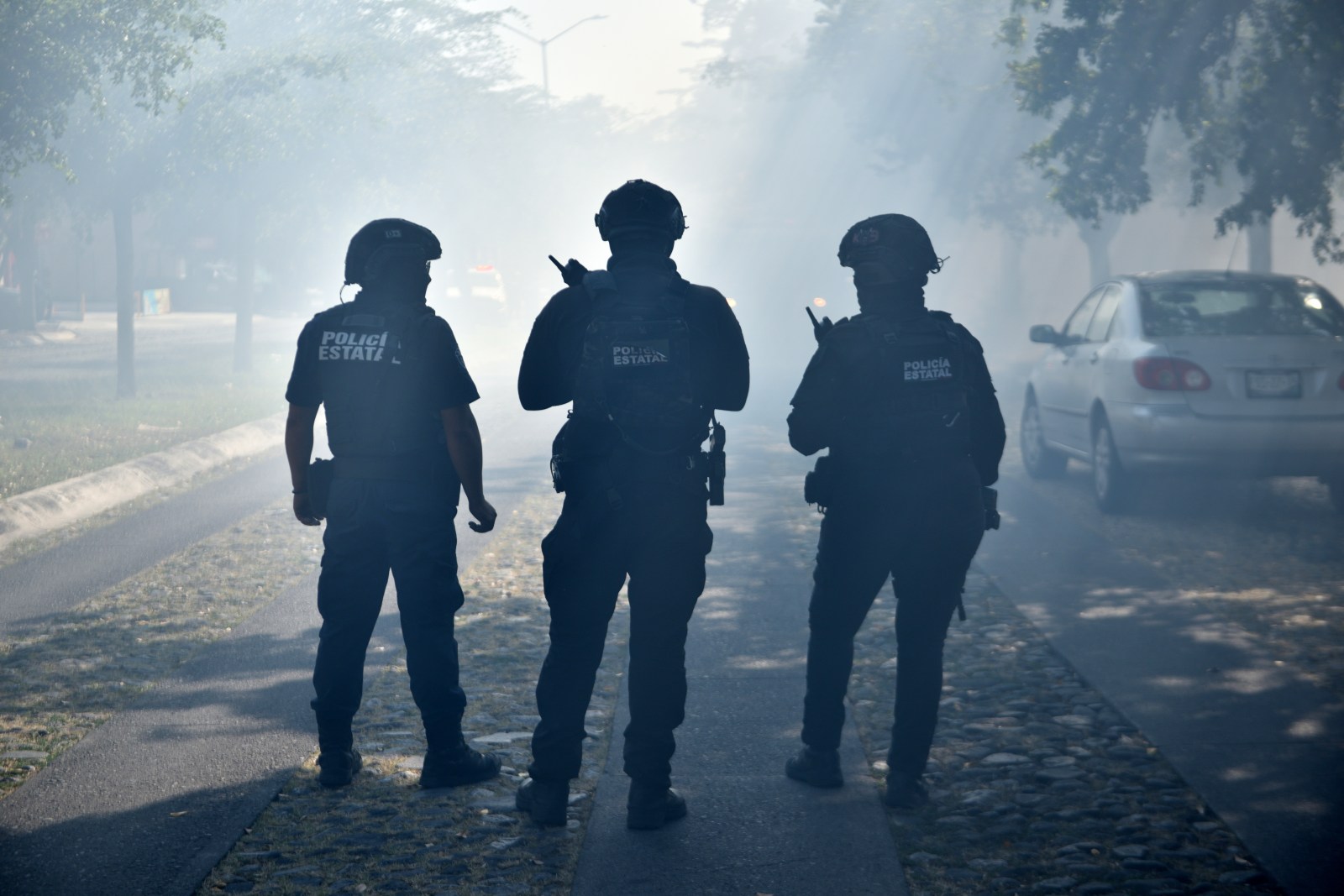
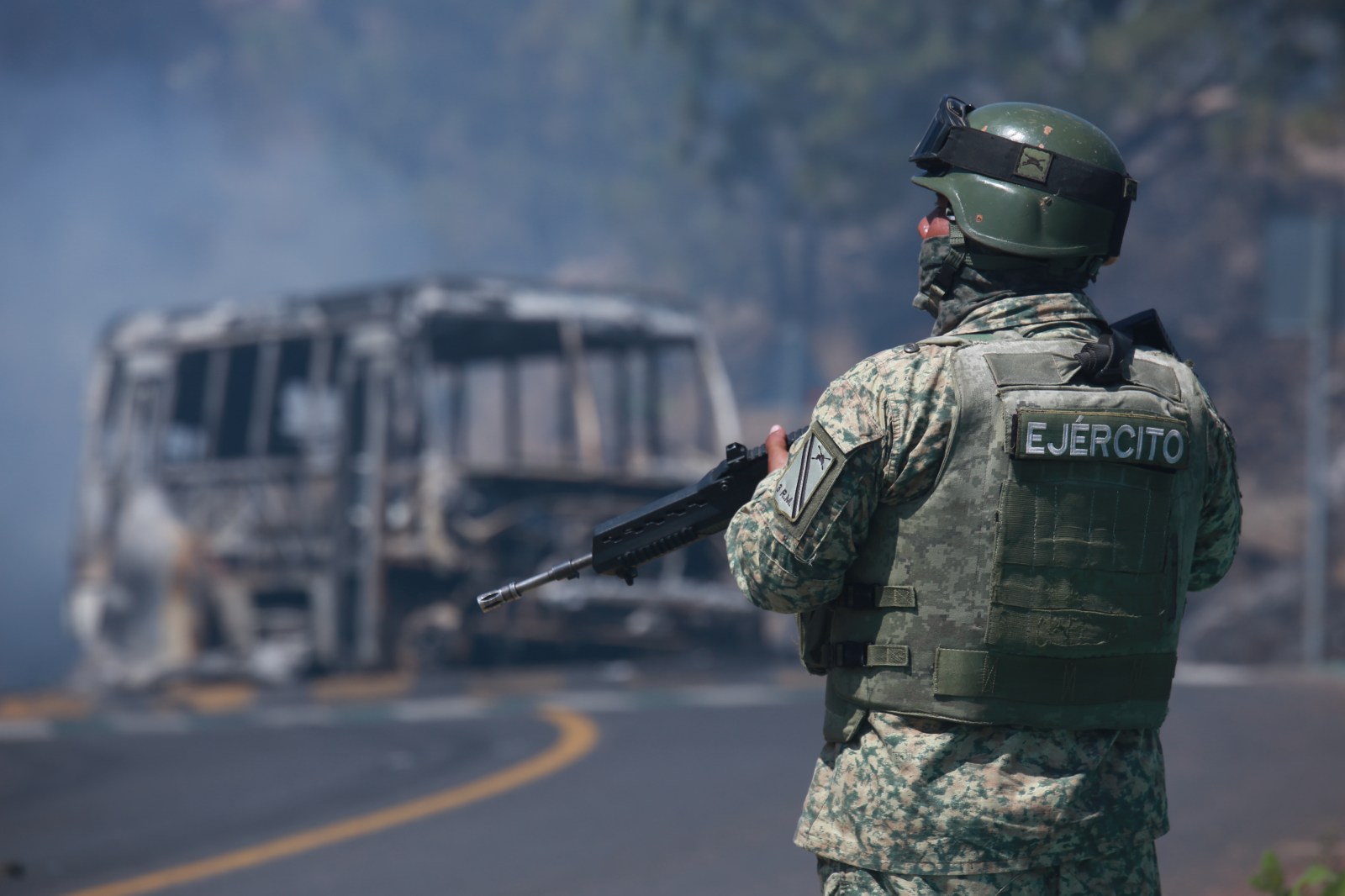
Roadblocks, Fires and Public Killings Spread to Over 20 States Within hours of the raid, CJNG supporters erected more than 250 roadblocks in 20 Mexican states, burning vehicles and blocking highways [1][2]. Photographs show supermarkets set ablaze and bodies left on streets in cities from Guadalajara to Tijuana, illustrating a coordinated retaliation [1]. In‑sight Crime data recorded clashes in Mexicali and contested migrant corridors in Chiapas [2].
Succession Vacuum Sparks Internal Power Struggle With El Mencho’s son serving a U.S. sentence, his wife imprisoned in Mexico and two brothers behind bars, the cartel lacks a clear heir [2]. Security expert David Saucedo identified four senior commanders now vying for control, raising the risk of intra‑cartel violence [2]. Analysts warn this fragmentation could intensify fights with the rival Sinaloa cartel for U.S. drug routes [2].
U.S. Terrorist Designations and Sanctions Intensify Pressure The State Department added CJNG to the Foreign Terrorist Organization list in February 2025, a status echoed by the National Counterterrorism Center [1][2][3]. The Treasury Department sanctioned the Kovay Gardens resort for running a CJNG‑linked timeshare fraud that stole $330 million from U.S. retirees [4]. DOJ officials described CJNG as a transnational criminal organization involved in drug trafficking, money‑laundering and migrant extortion [3].
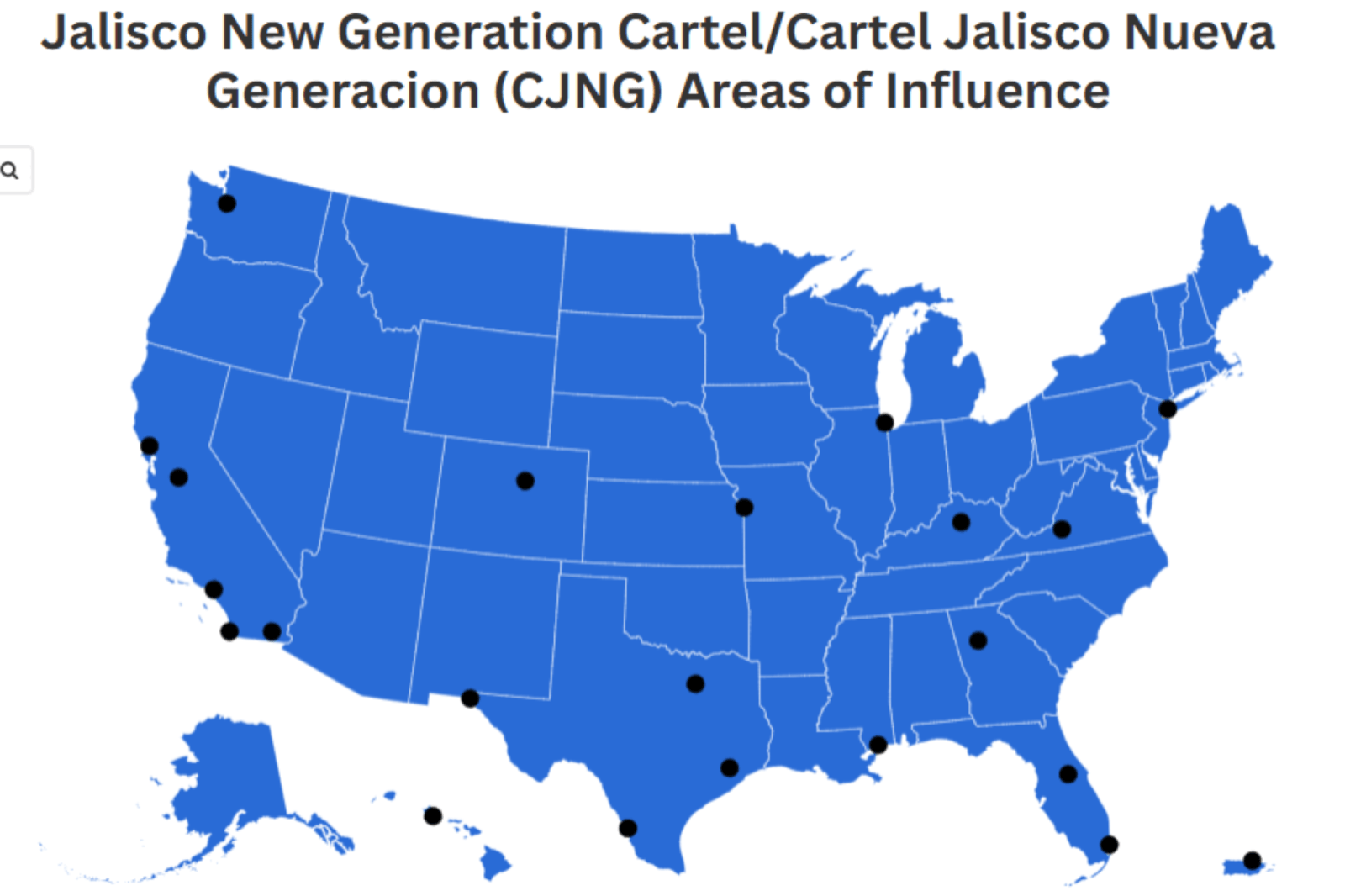
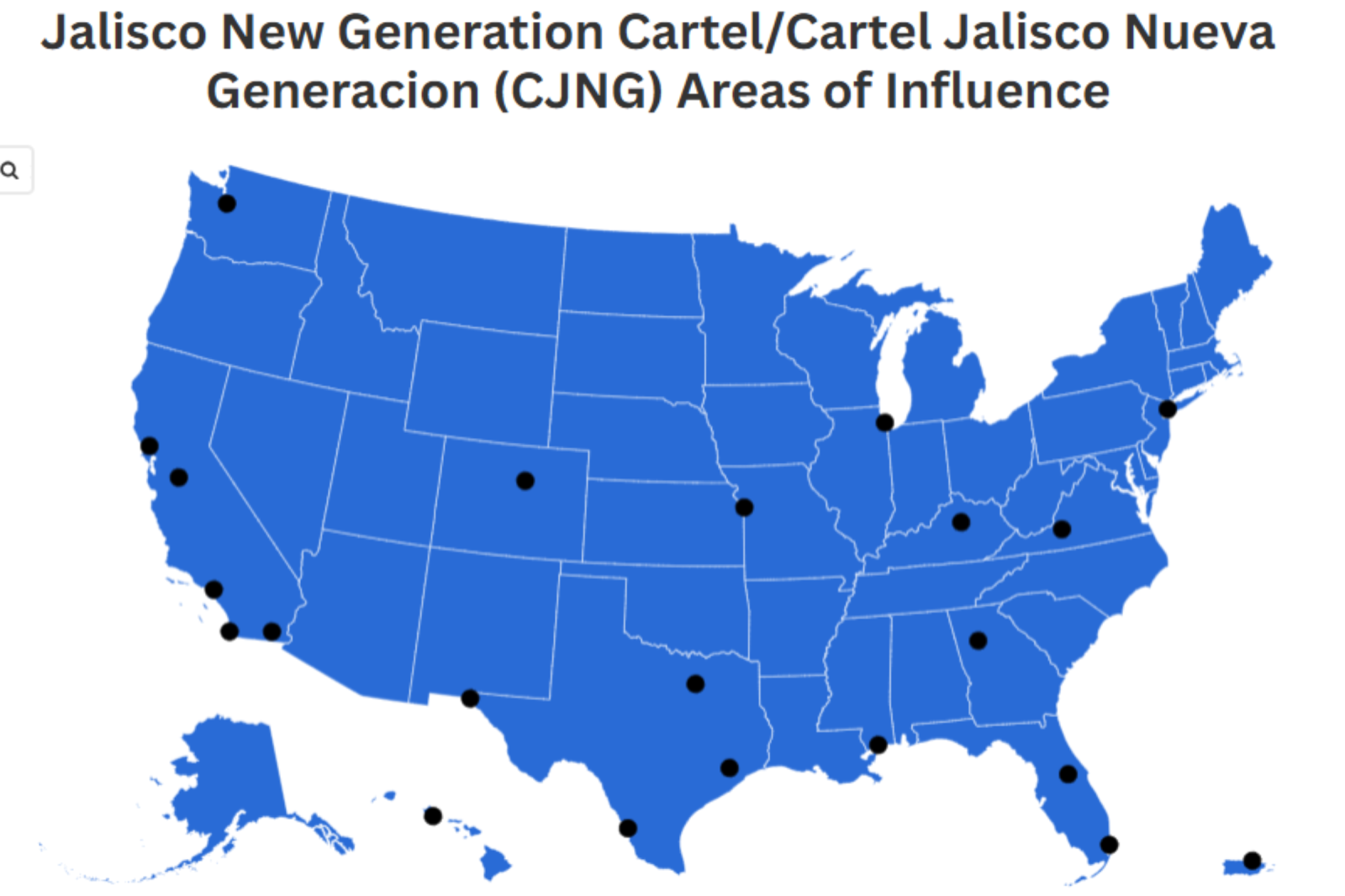
Cross‑Border Criminal Network Remains Operational DEA’s 2020 assessment mapped CJNG influence from New York to Los Angeles, confirming affiliates in almost every U.S. state [3]. Chainalysis linked the cartel to large bitcoin purchases used to fund fentanyl‑precursor production, tying digital finance to the opioid crisis [4]. Despite leadership loss, the cartel continues to dominate fentanyl supply to the United States and diversify into elder fraud and crypto payments [3][4].
Sources
-
1.
Newsweek: CJNG Retaliates After Leader’s Death, Sparking Nationwide Violence: Details the raid, El Mencho’s death, 250+ roadblocks, arson, mass disappearances and U.S. terrorist designation .
-
2.
CNN: El Mencho’s Death May Spark Cartel Wars and Narco‑Terrorism Across Mexico and Beyond: Highlights potential turf wars, succession crisis, roadblocks in Mexicali, and regional spillover risks .
-
3.
Newsweek: CJNG Presence in the U.S. Mapped Amid Mexican Leader’s Death: Maps CJNG’s U.S. footprint, cites DEA and DOJ assessments, and notes U.S. travel warnings .
-
4.
Newsweek: El Mencho’s Death Leaves CJNG‑Run Timeshare Scam Unchecked: Reports Treasury sanctions on a timeshare scheme, $330 million losses, bitcoin financing of fentanyl precursors, and U.S. “narcoterrorist” labeling .
Related Tickers
Timeline
2009 – The Jalisco New Generation Cartel (CJNG) is founded, later becoming one of Mexico’s most powerful drug‑trafficking organizations and a major source of fentanyl, cocaine and methamphetamine for the United States [2].
2020 – CJNG attempts a high‑profile attack on Mexico’s public‑security secretary Omar García Harfuch, signaling the group’s willingness to use “total war” tactics against the state [1].
2020 – The U.S. Drug Enforcement Administration’s National Drug Threat Assessment maps CJNG influence from New York to Los Angeles and across almost all 50 states, confirming its deep penetration of the American drug market [3].
Feb 2025 – The U.S. State Department designates CJNG as a Foreign Terrorist Organization, joining a short list of the world’s most dangerous criminal groups and paving the way for expanded counter‑terror tools [1][3].
Feb 2025 – The U.S. National Counterterrorism Center notes the FTO designation and warns that CJNG’s transnational operations threaten U.S. public health, safety and national security [2].
Feb 22, 2026 – Mexican military forces raid a safe house in Tapalpa, wounding CJNG founder Nemesio Oseguera Cervantes (“El Mencho”) who later dies while being air‑lifted to Mexico City, ending the cartel’s long‑standing leadership [2][3].
Feb 22‑23, 2026 – U.S. consular officials issue shelter‑in‑place alerts for American citizens in Guadalajara, Puerto Vallarta, Ciudad Guzmán, Tijuana, Chiapas and Michoacán, urging travelers to avoid law‑enforcement zones after the raid [3].
Feb 23, 2026 – The U.S. Treasury sanctions the Puerto Vallarta resort Kovay Gardens and 22 associated entities for operating a cartel‑run timeshare fraud that has siphoned roughly $330 million from U.S. retirees, highlighting CJNG’s diversification into elder fraud and crypto payments [4].
Feb 23‑24, 2026 – CJNG launches a wave of retaliation: more than 250 roadblocks are erected across 20 Mexican states, supermarkets are set ablaze, bodies are displayed in streets, and public killings surge, illustrating the breadth of the unrest [2].
Feb 24, 2026 – Violent clashes erupt in Mexicali and Chiapas as CJNG and Sinaloa factions contest migrant‑smuggling corridors, expanding a front of conflict that now spans over 20 states [1].
Feb 24, 2026 – A succession crisis looms within CJNG; with El Mencho’s son imprisoned in the U.S., his wife jailed in Mexico, and two brothers incarcerated, four senior commanders are poised to battle for control [1].
Feb 24, 2026 – Analysts warn the cartel’s instability could trigger a regional domino effect, sparking competition over drug routes in Ecuador and Colombia and reshaping criminal dynamics across South America [1].
2026 – Jalisco records 12,576 missing persons, the third‑highest disappearance count in Mexico, while sociologist Jorge Ramírez declares “CJNG’s role in these disappearances undeniable,” underscoring a deepening humanitarian crisis [2].
2026 – Amnesty International alerts that Mexico faces a “serious crisis of disappearances” tied to cartel‑related violence, raising concerns about future security conditions [2].
2026 – Chainalysis links CJNG to large‑scale purchases of bitcoin and stablecoins used to pay manufacturers of synthetic‑opioid precursors, tying the cartel’s drug trade to hard‑to‑trace digital finance [4].
2026 – White House spokesperson Karoline Leavitt, Treasury Secretary Scott Bessent and Attorney General Pamela Bondi label CJNG a “narcoterrorist,” calling for the application of counter‑terrorism tools against the organization [4].
External resources (4 links)
- https://www.dea.gov/sites/default/files/2021-02/DIR-008-21%202020%20National%20Drug%20Threat%20Assessment_WEB.pdf (cited 1 times)
- https://cnnespanol.cnn.com/2026/02/23/latinoamerica/impacto-mencho-violencia-carteles-ecuador-colombia-orix (cited 1 times)
- https://x.com/DeputySecState/status/2025649436156989831?s=20 (cited 1 times)