Macron Holds Cow‑Free Salon Opening, Meets Select Farm Unions Amid Widespread Boycotts
Updated (2 articles)
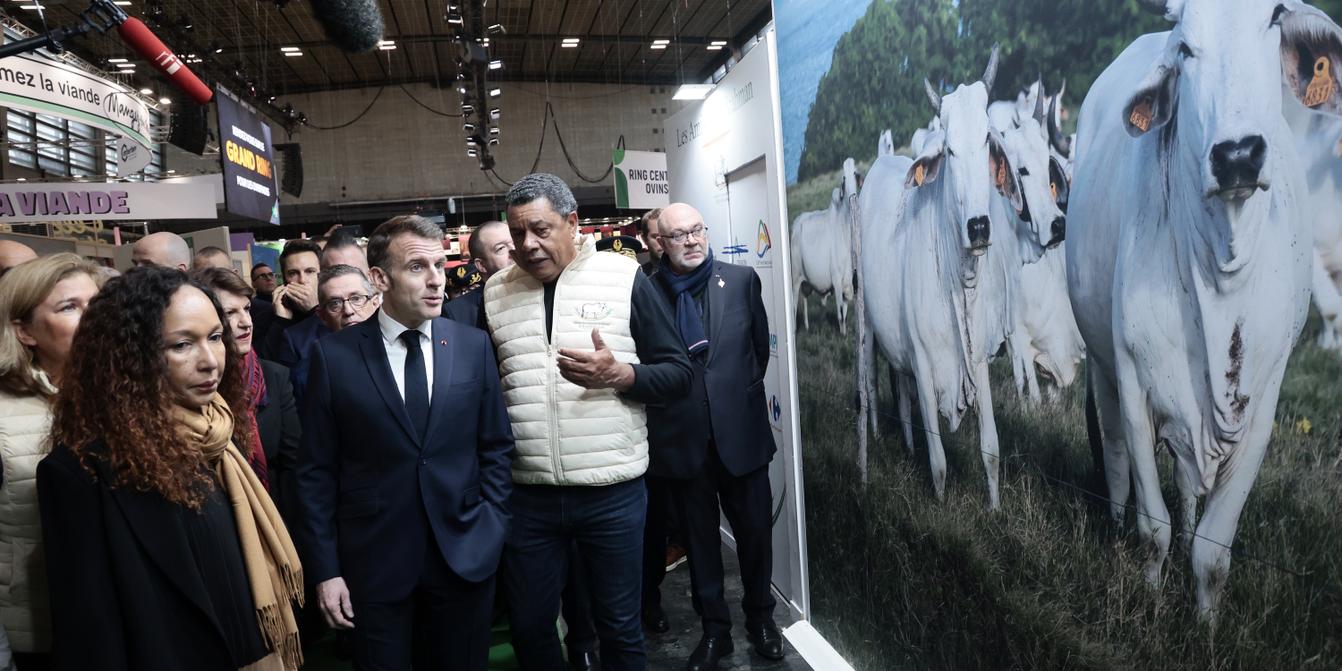
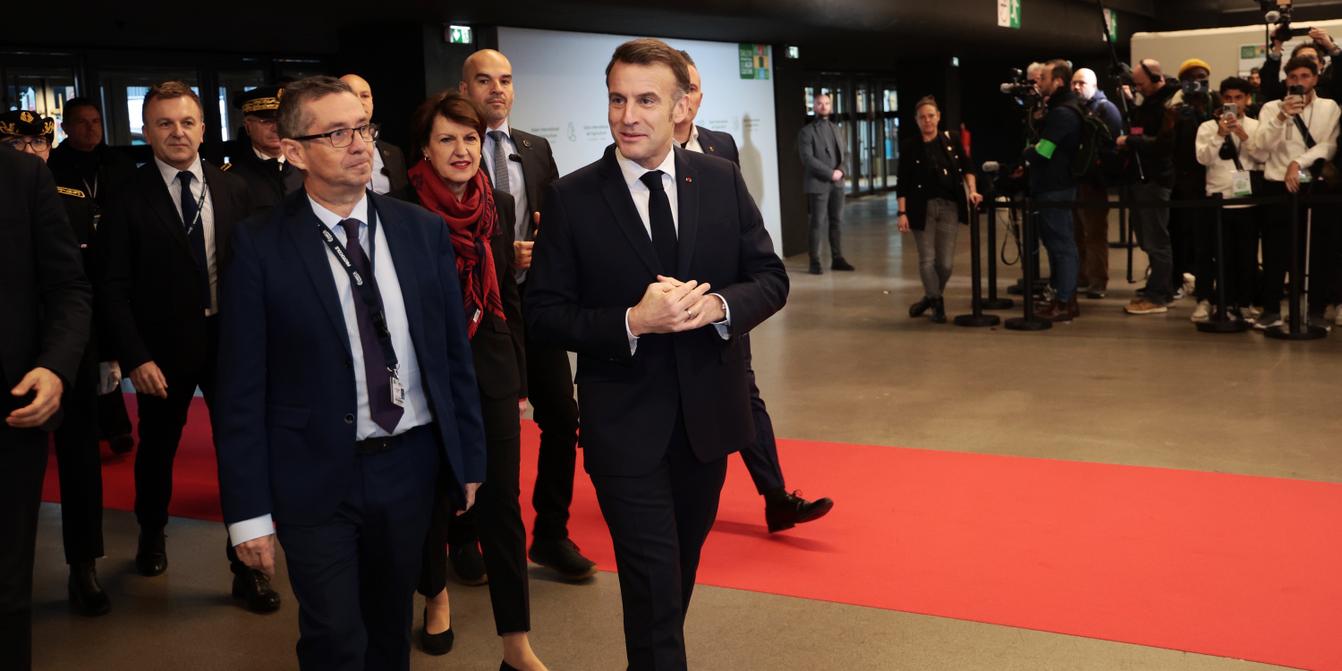
Macron Opens Cow‑Free Salon de l’Agriculture Emmanuel Macron inaugurated the 62nd Salon de l’Agriculture on 21 February 2026 without live cattle, displaying a hologram of a Brahman cow after farmer André Prosper could not bring his animal to Paris [1][2]. The decision highlighted a symbolic shift amid escalating farmer protests and a recent lift of Southwest restrictions on bovine dermatosis cases [1]. Macron framed the move as a “new era” for French agriculture while emphasizing disease‑free progress [1].
Union Boycotts and Limited Participation Mark Opening The far‑right‑linked Coordination rurale and left‑wing Confédération paysanne announced a boycott of the inauguration, refusing to attend the opening ceremony [2]. Only the FNSEA and Jeunes Agriculteurs accepted Macron’s invitation, agreeing to one‑on‑one talks that replaced the traditional pre‑show breakfast [2]. Their participation underscored a deep split within the farming sector, with many unions still distrustful of government policies [2].
President Offers Bilateral Talks and Broad Outreach Macron pledged to meet “each of the syndicates that wishes” to discuss the future of French farms, signaling an attempt at broad outreach [1][2]. He sat with FNSEA president Arnaud Rousseau and Jeunes Agriculteurs leaders, while Coordination rurale president Bertrand Venteau held a 45‑minute dialogue with the president [1]. The Élysée announced a forthcoming meeting with all agricultural chambers, unions, and inter‑professional bodies at the presidential level [1].
Critics Decry Absence of Concrete Measures Coordination rurale condemned the lack of a timetable for implementing the already‑passed Duplomb emergency agriculture law and reforms of environmental agencies [1]. The group warned that the “agricultural cause is buried” despite Macron’s claim of success against bovine dermatosis [1]. Tensions persist over EU‑Mercosur trade impacts, climate shocks, and upcoming CAP budget negotiations, with unions demanding tangible policy actions [1].
Sources
-
1.
Le Monde: Macron Meets Agricultural Unions After Cow‑Free Salon de l’Agriculture: Details Macron’s cow‑free opening, hologram display, meetings with FNSEA, Jeunes Agriculteurs, and Coordination rurale, and criticism over missing concrete measures .
-
2.
Le Monde: Macron’s appearance at the Paris Agricultural Show faces union boycotts: Highlights the boycott by Coordination rurale and Confédération paysanne, limited union participation, and the president’s call for unity despite ongoing farmer unrest .
Timeline
2025 – The French government passes the accelerated emergency agriculture “Duplomb” law, aiming to streamline emergency measures and review environmental agencies, but unions later claim its implementation timetable remains undefined [2].
2025 – Ongoing EU‑Mercosur trade negotiations raise alarm among French farmers, who warn the deal could exacerbate price volatility and threaten domestic agriculture [2].
2025 – Preparations begin for the 2026 Common Agricultural Policy (CAP) budget negotiations, a key forum where French farming interests expect to secure future subsidies [2].
Jan 2, 2026 – The Ministry of Agriculture reports zero new cases of bovine dermatosis since this date and lifts the Southwest cattle movement restrictions, marking a health‑related success for the sector [2].
Feb 21, 2026 (≈ 08:30 a.m.) – President Emmanuel Macron arrives at the 62nd Salon de l’Agriculture in Paris to “show his support for the agricultural world,” while the Coordination rurale and Confédération paysanne announce a boycott of the inauguration, reflecting deep sectoral distrust [1].
Feb 21, 2026 (morning) – Only the FNSEA and Jeunesses agricoles accept bilateral talks with Macron, replacing the traditional pre‑show breakfast and signalling a limited willingness to engage with the government [1].
Feb 21, 2026 (opening ceremony) – Macron inaugurates a cow‑free Salon, using a hologram of a Brahman cow after farmer André Prosper cannot bring his animal, underscoring the symbolic shift amid protests [2].
Feb 21, 2026 (opening remarks) – Macron pledges to meet “each of the syndicates that wishes” to stand behind French farms, emphasizing a broad outreach to all agricultural unions [2].
Feb 21, 2026 (≈ 09:00 a.m.) – In a televised address, Macron declares, “These are moments when everyone must stand behind the French farm… unity must prevail,” attempting to rally farmers around a common cause [1].
Feb 21, 2026 (mid‑morning) – Coordination rurale president Bertrand Venteau holds a 45‑minute dialogue with Macron; the Élysée subsequently announces a future Élysée‑level meeting with all agricultural chambers, unions and inter‑professional bodies [2].
Feb 21, 2026 (post‑opening) – FNSEA and Jeunes Agriculteurs sit with Macron but report receiving no clear “vision” for agriculture, while Coordination rurale criticises the lack of a concrete timetable for the Duplomb law and decries that “the agricultural cause is buried” [2].
Late 2026 (planned) – The government schedules an Élysée‑level summit with every agricultural chamber, union and inter‑professional body to negotiate concrete measures and address lingering farmer discontent [2].
Late 2026 (expected) – CAP budget negotiations commence, where French farming groups will seek to lock in subsidies and policy support amid ongoing climate shocks and trade pressures [2].