Winter Storm Warnings Target Over One Million Residents as Snow and Ice Threaten Power Grid
Updated (2 articles)
-
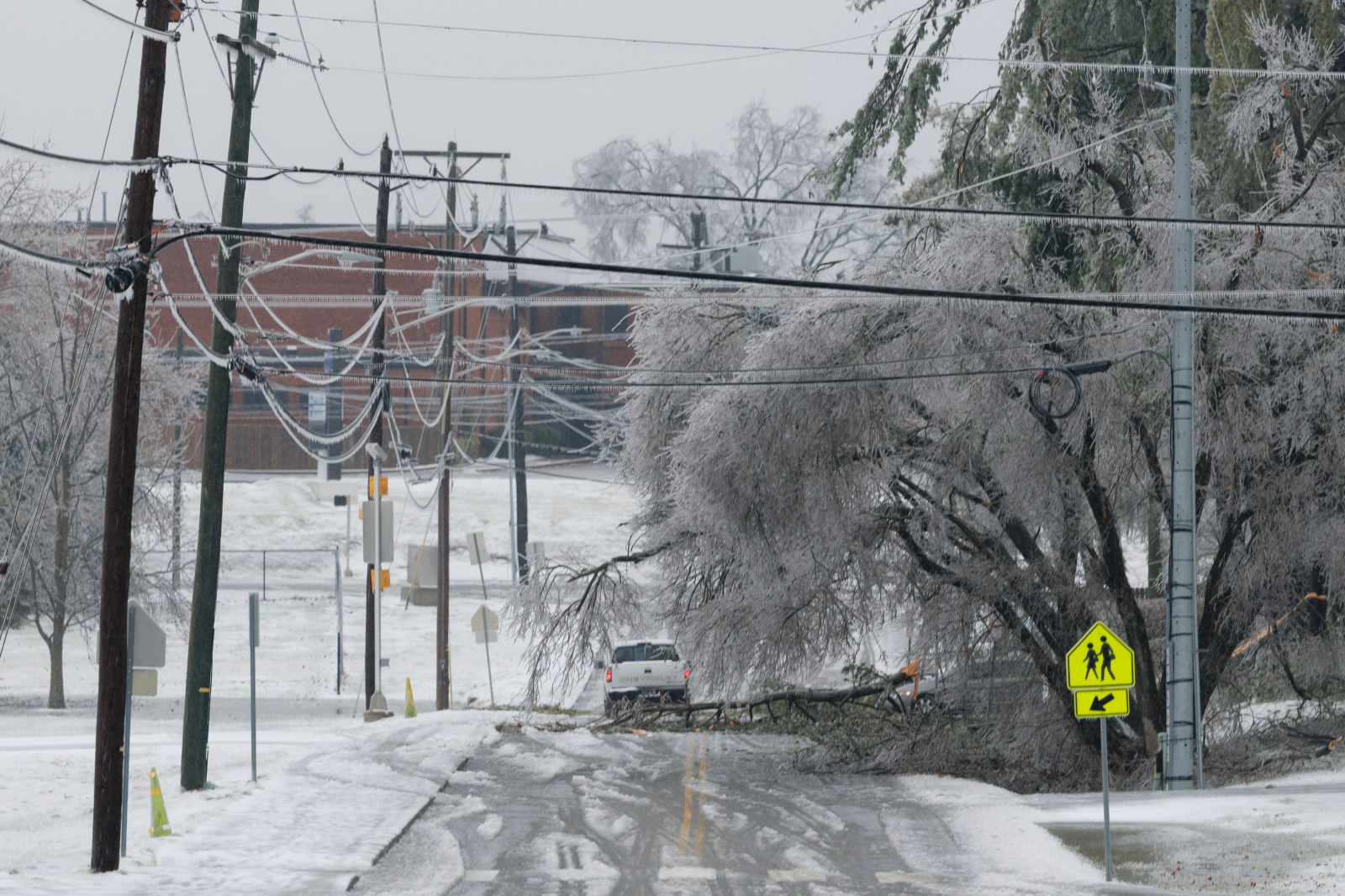 Image: NewsweekNASHVILLE, TENNESSEE – JANUARY 25: A vehicle navigates around fallen branches due to ice during a snowstorm on January 25, 2026 in Nashville, Tennessee. A massive winter storm is bringing frigid temperatures, ice, and snow to millions of Americans across the nation. (Photo by Brett Carlsen/Getty Images) Source Full size
-
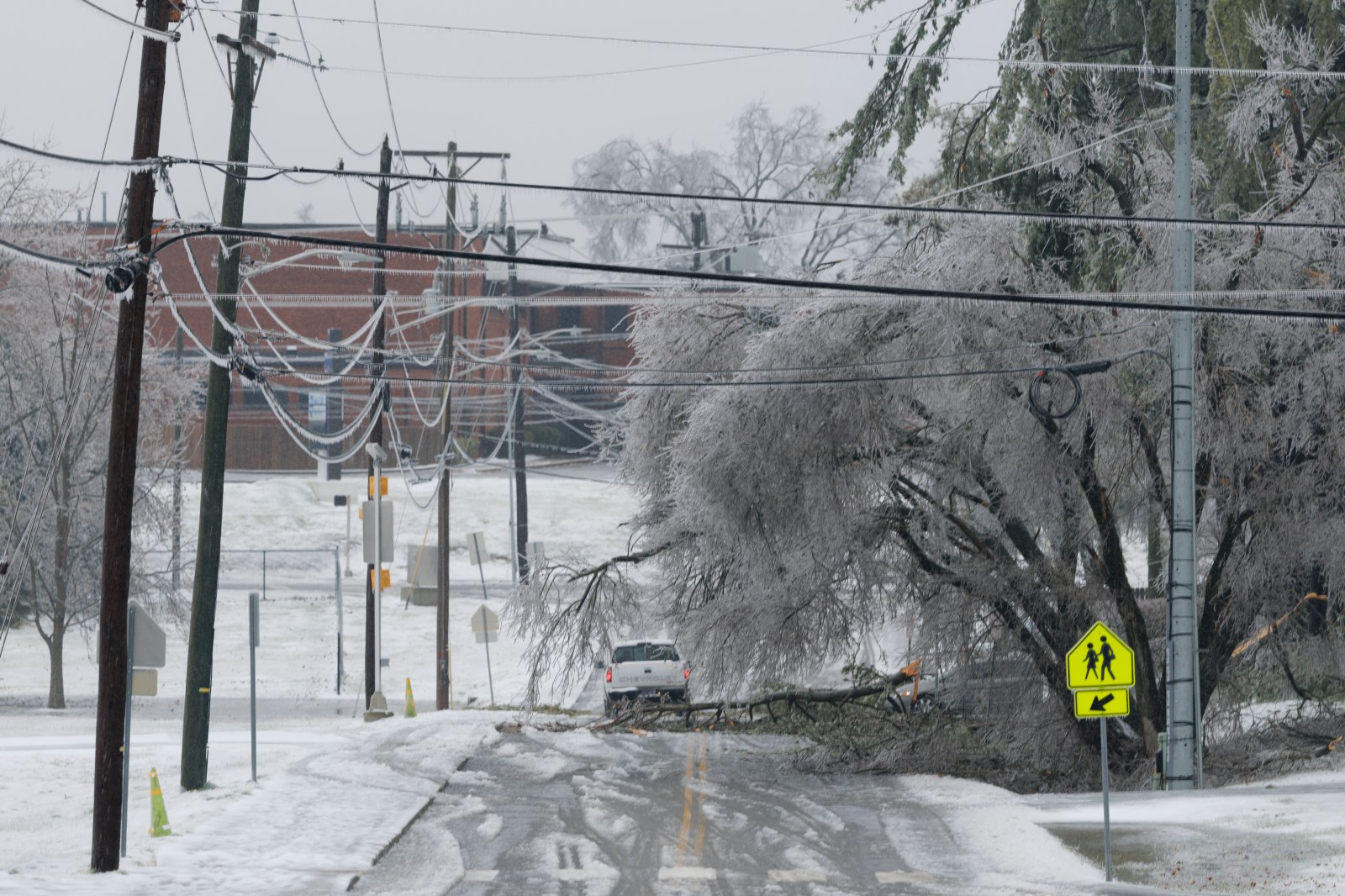 Image: NewsweekNASHVILLE, TENNESSEE – JANUARY 25: A vehicle navigates around fallen branches due to ice during a snowstorm on January 25, 2026 in Nashville, Tennessee. A massive winter storm is bringing frigid temperatures, ice, and snow to millions of Americans across the nation. (Photo by Brett Carlsen/Getty Images) Source Full size
NWS Issues First Winter Storm Warnings for Tennessee, Virginia, and North Carolina On Thursday at 1 p.m. ET the National Weather Service upgraded earlier watches to full warnings for a “significant” snow event affecting Tennessee, West Virginia, Virginia and North Carolina, signaling confidence that heavy snowfall will occur [1]. The warnings apply to more than one million people and meet the NWS criteria of at least six inches in twelve hours or eight inches in twenty‑four hours [1]. Charlie Woodrum, the agency’s Preparedness and Resilience Lead, warned that failure to prepare could create life‑threatening conditions for travelers and residents [1].
Snowfall Forecasts Reach Up to Twelve Inches Along the Eastern Seaboard The Greenville‑Spartanburg office projected as much as ten inches of snow within the warning zone, while the broader Eastern Seaboard watch anticipates up to twelve inches [1]. Active warnings may begin Friday morning and persist through Saturday, giving commuters only a narrow window to adjust travel plans [1]. Officials cautioned that heavy, wet snow could make roads impassable, snap tree limbs, and cause isolated power outages, especially where strong winds accompany the precipitation [1].
Ice Accumulation Up to One Inch Poses Outage Risk Across the Carolinas Forecasts released on Friday predicted up to one inch of ice in parts of South Carolina and North Carolina, including Charlotte, Asheville, Spartanburg, and Boone [2]. The Greenville‑Spartanburg office warned that ice thickness of 0.25 inch can break branches, while 0.50 inch or more may trigger widespread, long‑duration outages lasting up to a week [2]. Meteorologists compared the potential event to the 2002 ice storm, noting that similar accumulations have not been seen in the region for over a decade [2].
Officials Emphasize Household Preparedness for Snow, Ice, and Extreme Cold Both agencies urged residents to charge electronic devices, stock non‑perishable food and water for at least 72 hours, and secure medical supplies such as prescriptions or oxygen [2]. The Morristown office added extreme‑cold warnings with wind chills projected between 0 °F and 10 °F below zero, raising hypothermia concerns for vulnerable populations [1]. Brad Panovich and other forecasters recommended avoiding indoor use of generators or grills and checking on elderly neighbors before the storm’s onset [2].
Sources
-
1.
Newsweek: Winter Storm Warning Issued for Over 1 Million People: details the NWS’s first winter storm warnings, snowfall forecasts up to 12 inches, extreme‑cold advisories, and preparation guidance for the weekend event .
-
2.
Newsweek: Dire Warning as Major Ice Storm Threatens Millions: focuses on the forecast of up to one inch of ice, potential week‑long power outages, school cancellations, comparison to the 2002 ice storm, and specific steps residents should take to mitigate risks .
Timeline
Jan 23, 2026 – WCNC chief meteorologist Brad Panovich posts on X that the approaching system is a “damaging ice event, not a ‘fun snow day,’” urging residents to use Friday and Saturday to charge devices, stock food and water, check on elderly neighbors, and stay off roads once ice begins falling [2].
Jan 23, 2026 – The National Weather Service forecasts up to one inch of ice across parts of South Carolina and North Carolina, warning that 0.25 inch can snap tree limbs and 0.50 inch or more can cause widespread, long‑duration power outages [2].
Jan 23, 2026 – School districts in the affected region cancel classes for hundreds of thousands of students on Friday, citing hazardous travel and ice conditions as the reason for the shutdown [2].
Jan 23, 2026 – AccuWeather senior meteorologist Tom Kines tells Newsweek that the ice storm could produce power outages lasting up to seven days in the hardest‑hit areas, leaving residents without heat and electricity for extended periods [2].
Jan 23, 2026 – Panovich notes the ice totals could match or exceed those of the 2002 ice storm, a benchmark the region has not faced in at least a decade, underscoring the potential for severe, long‑lasting impacts [2].
Jan 29, 2026 – The National Weather Service issues its first winter storm warnings for a “significant” snow event targeting Tennessee, West Virginia, Virginia and North Carolina, upgrading earlier watches and signaling confidence that heavy snowfall will occur this weekend [1].
Jan 29, 2026 – Forecasts call for up to 12 inches of snow along the Eastern Seaboard, with some warnings becoming active as early as Friday morning and remaining in effect through Saturday, giving residents several days to prepare [1].
Jan 29, 2026 – The Greenville‑Spartanburg NWS office warns that heavy snow could make many roads impassable and cause isolated power outages as the weight of snow brings down tree limbs and power lines, especially during the Friday evening commute [1].
Jan 29, 2026 – The Morristown, Tennessee office flags “significant” snow along the Tennessee‑North Carolina state line, predicts wind chills as low as 0 °F to 10 °F below zero, and warns of heightened hypothermia risk for residents [1].
Jan 29, 2026 – NWS Preparedness and Resilience Lead Charlie Woodrum tells Newsweek that winter storms can bring snow, sleet, freezing rain, blizzard conditions and dangerously cold temperatures, and stresses that failure to prepare can lead to life‑threatening situations while traveling or at home [1].