Iran Temporarily Closes Parts of Strait of Hormuz, Disrupting Global Oil Flow
Updated (5 articles)
-
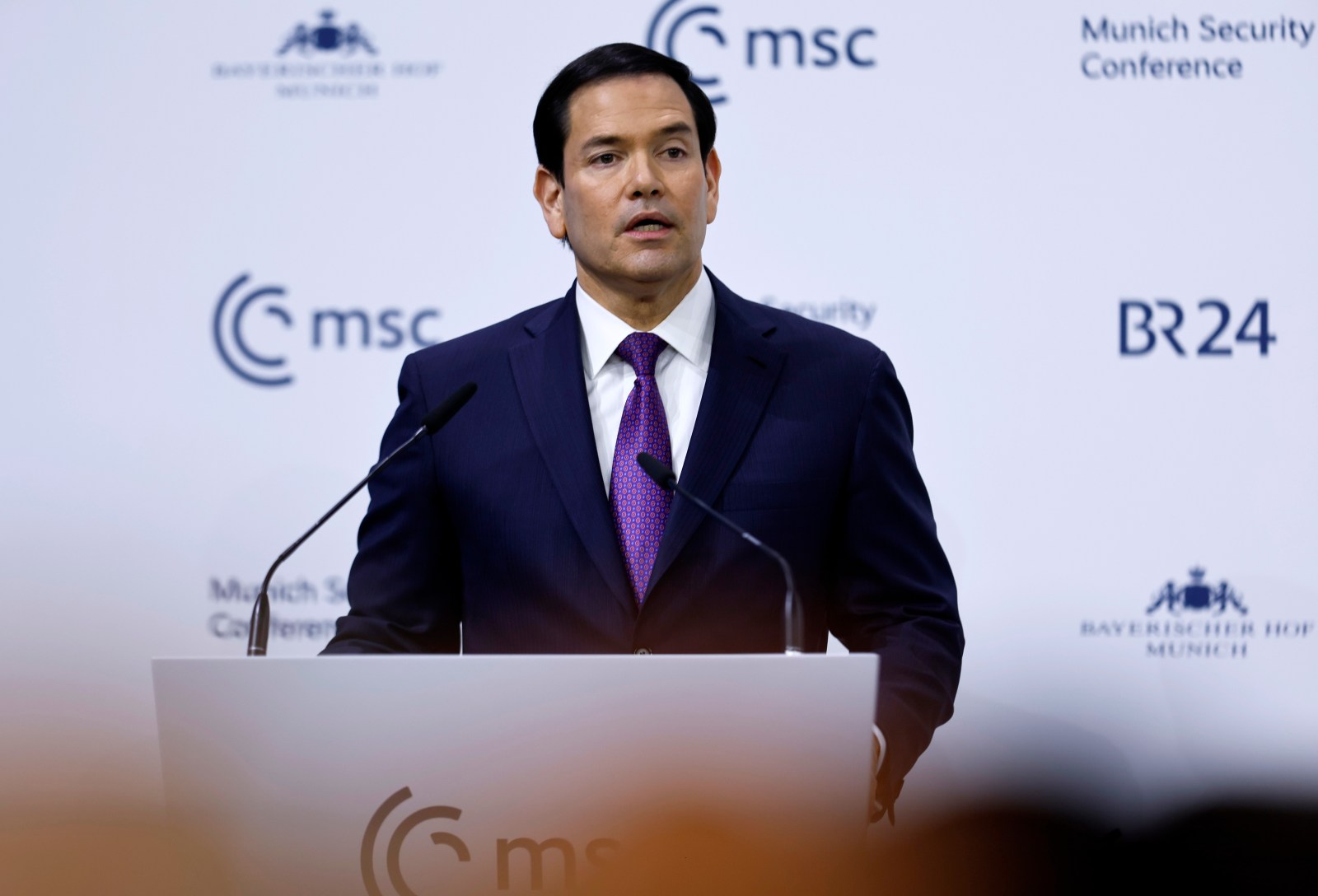 Image: NewsweekMUNICH, GERMANY – FEBRUARY 14: U.S. Secretary of State Marco Rubio delivers a key note speech at the 62nd Munich Security Conference on February 14, 2026 in Munich, Germany. The conference, which brings together government leaders, security experts and defence ministers, is taking place at a time when the traditional western political and military alliance is facing rupture due to the policies of U.S. President Donald Trump. (Photo by Johannes Simon/Getty Images) Source Full size
 -
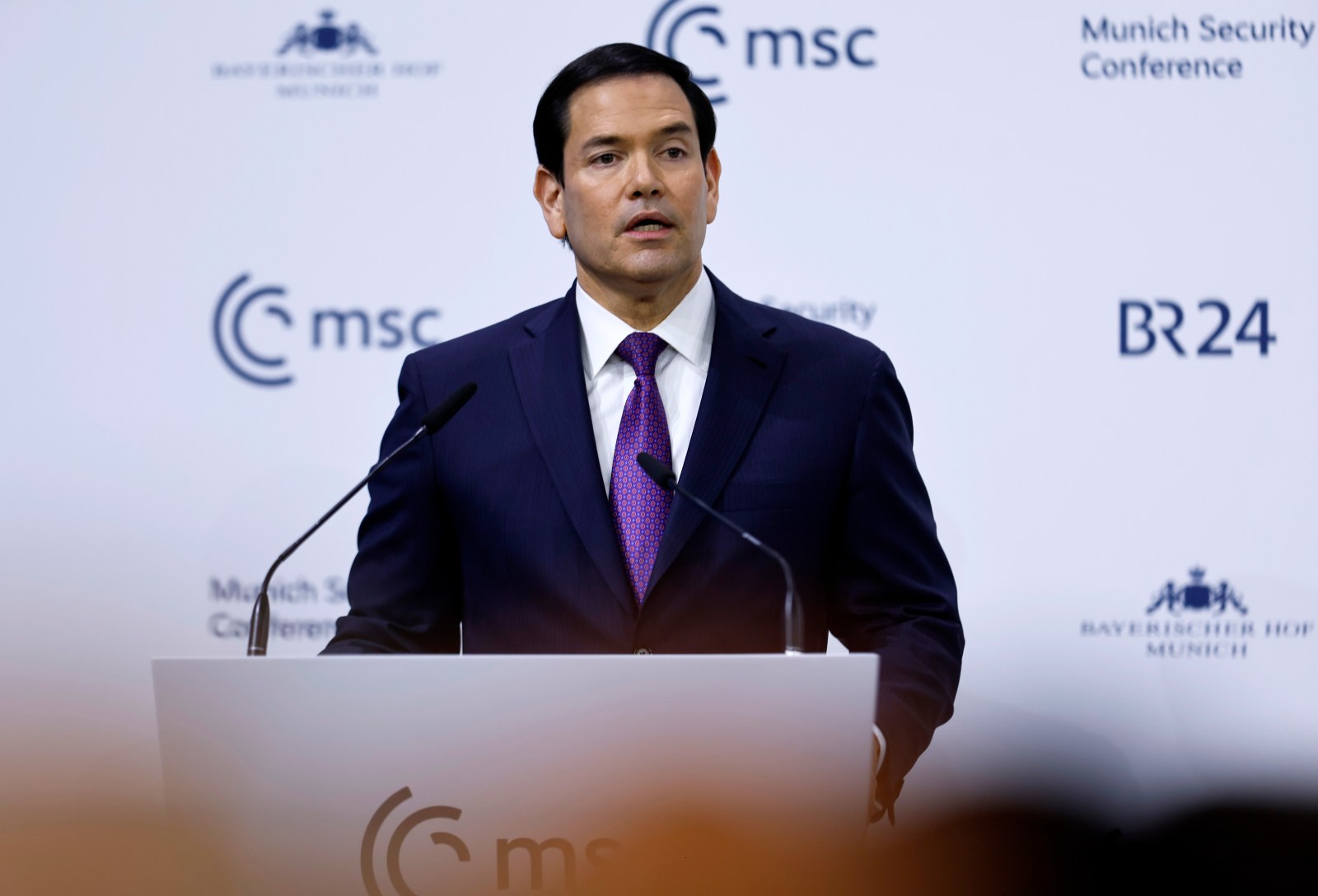 Image: NewsweekMUNICH, GERMANY – FEBRUARY 14: U.S. Secretary of State Marco Rubio delivers a key note speech at the 62nd Munich Security Conference on February 14, 2026 in Munich, Germany. The conference, which brings together government leaders, security experts and defence ministers, is taking place at a time when the traditional western political and military alliance is facing rupture due to the policies of U.S. President Donald Trump. (Photo by Johannes Simon/Getty Images) Source Full size
Iran Launches Partial Closure and Live‑Fire Exercises On February 18, Tehran announced a temporary shutdown of sections of the Strait of Hormuz and began live‑fire drills, a chokepoint through which roughly 20 percent of worldwide oil shipments pass [1]. The move marks one of the few recent attempts to restrict navigation in the waterway since the 1980s, echoing past harassment tactics but stopping short of a full blockade [1]. Iran’s Supreme Leader Ayatollah Ali Khamenei warned that any U.S. response could be met with a crippling strike, underscoring the strategic signaling behind the exercise [1].
Recent U.S. Naval Encounters Heighten Risk of Escalation A U.S. Navy fighter shot down an Iranian drone near the carrier USS Abraham Lincoln on February 4, and Iranian forces later harassed a U.S.–flagged merchant vessel transiting the strait [1]. CENTCOM cautioned that unsafe behavior near U.S. forces could increase collision and escalation risks, though it refrained from commenting on the latest closure [1]. These incidents illustrate a rapid buildup of military tension concurrent with the waterway shutdown.
Diplomatic Channels Remain Open Ahead of Geneva Talks U.S. Secretary of State Marco Rubio described negotiations with Tehran as “very difficult” because Iran’s clerical leadership makes decisions on theological grounds, not geopolitical [2]. Iran’s deputy foreign minister Majid Takht‑Ravanchi offered to discuss diluting its 60 percent‑enriched uranium in exchange for sanctions relief [2]. Meanwhile, the United States dispatched the nuclear‑powered carrier USS Gerald R. Ford to join the Abraham Lincoln, signaling readiness for both diplomatic and military contingencies [2].
Regional Powers Signal Possible Military Action Israeli Prime Minister Benjamin Netanyahu urged Iran to dismantle its enrichment facilities, and President Donald Trump told him the United States would back Israeli strikes on Iran’s ballistic‑missile program [2]. The International Atomic Energy Agency is seeking data on 400 kg of 60 % enriched uranium missing since the June strikes and requests access to Natanz, Fordow, and Isfahan sites [2]. Iran’s Revolutionary Guard continues drills in the strait, reinforcing Tehran’s willingness to leverage the waterway as a bargaining chip [2][1].
Sources
-
1.
AP: Iran’s Temporary Closure of the Strait of Hormuz Raises Global Oil Concerns – Details the February 18 partial shutdown, live‑fire drills, oil‑flow impact, recent U.S.‑Iran naval incidents, and Khamenei’s warning .
-
2.
Newsweek: Rubio Warns Iran “Difficult” Ahead of Geneva Talks – Highlights Rubio’s critique of Iran’s clerics, the addition of the USS Gerald R. Ford, Iran’s offer to dilute enriched uranium, Revolutionary Guard drills, Israeli‑U.S. strike signals, and IAEA data requests .
Timeline
Dec 5‑6, 2025 – The Islamic Revolutionary Guard Corps launches the two‑day “Shahid Mohammad Nazeri” naval drill across the Persian Gulf, Strait of Hormuz, and Sea of Oman, showcasing missiles, drones, and electronic‑warfare systems and issuing a direct warning for U.S. warships to stay clear; the exercise ends on Dec 6 amid heightened tension after U.S. F‑35 strikes on Iranian nuclear sites in June 2024 and a GCC summit on disputed islands [3].
Jan 31, 2026 – U.S. Central Command publicly warns Iran’s IRGC that any unsafe behavior—such as low‑altitude armed flights or live‑fire near U.S. forces in the Strait of Hormuz—could trigger escalation, while Tehran announces a two‑day live‑fire naval exercise for the following Sunday and Monday, stressing defensive readiness and urging the United States to set aside threats [2].
Feb 1, 2026 – Supreme Leader Ayatollah Ali Khamenei tells a Tehran crowd that any U.S. military action will spark a regional war and that Iran will deliver a heavy blow, as Iran proceeds with a live‑fire drill in the Strait of Hormuz and the U.S. carrier USS Abraham Lincoln operates nearby; the speech coincides with a crackdown that has detained over 49,500 protesters since Dec 28 [5].
Feb 2‑3, 2026 – Iran conducts the scheduled live‑fire drill in the Strait of Hormuz, firing missiles and drones while warning U.S. warships to keep out of the exercise area; the IRGC emphasizes high defensive readiness and calls on the United States to respect the drill’s safety corridor [5].
Feb 4, 2026 – A U.S. Navy fighter shoots down an Iranian drone that approaches the aircraft carrier USS Abraham Lincoln, and Iran subsequently harasses a U.S.–flagged merchant vessel in the strait, raising the risk of accidental escalation [4].
Feb 5‑6, 2026 – Iran temporarily closes portions of the Strait of Hormuz, disrupting the flow of roughly 20 % of global oil; the move, described as an uncommon escalation reminiscent of the 1980s and the 12‑day Iran‑Israel conflict, follows the drone incident and underscores Tehran’s willingness to leverage the chokepoint for political pressure [4].
Feb 16, 2026 – U.S. Secretary of State Marco Rubio warns that Iran’s “radical Shia clerics” make theological decisions that hinder real deals, notes the addition of the nuclear‑powered carrier USS Gerald R. Ford to the region, reports Iran’s offer to dilute 60 % enriched uranium for sanctions relief, and signals U.S. and Israeli support for strikes on Iran’s missile program ahead of the Geneva nuclear talks [1].
Late Feb 2026 (planned) – Diplomatic delegations gather in Geneva for U.S.–Iran nuclear negotiations, a summit that Rubio frames as a critical opportunity to overcome the “very difficult” environment created by Iran’s clerical decision‑making and regional military posturing [1].
Nov 2026 (future) – U.S. political analysts anticipate that the outcome of the Geneva talks and any U.S. military targeting of Iran’s nuclear and missile sites will influence the upcoming U.S. midterm elections, adding domestic pressure to resolve the crisis before voters head to the polls [2].
All related articles (5 articles)
-
AP: Iran’s Temporary Closure of the Strait of Hormuz Raises Global Oil Concerns
-
Newsweek: Rubio warns Iran “difficult” ahead of Geneva talks
-
AP: Iran’s Supreme Leader Threatens Regional War Over Possible U.S. Attack
-
Newsweek: U.S. Warns Iran’s IRGC Over Live‑Fire Drills in Strait of Hormuz
-
Newsweek: Iran Issues Final Warning to U.S. Warships as Naval Drill Concludes
External resources (5 links)
- https://www.iranintl.com/en/liveblog/202601258930 (cited 1 times)
- https://x.com/IranObserver0/status/1996871455900946913 (cited 1 times)
- https://x.com/araghchi (cited 1 times)
- https://www.bcaresearch.com/marketing/matt-gertken (cited 2 times)
- https://www.fdd.org/team/behnam-ben-taleblu/ (cited 2 times)