U.S. Carrier Group Arrives as Iran Unveils Blood‑Stained Billboard Amid Death‑Toll Dispute
Updated (8 articles)
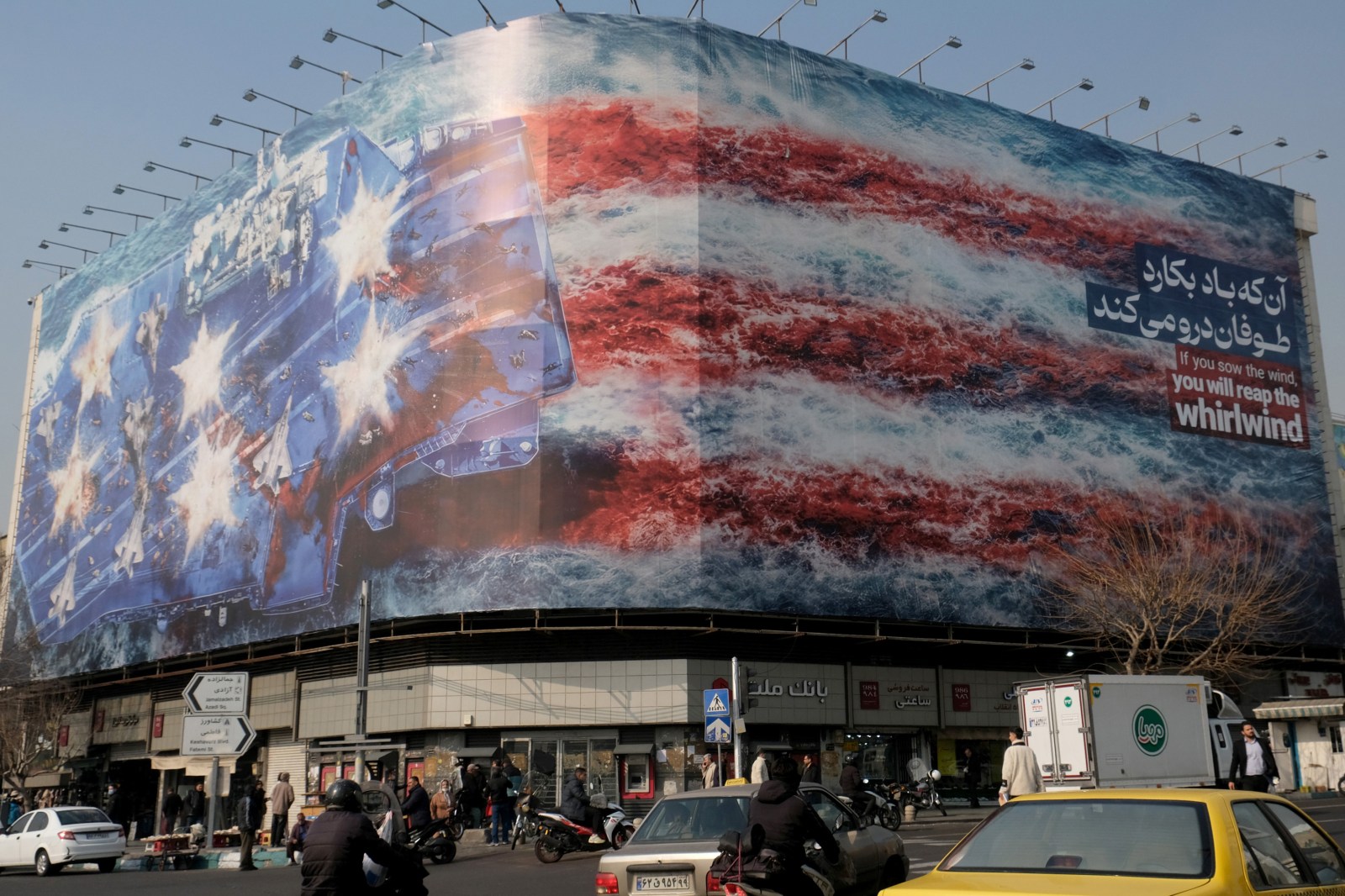
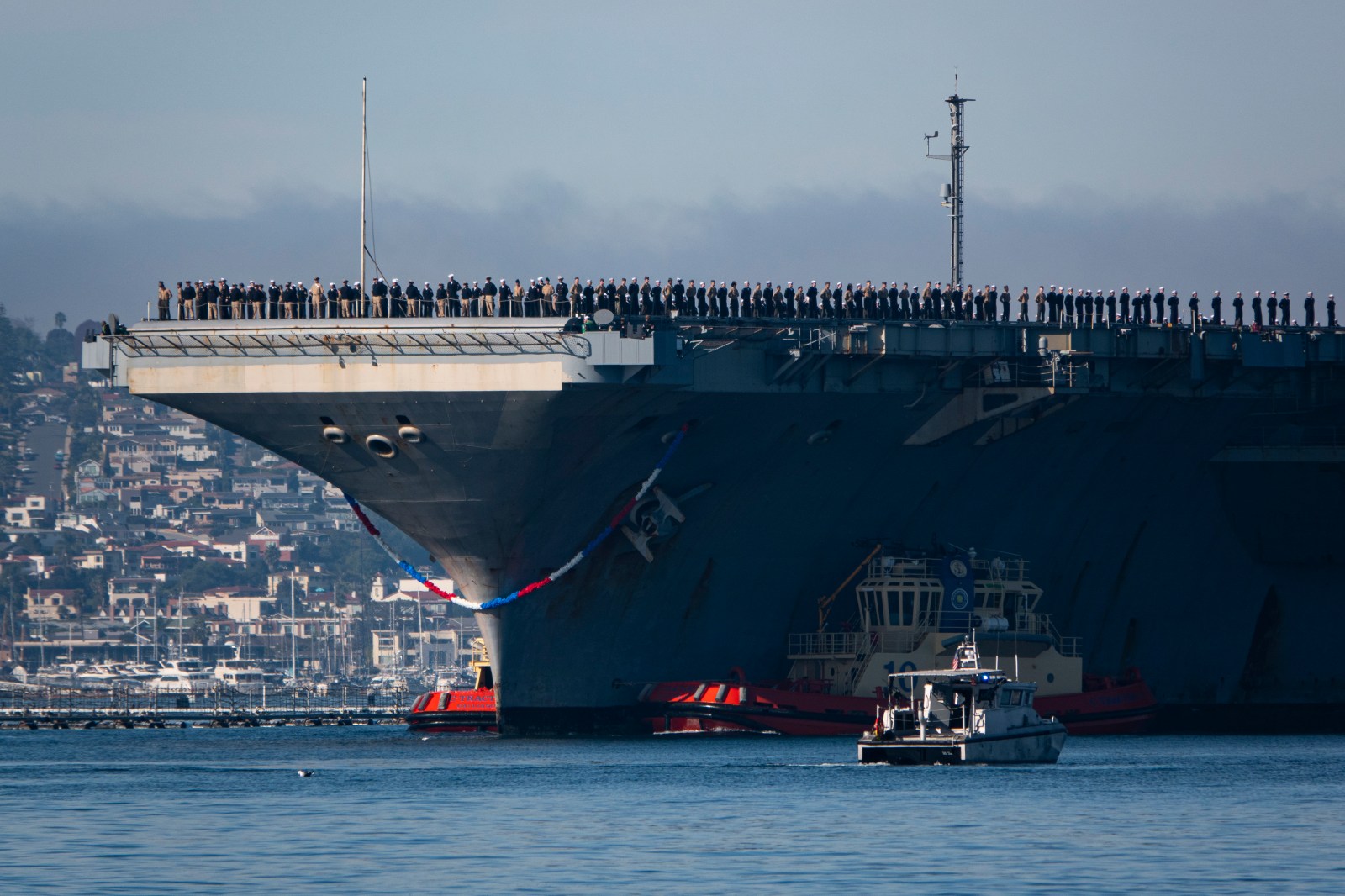
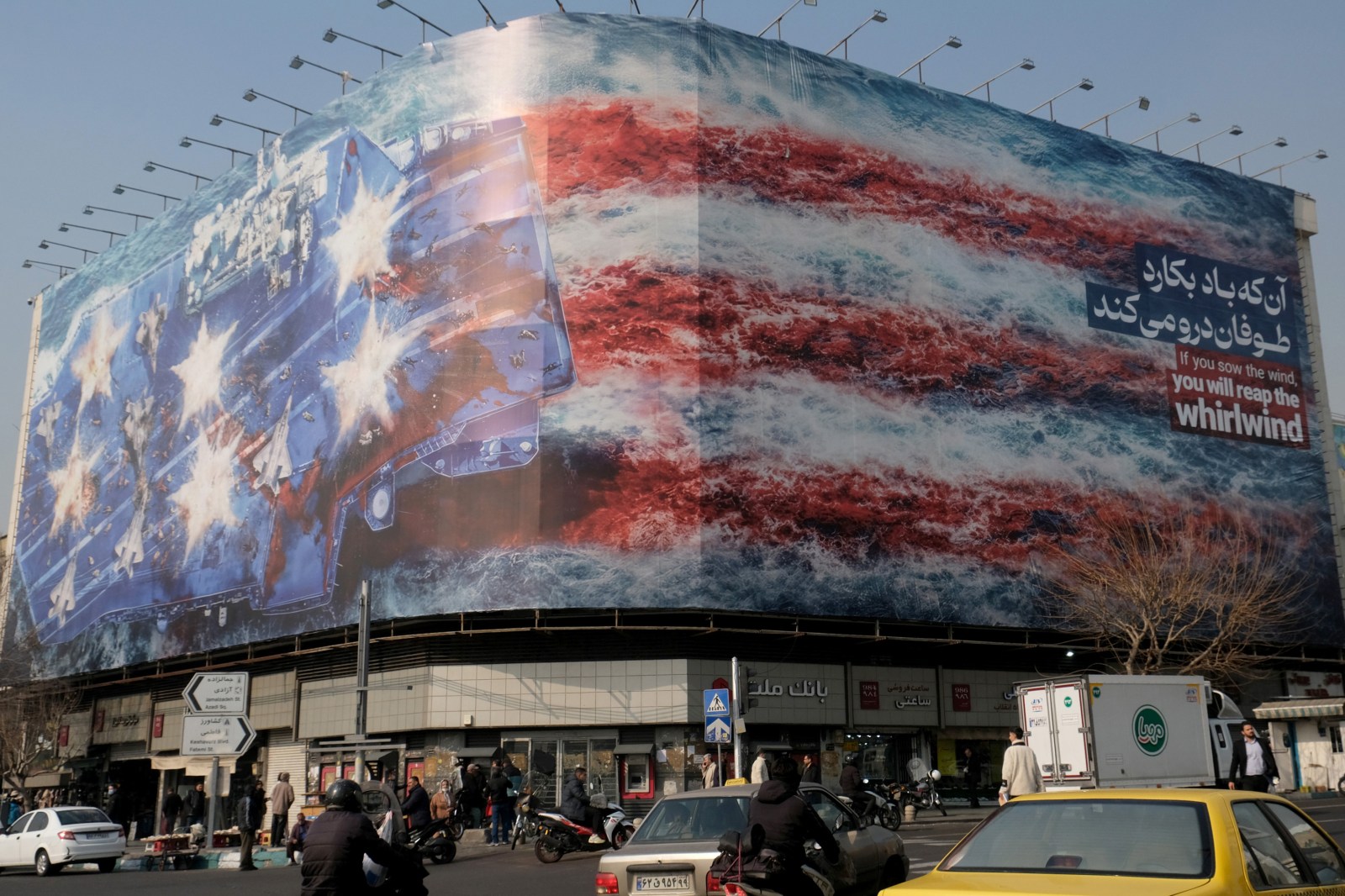
U.S. Carrier Group Moves Into Indian Ocean Near Iran On Jan 27, the nuclear‑powered carrier USS Abraham Lincoln and guided‑missile destroyers entered the Indian Ocean, placing them within striking distance of Iranian waters[1][3]. President Donald Trump announced the “massive fleet” was heading “just in case” and warned it could be used if Tehran escalates[5][8]. A White House official said the United States remains “open for business” and ready to discuss terms, while IRGC commander Gen. Mohammad Pakpour warned his forces have “finger on the trigger”[1][5]. The deployment coincides with U.S. Central Command’s plan to showcase combat air‑power in a regional exercise[3].
Tehran Unveils Blood‑Stained Billboard Targeting U.S. Carrier On Jan 26‑27, authorities erected a giant mural in Enghelab (Revolution) Square depicting the USS Abraham Lincoln riddled with destroyed jets and streams of blood forming a flag‑like stripe[2][4]. The image carries the caption “If you sow the wind, you will reap the whirlwind,” a biblical warning in Persian and English[2][4]. CNN photographed the posters during a limited visit, noting they were government‑approved and displayed alongside a 2016 image of a captured U.S. boat[1]. The mural’s launch aligns with heightened diplomatic strain and serves as a direct message to Washington[2].
Death Toll From Dec. 28 Protests Remains Disputed Human Rights Activists News Agency reported 5,137‑5,848 deaths and over 27,700‑41,280 arrests, while Iranian officials claim 3,117 fatalities, labeling many victims “terrorists”[6][5]. Time cited a figure of 30,000 deaths, illustrating the wide variance in estimates[3]. Families continue grieving as the rial fell to a record 1,500,000 per dollar, deepening economic distress[1]. The crackdown sparked an internet blackout that is now ending, allowing citizens to learn the full death toll[1].
EU and Allies Prepare Sanctions and Flight Cancellations European diplomats announced sanctions targeting senior IRGC members beginning Wednesday, responding to the deadly crackdown[2]. Airlines including Air France, Luxair, KLM and Transavia suspended or delayed flights to Dubai, citing security concerns amid the naval buildup[5][6]. The United Nations high commissioner for human rights warned Iran may execute detained protesters, urging transparency[5]. Analysts at the Soufan Center said the U.S. buildup expands leverage but does not guarantee decisive action[7].
Trump Claims Execution Halt, Faces Iranian Rebuttal On Jan 23, Trump asserted aboard Air Force One that he stopped 837 hangings and that Iran had halted executions of 800 detainees[7][8]. Iran’s top prosecutor Mohammad Movahedi called the claim “completely false,” stating no such halt occurred[7]. Trump also warned that a “massive fleet” could strike if Tehran kills protesters, while indicating openness to talks and potential tariffs[8][8]. Both sides continue to exchange threats, with the IRGC commander emphasizing readiness and the U.S. keeping options under review[5][3].
Sources
-
1.
CNN: Tehran Braces for U.S. Naval Presence Amid Post‑Crackdown Tension: Details the carrier’s arrival, anti‑U.S. posters, public fear, economic woes, and mutual military warnings.
-
2.
Newsweek: Iran Unveils Blood‑Stained Billboard Targeting U.S. Carrier Amid Rising Tensions: Describes the mural’s imagery, biblical caption, Trump’s “just in case” comment, IRGC readiness, and upcoming EU sanctions on IRGC officials.
-
3.
Newsweek: Trump Says U.S. Navy Deploys Large Armada Near Iran Amid Ongoing Tensions: Highlights Trump’s “big armada” claim, carrier group arrival, Tehran’s diplomatic stance, divergent death‑toll figures, and potential U.S. strike options.
-
4.
AP: Iran’s New Anti‑US Mural Highlights Escalating Tehran‑Washington Tensions: Reports the mural launch, carrier movement, IRGC warning, added U.S. and U.K. fighter deployments, and contested death‑toll numbers.
-
5.
King5: Iran’s IRGC Commander Threatens US as Warships Move Toward Region: Covers Pakpour’s warning, Trump’s fleet announcement, protest death and arrest counts, European airline cancellations, and UN concerns over executions.
-
6.
AP: Iran’s IRGC Commander Threatens US as Warships Approach: Mirrors King5’s warning, adds Trump’s red‑line on executions, airline disruptions, HRANA death‑toll data, and background on protest origins.
-
7.
Newsweek: Iran rejects Trump's claim of halted executions as U.S. ships move toward Iran: Focuses on Movahedi’s denial of execution halt, carrier deployment, Trump’s strike warnings, official Iranian death toll, and analyst view of U.S. leverage.
-
8.
Newsweek: Trump warns of armada heading to Iran amid protests: Summarizes Trump’s armada remark, brutal crackdown description, carrier deployment, disputed death toll, Reuters report on Lincoln arrival, and Trump’s openness to talks with tariff note.
Timeline
Dec 28, 2025 – Protests erupt across Iran after the rial collapses, spreading nationwide and lasting roughly two weeks before a violent crackdown leaves thousands dead, according to activists and Iranian officials [7][8].
Late Dec 2025 – Tehran imposes its most extensive internet blackout in history to suppress information about the protests and the mounting death toll [7][8].
June 2025 – President Trump orders airstrikes on Iran’s nuclear facilities, damaging several sites and heightening regional tensions [3].
Jan 20, 2026 – The U.S. aircraft carrier USS Abraham Lincoln and guided‑missile destroyers enter the CENTCOM area of the Indian Ocean, operating within striking distance of Iranian waters [3].
Jan 20, 2026 – Trump tells Axios that the U.S. navy fields a “big armada” near Iran, larger than the force deployed near Venezuela, signaling a possible intervention [3].
Jan 22, 2026 – Aboard Air Force One, Trump announces a “massive fleet” heading toward Iran, saying the ships are positioned “just in case” and may not need to be used [5].
Jan 23, 2026 – Iran’s top prosecutor Mohammad Movahedi rejects Trump’s claim that Tehran halted executions of 837 protesters, calling the allegation “completely false” [4].
Jan 23, 2026 – Trump claims he stopped 837 hangings on Thursday, asserting the regime would have executed them, and warns he will act if protesters are killed [4].
Jan 23, 2026 – U.S. officials confirm the USS Abraham Lincoln and accompanying warships are expected to arrive in the Middle East in the coming days and discuss deploying additional air‑defense systems [5].
Jan 24, 2026 – IRGC commander Gen. Mohammad Pakpour warns the United States and Israel that the Revolutionary Guard is “more ready than ever, finger on the trigger,” urging both sides to avoid miscalculation [7][8].
Jan 24, 2026 – European airlines (Air France, Luxair, KLM, Transavia) cancel or postpone flights to Dubai amid heightened geopolitical risk [7][8].
Jan 24, 2026 – UN High Commissioner for Human Rights Volker Türk warns Iran may execute detained protesters, noting a 50 % rise in executions in 2024 [8].
Jan 25, 2026 – Tehran unveils a giant anti‑U.S. mural in Enghelab Square depicting a blood‑stained USS Abraham Lincoln and the warning “If you sow the wind, you will reap the whirlwind” [6].
Jan 25, 2026 – U.S. Central Command announces deployment of F‑15E Strike Eagle aircraft to the Middle East, while Britain sends Typhoon fighters to Qatar for defensive purposes [6].
Jan 25, 2026 – Human Rights Activists News Agency reports the protest death toll has risen to 5,848 with more than 41,280 arrests, far above the government’s figure of 3,117 [6].
Jan 27, 2026 – Tehran hangs large billboards in Revolution Square showing a blood‑stained U.S. carrier deck and a 2016 image of a captured U.S. Navy boat, warning that Iran is “more than capable” of responding [1][2].
Jan 27, 2026 – Residents Mahsan and Mehdi Akbari voice fear that both the U.S. and the Iranian government threaten the Iranian people, reflecting deep uncertainty [1].
Jan 27, 2026 – The Iranian rial plunges to a record low of 1,500,000 per U.S. dollar, worsening the country’s economic crisis [1].
Jan 27, 2026 – The internet blackout that began during the protests ends, allowing citizens to learn the full death toll and fueling public distress [1].
Jan 27, 2026 – A White House official says the United States is “open for business” and ready to discuss terms, while Iran’s Foreign Ministry spokesperson Esmaeil Baghaei declares Tehran’s defensive resolve unchanged despite the carrier’s arrival [1].
Jan 27, 2026 – The U.S. announces an upcoming regional exercise to showcase combat air‑power deployment, and Senator Lindsey Graham urges Trump to protect “our people” [3].
Jan 27, 2026 – European diplomats plan to impose sanctions on senior IRGC officials starting Wednesday (Jan 29, 2026) as punishment for the deadly crackdown [2].
Jan 29, 2026 – EU sanctions on senior IRGC members take effect, targeting individuals linked to the protest crackdown [2].
External resources (5 links)
- https://x.com/LindseyGrahamSC/status/2015931978936103039 (cited 1 times)
- https://x.com/defencehq/status/2014459690638344339?s=46&t=QxzOMiC4we0qkulaZlO4vg (cited 1 times)
- https://www.bing.com/ck/a?!&&p=2cddb51d14ef76e9b599de147f99bb1def9946dac9bb94a2ac8593a04478dd77JmltdHM9MTc2OTEyNjQwMA&ptn=3&ver=2&hsh=4&fclid=31294c2b-4a98-6c6c-3c6d-5ac24bca6d43&psq=Trump+Iran&u=a1aHR0cHM6Ly93d3cucmV1dGVycy5jb20vd29ybGQvbWlkZGxlLWVhc3QvdXMtbWlsaXRhcnktYXNzZXRzLWhlYWRpbmctbWlkZGxlLWVhc3QtZXZlbi10cnVtcC1iYWNrcy1vZmYtdG91Z2hlc3QtaXJhbi0yMDI2LTAxLTIyLw (cited 1 times)
- https://www.bing.com/ck/a?!&&p=2f764b001b8f718152361d90da32fc483ff7d27555ebf932b6babadc1a203aa5JmltdHM9MTc2OTEyNjQwMA&ptn=3&ver=2&hsh=4&fclid=31294c2b-4a98-6c6c-3c6d-5ac24bca6d43&psq=USS+Abraham+Newsweek&u=a1aHR0cHM6Ly93d3cubmV3c3dlZWsuY29tL3Bob3Rvcy11cy1haXJjcmFmdC1jYXJyaWVyLXdlc3QtcGFjaWZpYy1pcmFuLXRlbnNpb25zLTExMzgzOTE1 (cited 1 times)
- https://www.bing.com/ck/a?!&&p=40b3e932505231d92a99e37c323c13c7c311dfd6ea662ef346f9fea0714ff168JmltdHM9MTc2OTEyNjQwMA&ptn=3&ver=2&hsh=4&fclid=31294c2b-4a98-6c6c-3c6d-5ac24bca6d43&psq=3%2c117+people%2c+death+Iran&u=a1aHR0cHM6Ly91ay5uZXdzLnlhaG9vLmNvbS9pcmFuaWFuLXN0YXRlLXR2LWlzc3Vlcy1maXJzdC0wMzA1MTIzMDkuaHRtbA (cited 1 times)