Senate Passes $ Funding Bill, Links Homeland Security Extension to ICE Reform Demands
Updated (3 articles)
Senate Passes Funding Measure to Keep Government Open Through September The Senate approved a $ funding bill with a 71‑29 vote, providing appropriations for most federal agencies until September and adding a temporary extension for Homeland Security funding. The measure now moves to the House, where a vote is expected Monday, and a partial shutdown could occur if the House delays action over the weekend[1][2][3].
Minneapolis Protester Deaths Prompt Calls for ICE Oversight The killings of ICU nurse Alex Pretti on Jan. 24 and activist Renee Good, both shot by federal agents in Minneapolis, intensified Democratic pressure for stricter immigration‑raid restrictions[1][2][3]. Lawmakers demand that ICE agents be unmasked, wear body cameras, obtain tighter warrants, and allow local authorities to investigate incidents[1][2][3].
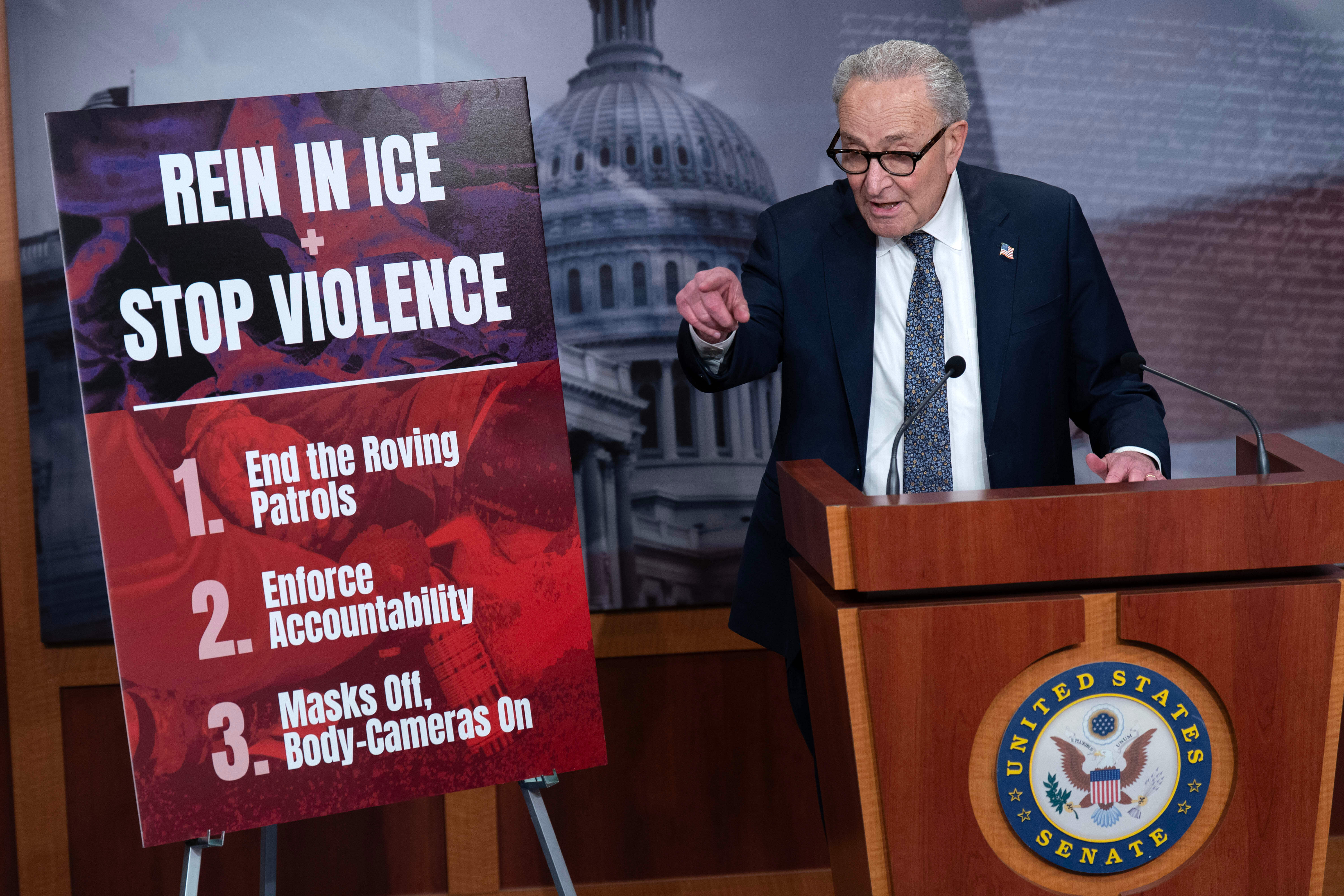
Democrats Condition DHS Funding Extension on Specific ICE Reforms Senate Democratic leader Chuck Schumer announced that Democrats will not support the Homeland Security extension unless it includes provisions such as agent identification, body‑camera use, an enforceable code of conduct, and limits on “roving patrols” and sanctuary‑city policies[1][2][3]. The party also seeks mechanisms for local law‑enforcement cooperation and tighter warrant requirements[3].
House Faces GOP Split as Monday Vote Approaches Speaker Mike Johnson expects a House vote Monday but faces opposition from his right‑flank Republicans who resist any limits on DHS funding[1][2]. Republican senators are divided: Lindsey Graham warns against conceding too much, Rand Paul notes a modest improvement in ICE rhetoric, and Eric Schmitt rejects Democratic “knee‑cap” proposals[1][2]. President Donald Trump met with Senate Democrats to broker the deal, emphasizing the need to avoid a shutdown—a detail reported only by King5[2].
Sources
-
1.
WBNS: Senate Approves Funding Bill Amid Push for ICE Restrictions: Details the 71‑29 Senate vote, the link to Minneapolis deaths, Democratic ICE reform demands, and intra‑Republican debate, noting Graham’s separate data‑privacy bill.
-
2.
King5 (Seattle) – Article 2: Senate approves bipartisan spending bill, sends to House for vote: Highlights the bipartisan vote, Trump’s role in brokering the compromise, and the same ICE oversight conditions, emphasizing the shutdown avoidance narrative.
-
3.
King5 (Seattle) – Article 3: Senate Approves Trump‑Backed Funding Deal, Sends Bill to House: Focuses on the Trump‑backed nature of the deal, the same protester deaths, detailed ICE reform requests, and mentions additional negotiations on sanctuary‑city rules and a data‑privacy bill.
Timeline
Jan 24, 2026 – ICU nurse Alex Pretti and activist Renee Good are shot and killed by federal ICE/Border Patrol agents during a protest in Minneapolis, igniting nationwide outrage and prompting Democrats to demand new immigration‑raid restrictions tied to upcoming funding legislation [1][2][3].
Jan 29, 2026 – President Donald Trump meets with Senate Democrats and brokers a bipartisan spending compromise, urging members to cast a “much needed Bipartisan ‘YES’ vote” to keep the government open and avert a shutdown [3].
Jan 30, 2026 – The Senate votes 71‑29 to approve a bipartisan spending bill that funds most of the government through September and adds a temporary extension for Homeland Security, sending the measure to the House for a vote [1][2][3].
Jan 30, 2026 – Senate Democratic leader Chuck Schumer declares the nation “reaching a breaking point” and ties the Homeland Security extension to ICE reforms, demanding agents remove masks, wear body cameras, show identification and follow an enforceable code of conduct [2][3].
Jan 30, 2026 – Republican senators voice split reactions: Lindsey Graham warns GOP not to concede too much, Rand Paul notes a modest improvement in ICE rhetoric, and Eric Schmitt declares there is “no way in hell” Democrats will be allowed to curb deportations in exchange for funding [1][2].
Jan 30, 2026 – House Speaker Mike Johnson tells GOP colleagues he expects a House vote on Monday (Feb 3) despite right‑flank opposition to any Homeland Security funding limits, making Democratic votes crucial for passage [1][2].
Jan 30, 2026 – Senate Majority Leader John Thune agrees to consider Graham’s separate data‑privacy bill that would let groups sue over unauthorized data access, a response to the Arctic Frost investigation of the Jan. 6 attack [1].
Jan 30, 2026 – Democrats also press for sanctuary‑city rules and an end to “roving patrols,” seeking tighter warrant requirements and local‑law‑enforcement coordination as part of the ICE oversight negotiations [2].
Feb 1‑2, 2026 – If the House does not act by Monday, a partial government shutdown looms over the weekend, threatening disruption of non‑essential services while Congress debates the ICE reforms [1][2].
Feb 3, 2026 – The House is slated to vote on the spending bill, with the outcome determining whether the government remains funded through September and whether the demanded ICE oversight provisions become law [1][2].