NASA Alerts to Untracked 140‑Metre Asteroids Threatening Regional Impact Risk
Updated (10 articles)

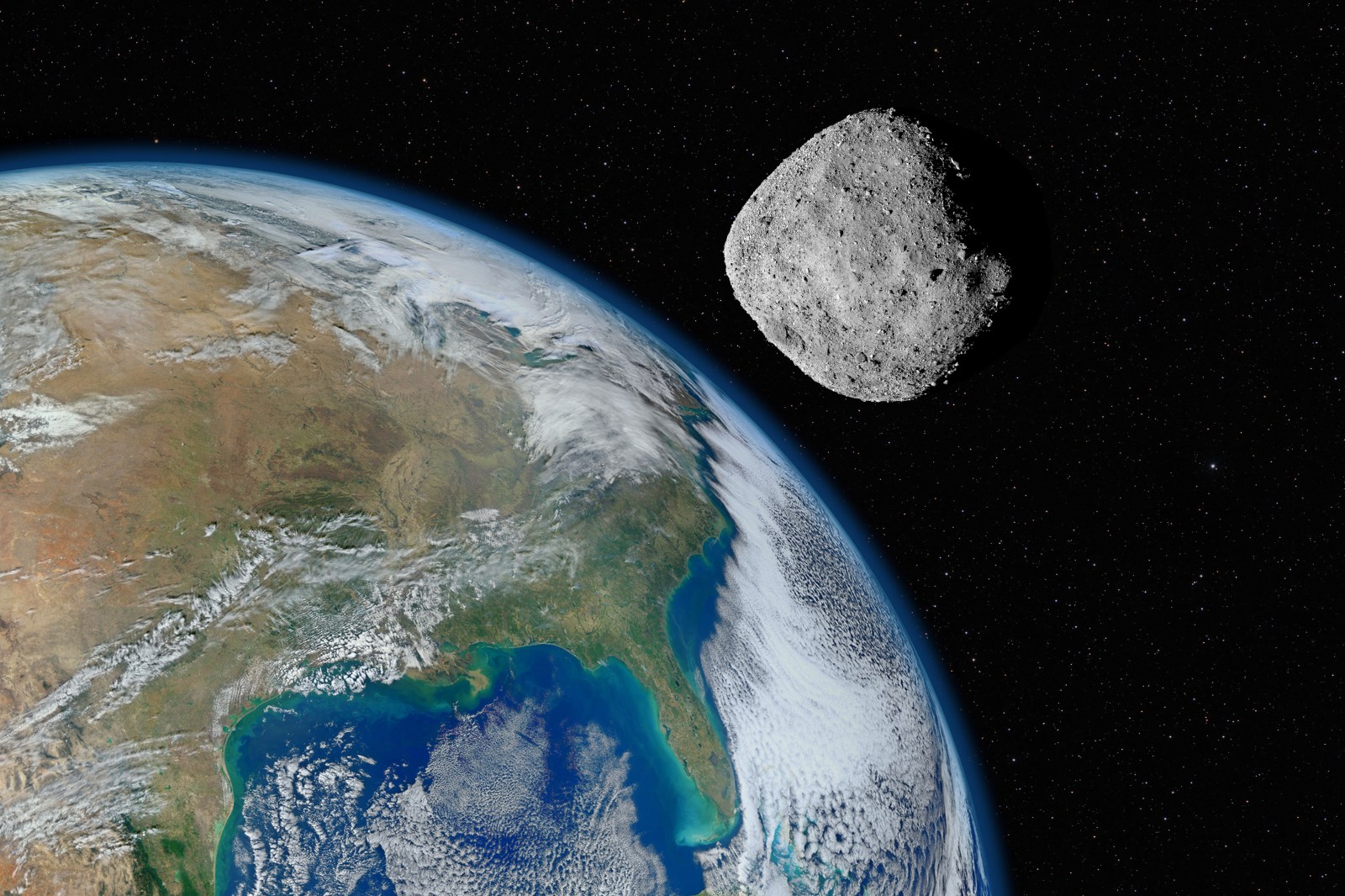

Undetected 140‑Metre Asteroids Pose Regional Damage Risk NASA estimates roughly 25,000 asteroids about 140 m across exist, yet only about 40 % have been surveyed, leaving many hidden from detection [1]. These bodies can cause regional devastation if they strike, and even the most powerful ground‑based telescopes often miss them [1]. The agency stresses that while larger, well‑tracked objects pose less immediate danger, the unknown medium‑sized population remains a significant concern [1].
NASA Tracks Multiple Small Near‑Earth Objects This Week On 17 February 2026, car‑sized asteroid 2026 CR2 (≈9.7 ft) will zip past Earth at 12,616 mph, coming within 84,800 miles [2]. In the same week NASA will monitor larger bodies: stadium‑sized 2026 BX4 at 1.83 million miles, airplane‑sized 2026 AJ17 at 4.14 million miles, 2026 CU at 1.29 million miles, and 110‑ft 2026 CA2 at 2.63 million miles [2]. Impacts from objects up to 30 ft occur roughly every decade, producing bright fireballs and occasional window damage but no major harm [2].
2024 YR4 Impact Odds Revised From 3.1% to Negligible Early 2025 calculations gave the 174‑220‑ft asteroid 2024 YR4 a 3.1 % chance of hitting Earth in 2032, the highest probability ever recorded for an object of its size [1][2]. Updated orbital models have since reduced the Earth‑impact risk to effectively zero, though a possible Moon impact in December 2032 remains under consideration [1][2]. The asteroid is currently too distant for direct observation, with a planned re‑examination in 2028 [1][2].
Potentially Hazardous Asteroid Label Reflects Centuries‑Long Threat The “potentially hazardous asteroid” designation applies to bodies larger than 460 ft that approach within 4.6 million miles of Earth [1]. CNEOS manager Paul Chodas explains the label focuses on long‑term orbital evolution over centuries rather than imminent danger [1]. Consequently, PHAs constitute a small subset of near‑Earth objects whose future paths could intersect Earth far in the future [1].
Global Volunteer Network Enhances Near‑Earth Object Surveillance Amateur astronomers and professional observatories worldwide submit observations to the Minor Planet Center, feeding NASA’s Small Bodies Node [2]. The Planetary Defense Coordination Office and the Center for Near Earth Object Studies use these data to refine trajectories and assess risk [1][2]. Continuous monitoring enables rapid response if any object's risk level changes [1][2].
Sources
-
1.
Newsweek: NASA Warns of Undetected 140‑Metre Asteroids Threatening Earth: Highlights the estimated 25,000 medium‑sized asteroids, the 40 % survey coverage, regional damage potential, and clarifies the PHA definition; published Feb 18, 2026.
-
2.
Newsweek: NASA Tracks Car‑Sized Asteroid 2026 CR2 as It Nears Earth Tomorrow: Details the Feb 17 flyby of 2026 CR2, lists several larger asteroids passing the same week, revisits the 2024 YR4 risk revision, and describes the global observation network; published Feb 16, 2026.
Timeline
Feb 2025 – NASA’s CNEOS reports that asteroid 2024 YR4 shows a 3.1 % chance of impacting Earth in 2032, the highest probability ever recorded for an object of its size, prompting heightened monitoring and risk assessment [2].
Jun 2025 – Astronomers announce the discovery of 2025 MN45, a 0.3‑mile‑wide asteroid rotating once every two minutes, setting a new record for spin rate among the 19 super‑ or ultra‑fast rotators identified that year [4].
Dec 9, 2025 – NASA’s JPL tracks asteroid 2025 XM as it flies within 295,000 miles (1.2 × the Moon’s distance) of Earth at 9,753 mph, noting it is well below the 150‑meter hazardous threshold [9].
Dec 11, 2025 – The 41‑foot rock 2025 XF1 passes Earth at 195,000 miles, traveling about 8,000 mph, while the 41‑foot 2025 XK1 follows a day later at 624,000 miles, both posing no impact risk [10].
Dec 15, 2025 – Asteroid 2025 XX2, a 33‑foot bus‑sized object moving at 18,000 mph, approaches within 580,000 miles of Earth, and NASA continues real‑time trajectory updates [8].
Dec 16, 2025 – The 38‑foot 2025 XN4 whizzes past Earth at a “cosmically slight” 123,000 miles, traveling over 33,000 mph, with no threat identified [8].
Dec 22, 2025 – Bus‑sized 2025 YH3 (32 ft) makes its closest approach at 284,000 miles, while larger companions 2025 YC3 and 2025 XT7 pass within ≈2.4 million miles, all monitored by CNEOS [7].
Jan 12, 2026 – NASA’s JPL confirms bus‑sized 2026 AJ (≈40 ft) will miss Earth by ≈961,000 miles, the nearest of five tracked asteroids that day, including 2026 AO and 2022 GR3 [6].
Jan 15, 2026 – The 41‑foot 2026 AZ2 zips past Earth at ≈217,000 miles and 38,500 mph, while plane‑sized 2026 AR1 passes at ≈702,000 miles; the week’s coverage also highlights the record‑fast 2025 MN45 asteroid discovered earlier [5].
Jan 26, 2026 – NASA monitors 2026 BB4, a 54‑foot rock traveling > 26,200 mph, projected to pass within 844,000 miles, and larger 2026 BJ1 (≈220 ft) at 3.07 million miles; CNEOS manager Paul Chodas explains that “potentially hazardous” labels refer to centuries‑long orbital evolution, not imminent danger [4].
Jan 30, 2026 – Bus‑sized 2022 OC3 (≈24 ft) flies by Earth at 311,000 miles on Jan 31, while scientists assess Bennu’s long‑term 1‑in‑2,700 chance of a 2182 impact, which would cause global climate effects [3]; NASA also plans to resume tracking 2024 YR4 when it returns near Earth in 2028 [3].
Feb 16, 2026 – NASA’s JPL tracks car‑sized 2026 CR2 (≈9.7 ft) for a close flyby on Feb 17 at 84,800 miles and 12,616 mph, alongside larger asteroids 2026 BX4, 2026 AJ17, 2026 CU, and 2026 CA2 passing later that week; the agency notes a global volunteer network feeds observations to the Minor Planet Center [2].
Feb 18, 2026 – NASA warns that ~25,000 medium‑sized (≈140 m) asteroids exist, with only ~40 % surveyed, and that such objects could cause regional damage despite being hard to detect, quoting senior scientist Kelly Fast; Paul Chodas reiterates that “potentially hazardous” designations reflect long‑term orbit evolution rather than short‑term impact risk [1].
All related articles (10 articles)
-
Newsweek: NASA Warns of Undetected 140‑Metre Asteroids Threatening Earth
-
Newsweek: NASA Tracks Car‑Sized Asteroid 2026 CR2 as It Nears Earth Tomorrow
-
Newsweek: NASA Tracks Bus‑Sized Asteroid 2022 OC3 as It Nears Earth
-
Newsweek: NASA Monitors Two Near‑Earth Asteroids, Including 54‑Foot Rock 2026 BB4
-
Newsweek: NASA Tracks Bus-Sized Asteroid 2026 AZ2 and AR1 Near Earth
-
Newsweek: Bus-sized asteroid 2026 AJ to pass Earth among five approaching near-Earth objects
-
Newsweek: NASA tracks bus-sized asteroid 2025 YH3 near Earth as others approach
-
Newsweek: NASA Monitors Multiple Bus‑Sized Asteroids Near Earth This Week
-
Newsweek: NASA Tracks Bus‑Sized Asteroid 2025 XF1 Near Earth This Week
-
Newsweek: NASA Tracks 2025 XM Asteroid Near Earth on Dec 9, 2025
External resources (3 links)
- https://www.jpl.nasa.gov/asteroid-watch/ (cited 4 times)
- https://science.nasa.gov/solar-system/asteroids/2024-yr4-facts/ (cited 1 times)
- https://www.jpl.nasa.gov/asteroid-watch/next-five-approaches/ (cited 1 times)