Kim Jong Un Announces Accelerated Nuclear Build‑Up, Offers Conditional US Talks at Party Congress
Updated (19 articles)
-
 Image: YonhapThis photo, provided by the foreign ministry on Feb. 23, 2026, shows Jeong Yeon-doo, vice minister for diplomatic strategy and intelligence, delivering a speech at the high-level segment of the Conference on Disarmament held on the same day in Geneva, Switzerland. (PHOTO NOT FOR SALE) (Yonhap) Source Full size

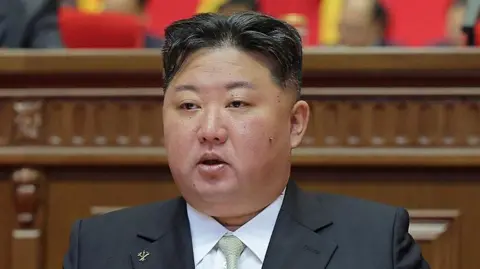
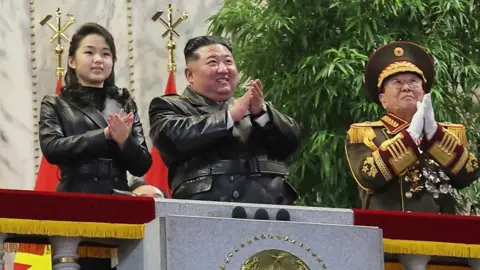
Kim’s Nuclear Expansion Commitment at Ninth Party Congress Kim Jong Un told the Ninth Workers’ Party Congress on 26 February 2026 that North Korea will redouble efforts to increase the number of nuclear warheads and broaden deployment, describing the arsenal as a “reliable guarantee” of regime security [1][2]. The five‑year plan unveiled at the congress calls for more sophisticated land‑ and submarine‑launched ICBMs, AI‑enabled unmanned strike platforms, anti‑satellite weapons, advanced electronic‑warfare systems and higher‑resolution reconnaissance satellites [1]. Analysts note the emphasis on naval nuclear forces to improve second‑strike survivability [1].
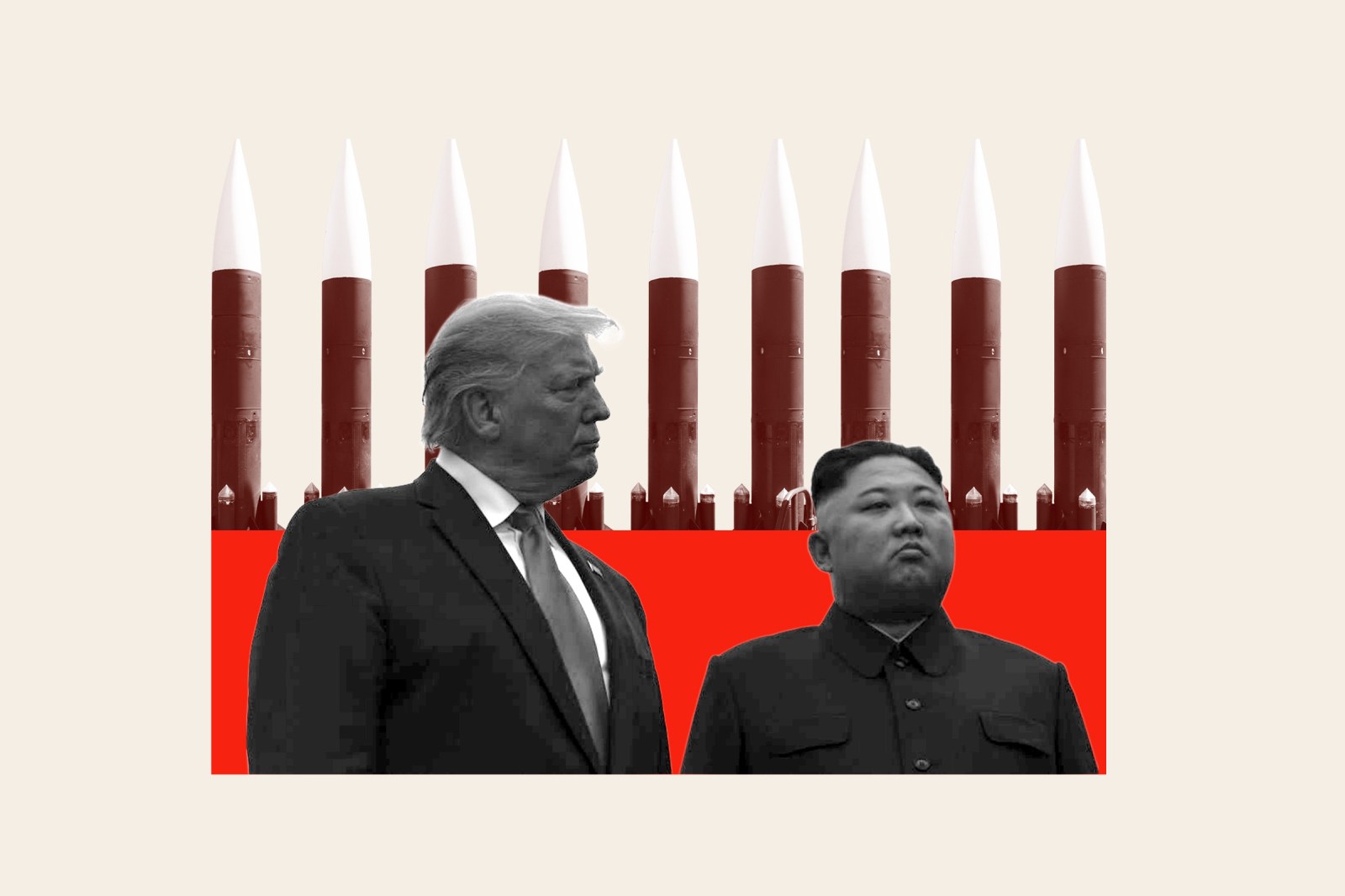
Conditional Offer of US Relations Dependent on Recognition Kim added that the United States could maintain “good relations” only if Washington formally recognizes North Korea’s constitutional right to nuclear weapons and ends its “hostile policy” [1][2]. He reiterated that the nuclear status is “irreversible” and that the DPRK will keep the “strongest possible” posture toward the United States [1]. The conditional overture implies a potential diplomatic opening, though no concrete negotiation framework was presented [1].
South Korea Designated as ‘Most Hostile Entity’ In the same speech, Kim labeled South Korea the “most hostile entity,” permanently excluding Seoul from any compatriot category and warning that perceived threats could trigger retaliation [1][2]. He warned that actions undermining North Korean security might lead to the “complete collapse” of the South [1]. This stark shift underscores Pyongyang’s intent to treat inter‑Korean relations as a rivalry between hostile states [2].
Analysts Diverge on Future US‑Korea Coordination Yonhap quoted observers who stress that the United States must coordinate closely with Seoul to preserve alliance cohesion and prevent Pyongyang from driving a wedge between the allies [1]. By contrast, the BBC cited an AFP‑quoted analyst who interprets Kim’s remarks as a push for US‑only talks, bypassing South Korean mediation [2]. The differing assessments highlight uncertainty over whether future negotiations will involve Seoul or be conducted solely between Washington and Pyongyang.
International Reactions and Diplomatic Overtures South Korea’s vice‑minister for diplomatic strategy, Jeong Yeon‑doo, urged the DPRK at the Geneva Conference on 23 February 2026 to comply with the NPT and relevant UN Security Council resolutions and to cease illegal military cooperation with Russia [3]. Seoul also outlined a phased denuclearization strategy that begins with dialogue‑based halting of nuclear and ballistic programs [3]. Meanwhile, South Korean ambassador Kang Kyung‑hwa hinted that a Trump‑Kim summit could be arranged in Beijing alongside a Trump‑Xi meeting, though no official confirmation exists [1].
Sources
-
1.
Yonhap: Kim Jong‑un Vows Faster Nuclear Buildup While Offering Conditional U.S. Diplomacy: details accelerated nuclear plan, five‑year blueprint, hostile South Korea, conditional US overture, possible Trump‑Kim summit, analyst warnings.
-
2.
BBC: Kim Jong Un Calls for Nuclear Expansion, Offers Conditional US Rapprochement: repeats nuclear expansion, US respect condition, hostile South Korea, analyst on US‑only talks, SIPRI warhead estimate, reference to Trump’s 2025 roadmap.
-
3.
Yonhap: South Korea Urges North Korea to Honor UN Resolutions and Resume Talks: reports Jeong Yeon‑doo’s appeal at Geneva, demand for NPT compliance, criticism of DPRK‑Russia cooperation, phased denuclearization plan, note of North Korea’s silence.
-
4.
Newsweek: Trump’s Iran Pressure Meets North Korea’s Nuclear Shield: describes Trump’s Iran campaign, NK’s deterrent status, deepening Russia ties, sanctions limits, expert view on deterrence, US denuclearization stance.
Timeline
June 2024 – North Korea and Russia sign a mutual‑defence pact, the first formal agreement since the 1961 China treaty, and deploy roughly 10,000 Korean People’s Army personnel to fight in Ukraine, deepening Pyongyang’s military ties with Moscow[2].
Dec 3, 2025 – South Korean Foreign Minister Cho Hyun delivers video remarks at a Washington forum, stressing that diplomatic engagement with North Korea must accompany deterrence and calling for a US‑South Korea‑Japan framework to manage Russian and Chinese influence[19].
Dec 5, 2025 – The United States releases its National Security Strategy without any mention of North Korea or denuclearization, a departure from prior strategies that signals a possible shift in Washington’s Korean‑Peninsula policy[18].
Dec 7, 2025 – China’s security white paper also removes language on Korean‑peninsula denuclearization, aligning with the U.S. NSS omission and suggesting coordinated great‑power reframing of the issue[18].
Dec 8, 2025 – Acting U.S. Ambassador to South Korea Kevin Kim reaffirms the United States’ commitment to “complete denuclearization” of North Korea despite the NSS silence, and discusses coordination on joint drills and a pending nuclear‑energy pact with Seoul[16].
Dec 9, 2025 – South Korean analysts urge Seoul to accelerate its own deterrence, including fast‑tracking nuclear‑powered submarines, warning that a “Korea‑passing” scenario could leave the peninsula vulnerable if major powers bypass Korean security concerns[15].
Dec 12, 2025 – Seoul and Washington begin regular working‑level talks to coordinate North‑Korea policy, while former diplomat Cho Byung‑jae cautions that dropping denuclearization language could trigger a regional nuclear domino effect[14].
Dec 17, 2025 – Pro‑Pyongyang newspaper Choson Sinbo publishes an editorial highlighting the NSS omission as the most notable aspect of the document and suggesting the United States is moving toward an isolationist “Fortress America” stance[9].
Jan 4, 2026 – Kim Jong Un declares that expanding North Korea’s nuclear capabilities is essential in response to a recent geopolitical crisis, framing the buildup as a core security guarantee for the regime[8].
Jan 24, 2026 – A U.S. defense assessment labels North Korea’s nuclear forces a “clear and present danger” to the American mainland, underscoring heightened U.S. concern over potential attacks[7].
Jan 27, 2026 – Kim announces that the upcoming Workers’ Party Congress will unveil new measures to strengthen the country’s nuclear deterrent, signaling a forthcoming escalation in its weapons program[6].
Feb 6, 2026 – The U.S. State Department reaffirms its extended nuclear‑deterrence guarantee to South Korea and praises President Trump as a “president of peace,” even as the latest National Security Strategy omits explicit deterrence language; Trump also threatens higher tariffs on Korean goods if trade talks stall[5].
Feb 20, 2026 – President Trump intensifies military pressure on Iran, prompting North Korea to watch from behind its expanding nuclear shield; analysts note Pyongyang’s deterrent now rivals great‑power arsenals and that its deepening military ties with Russia include a mutual‑defence pact signed in June 2024[2].
Feb 24, 2026 – South Korean nuclear envoy Jeong Yeon‑doo urges North Korea to comply with UN Security Council resolutions, halt illegal military cooperation with Russia, and return to full NPT compliance, while Seoul outlines a phased denuclearization strategy despite Pyongyang’s silence[4].
Feb 26, 2026 – At the Ninth Workers’ Party Congress, Kim Jong Un vows to accelerate nuclear weapons production, expand deployment reach, and unveil a five‑year plan featuring AI‑enabled strike platforms, anti‑satellite weapons, and a stronger naval nuclear force; he adds that good U.S.–North Korea relations become possible only if Washington recognises Pyongyang’s constitutional nuclear status and ends its “hostile policy”[1][3].
April 2026 (planned) – South Korean ambassador Kang Kyung‑hwa hints that a Trump‑Kim summit could be arranged in Beijing alongside a Trump‑Xi meeting slated for April, suggesting a possible high‑level diplomatic breakthrough despite Kim’s conditional overture[3].
April 5, 2026 (planned) – The Pyongyang International Marathon is scheduled for April 5, with all 500 participant slots sold out within hours, reflecting North Korea’s continued domestic propaganda efforts amid its nuclear escalation[12].
Dive deeper (16 sub-stories)
-
Yonhap: Kim Jong‑un Vows Faster Nuclear Buildup While Offering Conditional U.S. Diplomacy
-
BBC: Kim Jong Un Calls for Nuclear Expansion, Offers Conditional US Rapprochement
-
Yonhap: South Korea Urges North Korea to Honor UN Resolutions and Resume Talks
-
Newsweek: Trump’s Iran Pressure Meets North Korea’s Nuclear Shield
-
Yonhap: U.S. State Department Reaffirms Nuclear Deterrence for South Korea Amid Trade Tensions
-
Yonhap: Kim Announces Upcoming Nuclear Deterrent Plans at Party Congress
-
Yonhap: North Korea’s Nuclear Forces Deemed “Clear and Present” Threat to U.S. Homeland
-
Yonhap: Kim says need to advance North Korea's nuclear capabilities amid geopolitical crisis
-
Pro‑Pyongyang Newspaper Flags North Korea Omission in U.S. December 2025 National Security Strategy
(2 articles)
-
Yonhap: Key developments on North Korea this week
-
Yonhap: Summary of external news of North Korea this week
-
U.S. NSS and China White Paper Exclude North Korea Denuclearization, Seoul Rethinks Deterrence
(2 articles)
-
Yonhap: Ex-Seoul diplomat cautions against dropping denuclearization language in NK policy
-
U.S. Envoy Kevin Kim Reaffirms Complete Denuclearization as NSS Excludes North Korea
(2 articles)
-
Yonhap: North Korea denuclearization language vanishes from US, Chinese security documents
-
Yonhap: South Korean FM Cho Emphasizes Diplomacy with North Korea Amid Deterrence Efforts
All related articles (19 articles)
-
Yonhap: Kim Jong‑un Vows Faster Nuclear Buildup While Offering Conditional U.S. Diplomacy
-
BBC: Kim Jong Un Calls for Nuclear Expansion, Offers Conditional US Rapprochement
-
Yonhap: South Korea Urges North Korea to Honor UN Resolutions and Resume Talks
-
Newsweek: Trump’s Iran Pressure Meets North Korea’s Nuclear Shield
-
Yonhap: U.S. State Department Reaffirms Nuclear Deterrence for South Korea Amid Trade Tensions
-
Yonhap: Kim Announces Upcoming Nuclear Deterrent Plans at Party Congress
-
Yonhap: North Korea’s Nuclear Forces Deemed “Clear and Present” Threat to U.S. Homeland
-
Yonhap: Kim says need to advance North Korea's nuclear capabilities amid geopolitical crisis
-
Yonhap: Pro-Pyongyang paper flags omission of North Korea in US security strategy
-
Yonhap: Pro-Pyongyang paper notes North Korea omission from US security strategy
-
Yonhap: Key developments on North Korea this week
-
Yonhap: Summary of external news of North Korea this week
-
Yonhap: North Korea denuclearization omitted from U.S. NSS prompts Seoul to recalibrate strategy
-
Yonhap: Nuclear void: US and China bypass denuclearization on Korea, Seoul urged to rethink deterrence
-
Yonhap: Ex-Seoul diplomat cautions against dropping denuclearization language in NK policy
-
Yonhap: U.S. envoy keeps denuclearization stance as NSS omits North Korea mention
-
Yonhap: U.S. envoy reaffirms “complete denuclearization” of North Korea amid its omission in new U.S. security strategy
-
Yonhap: North Korea denuclearization language vanishes from US, Chinese security documents
-
Yonhap: South Korean FM Cho Emphasizes Diplomacy with North Korea Amid Deterrence Efforts