Trump Escalates Trade Tension with 25% Tariff on South Korean Exports
Updated (2 articles)
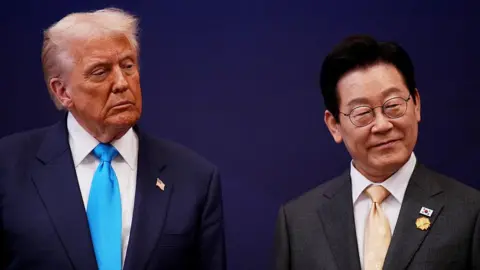
Trump Announces Immediate 25% Tariff Increase on South Korean Goods President Donald Trump posted on Truth Social that the United States will raise tariffs on South Korean automobiles, lumber, pharmaceuticals and other goods from 15% to 25% [1][2]. He gave no implementation date and the White House declined to comment [2]. The rule places the tax burden on U.S. importers rather than South Korean exporters [1].
Seoul Demands Urgent Talks While Maintaining Calm Diplomatic Tone South Korea said it had not received an official notice and demanded immediate discussions with Washington [1][2]. Industry Minister Kim Jung‑kwan will travel to meet Commerce Secretary Howard Lutnick after a Canada trip, while the trade minister has advanced a U.S. visit to meet Trade Representative Jamieson Greer [1][2]. Presidential spokesperson Kang Yoo‑jung pledged a calm response and swift diplomatic outreach [2].
Korean Auto Shares Plunge and Kospi Rebounds Within Trading Day Hyundai and Kia shares dropped up to 6% after the announcement, though they closed about 1% lower by market close [1][2]. The Kospi index fell more than 1% early in the session but finished up 2.7%, erasing early losses [1][2]. Analysts noted investor skepticism about the tariff’s enforceability, citing Trump’s recent reversals on European tariffs [1].
Existing Trade Pact and $350 B Investment Pledge Now at Risk The October agreement committed South Korea to invest $350 billion in the United States, with a tariff cut contingent on the start of a domestic approval process [1]. That deal, along with a July 2025 pact that capped tariffs at 10%, is now jeopardized by the 25% increase, putting $132 billion of 2024 U.S. imports at risk [2]. South Korea exported $123 billion to the U.S. last year, including $30 billion in automobiles [1]. A pending Supreme Court case could restrict the president’s authority to impose country‑specific tariffs, potentially blocking immediate implementation [2].
Sources
-
1.
BBC: Trump Raises South Korea Tariffs to 25%: outlines Trump’s social‑media announcement, the 15%‑to‑25% hike on autos, lumber, pharma, the $123 bn export figure, market dip and rebound, the $350 bn investment pledge, and notes that tariffs will be borne by U.S. importers.
-
2.
CNN: Trump raises South Korean tariffs to 25% amid trade dispute: emphasizes Seoul’s calm diplomatic outreach, the accelerated meetings with U.S. trade officials, the sharp fall in Hyundai shares and Kospi, the jeopardized July 2025 tariff‑cap deal, and the pending Supreme Court case that could limit Trump’s tariff authority.
Timeline
2024 – South Korea ships $123 billion of goods to the United States, becoming Washington’s second‑largest export market after China, with automobile exports alone worth about $30 billion. [1]
July 2025 – The United States and South Korea sign a trade agreement that caps tariffs at 10% on automobiles and grants preferential rates, protecting roughly $132 billion of 2024 U.S. imports from South Korea. [2]
Oct 2025 – The October deal includes a $350 billion investment pledge from South Korea into the United States, part of which is earmarked for shipbuilding, expanding the economic scope of the trade framework. [1]
Nov 26, 2025 – South Korean lawmakers receive a follow‑up agreement that ties U.S. tariff reductions to the start of South Korea’s domestic approval process for the pledged investments; the bill is slated for National Assembly passage in February 2026. [1]
Jan 26, 2026 – President Donald Trump posts on Truth Social that he raises South Korean tariffs from 15% to 25% on autos, lumber, pharmaceuticals and “all other Reciprocal TARIFFS,” saying Seoul “has not lived up” to the trade deal reached last year. [1][2]
Jan 26, 2026 – The Kospi index falls more than 1% before rebounding, while Hyundai Motor shares drop over 2.2% in early trading, reflecting investor anxiety over the sudden tariff hike. [2]
Jan 26, 2026 – South Korean Industry Minister Kim Jung‑kwan, then in Canada, promises to meet U.S. Commerce Secretary Howard Lutnick “as soon as possible” to discuss the tariff notice; presidential spokesperson Kang Yoo‑jung pledges a “calm response” and fast diplomatic outreach. [1][2]
Jan 27, 2026 – Analysts express skepticism that the tariff increase will be implemented, noting Trump’s recent reversal on extra European tariffs and emphasizing that the new rule would make U.S. importers, not exporters, bear the 25% tax. [1]
Feb 2026 (expected) – The South Korean National Assembly is expected to pass the October investment agreement, which would trigger the promised U.S. tariff cuts under the original deal. [1]
2026 (pending) – A Supreme Court case scheduled for 2026 will decide whether the president has legal authority to impose sweeping, country‑specific tariffs; a ruling against the administration could block the 25% rates. [2]