Bomb Cyclone Aftermath: Millions Without Power, Travel Chaos, New Storm Looms
Updated (6 articles)
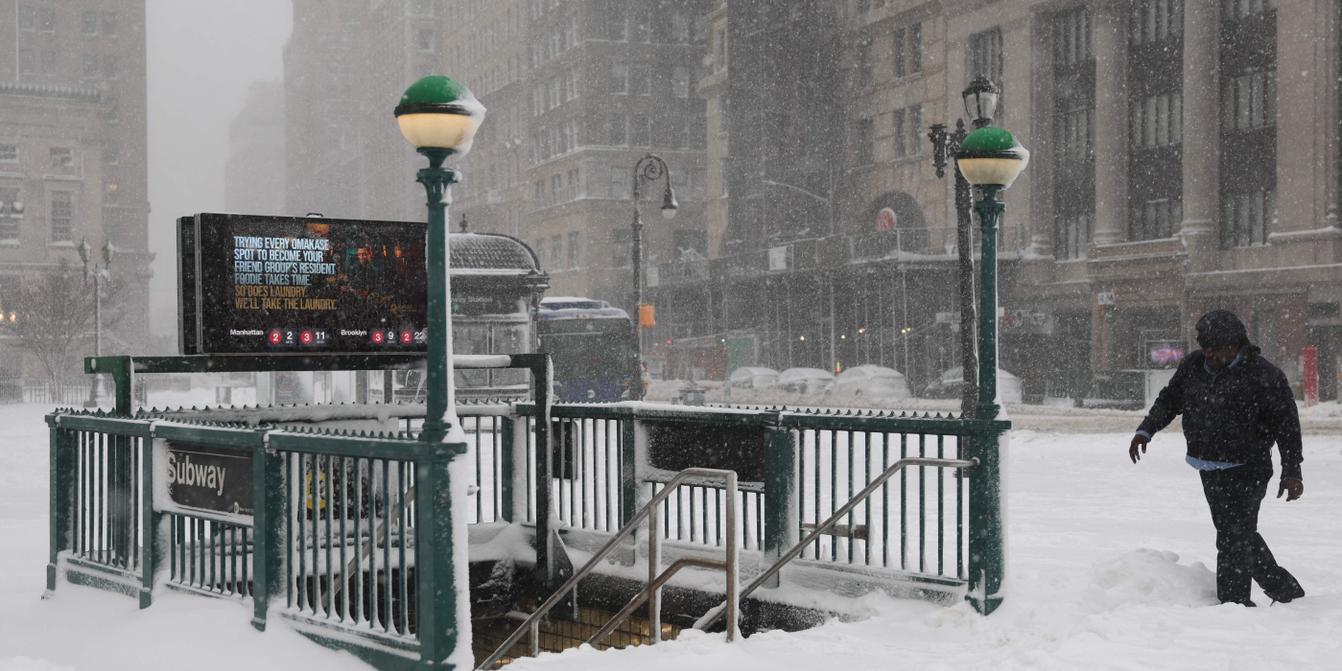
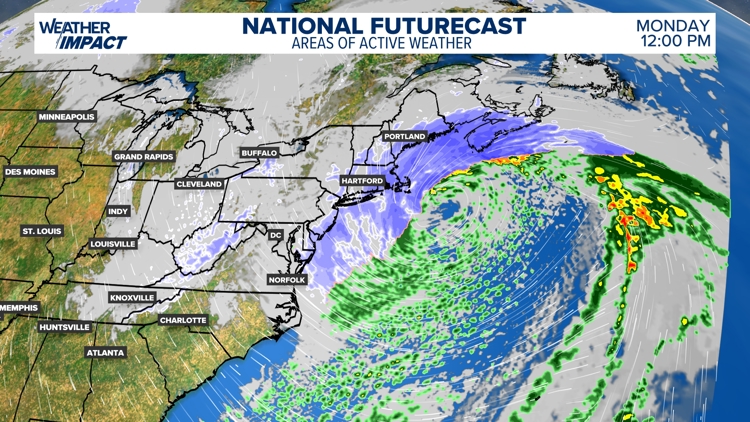
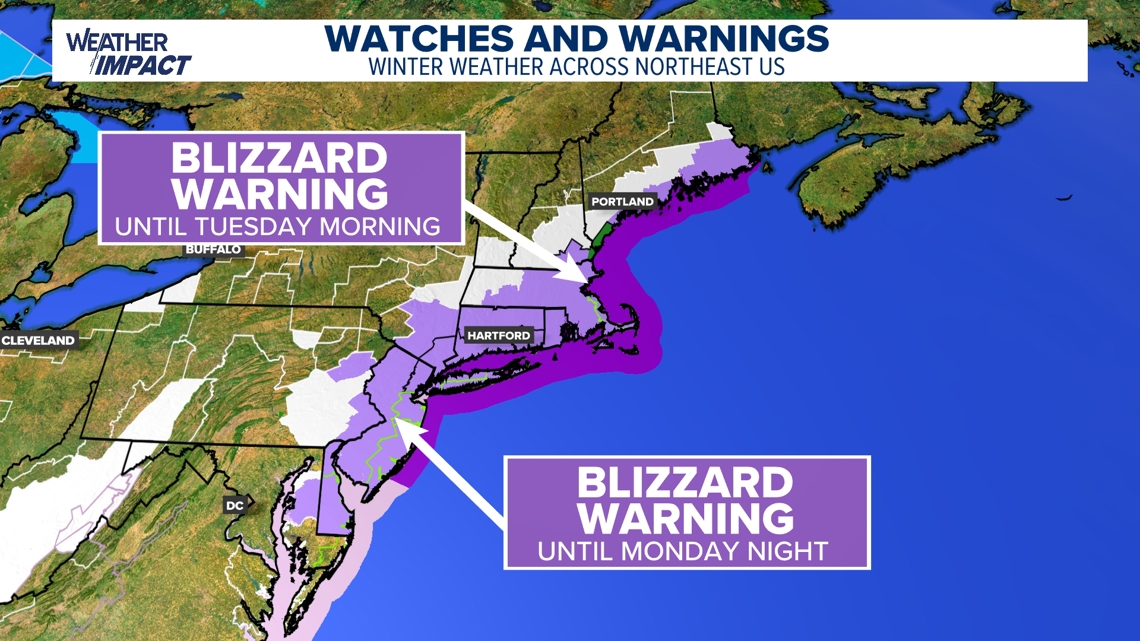
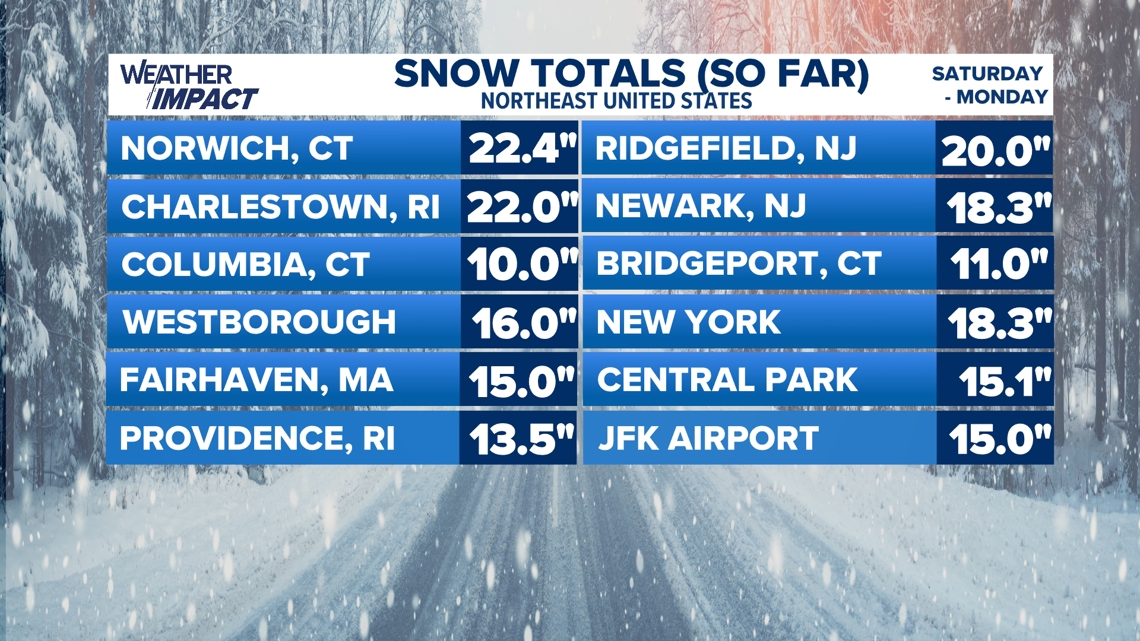
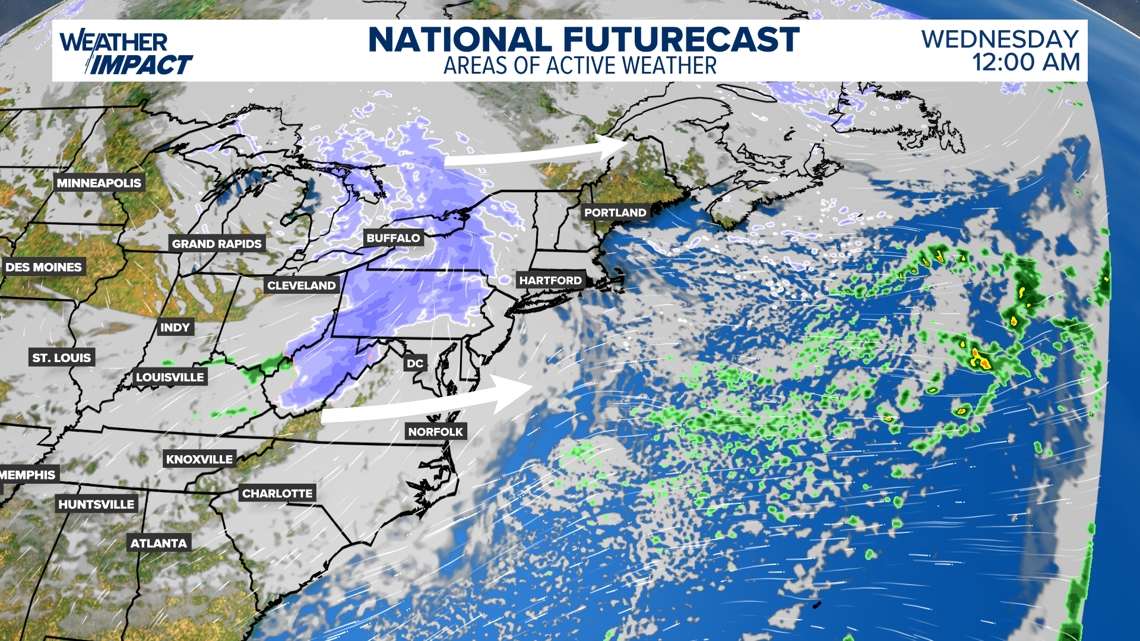

Record‑breaking bomb cyclone slammed the Northeast with historic snowfall and winds. The system reached bomb‑cyclone status early Monday, producing hurricane‑force gusts and a pressure drop of 24 mb in 24 hours, and dumped up to three feet of snow in parts of Rhode Island and Massachusetts, with Providence logging a record 37.9 inches [1][2][3][4].
Power outages crippled hundreds of thousands of homes and businesses. More than 600,000 properties lost electricity, including over 225,000 customers in southeastern Massachusetts and 85 % of Cape Cod customers, while Le Monde reported 570,000 households without power across eight states [1][2][3][5].
Travel networks ground thousands of flights and suspend rail service. Flight cancellations topped 10,000 nationwide, with 5,706 on Feb 24 and an additional 2,200 on Feb 25, while Amtrak and the Long Island Rail Road halted or limited service; the Boston Globe skipped its Tuesday print edition for the first time in 154 years [1][2][3][4].
Schools and municipal services faced mixed responses amid the storm. New York City kept schools open for 900,000 students, achieving 63 % attendance, whereas most other districts closed; the UN headquarters and many municipal offices remained shut, and DoorDash halted NYC deliveries [1][2][4][5].
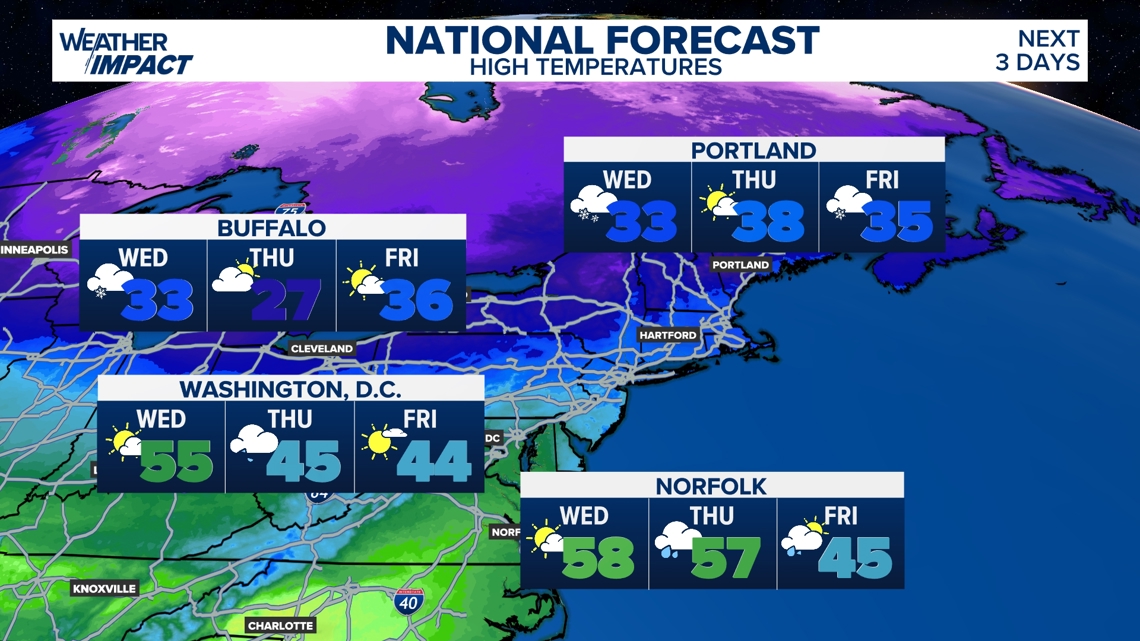
Forecasters warn a second clipper system will add rain and modest snow on Wednesday. The National Weather Service expects a milder low‑pressure system to bring less than two inches of snow to most areas, with higher amounts in the higher elevations of Pennsylvania, New York and New England [1][2][3][6].
Sources
-
1.
AP: Northeast Snowstorm Leaves Millions Digging Out, Schools Open, Power Outages Persist – Details record snowfall, school attendance, massive power outages, travel cancellations, and a forthcoming milder storm .
-
2.
CNN: Northeast grapples with power outages, travel chaos after historic bomb cyclone – Emphasizes lingering outages, hurricane‑force winds, record snowfall in Providence, and a secondary low‑pressure system .
-
3.
BBC: East Coast Nor'easter Triggers Record Snow, Travel Bans and 5,700 Flight Cancellations – Highlights state snowfall records, travel bans, 600,000 power outages, and police snowball incident .
-
4.
CNN: Northeast bomb cyclone weakens, travel bans ease after record snowfall – Focuses on the cyclone’s exit, flight cancellations, LIRR resumption, and Boston Globe’s print skip .
-
5.
Le Monde: Northeast U.S. hit by rare snowstorm, 40 million face extreme conditions – Reports emergency declarations, 570,000 households without power, UN headquarters closure, and no storm‑related deaths .
-
6.
King5: Nor'easter Slams Northeast US, Triggering Blizzard, Travel Chaos and Power Outages – Describes bomb cyclogenesis, snowfall rates, widespread outages, and a second snowfall wave forecast .
Related Tickers
Timeline
Jan 2026 – A severe cold wave earlier in the month kills 18 people in New York and roughly 100 nationwide, highlighting regional vulnerability before the February storm hits [6].
Feb 23, 2026 – A rare nor’easter undergoes bomb‑cyclogenesis, dropping 24 mb in 24 hours and dumping up to 90 cm (3 ft) of snow with 90 km/h winds across the Northeast, prompting eight governors to declare emergencies and causing 570,000 households to lose power—including 285,000 in Massachusetts [6]; Mayor Zohran Mamdani says the worst of the storm has passed and invites children to “pelt me with snowballs” [6]; FlightAware logs more than 6,000 flight cancellations by mid‑afternoon, chiefly at New York, Boston and Philadelphia airports [6]; Police Commissioner Jessica Tisch calls officers pelted with snowballs “disgraceful” and “criminal” [1]; Providence Airport records a historic 83 cm, potentially reaching 90 cm [6].
Feb 23, 2026 (evening) – Rhode Island, Connecticut and Massachusetts impose non‑essential‑vehicle travel bans as white‑out conditions worsen, with Governor Maura Healey warning that assistance will struggle to reach stranded motorists and imposing a $500 fine for violations [3]; New York City issues a hazardous travel advisory while later lifting its vehicle ban [3].
Feb 24, 2026 – The bomb cyclone peaks with hurricane‑force gusts, delivering a historic 37.9 in (96 cm) snowfall in Providence and over 30 in in New York City while up to three feet accumulate in parts of Rhode Island and Massachusetts [3][2]; power outages affect more than 600,000 properties, including 300,000 in Massachusetts and 85 % of Cape Cod customers [1]; flight cancellations top 10,000 nationwide, with 98 % of LaGuardia and 91 % of JFK flights scrubbed and 2,200 cancellations recorded on Tuesday alone [2]; the Boston Globe skips its Tuesday print edition for the first time in 154 years and the Long Island Rail Road begins limited service at 4 a.m. Tuesday as crews clear snow [3]; Police Commissioner Jessica Tisch continues to label the snowball assaults on officers “disgraceful” and “criminal” [1].
Feb 25, 2026 – Travel bans begin to ease as Connecticut lifts its commercial‑vehicle restriction, New Jersey drops speed limits, while Massachusetts keeps a non‑essential‑vehicle ban in four counties, and New York City schools reopen with 63 % attendance despite deep drifts [3][4]; power outages persist, with over 225,000 customers still without electricity, 190,000 of them in southeastern Massachusetts and more than 100,000 Cape Cod residents in the dark [2]; officials warn an Alberta‑Clipper system will bring modest snow, rain and high winds to the Great Lakes and Northeast on Tuesday‑Wednesday, and a secondary low‑pressure system may add less than two inches of snow to most areas [2]; the National Weather Service also forecasts a milder Great Lakes‑origin storm later in the week, adding 1–5 inches of mixed precipitation across the region [5].
External resources (27 links)
- https://dot.nj.gov/transportation/uploads/comm/news/details/comm_np_20260223_160711_CommercialVehicleTravelRestrictionand35mphrestrictionLIFTEDat5pmtodayMonFeb23.pdf (cited 2 times)
- https://news.delaware.gov/2026/02/23/level-1-driving-warning-lifted-for-new-castle-county/ (cited 2 times)
- https://portal.ct.gov/governor/news/press-releases/2026/02-2026/governor-lamont-terminates-emergency-order-prohibiting-commercial-vehicle-travel?language=en_US (cited 2 times)
- https://suffolkcountyny.gov/News/ArtMID/583/ArticleID/14489 (cited 2 times)
- https://www.mass.gov/doc/south-coast-travel-ban-eo/download (cited 2 times)
- https://www.facebook.com/photo/?fbid=1315737917257130&set=a.647464897417772 (cited 2 times)
- https://x.com/BostonGlobe/status/2026100362227106064 (cited 2 times)
- https://x.com/CityOfBoston/status/2026081639265165485?s=20 (cited 2 times)
- https://x.com/LIRR/status/2026072966618816783 (cited 2 times)
- https://x.com/MassDOT/status/2026064385169330452?s=20 (cited 2 times)
- https://x.com/NJTRANSIT/status/2026145124489499092 (cited 2 times)
- https://x.com/NYCMayor/status/2026027180665315733?s=20 (cited 2 times)
- https://x.com/NYPDPC/status/2026128921905803638 (cited 2 times)
- https://x.com/NewHampshireDOT/status/2025909859078611198 (cited 2 times)
- https://x.com/sidetalknyc?lang=en (cited 2 times)
- https://x.com/NJTRANSIT/status/2026274212659294438 (cited 1 times)
- https://x.com/PhilaOEM/status/2026252801303888135 (cited 1 times)
- https://x.com/andrewcuomo/status/2026106563744637346 (cited 1 times)
- https://x.com/nycemergencymgt/status/2026266485602041915 (cited 1 times)
- https://www.flightaware.com/live/cancelled/ (cited 4 times)
- https://poweroutage.us/ (cited 3 times)
- https://www.bostonglobe.com/2026/02/23/business/boston-globe-not-print-noreaster-snow/?event=event12 (cited 2 times)
- https://www.flightaware.com/live/cancelled/tomorrow (cited 2 times)
- https://www.westchestergov.com/all-press-releases/westchester-county-travel-ban-extended-until-6-p-m-monday-february-23 (cited 2 times)
- https://bit.ly/4b5Ten2 (cited 1 times)
- https://infohub.nyced.org/reports/students-and-schools/school-quality/information-and-data-overview/end-of-year-attendance-and-chronic-absenteeism-data (cited 1 times)
- https://www.flightaware.com/live/cancelled/today (cited 1 times)