U.S. Intelligence Says 2020 Chinese Test Signals New Nuclear Arsenal, Spurs US Testing Debate
Updated (6 articles)
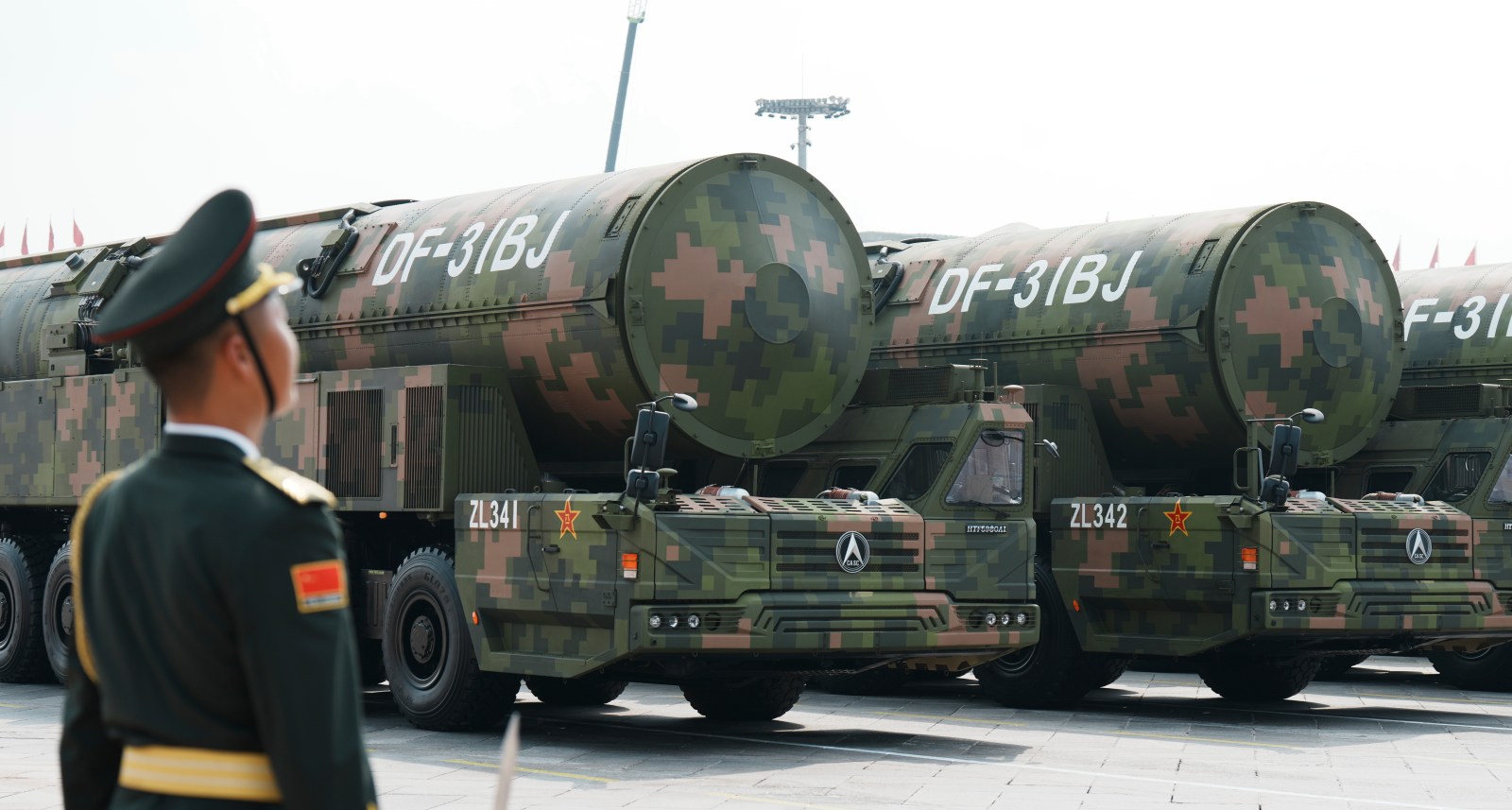
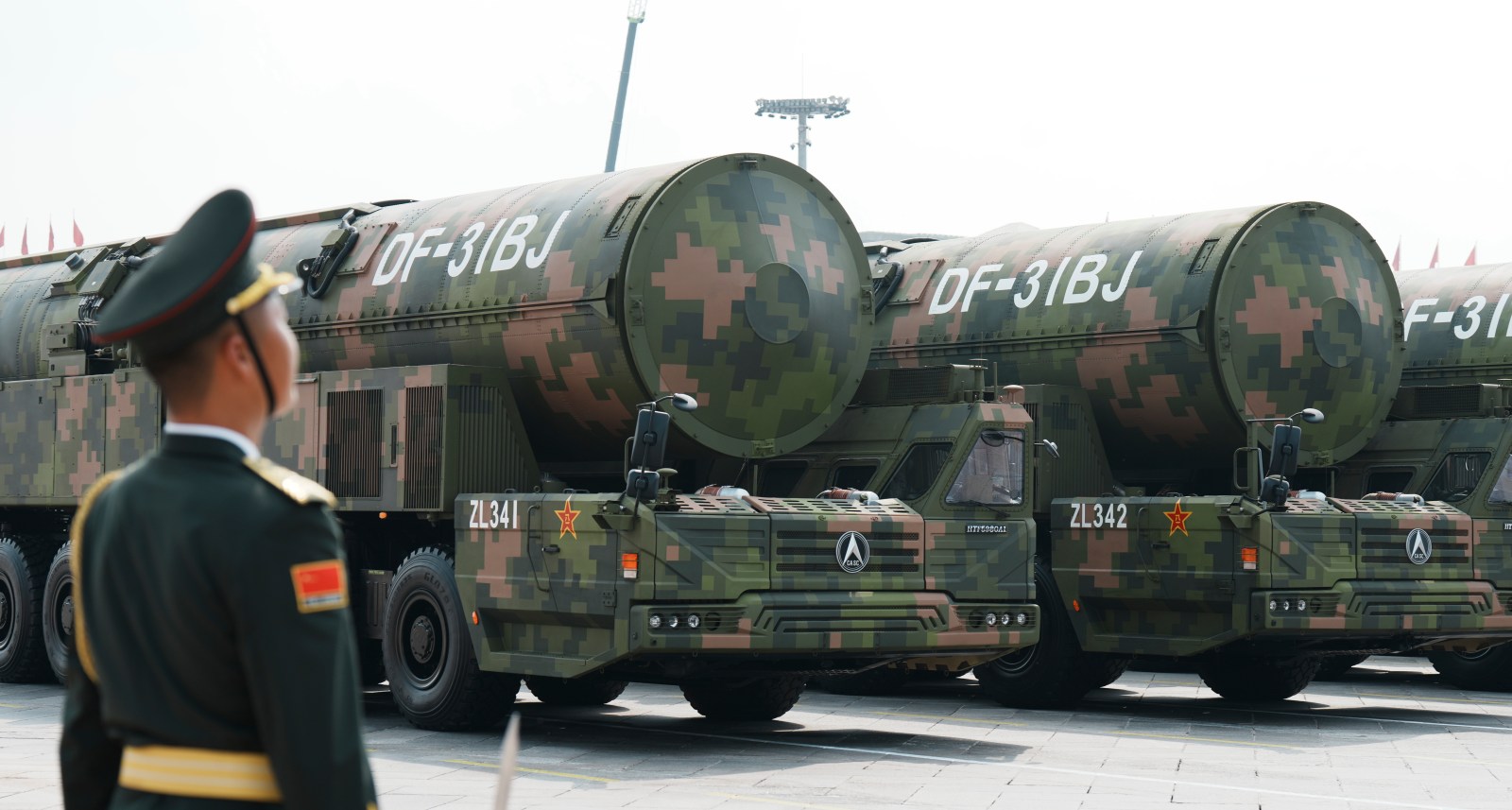
June 2020 Seismic Event Linked to Lop Nur Test A magnitude‑2.75 seismic signal recorded by the International Monitoring System station in Makanchi, Kazakhstan on 22 June 2020 matches the location of China’s Lop Nur test site, and U.S. Assistant Secretary of State Christopher Yeaw described the waveform as consistent with a nuclear explosion rather than mining or an earthquake [1][2][3]. The CTBTO’s Executive Secretary Robert Floyd noted the event is far below the 551‑ton TNT detection threshold, making a definitive attribution impossible [3]. Chinese embassy spokesperson Liu Pengyu dismissed the claim as political manipulation [1][3].
U.S. Intelligence Interprets Test as Moratorium Violation U.S. analysts conclude the 2020 blast broke China’s self‑imposed 1996 nuclear‑test moratorium, indicating a covert drive toward a modernized arsenal that includes next‑generation warheads capable of carrying multiple miniaturized payloads [1]. Intelligence reports also cite development of low‑yield tactical nuclear weapons intended for regional scenarios such as defending Taiwan [1]. Satellite imagery reviewed by CSIS found no conclusive visual evidence of a test tunnel, leaving some uncertainty about the exact underground location [2].
Pentagon Projects Rapid Growth of Chinese Warhead Stockpile Pentagon estimates place China’s nuclear stockpile at over 600 warheads today, with a trajectory toward more than 1,000 by 2030, reflecting an accelerated expansion compared with earlier assessments [2][3]. The projected increase underscores concerns that Beijing could acquire novel coercive options in crises, prompting U.S. defense planners to reassess strategic postures [1]. Both the United States and China remain signatories to the Comprehensive Test Ban Treaty but have not ratified it, preserving a voluntary testing moratorium [2][3].
Washington Considers Resuming Nuclear Testing A senior U.S. official warned that the alleged Chinese test creates an “intolerable disadvantage” for the United States, arguing that a resumption of underground testing may be required to maintain warhead reliability [2]. Former President Trump previously urged the Pentagon to adopt an “equal basis” testing approach before his October meeting with President Xi [2]. The U.S. currently relies on computer simulations for warhead certification, a stance critics say may lag behind China’s emerging capabilities [3].
Chinese and Russian Officials Reject Allegations China’s foreign ministry spokesperson Lin Jian and Russia’s Kremlin spokesman Dmitry Peskov both denied any 2020 nuclear test, labeling the U.S. claims as unfounded political maneuvering [2]. They emphasized continued adherence to the CTBT’s moratorium and called for Washington to reaffirm its commitment to the test‑ban regime [3]. The dispute highlights divergent narratives over compliance with international non‑proliferation norms.
Sources
-
1.
CNN: US Intelligence Links 2020 Chinese Test to New Nuclear Arsenal Drive – Details U.S. intelligence assessment that a covert 2020 test broke China’s moratorium, signals development of next‑gen and tactical warheads, and includes official denials .
-
2.
Newsweek: US Official Details Alleged 2020 Chinese Nuclear Test and Calls for U.S. Testing Resumption – Presents senior official’s disclosure of the test, seismic data, “equal basis” testing argument, CSIS satellite review, and stockpile estimates .
-
3.
The Hindu: U.S. Official Claims China Conducted 2020 Underground Nuclear Test – Covers Yeaw’s testimony on seismic evidence, CTBTO’s caution, Chinese denial, CTBT status, and Pentagon warhead projections .
Related Tickers
Videos (1)
Timeline
1992 – The United States conducts its last underground nuclear test, marking the end of a decades‑long testing program that it now relies on simulations for warhead reliability[6].
1996 – China publicly declares a self‑imposed nuclear‑test moratorium and signs the Comprehensive Nuclear‑Test‑Ban Treaty (CTBT), though the treaty never enters force because key states, including the United States, do not ratify it[3].
1998‑2006 – The previous longest global test‑free interval runs from Pakistan’s 1998 test to North Korea’s first test in 2006, establishing a benchmark for future hiatuses[2].
2006 – North Korea conducts its inaugural nuclear explosion, breaking the post‑Cold‑War testing lull and beginning a series of six tests through 2017[2].
September 3, 2017 – North Korea carries out its most recent nuclear test, the last of its six detonations to date[2].
June 22, 2020 – U.S. intelligence identifies a magnitude‑2.75 seismic event 720 km from China’s Lop Nur site, interpreting the waveform as a covert underground nuclear explosion that employed “decoupling” to mask a yield of only a few hundred tons[1][3].
2022 – The U.S. Department of Defense releases a strategy warning that China’s expanding arsenal could give it novel coercive options in regional crises[1].
2023 – Russia revokes its ratification of the CTBT, citing an “imbalance” with the United States and signaling a willingness to resume testing if other powers do so[5].
2024 – A Defense Intelligence Agency (DIA) report warns that China’s modernization program aims to field a completely new nuclear force, including multiple‑warhead missiles and low‑yield tactical weapons[1].
October 31, 2025 – President Donald Trump posts on Truth Social that the Department of War will “begin nuclear weapons testing immediately,” framing the move as a response to rival programs[5].
October 2025 – Trump plans an “equal‑basis” testing discussion with Chinese President Xi Jinping, echoing his earlier call for the United States to match peer‑state testing activities[3].
November 10, 2025 – At a Vienna CTBT meeting, U.S. Chargé d’Affaires Howard Solomon declares that the United States will resume nuclear testing “on an equal basis” with other nuclear powers, citing alleged violations by Russia and China since 2019[4].
December 2, 2025 – The United States and Russia publicly threaten to resume nuclear testing; Putin tells the Security Council that Russia will take reciprocal action if the U.S. or any CTBT signatory conducts a test[5].
December 18, 2025 – Solomon reiterates that low‑yield “supercritical” tests could evade the global monitoring network, and he points to U.S. reports of suspected activity at China’s Lop Nur and Russia’s Novaya Zemlya sites[4].
February 5, 2026 – The New START treaty expires, removing the last major bilateral arms‑control constraint on U.S. and Russian strategic arsenals and prompting U.S. officials to push for a new three‑way treaty with China and Russia[4][6].
January 15, 2026 – The world marks an eight‑year, four‑month, eleven‑day nuclear‑test hiatus—the longest since the 1945 Trinity explosion—while analysts warn that the lapse of New START could trigger rapid deployment of thousands of additional warheads[2].
February 17, 2026 – Assistant Secretary of State Christopher Yeaw tells a Hudson Institute audience that a remote Kazakhstan station recorded a 2.75‑magnitude blast on June 22, 2020, whose waveform “is entirely not consistent with an earthquake” and matches a nuclear detonation signature[6].
February 18, 2026 – A senior U.S. official warns that foregoing nuclear testing would place America at an “intolerable disadvantage” against peer rivals, citing the 2020 Chinese event as evidence of a covert test program[3].
February 21, 2026 – U.S. intelligence concludes that the 2020 Chinese test signals a drive toward a new nuclear arsenal, including next‑generation warheads capable of carrying multiple miniaturized payloads and low‑yield tactical nukes intended for regional scenarios such as a Taiwan conflict[1].
2026 onward – The United States plans to conduct subcritical experiments that do not produce a self‑sustaining chain reaction, while urging China to join a three‑way treaty to replace New START; experts caution that U.S. testing could lower the threshold for other states, including China and India, to develop advanced warheads[5][6].
All related articles (6 articles)
-
CNN: US Intelligence Links 2020 Chinese Test to New Nuclear Arsenal Drive
-
Newsweek: US Official Details Alleged 2020 Chinese Nuclear Test and Calls for U.S. Testing Resumption
-
The Hindu: U.S. Official Claims China Conducted 2020 Underground Nuclear Test
-
CNN: World marks record-long lull in nuclear tests as renewed testing threats loom
-
AP: U.S. Official Defends Trump’s Nuclear‑Testing Stance Amid Rising Global Concerns
-
AP: US and Russia Threaten to Resume Nuclear Testing
External resources (7 links)
- https://www.youtube.com/watch?v=LHEdJ5e539I&t=26s (cited 1 times)
- https://media.defense.gov/2022/Oct/27/2003103845/-1/-1/1/2022-NATIONAL-DEFENSE-STRATEGY-NPR-MDR.PDF (cited 1 times)
- https://www.state.gov/releases/under-secretary-for-arms-control-and-international-security-affairs/2026/02/statement-to-the-conference-on-disarmament (cited 1 times)
- https://outrider.org/ (cited 2 times)
- https://www.carnegie.org/ (cited 2 times)
- https://blog.ucs.org/dylan-spaulding/the-nuclear-testing-moratorium-passes-a-milestone/ (cited 1 times)
- https://www.csis.org/analysis/satellite-imagery-analysis-chinas-alleged-2020-nuclear-test-lop-nur (cited 1 times)