India Advances State‑Level Push Toward Under‑16 Social Media Ban
Updated (28 articles)
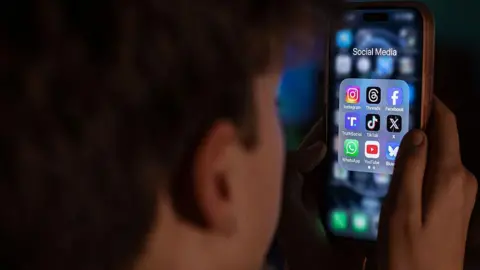
Federal and State Leaders Accelerate Child Social Media Restrictions The Economic Survey of India urged the central government to consider age‑based limits for social‑media use, prompting several states to act independently [1]. Andhra Pradesh formed a ministerial panel and invited Meta, X, Google and ShareChat for consultations, while IT Minister Nara Lokesh warned on X that “children are slipping into relentless usage,” harming attention and education [1]. Goa’s tourism and IT minister Rohan Khaunte announced a review of a possible ban, signaling growing regional momentum [1].
Platform Consultations Highlight Verification Challenges The invited platforms face India’s fragmented digital ecosystem, where a DEF India study of 1,277 teens showed many accounts are created with family assistance and lack personal email links, undermining simple age‑verification assumptions [1]. Experts note that IP‑based location checks are unreliable and could spark inter‑state conflicts, while mandatory verification would require platforms to authenticate every user, a technically complex task [1]. State officials are therefore weighing whether existing verification models can be adapted to Indian conditions [1].
Legal and Technical Hurdles Question Feasibility Digital‑rights activist Nikhil Pahwa warned that inaccurate IP‑based checks could create jurisdictional disputes, and public‑policy scholar Prateek Waghre highlighted potential court challenges to any blanket ban [1]. Age‑verification systems would need to process vast user data, raising privacy and compliance concerns for platforms [1]. These legal uncertainties are prompting some state leaders to adopt a cautious, consultative approach rather than immediate legislation [1].
Australian Model Serves as Reference but Shows Workarounds Australia’s mandatory age‑verification framework obliges platforms to delete under‑16 accounts, yet children often evade it by entering false birthdates to create new profiles [1]. Indian policymakers cite this example to gauge enforcement limits, acknowledging that similar loopholes could arise domestically [1]. The comparison underscores the difficulty of translating foreign regulatory successes to India’s unique user‑behavior patterns [1].
Parental Attitudes Emphasize Need for Broader Engagement Delhi resident Jitender Yadav, father of two young daughters, argued that without increased parental involvement children will find ways around any ban, suggesting the issue extends beyond platform restrictions [1]. His perspective reflects a broader societal concern that policy alone may not curb excessive usage [1]. Stakeholders therefore stress complementary education and parental monitoring initiatives alongside any legislative action [1].
Timeline
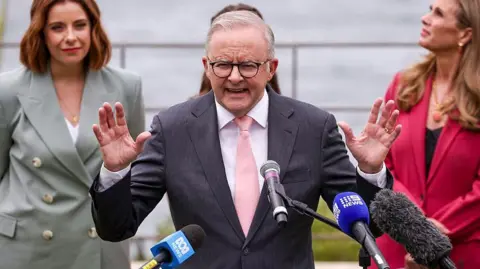
Nov 2024 – Australia passes the Online Safety Amendment (Social Media Minimum Age) Bill, establishing a 16‑year minimum age for major social‑media platforms and authorising fines up to A$49.5 million, with Prime Minister Anthony Albanese saying the law “puts families back in control” and answers “parents’ pleas”[7].
1 Dec 2025 – Communications Minister Anika Wells tells the BBC she “is not intimidated by tech companies” and will enforce the new age‑limit despite industry push‑back[12].
4 Dec 2025 – Meta notifies users aged 13‑15 that their Instagram, Facebook and Threads accounts will be deactivated, projecting the removal of roughly 150 000 Facebook and 350 000 Instagram profiles and offering a download window before shutdown[11].
8 Dec 2025 – eSafety Commissioner Julie Inman Grant announces that, from midnight on 10 Dec, ten platforms must block or delete under‑16 accounts or face penalties, and that compliance monitoring will begin immediately[28].
9 Dec 2025 – Australia becomes the world’s first nation to ban under‑16s from major social media; most platforms pledge compliance, while Elon Musk’s X declares it will “not comply” and calls the measure “a backdoor way to control access to the internet”[25][28].
10 Dec 2025 – The ban takes effect nationwide: Instagram, Facebook, TikTok, YouTube, X and six other services block new sign‑ups and deactivate existing under‑16 accounts, with fines of up to A$49.5 million for breaches; Albanese frames the step as “a turning point” for protecting children’s mental health[22][15][23][24].
11 Dec 2025 – Denmark’s coalition agrees to prohibit social‑media use for anyone under 15, with possible parental exceptions at 13, and plans to launch a digital‑evidence app in spring 2026 to enforce the rule[21].
12 Dec 2025 – Reddit files a High Court challenge, arguing the Australian ban infringes the implied freedom of political communication, while simultaneously stating it will comply with the regulator’s notices[20].
12 Dec 2025 – Meta reports that it has blocked about 550 000 Australian accounts under the new law, urging the government to shift age‑verification to app‑store level and to allow parental exemptions[5].
12 Jan 2026 – Meta reiterates that roughly 550 000 teen accounts have been removed and calls for “app‑store age checks” and parental‑approval mechanisms to reduce evasion[5].
16 Jan 2026 – eSafety releases its first tally, confirming 4.7 million child accounts have been deactivated since the ban; Minister Wells says the result “gives parents confidence that their children’s online time is safer”[19].
20 Jan 2026 – The UK launches a three‑month public consultation on an under‑16 social‑media ban, granting Ofsted new powers to audit school phone policies and citing Australia’s December 2025 ban as a catalyst[4].
23 Jan 2026 – eSafety Commissioner Julie Inman Grant tells the BBC that platforms are complying “kicking and screaming,” noting that regulators have issued information notices to the ten listed services[2].
25 Jan 2026 – French President Emmanuel Macron announces a fast‑track legislative process to ban under‑15 social‑media use before the September 2026 school year, referencing Australia’s December 2025 ban as a precedent[13].
5 Feb 2026 – Indian states Andhra Pradesh and Goa launch ministerial panels and consultations with Meta, X, Google and ShareChat on a possible nationwide under‑16 ban; IT Minister Nara Lokesh warns children are “slipping into relentless usage,” harming attention and education[1].
Planned/expected: Apr 2026 – The UK’s three‑month consultation is slated to close, after which the government will decide whether to legislate an under‑16 ban.
Mid‑2026 – Denmark aims to roll out its digital‑evidence age‑certificate app and enforce the under‑15 ban, following the Australian model[21].
Sep 2026 – France intends to have its under‑15 ban in force before the new school year, completing the fast‑track process announced in January[13].
2026‑2028 – Australia will conduct a two‑year review of the under‑16 ban, assessing impacts on sleep, mental health and online safety, with findings to inform possible policy adjustments[12].
Dive deeper (22 sub-stories)
-
BBC: India’s Push to Ban Social Media for Children Under 16 Gains Momentum
-
CNN: Macron pushes fast‑track ban on social media for under‑15s in France
-
BBC: Australia’s Under‑16 Social Media Ban Faces Reluctant Industry Compliance
-
BBC: Australia imposes first-of-its-kind under-16 social media ban on major platforms
-
BBC: UK to consult on social media ban for under-16s
-
AP: Australia bans under-16 social media use as 4.7 million child accounts are deactivated
-
BBC: Meta blocks about 550,000 Australian accounts under new under-16 ban
-
Australia Enforces First Nationwide Under‑16 Social‑Media Ban, Fines Up to $33 Million
(4 articles)
-
BBC: Australia’s under‑16 social‑media ban excludes gaming platforms
-
AP: Reddit Files Court Challenge to Australia’s Under‑16 Social‑Media Ban
-
AP: Denmark Moves Toward 15‑Year‑Old Social Media Ban
-
AP: Australia’s under-16 social media ban takes effect
-
AP: Australia’s Social Media Ban Takes Effect, 15‑Year‑Old Riley Faces Loss of Online Connections
-
Australia’s Under‑16 Social Media Ban Takes Effect, Faces Legal Challenge
(2 articles)
-
Australia Enforces World‑First Under‑16 Social Media Ban Starting Dec 10, 2025
(3 articles)
-
CNN: Australia rolls out under-16 social media ban as platforms pledge compliance
-
The Hindu: Australia bans social media for under-16s as others move to curb access
-
The Hindu: Meta says Australia pushing teens to 'less regulated' platforms
-
The Hindu: Australia to enforce under-16 social media ban starting Dec 10, 2025
-
BBC: Can you ban kids from social media? Australia is about to, but some teens are a step ahead
-
BBC: Meta starts removing Australian children from social media ahead of ban
-
BBC: Australia’s Social Media Ban: Minister Stays Firm Amid Tech Company Pushback
All related articles (28 articles)
-
BBC: India’s Push to Ban Social Media for Children Under 16 Gains Momentum
-
CNN: Macron pushes fast‑track ban on social media for under‑15s in France
-
BBC: Australia’s Under‑16 Social Media Ban Faces Reluctant Industry Compliance
-
BBC: Australia imposes first-of-its-kind under-16 social media ban on major platforms
-
BBC: UK to consult on social media ban for under-16s
-
AP: Australia bans under-16 social media use as 4.7 million child accounts are deactivated
-
BBC: Meta blocks about 550,000 Australian accounts under new under-16 ban
-
The Hindu: Australia’s social media minimum age takes effect, with fines for noncompliance
-
BBC: Australia’s under‑16 social‑media ban excludes gaming platforms
-
AP: Reddit Files Court Challenge to Australia’s Under‑16 Social‑Media Ban
-
AP: Denmark Moves Toward 15‑Year‑Old Social Media Ban
-
AP: Australia’s under-16 social media ban takes effect
-
CNN: Australia Enacts First Global Under‑16 Social Media Ban
-
AP: Australia’s Social Media Ban Takes Effect, 15‑Year‑Old Riley Faces Loss of Online Connections
-
BBC: Australia enacts nationwide ban on social media for children under 16
-
BBC: Australia’s world-first under-16 social media ban takes effect
-
CNN: Australia rolls out under-16 social media ban as platforms pledge compliance
-
The Hindu: Australia bans social media for under-16s as others move to curb access
-
The Hindu: Australia begins enforcing world-first teen social media ban (Dec 10, 2025)
-
The Hindu: Meta says Australia pushing teens to 'less regulated' platforms
-
CNN: Australia enacts world-first nationwide ban on social media for under-16s
-
CNN: Australia is banning young teens from social media. Could it happen in the US?
-
The Hindu: Australia to enforce under-16 social media ban starting Dec 10, 2025
-
BBC: Australia’s under-16 social media ban takes effect December 10, 2025
-
BBC: Can you ban kids from social media? Australia is about to, but some teens are a step ahead
-
BBC: Meta starts removing Australian children from social media ahead of ban
-
BBC: Australia’s Social Media Ban: Minister Stays Firm Amid Tech Company Pushback
-
CNN: Australia Approaches Dec 10 Social Media Ban for Under‑16s
External resources (22 links)
- https://www.youtube.com/@bbcnewsindia/featured (cited 1 times)
- https://governor.nebraska.gov/gov-pillen-signs-last-bills-protect-children-online (cited 1 times)
- https://www.gov.uk/government/news/government-to-drive-action-to-improve-childrens-relationship-with-mobile-phones-and-social-media (cited 1 times)
- https://sml.stanford.edu/sites/g/files/sbiybj22976/files/media/file/academicadvisorygroupstatement.pdf (cited 1 times)
- https://www.tiktok.com/@cnn/video/7581841747634916663 (cited 2 times)
- https://www.facebook.com/bbcindia/ (cited 1 times)
- https://www.instagram.com/bbcnewsindia/ (cited 1 times)
- https://www.tiktok.com/@_heyitszoeyandmark/video/7554659239663324434?_r=1&_t=ZS-91THUdlkMrv (cited 1 times)
- https://x.com/BBCIndia (cited 1 times)
- https://x.com/RahmEmanuel/status/1998467923774681394 (cited 1 times)
- https://x.com/naralokesh/status/2016747258201694548 (cited 1 times)
- https://corp.roblox.com/newsroom/2025/11/roblox-requires-age-checks-limits-minor-and-adult-chat (cited 1 times)
- https://medium.com/chamber-of-progress/utahs-app-store-age-verification-bill-sets-a-dangerous-precedent-3f49058ea343 (cited 1 times)
- https://medium.com/meta-australia-policy-blog/removing-access-to-instagram-threads-and-facebook-for-under-16s-in-australia-1ab448660c0f (cited 1 times)
- https://www.36months.com/ (cited 1 times)
- https://www.aph.gov.au/e-petitions/petition/EN8494 (cited 1 times)
- https://www.defindia.org/wp-content/uploads/2025/12/2.-The-Ideal-Internet-3.0-%E2%80%93-Digital-Divides-Vulnerabilities-of-Indian-Teens-Online.pdf (cited 1 times)
- https://www.infrastructure.gov.au/department/media/publications/age-assurance-technology-trial-final-report (cited 1 times)
- https://www.lemon8-app.com/h5/feoffline/report/osa-detail?region=au (cited 1 times)
- https://www.pcgamer.com/hardware/brits-can-get-around-discords-age-verification-thanks-to-death-strandings-photo-mode-bypassing-the-measure-introduced-with-the-uks-online-safety-act-we-tried-it-and-it-works-thanks-kojima/ (cited 1 times)
- https://www.safeonsocial.com/ (cited 1 times)
- https://www.westernsydney.edu.au/young-and-resilient/news/in_media/young_and_resilient_research_centre_joins_chorus_of_nearly_150_australian_and_international_experts_opposing_social_media_ban_for_u16s (cited 1 times)