Artemis II Launch Window Set for Feb 8, 2026, with Possible March 6 Slip Amid Cold‑Weather Risks
Updated (9 articles)
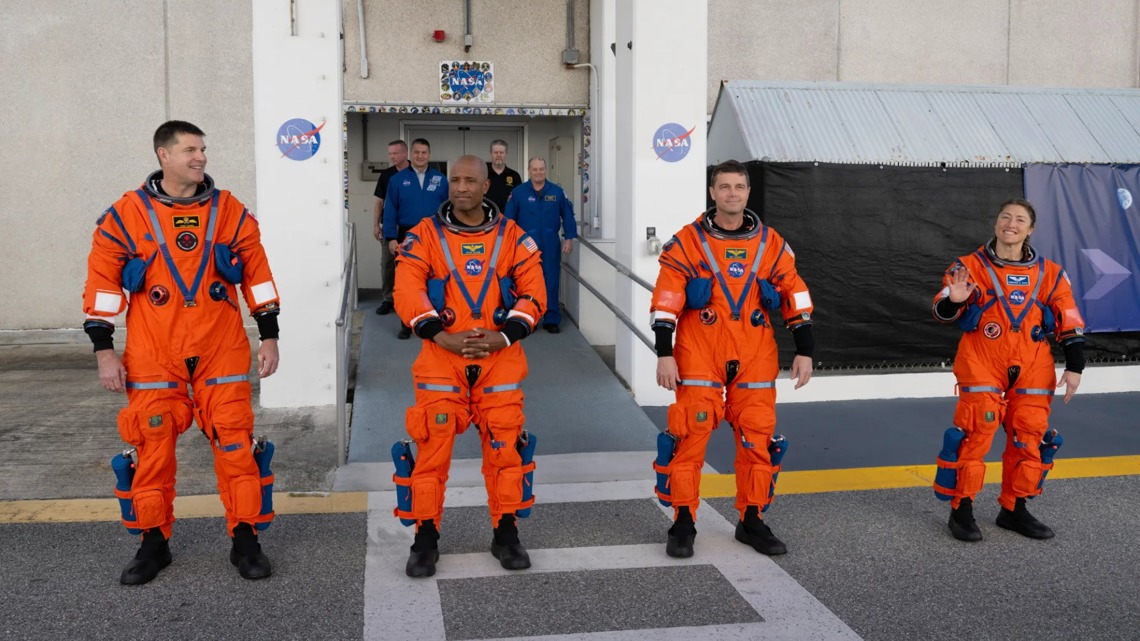
Launch window anchored to Feb 8, 2026 NASA opened the first Artemis II launch window on Feb 8, 2026, after earlier delays left the mission without a fixed date. The schedule remains flexible pending safety checks and weather conditions, marking the first crewed deep‑space flight since Apollo 17 in 1972[2][3]. The launch will employ the 332‑foot Space Launch System (SLS) rocket and the Orion crew capsule.
Four‑astronaut crew confirmed for lunar flyby Commander Reid Wiseman, Pilot Victor Glover, Mission Specialist Christina Koch, and Canadian astronaut Jeremy Hansen comprise the Artemis II crew[3][4]. Wiseman, Glover, and Koch are veteran astronauts, while Hansen awaits his first rocket launch. Their ten‑day mission will loop around the Moon without attempting a surface landing.
Mission will validate Orion life‑support and navigation After launch, the crew will spend roughly two days testing Orion’s systems before heading toward the Moon[3][4]. Objectives include evaluating air regeneration, carbon‑dioxide removal, and a targeting demonstration near Earth. Data will inform hardware for future lunar‑surface and Mars missions.
Cold polar vortex threatens February liftoff A polar vortex has driven unusually low temperatures to Florida, a condition that previously forced shuttle delays[2]. Artemis II must complete a “tanking day” loading cryogenic propellant and a simulated countdown before launch can proceed, so officials will monitor the weather closely. Persistent cold could push the earliest launch to March 6, as NASA retains that date as a contingency.
CNN’s Countdown newsletter highlights March 6 earliest launch CNN’s new “Countdown” newsletter, authored by Ashley Strickland, promotes updates on Artemis II with an earliest possible lift‑off of March 6, 2026[1]. Strickland and reporter Jackie Wattles will provide on‑site coverage from Kennedy Space Center, offering exclusive photos and videos. The free newsletter aims to keep the public informed as launch plans evolve.
Sources
-
1.
CNN: CNN Launches Countdown Newsletter Ahead of Artemis II Crew Mission: Announces a free “Countdown” newsletter delivering on‑site coverage and cites March 6, 2026 as the earliest launch date.
-
2.
King5 (Seattle, WA): February Sky Above: Planet Parade, Artemis II Launch, and a New NASA Astronaut: Details the Feb 8 launch window, crew lineup, cold‑weather delay risk, and introduces new astronaut Dr Lauren Edgar.
-
3.
WBNS (Columbus, OH): Artemis II Crewed Moon Flyby Set for Early February 2026: Confirms the Feb 8 window, crew composition, lunar flyby trajectory, and emphasizes the mission as a stepping stone to Mars.
-
4.
King5 (Seattle, WA): Artemis II crewed lunar flyby set for early February 2026: Reiterates the launch window, ten‑day mission objectives, crew details, and highlights NASA’s public engagement via the #Artemis hashtag.
Timeline
Dec 1972 – Apollo 17 lands the last humans on the Moon, ending the Apollo era and framing Artemis’s goal to return humans to the lunar surface after a half‑century gap [2].
Sep 2025 – NASA targets a launch window opening as early as Feb 5 2026 for Artemis II, a ten‑day crewed lunar flyby with astronauts Reid Wiseman, Victor Glover, Christina Koch and Jeremy Hansen; the mission includes a proximity‑operations demonstration and no landing, while Open University expert Dr Simeon Barber warns that a Moon landing before mid‑2027 remains optimistic and depends on SpaceX Starship readiness [3].
Dec 31 2025 – Artemis II stays on track for a possible Feb 6 2026 liftoff, carries health‑science payloads to monitor cognition and immune response, and resolves the Artemis I heat‑shield wear issue, while lawmakers frame the mission as a strategic step amid U.S.–China competition [6].
Jan 17 2026 – NASA rolls the 98‑metre SLS and Orion from the Vehicle Assembly Building to Launch Complex 39B, marking the first formal mission step; the crew watches the rollout, and NASA plans a free‑return trajectory that could set a new distance‑from‑Earth record, while the Starship HLS schedule for Artemis III remains uncertain [5].
Jan 18 2026 – The SLS arrives at Pad 39B after a 12‑hour, 4‑mile crawl; NASA opens launch windows from early February (earliest Feb 6) and schedules a wet‑dress rehearsal, while crew members observe the move, Airbus’s Sian Cleaver stresses the European Service Module’s indispensability, and mission‑management chair John Honeycutt emphasizes safety as the top priority [1][2].
Jan 30 2026 – NASA sets the first launch window to begin Feb 8 2026, confirming that Artemis II will be the first crewed deep‑space flight in over 50 years; the ten‑day mission will test Orion’s life‑support, navigation and manual docking, and acting associate administrator Lori Glaze calls it a “key test flight” that advances the goal of returning humans to the Moon and eventually to Mars [7][9].
Jan 30 2026 – NASA highlights that Artemis II will perform a lunar flyby, not a landing, using a free‑return trajectory to validate Orion’s systems and demonstrate a targeting demonstration near Earth before heading toward the Moon, reinforcing its role as a stepping stone toward sustained lunar exploration [7].
Feb 3 2026 – CNN launches the “Countdown” newsletter to cover Artemis II, which could lift off as early as Mar 6 2026, and author Ashley Strickland recounts attending the uncrewed Artemis I launch in 2022, underscoring long‑term public interest in the program [4].
Feb 3 2026 – A planetary parade begins on Feb 17, featuring Venus, Jupiter, Saturn, Uranus, Neptune and Mercury, while NASA warns that an unusually cold polar vortex could delay Artemis II’s tanking day and simulated countdown, requiring close monitoring of launch conditions [8].
Feb 3 2026 – NASA announces the selection of Dr Lauren Edgar to the first majority‑female astronaut class, noting her excitement about the International Space Station’s complex engineering and her training for future Artemis missions [8].
2027 – 2028 (future) – Artemis III plans a lunar south‑pole landing no earlier than 2027, with final lander selection pending between SpaceX’s Starship and Blue Origin; new Axiom spacesuits remain unavailable, and the mission relies on SpaceX’s Starship HLS, now expected to land on the Moon in 2028, though timeline uncertainties persist [2][5].
Late 2020s (future) – NASA’s broader Artemis initiative aims to establish a permanent human presence at the Moon’s south pole, using the lunar base as a platform for eventual crewed missions to Mars, while competing with China’s lunar ambitions [8][6].
All related articles (9 articles)
-
CNN: CNN Launches Countdown Newsletter Ahead of Artemis II Crew Mission
-
King5 (Seattle, WA): February Sky Above: Planet Parade, Artemis II Launch, and a New NASA Astronaut
-
WBNS (Columbus, OH): Artemis II Crewed Moon Flyby Set for Early February 2026
-
King5 (Seattle, WA): Artemis II crewed lunar flyby set for early February 2026
-
BBC: Artemis II set for early February launch after SLS rollout
-
BBC: NASA’s SLS Rocket Reaches Launch Pad 39B for Artemis II
-
CNN: Artemis II will fly near the Moon with four astronauts but not land
-
CNN: Artemis II on track for first crewed lunar mission with February launch target
-
BBC: Artemis II aims for February crewed lunar flyby with four astronauts
External resources (9 links)
- https://www.nasa.gov/humans-in-space/astronauts/christina-koch/ (cited 2 times)
- https://www.nasa.gov/humans-in-space/astronauts/g-reid-wiseman/ (cited 2 times)
- https://www.nasa.gov/humans-in-space/astronauts/victor-j-glover/ (cited 2 times)
- https://www.nasa.gov/news-release/launch-your-name-around-moon-in-2026-on-nasas-artemis-ii-mission/ (cited 2 times)
- https://t.co/XWDUrrQxhd (cited 2 times)
- https://t.co/xHhp44Qzr4 (cited 2 times)
- https://twitter.com/hashtag/Artemis?src=hash&ref_src=twsrc%5Etfw (cited 2 times)
- https://bit.ly/4q4Vy1O (cited 2 times)
- https://www.asc-csa.gc.ca/eng/astronauts/canadian/active/bio-jeremy-hansen.asp (cited 2 times)