U.S. Carrier Group Deploys as Trump Threatens Strike Amid Iran’s Deadly Protests
Updated (6 articles)
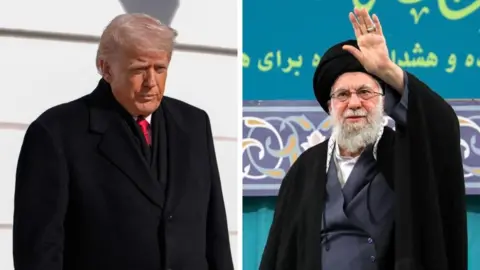
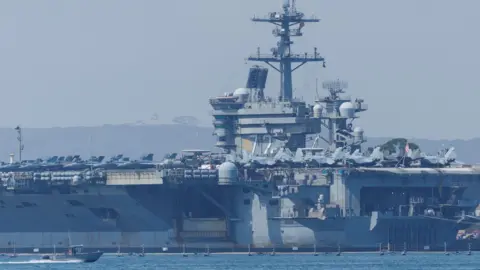
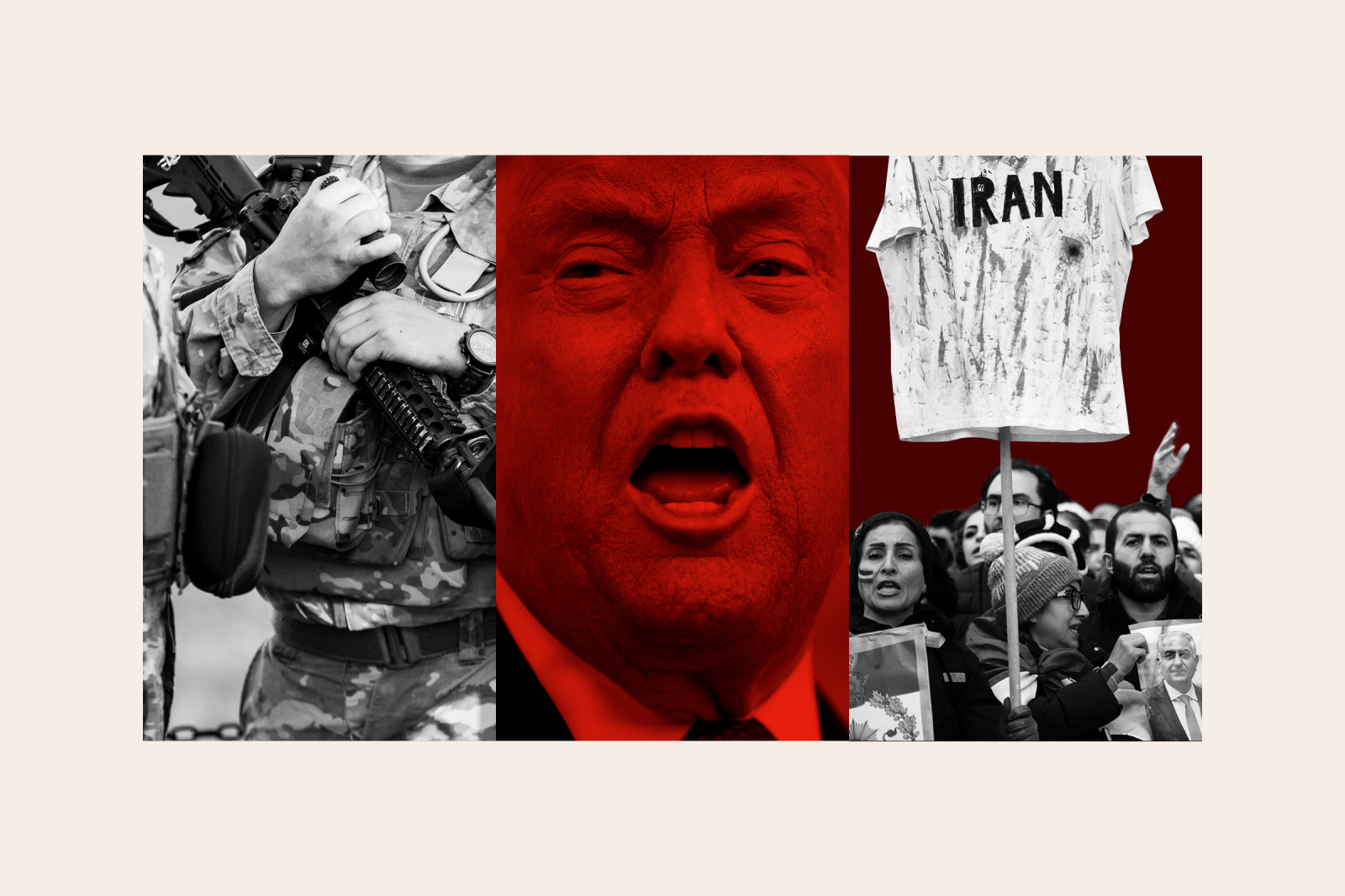
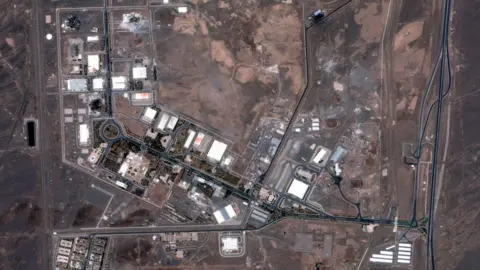
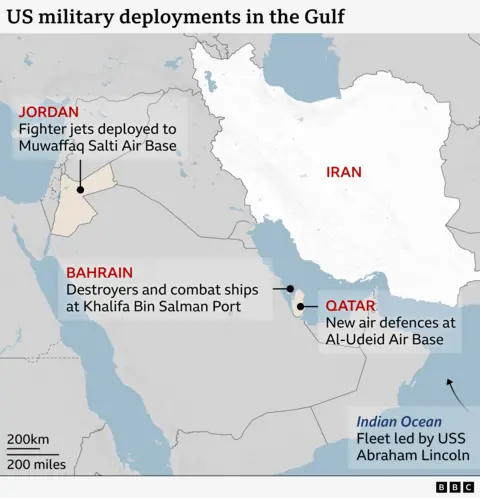
Escalating Military Posture After Trump’s Threat On 30 January 2026 the USS Abraham Lincoln carrier strike group entered the U.S. Central Command area near Iran, joining warships and fighter jets that had gathered after President Donald Trump warned of a possible strike and urged protesters to “take over your institutions” [1][2][3]. The deployment, described by Trump as an “armada,” signals a tangible shift from rhetoric to forward‑deployed force.
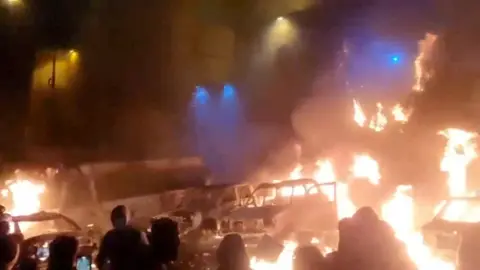
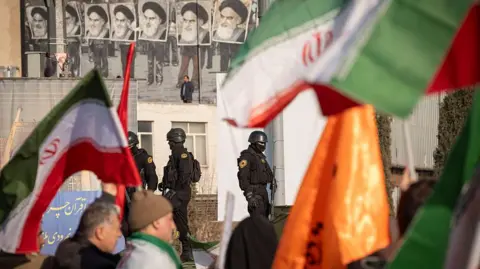
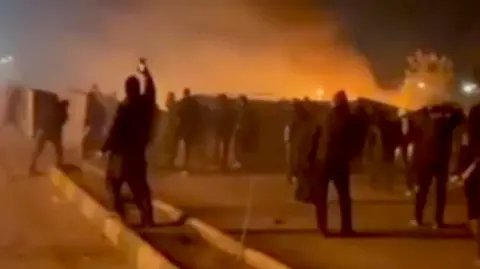
Iran’s Internal Crisis Fuels Risk of Rapid Retaliation Demonstrations that began on 28 December 2025 over a soaring rial‑to‑dollar rate were met with the most severe crackdown since 1979, with official counts of over 3,000 deaths and foreign monitors estimating tens of thousands, alongside mass detentions and a two‑week internet blackout [1][2]. The Islamic Revolutionary Guard Corps, which lost 500‑600 security personnel, warned that any U.S. attack would be treated as an act of war, raising the prospect of an “all‑out” response [1][2].
Iranian Arsenal and Proxy Forces Ready for Counterstrike Tehran retains thousands of short‑range ballistic missiles and Shahed suicide drones capable of striking eight to nine U.S. bases across the region, while proxy militias in Iraq and Lebanon have pledged “all‑out war” in defense of Iran [3]. Senator Marco Rubio warned that 30,000‑40,000 U.S. troops stationed at those sites could be within range of Iranian launches [3].
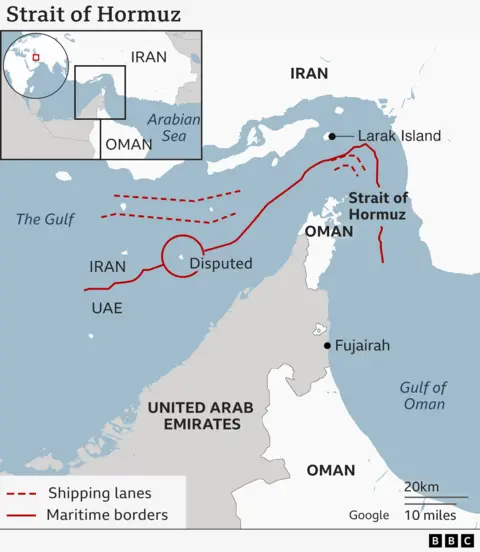
Potential Regional and Economic Shock from Hormuz Closure Iran has threatened to shut the Strait of Hormuz, a chokepoint through which roughly 20 % of global LNG and 20‑25 % of oil flow, a move that analysts say would spike prices and could trigger a worldwide recession [3][4]. Historical mining operations during the 1980s “Tanker War” and recent Houthi‑backed disruptions demonstrate Tehran’s capacity to block maritime traffic swiftly [3][4].
Diplomatic Options Narrow as Talks Stall U.S. demands to halt uranium enrichment and limit missile ranges clash with Tehran’s red lines, prompting the IRGC to rehearse naval battles in the Sea of Oman while diaspora leader Reza Pahlavi publicly backs U.S. intervention, contrasting with domestic elites who seek reform without war [1][4].
Sources
-
1.
Newsweek: Iranians Brace for Possible U.S. Attack Amid Rising Tensions: reports the deadly December protests, Trump’s strike warning, IRGC retaliation plans, diaspora split, and stalled diplomatic talks .
-
2.
BBC: Iran’s heightened risk of escalation as US carrier group arrives: details the USS Abraham Lincoln deployment, severe crackdown, past Iranian retaliation patterns, Trump’s promises, and IRGC war declarations .
-
3.
CNN: Iran’s Options to Respond if Trump Orders a Strike: outlines Iran’s missile and drone stockpiles, Rubio’s troop‑risk estimate, proxy militia pledges, Hormuz closure impact, and historical maritime threats .
-
4.
BBC: Potential Outcomes if the U.S. Strikes Iran: analyzes limited precision strike plans, regime‑change scenarios, Iranian retaliation threats, regional target possibilities, Hormuz disruption, and civil‑war risk .
Timeline
1980s – Iran mines the Persian Gulf during the “Tanker War,” nearly sinking the USS Samuel B. Roberts in 1988, demonstrating its willingness to threaten maritime traffic in the region [3].
2019 – Iran is implicated in Gulf of Oman tanker strikes, reinforcing its capacity to disrupt global shipping routes [3].
Jan 2020 – The United States kills Quds Force commander Qassem Soleimani; Iran later warns before striking the U.S. Ain al‑Asad base, causing injuries but no deaths, establishing a pattern of pre‑emptive warnings [1].
June 21‑22, 2025 – U.S. B‑2 bombers conduct a bombing campaign on two Iranian nuclear installations, a success the Trump administration later touts as a major victory [4].
June 23, 2025 – Iran fires missiles at Qatar’s Al Udeid Air Base in retaliation for the June nuclear strikes; most missiles are intercepted after advance warning, showing Tehran’s calibrated response [1][6].
Dec 28, 2025 – Massive protests erupt across Iran over a soaring rial‑to‑dollar rate, quickly spreading nationwide and setting the stage for a severe crackdown [5].
Late Dec 2025 – Iran endures its most severe protest crackdown since 1979, with thousands killed, mass detentions, a two‑week internet blackout, and officials blaming “terrorist groups” and Israel for the unrest [1][5].
Jan 15, 2026 – Analysts warn Iran could retaliate more aggressively if the U.S. intervenes, with Rosemary Kelanic noting the situation is “very different from seven months ago” and that an existential threat may push Tehran to abandon restraint [6].
Jan 15, 2026 – President Trump frames last year’s Iran strikes as a triumph and signals a new attack “in solidarity with protesters,” raising expectations of a more civilian‑risk‑laden operation [4].
Jan 29, 2026 – The United States readies limited precision strikes within days, targeting IRGC and Basij bases, ballistic‑missile sites, and nuclear facilities, emphasizing a highly focused rather than full‑scale invasion [2].
Jan 29, 2026 – Iran vows retaliation, declaring its “finger is on the trigger” and warning it can launch concealed ballistic missiles and drones from caves, mountainsides, and underground sites [2].
Jan 29, 2026 – Senator Marco Rubio tells CNN that 30,000‑40,000 U.S. personnel at eight or nine regional bases are within range of Iranian UAVs and short‑range missiles, underscoring the high personnel risk [3].
Jan 29, 2026 – Iraqi and Lebanese proxy militias—including Kataeb Hezbollah, Harakat al‑Nujaba, and Lebanon’s Hezbollah—pledge direct retaliation; commander Abu Hussein al‑Hamidawi calls supporters worldwide to prepare for an “all‑out war” [3].
Jan 29, 2026 – Energy strategist Umud Shokri warns that closing the Strait of Hormuz would spike oil prices, strain supply chains, and could trigger a global recession, highlighting the economic stakes of Iranian leverage [3].
Jan 30, 2026 – The USS Abraham Lincoln carrier strike group moves into the U.S. Central Command area near Iran, bringing carrier‑based power close to Iranian waters and raising escalation concerns [1].
Jan 30, 2026 – President Donald Trump warns of a U.S. strike, labels the naval buildup an “armada,” and repeats the message “help is coming” to Iranians, fueling protester expectations [1][5].
Jan 30, 2026 – Iran’s Islamic Revolutionary Guard Corps prepares for possible U.S. retaliation, rehearsing a naval battle in the Sea of Oman after losing 500‑600 security‑force members during the protests [5].
Jan 30, 2026 – Professor Ali Bagheri Dolatabadi says a U.S. attack would be “similar to Afghanistan, Iraq, Syria and Yemen,” arguing that diplomatic negotiation is the only viable path and that many view Trump as a bully who has abandoned promised support [5].
Jan 30, 2026 – Senior Iranian commanders declare any U.S. attack an act of war, warning that Tehran could abandon its usual delayed retaliation and respond rapidly, heightening regional spillover risk [1].
Jan 30, 2026 – Forecasts indicate the United States may launch the planned limited precision strikes within days, while Iran threatens to shut the Strait of Hormuz—potentially disrupting 20 % of global oil and LNG flow and sparking a worldwide economic downturn [2][3].
All related articles (6 articles)
-
Newsweek: Iranians Brace for Possible U.S. Attack Amid Rising Tensions
-
BBC: Iran’s heightened risk of escalation as US carrier group arrives
-
CNN: Iran’s Options to Respond if Trump Orders a Strike
-
BBC: Potential Outcomes if the U.S. Strikes Iran
-
Newsweek: Iran could retaliate more aggressively if U.S. intervenes, experts warn
-
CNN: Analysts map potential US targets and risks in possible Iran strike