Hamas Conducts Election for Interim Leader as Post‑War Negotiations Progress
Updated (2 articles)
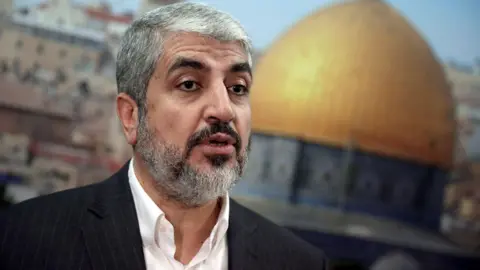
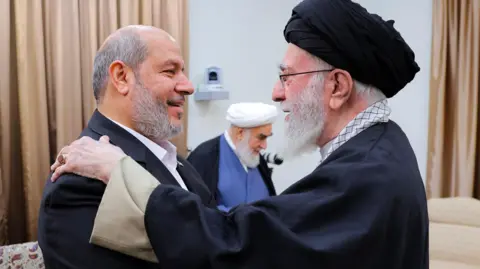
Election Process Spans Gaza, West Bank, and Diaspora Hamas opened voting in Gaza, the occupied West Bank and among members abroad, according to a senior Palestinian official familiar with the group’s affairs [1]. Secret ballots have already been cast in Gaza, while it remains unclear whether voting has concluded elsewhere [1]. An electoral college of roughly 86 General Shura Council members, drawn from Gaza, the West Bank, Palestinian prisoners in Israel and officials abroad, will choose the new head [1].
Leadership Vacuum Traces Back to 2024 Targeted Killings Israeli strikes in 2024 eliminated top Hamas figures Yahya Sinwar, Ismail Haniyeh and military chief Mohammed Deif, leaving the overall head position vacant [1]. An interim committee headed by Qatar‑based Mohammad Darwish has been running the movement since those deaths [1]. The election will fill the vacancy for a twelve‑month term [1].
Main Contenders Represent Divergent Factional Lines The primary contest appears between Khaled Meshaal, a Doha‑based pragmatist aligned with the Muslim Brotherhood, and candidates linked to the Iran‑aligned “old guard” that may regain influence after the war [1]. Internal talks suggest the old guard could reassert power, reflecting a split between pragmatic and hard‑line factions [1]. The winner will determine which faction steers post‑war Gaza governance [1].
Result Expected to Influence U.S. Ceasefire and Reconstruction Plans The United States proposes a phased ceasefire that would eventually hand Gaza administration to the Palestinian Authority, excluding Hamas from future governance [1]. The new interim leader’s stance will affect reconstruction, reforms and negotiations under that plan [1]. Observers view the election as a pivotal factor shaping Gaza’s political future [1].
Timeline
2024 – Israeli strikes kill Hamas top leaders Yahya Sinwar, Ismail Haniyeh and military chief Mohammed Deif, creating a leadership vacuum that leads to an interim committee headed by Qatar‑based Mohammad Darwish [1].
2025 (approx.) – The United States proposes a phased cease‑fire plan that excludes Hamas from future administration and envisions eventual transfer of Gaza control to the Palestinian Authority after reforms [1].
Jan 11, 2026 – Hamas announces it will dissolve the Gaza governing body once a politically unaligned technocratic committee assumes control, though the technocrat slate remains unnamed [2].
Jan 11, 2026 – Khalil al‑Hayya, a senior Hamas negotiator, is slated to chair talks with Egyptian, Qatari and Turkish officials to finalize the technocratic committee [2].
Jan 11, 2026 – The U.S.–brokered peace framework creates a Board of Peace to oversee the cease‑fire, disarm Hamas and deploy an international security force, but its members have not yet been announced [2].
Jan 11, 2026 – Israeli gunfire kills three Palestinians in Gaza during the cease‑fire period, underscoring ongoing violence despite the truce [2].
Jan 11, 2026 – Israeli Prime Minister Benjamin Netanyahu cites Bulgarian diplomat Nickolay Mladenov as the appointed director‑general of the Board of Peace [2].
Jan 11, 2026 – Japanese Foreign Minister Toshimitsu Motegi visits Israel to discuss the cease‑fire and regional cooperation [2].
Feb 20, 2026 – Hamas launches an election for a new interim leader across Gaza, the occupied West Bank and among members abroad, with secret voting already taking place in Gaza [1].
Feb 20, 2026 – An electoral college of roughly 86 General Shura Council members drawn from Gaza, the West Bank, Palestinian prisoners and the diaspora will choose the leader for a twelve‑month term [1].
Feb 20, 2026 – The main contest pits Khaled Meshaal, a Doha‑based pragmatic figure aligned with the Muslim Brotherhood, against candidates linked to the Iran‑aligned “old guard” [1].
Feb 20, 2026 – The election outcome is expected to shape post‑war Gaza governance under the U.S. cease‑fire plan, influencing reconstruction efforts and negotiations with the Palestinian Authority [1].