Trump Issues Iran Ultimatum as U.S. Buildup Peaks and Rubio Prepares Netanyahu Briefing
Updated (10 articles)
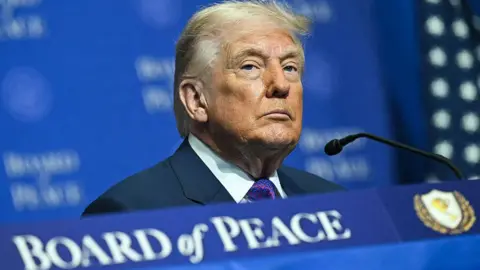
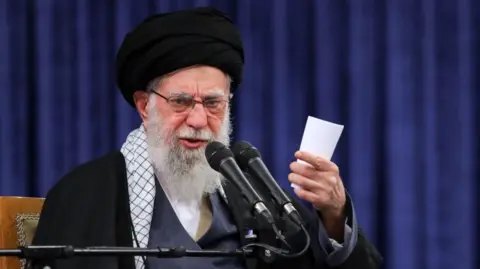
Trump’s direct threat and call for a diplomatic deal On Feb. 20, President Donald Trump warned Tehran of possible military action while simultaneously urging a peace agreement to end Iran’s nuclear weapons program, a stark policy contrast noted by the White House [1]. He reiterated that the June strike had “obliterated” Iranian nuclear sites, yet offered no new target details [1]. The president’s remarks followed a meeting with Israeli Prime Minister Benjamin Netanyahu at the White House, hinting at Israeli participation in any U.S. offensive [1]. Domestic political considerations, including an upcoming State of the Union address and midterm elections, add uncertainty to the administration’s “America First” stance [1].
Rubio’s scheduled briefing for Netanyahu on nuclear talks Secretary of State Marco Rubio will travel to Israel to meet Netanyahu on Feb. 28, intending to update the Israeli leader on two recent rounds of indirect U.S.–Iran negotiations [2]. Iran has agreed to draft a written proposal addressing U.S. concerns raised in Geneva, creating what Iranian Foreign Minister Abbas Araghchi described as a “new window” for agreement [2]. Vice President JD Vance praised the progress but warned that Trump’s red‑line demands remain unacknowledged by Tehran [2]. The briefing aims to align Israeli expectations with U.S. diplomatic efforts before any potential military option is considered [2].
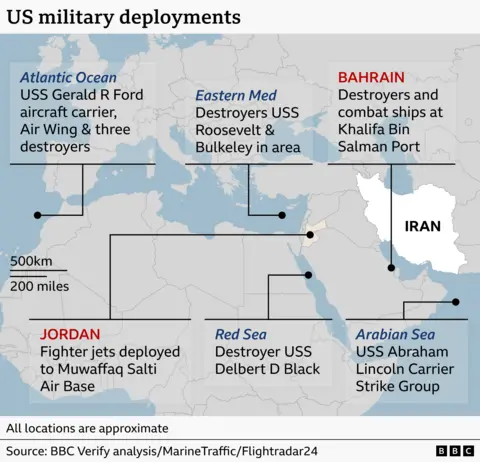
U.S. military presence reaches its highest level since 2003 The United States has repositioned the aircraft carrier USS Gerald R. Ford from the Caribbean to the Middle East, adding a second carrier and dozens of warships, fighter jets, and support aircraft to the region [2]. Senior national‑security officials reported that “full forces” needed for a possible strike should be ready by mid‑March, though no deadline for Iran’s written response was set [2]. The BBC notes this buildup is the largest Middle‑East deployment since the Iraq War, proceeding without prior congressional approval [1]. Israel’s exact role in any forthcoming operation remains undefined [1].
Trump’s regime‑change rhetoric and political calculus In remarks to reporters, Trump suggested that a change in Iran’s leadership “seems like the best thing that could happen,” reinforcing his broader strategy of pressure and potential regime change [1][2]. The administration’s aggressive posture occurs alongside Trump’s campaign for a Nobel Peace Prize, creating a paradox between diplomatic overtures and military threats [1]. Critics warn that the dual approach could alienate the president’s base and complicate upcoming electoral dynamics [1].
Sources
-
1.
BBC: Trump Issues New Iran Ultimatum Amid Growing Military Buildup: Details Trump’s contradictory threat‑and‑diplomacy stance, the unprecedented Middle‑East troop surge, and the political backdrop of his upcoming State of the Union and elections .
-
2.
AP: Rubio to brief Netanyahu on US‑Iran nuclear talks amid rising military posture: Covers Rubio’s planned Israel visit, the progress of indirect talks, the carrier redeployment, and Trump’s regime‑change comments .
Related Tickers
Timeline
2003 – The United States conducts its largest Middle‑East military buildup since the Iraq War, setting a precedent for the scale of forces later deployed against Iran [1].
June 2025 – The U.S. carries out a strike it claims “obliterates” Iran’s nuclear facilities, though motives and target details remain unclear, marking the first major offensive on Tehran’s program [1].
June 2025 – A brief but intense clash erupts involving Iran, Israel and the United States, heightening regional tensions and foreshadowing later escalation [6].
2025 (12‑day war) – Iran fires hundreds of ballistic missiles at Israeli towns, killing at least 28 people and demonstrating rapid missile‑evade capability that fuels Israeli security concerns [2].
Dec 29 2025 – At a Mar‑a‑Lago briefing, President Trump warns Hamas and Iran, declares Iran may be building new nuclear sites, and announces Israel will award him its highest civilian honor, underscoring the U.S.–Israel partnership [10].
Dec 30 2025 – Trump tells reporters he will consider further strikes if Iran rebuilds its nuclear program, while Netanyahu joins him to discuss Gaza cease‑fire phases; Iran asserts it has stopped uranium enrichment [9].
Jan 5 2026 – Trump warns Iran it will be “hit very hard” if more protesters die; Netanyahu approves “Operation Iron Strike” and outlines war‑game scenarios; protests spread to 222 locations across 26 provinces, and open‑source intel shows large‑scale U.S. aircraft movements linked to the plan [6].
Jan 9 2026 – Iran’s UN ambassador accuses Trump and Netanyahu of inciting violence in Iran; Trump signals possible U.S. intervention if killings continue; protests erupt nationwide after a Grand Bazaar spark, and Netanyahu publicly backs the demonstrators [5].
Jan 11 2026 – Netanyahu tells his cabinet that Israel is closely monitoring Iranian protests, praises protesters as heroes, and hopes for a post‑tyranny Iran; he discusses the situation overnight with U.S. Secretary of State Rubio; the Israeli military says no new shelter guidelines are needed, while Iran warns any U.S./Israeli strike will create legitimate targets [8].
Jan 13 2026 – Israel adopts a quiet stance as Iranian protests expand to over 180 cities; Netanyahu publicly affirms monitoring and support but orders officials to stay silent to avoid giving Tehran a pretext for escalation; the IDF downplays immediate risk, and analysts note the Trump decision will shape Israel’s calculus [3].
Jan 15 2026 – Trump threatens additional Iran strikes amid the protests, citing Tehran’s military rebuilding; retired IDF Lt. Gen. Amir Avivi says Israel would assist defensively if the U.S. leads; Netanyahu seeks an Iran “victory” to bolster his legacy, while analysts warn of uncertain post‑regime scenarios [4].
Jan 31 2026 – Netanyahu pushes the U.S. for a maximalist Iran strike, calling the Gulf buildup a “golden moment,” while Israeli intel chief Shlomi Binder meets U.S. officials on target selection; Trump weighs limited attacks versus full regime change, with Israeli analysts linking regime removal to neutralizing Hezbollah’s missile threat [2].
Feb 19 2026 – Secretary of State Marco Rubio plans a Feb 28 visit to Israel to brief Netanyahu on two recent rounds of indirect U.S.–Iran nuclear talks; the White House expects “full forces” for any Iran operation to be ready by mid‑March; the U.S. moves the carrier USS Gerald R. Ford and adds a second carrier to the region, while Trump hints that a regime change in Iran “seems like the best thing that could happen” [7].
Feb 20 2026 – At a Board of Peace meeting, President Trump issues a new Iran ultimatum, threatening military action while urging a diplomatic deal to end Tehran’s nuclear program; the White House says Iran would be “very wise” to negotiate; the U.S. conducts its biggest Middle‑East buildup since 2003; Israel’s involvement is hinted but not defined, and domestic political pressures complicate the gamble [1].
All related articles (10 articles)
-
BBC: Trump Issues New Iran Ultimatum Amid Growing Military Buildup
-
AP: Rubio to brief Netanyahu on US‑Iran nuclear talks amid rising military posture
-
BBC: Israel’s Quiet Push for U.S.‑Led Regime Change in Iran
-
Newsweek: Trump threatens Iran strikes, Netanyahu sees golden opportunity
-
CNN: Israel stays quiet as Iran protests expand and Trump decision looms
-
AP: Iranian protests intensify; Israel watching closely
-
Newsweek: Iran accuses Trump and Netanyahu of inciting violence as protests grow
-
Newsweek: Iran fears new US attack as protests grip nation
-
AP: Trump warns Iran of further strikes if it reconstitutes nuclear program during Netanyahu visit
-
The Hindu: Trump warns Hamas and Iran after Netanyahu talks in Florida
External resources (1 links)
- https://x.com/MonitorX99800/status/2007867930957226216?s=20 (cited 1 times)