DHS Halts TSA PreCheck and Global Entry as Partial Shutdown Takes Effect
Updated (11 articles)
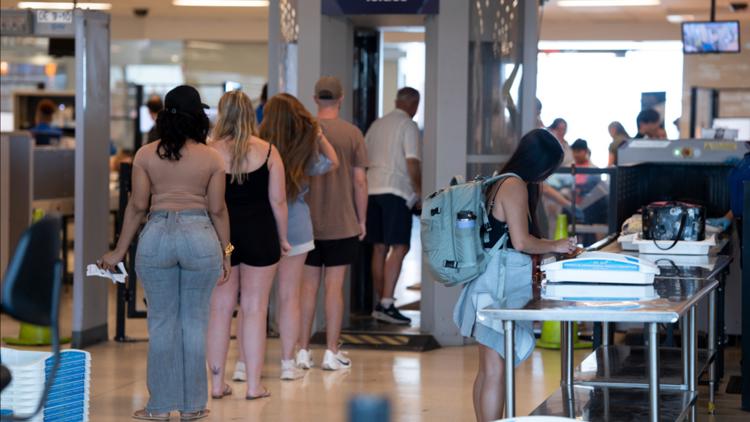

Partial Shutdown Triggers Trusted‑Traveler Program Suspension The Department of Homeland Security announced on Sunday, Feb. 22, that it is temporarily suspending both TSA PreCheck and Global Entry after a partial government shutdown began at 6 a.m. ET on Feb. 14 [1][2]. DHS Secretary Kristi Noem said the move is “tough but necessary” to protect national security amid the funding impasse [1][2]. The shutdown follows a failed funding deal between congressional Democrats and President Donald Trump’s team, which left DHS unfunded through September [1][2].
Travel Delays Expected From Unpaid TSA Staff TSA officers are required to work without pay, and any unscheduled absences could lengthen security lines, especially at smaller airports, and delay checked‑baggage screening [1][2]. Experts advise passengers to arrive early, pack carefully, and avoid prohibited items to mitigate potential disruptions [2]. While air‑traffic controllers remain on duty, the reduced staffing raises the risk of longer wait times and possible flight delays [1].
FEMA Redirects Resources and Freezes Disaster Travel FEMA has paused all non‑disaster response activities to concentrate on an imminent winter storm forecast for the Mid‑Atlantic and Northeast [1][2]. Internal DHS directives also ordered a freeze on all new FEMA disaster‑area travel, standing down about 300 responders and limiting field staff to existing missions [3]. The Disaster Relief Fund remains fully funded at roughly $7 billion, so the travel ban reflects operational constraints rather than budget shortfalls [3].
Funding Stalemate and Political Pressure Shape Response The partial shutdown stems from a disagreement over DHS funding that began on Feb. 14, after Democrats and the Trump administration could not reach a deal [1][2]. Unlike the 43‑day full shutdown from Oct. 1 to Nov. 12, 2025, which left trusted‑traveler programs untouched, the current action marks an unprecedented suspension [2]. Democrats are also pressing immigration‑enforcement reforms after recent federal‑officer shootings, adding further political pressure on the agency [1].
Sources
-
1.
WBNS: DHS Suspends TSA PreCheck, Global Entry Amid Partial Shutdown: Details the shutdown’s start, Noem’s security warning, FEMA’s winter‑storm focus, and potential travel disruptions, emphasizing the political backdrop of immigration‑related deaths .
-
2.
King5: DHS suspends TSA PreCheck, Global Entry as partial shutdown begins: Mirrors WBNS on the suspension and Noem’s statements, adds context about the previous full shutdown’s unchanged programs, and offers traveler‑advice for anticipated longer lines .
-
3.
CNN: Trump Administration Halts New FEMA Disaster Deployments Amid DHS Shutdown: Reports an internal DHS order freezing new FEMA disaster travel, notes the $7 billion Disaster Relief Fund remains intact, and includes criticism from former FEMA staff about the decision’s impact on disaster response .
Related Tickers
Timeline
2023 – A Government Accountability Office report finds FEMA short about 6,000 positions, roughly 35 % below its staffing target, underscoring a pre‑existing workforce gap that later reforms aim to widen. [5]
2025 – President Trump creates the FEMA Review Council, a special task force charged with drafting sweeping reforms of the agency’s structure and funding. [6]
Dec 10, 2025 – The Review Council’s draft recommends cutting FEMA’s workforce by half within two to three years, shifting $‑billion savings to states via a new block‑grant system, rebranding the agency as “FEMA 2.0,” and keeping it inside DHS; the council plans to vote Thursday and deliver the report to the president. [6]
Dec 1, 2025 – More than 190 current and former FEMA officials sign the “Katrina Declaration,” warning Congress that dismantling FEMA could endanger lives; DHS places the signers on paid administrative leave, launches misconduct investigations, briefly reinstates 14 staff, then re‑suspends them after an internal review. [7][8]
Jan 2, 2026 – DHS terminates roughly 50 CORE disaster‑response contractors—the frontline of FEMA’s emergency teams—and revokes FEMA’s authority to renew CORE contracts without DHS sign‑off, marking the first wave of the administration’s downsizing push. [5]
Jan 6, 2026 – Senior FEMA leaders receive a December‑23 email launching a “workforce capacity planning exercise” that asks them to identify cuts for more than 11,500 jobs (over 50 % of the agency), with spreadsheets targeting a 15 % cut to permanent staff, 41 % to disaster‑response staff, and 85 % to surge teams; officials stress the numbers are for planning only and not yet approved. [4]
Jan 23, 2026 – FEMA issues an internal email ordering a pause on off‑boarding about 300 disaster‑worker contracts as a massive winter storm looms, leaving the duration of the halt uncertain and highlighting the link between staffing decisions and imminent emergency needs. [3]
Jan 29, 2026 – FEMA confirms it retains $7‑8 billion in the Disaster Relief Fund, sufficient to cover winter‑storm recovery despite a pending partial shutdown; the storm has already caused 70 deaths and widespread power outages across the South and Midwest. [9]
Jan 30, 2026 – Homeland Security Secretary Kristi Noem makes a surprise visit to FEMA headquarters hours before a bomb‑cyclone, prompting a temporary pause to mass terminations, activating the National Response Coordination Center, and defending officers who shot a Minneapolis protester by labeling the victim a “domestic terrorist.” [2]
Feb 14, 2026 – A partial government shutdown begins after Congress fails to fund DHS through September, marking the first shutdown since the 43‑day shutdown of Oct‑Nov 2025 and setting the stage for later travel‑program suspensions. [10][11]
Feb 18‑19, 2026 – An internal DHS directive orders FEMA to halt all new disaster‑area travel effective Wednesday; about 300 responders stand down, damage assessments in Florida, North Carolina, Washington and Alaska stall, and former FEMA chief‑of‑staff Michael Coen calls the move “amateur hour.” [1]
Feb 22, 2026 – DHS suspends TSA PreCheck and Global Entry, with Secretary Noem describing the action as “tough but necessary” and warning the shutdown threatens national security; FEMA pauses all non‑disaster operations to concentrate on an imminent winter storm forecast for the Mid‑Atlantic and Northeast. [10][11]
Future (post‑Dec 2025) – The postponed final meeting of the FEMA Review Council leaves the 50 % workforce‑cut and block‑grant proposals in limbo, while the Senate still must approve the FY 2026 DHS appropriations package, a decision that will determine whether FEMA’s disaster‑relief funding remains uninterrupted. [6][9]
Dive deeper (5 sub-stories)
-
DHS Halts TSA PreCheck and Global Entry as Partial Shutdown Begins Feb. 14
(2 articles)
-
Trump Administration Suspends New FEMA Disaster Deployments During DHS Shutdown
(3 articles)
-
Kristi Noem Visits FEMA Amid Bomb Cyclone, Pauses Mass Terminations
(3 articles)
-
CNN: Internal FEMA planning email asked leaders to plan for up to 50% workforce cut
-
FEMA Reinstates 14 Employees After Whistleblower Letter Investigation Closed
(2 articles)
All related articles (11 articles)
-
WBNS (Columbus, OH): DHS Suspends TSA PreCheck, Global Entry Amid Partial Shutdown
-
King5 (Seattle, WA): DHS suspends TSA PreCheck, Global Entry as partial shutdown begins
-
CNN: Trump Administration Halts New FEMA Disaster Deployments Amid DHS Shutdown
-
CNN: Noem’s On‑Site Visit Marks Sudden Shift as Winter Storm Hits
-
AP: FEMA Holds $7‑8 Billion Disaster Fund Amid Potential Shutdown
-
CNN: FEMA halts disaster-worker terminations as winter storm looms
-
CNN: Internal FEMA planning email asked leaders to plan for up to 50% workforce cut
-
CNN: DHS cuts FEMA CORE disaster-response staff as White House delays final review meeting
-
CNN: FEMA Review Council Draft Calls for 50% Workforce Cut and Block‑Grant Overhaul
-
CNN: FEMA Employees Reinstated and Then Re‑suspended After Letter to Congress
-
CNN: FEMA workers reinstated after investigation over letter criticizing Trump’s overhaul of agency
External resources (7 links)
- https://mayor.dc.gov/sites/default/files/dc/sites/mayormb/page_content/attachments/DC%20Request%20for%20Presidential%20Emergency%20Disaster%20Decleration%202.18.26.pdf (cited 1 times)
- https://www.dhs.gov/news/2025/09/02/secretary-noem-fires-fema-employees-who-used-government-devices-consume-racially (cited 1 times)
- https://www.dhs.gov/news/2026/01/29/dhs-leads-historic-nationwide-response-winter-storm-slams-12-states-once (cited 1 times)
- https://www.fema.gov/about/reports-and-data/disaster-relief-fund-monthly-reports (cited 1 times)
- https://www.gao.gov/products/gao-23-105663?utm_source=chatgpt.com (cited 1 times)
- https://www.washingtonpost.com/nation/2026/02/21/tsa-precheck-global-entry-shutdown/ (cited 2 times)