BBC Joins Colombian Commandos Over Putumayo, Reveals Massive Coca Production Surge
Updated (2 articles)

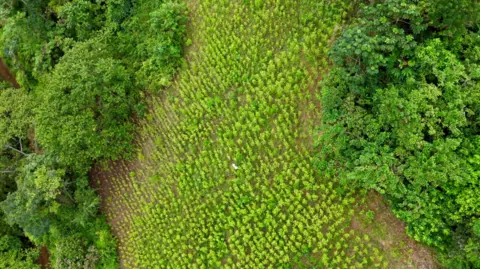
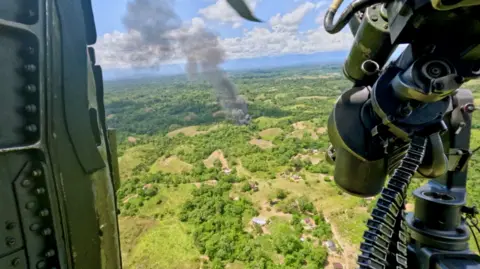

Journalists Ride Black Hawk Over Coca Heartland BBC journalists rode with commandos in a Black Hawk helicopter over the Putumayo district, the core coca‑growing region that supplies roughly 70 % of the world’s cocaine. UNODC data shows the cultivated coca footprint now spans an area almost twice the size of Greater London and four times that of New York. The raid was filmed for a BBC documentary highlighting the scale of production [1].
Defense Minister Quantifies Lab Destruction Rate Defence Minister Pedro Sanchez told reporters the force eliminates a cocaine laboratory roughly every forty minutes. Over the past three and a half years, Colombian authorities have seized 2,800 tonnes of cocaine, equivalent to about 47 billion doses. He warned that rising European demand is hampering eradication efforts [1].
Criminal Adaptations Accelerate Lab Rebuilding Major Cristhian Cedano Díaz explained that a destroyed lab can be rebuilt within 24 hours. Continuous raids, however, erode gang profitability. Criminal groups now employ drones, bitcoin payments and on‑site chemists to evade detection [1].
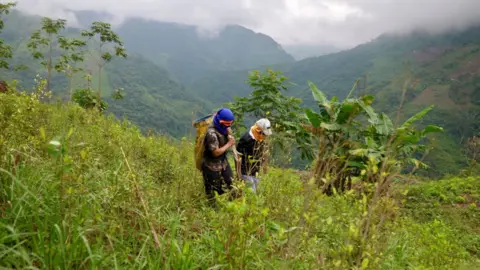
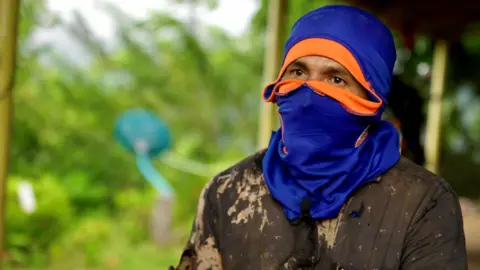
Local Farmer Faces Guerrilla Pressure Amid Poverty Local farmer “Javier”, 39, admits coca cultivation is his only livelihood for his five daughters. He reports guerrilla intimidation and a recent robbery that stole part of his crop. With limited state assistance, he is weighing a return to coal mining [1].
U.S. President’s Rhetoric Softens After Threat President Donald Trump labeled Colombia’s left‑wing leader Gustavo Petro a “sick man” and warned of possible U.S. military action last month. Analysts note the inflammatory rhetoric has since softened. No concrete U.S. steps have been announced [1].
Timeline
2026 – UNODC data shows coca fields now cover an area twice the size of Greater London and four times New York, indicating a record‑high production footprint that underpins the surge in global cocaine supply [1].
Jan 2026 – President Donald Trump calls Colombian President Gustavo Petro a “sick man who likes selling cocaine to the United States” and warns he could be “next” for military action, intensifying diplomatic tension while rhetoric later softens [1].
Jan 2026 – Colombia reports a historic haul of 446 tons of cocaine seized this year, described by Brig. Gen. Ricardo Sánchez‑Silvestre as “more than one ton per day,” and notes destruction of over 3,000 production facilities, highlighting the impact of joint U.S.–Colombia operations [2].
Jan 2026 – DEA agents operate embedded with Colombia’s DIRAN anti‑narcotics unit, forming the agency’s largest foreign operation and enabling real‑time intelligence sharing that drives joint missions and large‑scale seizures [2].
Jan 2026 – Officials warn that Trump’s hostile rhetoric could raise safety risks for DEA personnel in Colombia, fearing retaliation against agents despite no current operational disruption [2].
Jan 2026 – Trump threatens to cut off U.S. aid to Colombia, yet the United States continues to provide roughly $210 million this fiscal year, including $31 million for agricultural support, sustaining aviation, training, and technology assistance [2].
Jan 2026 – Colombian leaders caution that ending U.S. cooperation would empower drug traffickers and armed groups, asserting the current seizure levels are the highest in 30 years and essential to preventing billions of doses from reaching markets [2].
Feb 3, 2026 – BBC journalists ride in a Black Hawk with Colombian commandos over the Putumayo district, the heart of coca cultivation that supplies about 70 % of the world’s cocaine, providing on‑the‑ground insight into the raid [1].
Feb 3, 2026 – Defence Minister Pedro Sanchez states Colombia destroys a cocaine lab every 40 minutes and has seized 2,800 tonnes in the past 3½ years, equivalent to 47 billion doses, while noting rising European demand hampers eradication [1].
Feb 3, 2026 – Major Cristhian Cedano Díaz warns that a destroyed lab can be rebuilt within 24 hours, but repeated raids “affect the profitability of the criminal groups,” as gangs adopt drones, bitcoin, and on‑site chemists to evade attacks [1].
Feb 3, 2026 – Local farmer “Javier,” 39, admits coca cultivation is his only livelihood for his five daughters, recounts guerrilla intimidation and a recent robbery, and says he is considering returning to coal mining amid limited state support [1].
All related articles (2 articles)
External resources (2 links)
- https://foreignassistance.gov/cd/colombia/2025/obligations/0 (cited 1 times)