Netflix Defends $82 B Warner Bros Acquisition, Offers All‑Cash Bid to Senate
Updated (3 articles)
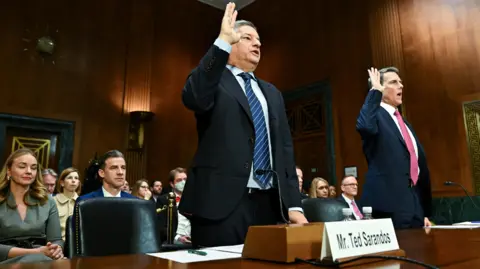
Senate Hearing Highlights Netflix’s $82 B Takeover Plan Netflix appeared before the U.S. Senate Antitrust Subcommittee on Feb. 3, 2026 to justify its $82 bn (£61 bn) proposal to acquire Warner Bros Discovery, which would give it control of the studio’s film and TV libraries and HBO Max; the Department of Justice is reviewing the deal while Paramount Skydance has floated a rival bid [1]. Lawmakers warned the merger could reduce competition, raise subscription prices, and threaten cinema exhibition, prompting intense questioning of Netflix executives [1]. The hearing marks the latest regulatory hurdle as the company seeks clearance for the largest media consolidation in decades [1].
Ted Sarandos Promises Theatrical Window and Operational Continuity Co‑CEO Ted Sarandos told senators Netflix would honor a 45‑day theatrical release window, the current industry standard, and would run Warner Bros “largely as it is today,” preserving studio autonomy [1]. He argued the merger would deliver “more content for less,” create additional American jobs, and benefit the 80 % of HBO Max subscribers who also pay for Netflix [1]. Sarandos also positioned Netflix as a direct competitor to YouTube for content, viewers, and ad revenue [1].
Republican and Democratic Senators Voice Distinct Concerns Republican Senator Mike Lee warned that consolidating two major employers could weaken labor competition, while Senator Eric Schmitt criticized Netflix’s programming as “overwhelmingly woke” [1]. Democrat Cory Booker condemned Paramount CEO David Ellison’s refusal to testify and warned the deal would give a single corporation unprecedented control over media consumption [1]. These partisan critiques underscore broader anxieties about media concentration and cultural influence [1].
Netflix Shifts to All‑Cash Offer to Outbid Paramount After initially proposing a mixed cash‑and‑stock package, Netflix revised its proposal on Feb. 3 to an all‑cash payment, aiming to strengthen its position against Paramount’s $108 bn counteroffer [1]. The cash‑only bid is intended to simplify financing and demonstrate financial commitment to the acquisition [1]. This strategic adjustment reflects Netflix’s effort to preempt competing offers and satisfy regulatory scrutiny [1].
Debate Over YouTube’s Role as a True Competitor Sarandos argued that Netflix competes with YouTube for the same content, audiences, and advertising dollars, labeling the platform “TV” [1]. Senators, however, remained skeptical about treating YouTube as a rival in the merger review, questioning the relevance of its business model to traditional streaming competition [1]. The discussion highlights the evolving definition of competition in the digital media landscape [1].
Timeline
Dec 5, 2025 – Netflix announces plan to acquire Warner Bros., HBO and Discovery assets for about $82.7 billion, creating an integrated production‑distribution powerhouse that will add roughly 4,000 titles and 30,000 hours of content to its library and signals a shift toward vertical integration in Hollywood [3].
Dec 6, 2025 – Analysts note that Netflix’s $72 billion bid (earlier estimate) triggers antitrust scrutiny because the combined entity would exceed key market‑share thresholds, raising concerns that the merger could boost Netflix’s power over creators, distributors and consumers and potentially lead to higher prices and reduced innovation [2].
Dec 6, 2025 – Labor unions warn the deal could accelerate streaming‑first models, threaten jobs and weaken bargaining power for writers, actors and crew, highlighting the broader workforce impact of consolidating two major employers [2].
Dec 13, 2025 – Industry commentary stresses that the vertical integration will concentrate control at Netflix, potentially limiting independent voices and shifting emphasis to algorithm‑driven, scale‑focused projects, while also threatening the traditional theatrical experience by favoring streaming‑centric release strategies [3].
Dec 13, 2025 – A rival bid from Paramount Skydance emerges, proposing a $108 billion offer for Warner Bros., intensifying competition and prompting regulators to compare the two proposals for potential consumer and market effects [1].
Feb 3, 2026 – Netflix appears before the U.S. Senate Antitrust Subcommittee, with co‑CEO Ted Sarandos pledging to keep a 45‑day theatrical window and run Warner Bros “largely as it is today,” arguing the merger will give consumers “more content for less” and create additional American jobs, while noting that 80 % of HBO Max subscribers also pay for Netflix [1].
Feb 3, 2026 – Republican Senator Mike Lee warns that consolidating two major employers “inevitably has an impact on, and can significantly weaken, competition for that labour,” and Senator Eric Schmitt criticizes Netflix’s programming as “overwhelmingly woke,” reflecting political concerns over labor and cultural implications of the deal [1].
Feb 3, 2026 – Democrat Senator Cory Booker condemns Paramount CEO David Ellison’s refusal to testify and warns that any merger would give a single corporation “increased control over what we see, what we hear and what news we consume,” underscoring fears of media concentration [1].
Feb 3, 2026 – Netflix revises its offer to an all‑cash payment to outbid Paramount’s proposal, aiming to strengthen its position as the Department of Justice continues its review of the transaction [1].
Feb 3, 2026 – Sarandos argues Netflix competes with YouTube for the same content, viewers and ad dollars, calling YouTube “TV,” but senators remain skeptical about treating the platform as a true rival in the merger review, highlighting the evolving definition of competition in the digital media landscape [1].