Police Continue Searches of Prince Andrew’s Former Residences After Arrest
Updated (3 articles)
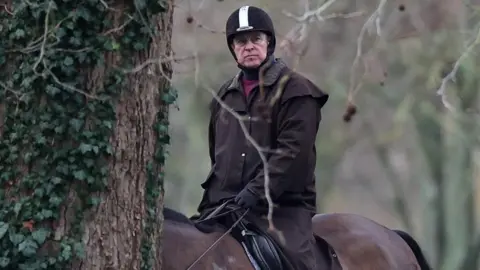

Arrest Occurred on Prince Andrew’s 66th Birthday Thames Valley Police detained Andrew Mountbatten‑Windsor, 66, at 08:00 GMT on 19 February at the Sandringham Estate in Norfolk, the day of his birthday. He was taken to Aylsham police station, held for roughly 11 hours, and released on the evening of 19 February under investigation without charge. The former trade envoy remains subject to ongoing inquiries, and King Charles issued a statement that “the law must take its course” while declining further comment [2][3].
Allegations Center on Confidential Trade Documents Sent to Epstein Prosecutors are reviewing 2010 emails that show the former prince forwarded confidential trade‑visit reports on Hong Kong, Vietnam, Singapore and a briefing on Afghan reconstruction to Jeffrey Epstein while serving as the UK’s special envoy for international trade. The documents also included a Treasury briefing, suggesting a broader pattern of sharing sensitive material with a personal business contact. Authorities describe the conduct as a possible breach of the misconduct‑in‑public‑office offence [1][2][3].
Police Conducted Searches at Multiple Royal Properties Searches were carried out at addresses in Berkshire and Norfolk, including the Royal Lodge in Windsor Great Park and the Sandringham estate. The Norfolk operation concluded on 20 February, while officers continued to examine the former residence at Royal Lodge on 20 February, seizing electronic devices and documents. Thames Valley Police confirmed the searches are part of the same investigation into the alleged communications with Epstein [1][2][3].
Legal Framework Makes Prosecution of Misconduct Complex Misconduct in public office is defined by the Crown Prosecution Service as a serious, willful abuse of public authority, carrying a maximum sentence of life imprisonment, though experts expect shorter terms if convicted. Prosecutors must apply a two‑stage test: first, whether there is sufficient evidence of a public‑officer role and wilful abuse; second, whether a prosecution is required in the public interest. Legal analysts note the ambiguous definition of a “public officer” and the high threshold for charging, making a conviction uncertain [1][2][3].
Sources
-
1.
AP: Police Continue Search of Andrew Mountbatten‑Windsor’s Former Home After Arrest: Reports ongoing search at Royal Lodge, details of email evidence, legal analysis, and King’s statement, emphasizing that no charges have been filed yet .
-
2.
BBC: Andrew Mountbatten‑Windsor arrested on suspicion of misconduct in public office: Highlights arrest on birthday at Sandringham, outlines search operations, includes comments from police and legal test, and notes public‑interest framing .
-
3.
AP: Andrew Mountbatten‑Windsor arrested on suspicion of misconduct in public office: Focuses on initial arrest, details of the 2010 emails to Epstein, explains potential penalties, and mentions limited royal family comments .
Timeline
2001 – Virginia Giuffre alleges she is trafficked to Britain for sex with Prince Andrew, a claim later referenced by her sister‑in‑law Amanda Roberts as “mixed emotions” over the 2026 arrest[2].
2010 – Emails show Prince Andrew, then UK special envoy for international trade, forwards confidential reports on Hong Kong, Vietnam, Singapore and an Afghan reconstruction brief to Jeffrey Epstein, forming a core part of the current misconduct investigation[3][2].
Feb 19, 2026 – On his 66th birthday, Prince Andrew is arrested at Sandringham Estate around 08:00 GMT, detained for roughly 11 hours and released under investigation later that evening[1][3].
Feb 19, 2026 – Thames Valley Police search multiple royal residences—including unmarked vans at Sandringham, Windsor Castle and the Royal Lodge—and conclude the Sandringham search the same day[1][3].
Feb 19, 2026 – King Charles III issues a statement that “the law must take its course” and declines further comment, underscoring the rule of law in the probe[1][2].
Feb 19, 2026 – Assistant Chief Constable Oliver Wright says the case is of “significant public interest,” while BBC’s Daniel Sandford notes the probe likely involves Epstein files[1].
Feb 19, 2026 – Criminal‑defence lawyer Sean Caulfield and CPS prosecutor Andrew Gilmore explain the two‑stage CPS test for misconduct in public office, warning that proving the charge is difficult and that a charging decision may take weeks[1][3].
Feb 20, 2026 – Police continue searching Prince Andrew’s former home, the Royal Lodge in Windsor Castle grounds, while the Sandringham investigation wraps up; he remains under investigation with no charges filed[2].
Feb 20, 2026 – The Crown Prosecution Service prepares to apply its misconduct‑in‑public‑office test, indicating the former prince may be re‑questioned and that a charging decision could be reached in the coming weeks[1][3].