Portland Mayor Orders ICE Exit After Tear‑Gas Assault on Feb 2 Protest
Updated (2 articles)
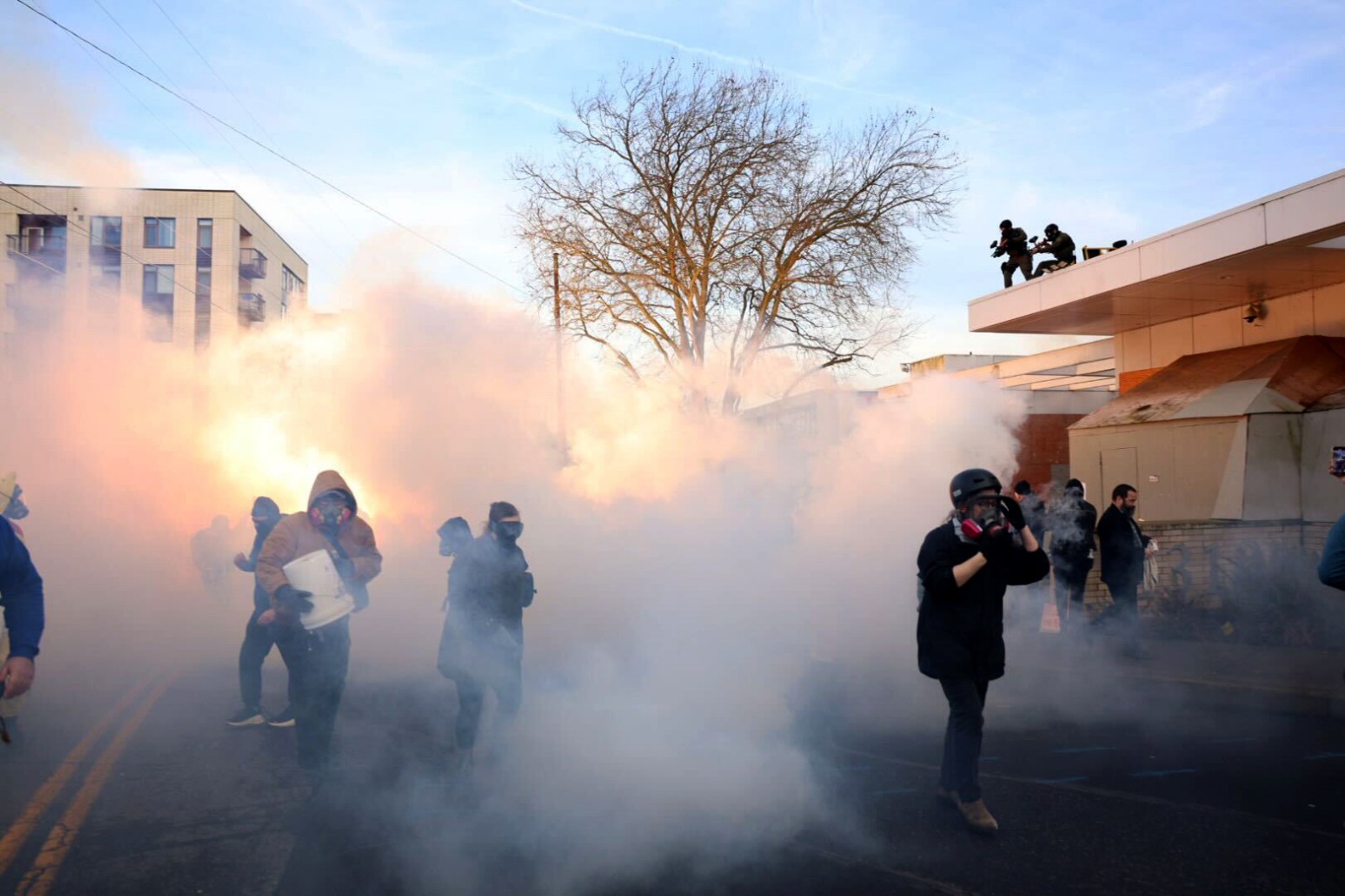
Mayor Keith Wilson Demands ICE Vacate City On Feb 2, 2026, Portland Mayor Keith Wilson issued a Saturday‑night proclamation ordering all ICE personnel to resign and the agency to leave the city, accusing the federal presence of violating constitutional rights. He announced a municipal fee that will penalize any detention facility that employs chemical agents such as tear gas. Wilson also urged ICE employees who disagree with the policy to quit voluntarily [1][2].
Federal Agents Use Tear Gas, Pepper Balls, Rubber Bullets During a daytime demonstration near the ICE field office on the South Waterfront, federal officers fired tear‑gas canisters, pepper‑ball launchers and rubber bullets at thousands of marchers, including families with children and wheelchair users. Witness Erin Hoover Barnett described agents as “two guys with rocket launchers” spraying the crowd from about 100 yards away. The Portland Fire Bureau dispatched paramedics to treat exposed individuals, while the Portland Police Bureau monitored the crowd but recorded no arrests [2][1].
City Declares Protest Largely Peaceful, Part of Nationwide Backlash City officials characterized the gathering as overwhelmingly peaceful, noting that the majority of participants broke no laws and posed no threat. The incident joins a wave of protests in cities such as Minneapolis—where agents killed Alex Pretti and Renée Good—and Eugene, where similar tear‑gas tactics were reported. Portland has logged 86 ICE‑related arrests since June, but none occurred on Feb 2 [1][2].
President Trump Calls for Forceful Defense of Federal Property In a Truth Social post on the same day, President Donald Trump instructed Homeland Security Secretary Kristi Noem to ensure ICE and Border Patrol act “very forceful” in protecting federal facilities. He warned that anyone who attacks officers or vehicles would face “equal or greater consequences.” The statement contrasted with Wilson’s demand for ICE’s removal and heightened tensions between local and federal authorities [1][2].
Sources
-
1.
Newsweek:Portland Mayor Calls for ICE Withdrawal After Tear‑Gas Deployment: Details Wilson’s demand, the fee on chemical‑using facilities, and Trump’s forceful protection order, emphasizing the broader national protest context and recent Minneapolis shootings .
-
2.
AP:Portland Mayor Orders ICE to Leave After Tear‑Gas Attack at Protest: Highlights the peaceful nature of the protest, specific crowd‑control weapons used, Wilson’s call for ICE resignation, and the city’s request for DHS clarification, with focus on local response .
Timeline
June 2025 – Portland records 86 arrests related to ICE protests since June, reflecting ongoing tension between local activists and federal immigration enforcement [1].
2025 – Federal agents kill U.S. citizens Alex Pretti and Renée Good during a Minneapolis enforcement action, intensifying national criticism of ICE’s use of force and prompting calls for accountability [1][2].
Jan 2026 – President Donald Trump posts on Truth Social urging ICE and Border Patrol to be “very forceful” in protecting federal property and warning that anyone who attacks officers will face “equal or greater consequences,” signaling a hard‑line federal response to the protests [1][2].
Feb 1, 2026 – Thousands of demonstrators gather peacefully at Portland’s South Waterfront ICE field office; federal agents deploy tear‑gas canisters, pepper‑ball launchers and rubber bullets, while the Portland Fire Bureau sends paramedics and police monitor the crowd without making arrests [2].
Feb 1, 2026 (evening) – Mayor Keith Wilson issues a statement demanding that ICE staff resign and the agency vacate Portland, accusing federal officials of trampling the Constitution, urging dissenting ICE employees to quit, and announcing a municipal fee on detention facilities that use chemical agents [1][2].
Feb 2, 2026 – City officials send a formal request to the Department of Homeland Security seeking clarification on the deployment of tear gas and other chemical irritants against protesters, emphasizing the need for transparency and accountability [2].
2026 (planned) – Portland prepares to levy a financial penalty on any detention center that employs tear gas or similar chemicals, positioning the fee as a deterrent against future use of such crowd‑control tactics [1].