Russian Drone Strikes Kill 12 Miners, Hit Zaporizhzhia Maternity Hospital as Peace Talks Rescheduled
Updated (8 articles)
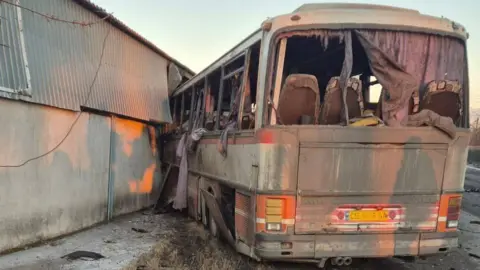

Deadly bus attack on miners confirmed by multiple outlets Russian Shahed drone struck a bus carrying DTEK coal‑mine workers in the Pavlohrad district of Dnipropetrovsk region, killing 12 and injuring eight to fifteen people, according to both BBC and CNN [1][2]. DTEK identified the vehicle as transporting staff from its Ternivka mine, while adviser Serhii Beskrestnov said a second drone deliberately targeted the civilians after the bus swerved into a fence [2]. Energy minister Denys Shmyhal and President Volodymyr Zelensky condemned the strike as a “demonstrative crime” against the energy sector [2].
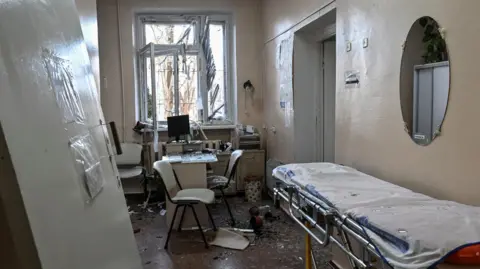
Maternity hospital hit while women were in labour The same day a Russian drone hit Maternity Hospital No. 3 on Bocharova Street in Zaporizhzhia, injuring six people, including three women delivering babies, as reported by both agencies [1][2]. Ukrainian Prime Minister Yulia Svyrydenko noted that medical staff and patients were in shelters at the time of the strike [2]. Regional head Ivan Fedorov called the attack proof of a war directed against civilian life [1].
Russia’s promised civilian‑target pause expired before the strikes Moscow announced a temporary halt on attacks against population centres and energy infrastructure during an extreme cold snap, framing it as a confidence‑building measure for Abu Dhabi peace talks [1]. The Kremlin later declared the pause would end on Sunday, after which the drone attacks on the miners’ bus and the maternity hospital occurred [1]. This timing suggests the cease‑fire was not honoured once the pause lapsed [1].
Ukraine and SpaceX cooperate to deny Starlink to Russian drones Kyiv worked with Elon Musk’s SpaceX to disable unverified Starlink terminals that could guide long‑range Russian drones, a step praised by Defence Minister Mykhailo Fedorov as “a true friend of the Ukrainian people” [1][2]. Musk reported that the measures appeared to be effective, limiting Russian drone navigation capabilities [1]. The collaboration reflects Ukraine’s broader strategy to curb the technological edge of Russian UAV operations [2].
Three‑way peace talks shifted to mid‑week after attacks President Zelensky moved the scheduled trilateral negotiations with Russia and the United States to Wednesday and Thursday, February 4‑5, instead of the originally planned Sunday, citing the need to respond to recent escalations [1][2]. The talks, mediated by the United States, will focus on Ukraine’s territorial concessions and the status of the Zaporizhzhia nuclear plant [1]. Zelensky framed the rescheduling as a response to Russia’s continued aggression [2].
Sources
-
1.
BBC: Russian Drone Strikes Kill Miners, Hit Maternity Hospital Amid Cold‑Snap Pause – Details the dual attacks, Russia’s broken pause on civilian targets, Starlink blocking, and the mid‑week shift of peace talks .
-
2.
CNN: Russian Drone Strike Kills 12 Miners in Dnipropetrovsk Region – Emphasizes the miner bus attack, Shahed drone tactics, the simultaneous maternity hospital strike, Starlink restrictions, and upcoming Abu Dhabi negotiations .
Timeline
Dec 31, 2025 – Ukraine launches drone strikes on Moscow, western Russia and Crimea, injuring one civilian; Russia reports downing 27 drones, including 21 over the Moscow region, and Kyiv dismisses the claim as “baseless”[8].
Dec 31, 2025 (just before midnight) – Three Ukrainian UAVs hit a cafe and hotel in Khorly, Kherson, killing at least 24 people and wounding more than 50 as New Year celebrations unfold; Russia says its air defenses shoot down 168 Ukrainian drones across multiple regions[7].
Jan 1, 2026 – Russian‑installed officials label the Khorly attack a “war crime” and claim Kyiv attempted to strike President Putin’s residence, a charge Kyiv rejects[3].
Jan 2, 2026 – Moscow‑backed Kherson governor Vladimir Saldo posts that an incendiary‑laden drone struck the Khorly cafe and hotel, confirming the 24‑fatality toll[6].
Jan 4, 2026 – Ukrainian drones kill two people near the Russia‑Ukraine border (Belgorod and Kursk) and wound three in Kharkiv; European security advisers visit Kyiv, and President Zelensky says Ukraine has shared all peace‑proposal documents with 18 advisers[5].
Jan 11, 2026 – A Ukrainian drone hits a house in Voronezh, killing one woman and wounding three; Kyiv’s power grid remains crippled, leaving about 30,000 residents without electricity, and President Zelensky notes that talks with the United States continue[4].
Jan 2026 – Russia conducts a wave of drone and missile strikes on Ukraine’s electricity system, cutting heating for millions as temperatures plunge below ‑20 °C, underscoring the strategic targeting of civilian infrastructure[1].
Feb 1, 2026 – A Russian drone strikes a DTEK bus in Ternivka, Dnipropetrovsk, killing 12 miners and injuring eight; a separate drone hits Zaporizhzhia’s Maternity Hospital 3, injuring six women in labour, prompting Energy Minister Denys Shmyhal to call the attack “cynical and deliberate” and President Zelensky to call it a “demonstrative crime”[2].
Feb 1‑2, 2026 – Ukraine works with SpaceX to block Starlink terminals on Russian drones; Elon Musk says the steps appear effective and Defence Minister Mykhailo Fedorov thanks him as “a true friend of the Ukrainian people”[1].
Feb 2, 2026 – Russia pledges a temporary pause on attacks against civilian targets during an extreme cold snap, linking the pause to upcoming Abu Dhabi peace talks, and announces the pause will expire on Sunday[1].
Feb 2, 2026 – President Zelensky shifts the next round of Ukraine‑Russia‑US peace talks to Wednesday and Thursday, focusing on territorial concessions and the status of the Zaporizhzhia nuclear plant[1].
Feb 4‑5, 2026 (planned) – Ukraine, Russia and the United States are set to hold trilateral peace negotiations in Abu Dhabi, as announced by President Zelensky[2].
All related articles (8 articles)
-
BBC: Russian drone strikes kill miners, hit maternity hospital amid cold‑snap pause
-
CNN: Russian Drone Strike Kills 12 Miners in Dnipropetrovsk Region
-
AP: Ukrainian drone strike in Voronezh kills 1, wounds 3 as Kyiv power outages persist
-
AP: Drone strikes kill two in Russian border regions ahead of Paris peace talks
-
AP: Ukrainian drone strike kills 24 in Khorly as tensions rise amid peace talks
-
Newsweek: Kherson drone attack kills 24 as Russia calls it war crime
-
The Hindu: Ukrainian drone strike kills 24 in Kherson during New Year celebrations
-
The Hindu: Ukraine drones target Moscow as Russia says 27 drones downed, one civilian injured