U.S. Secret African Deals Lead to Handcuffed Migrant Deportations, Including Gay Asylum Seeker
Updated (3 articles)
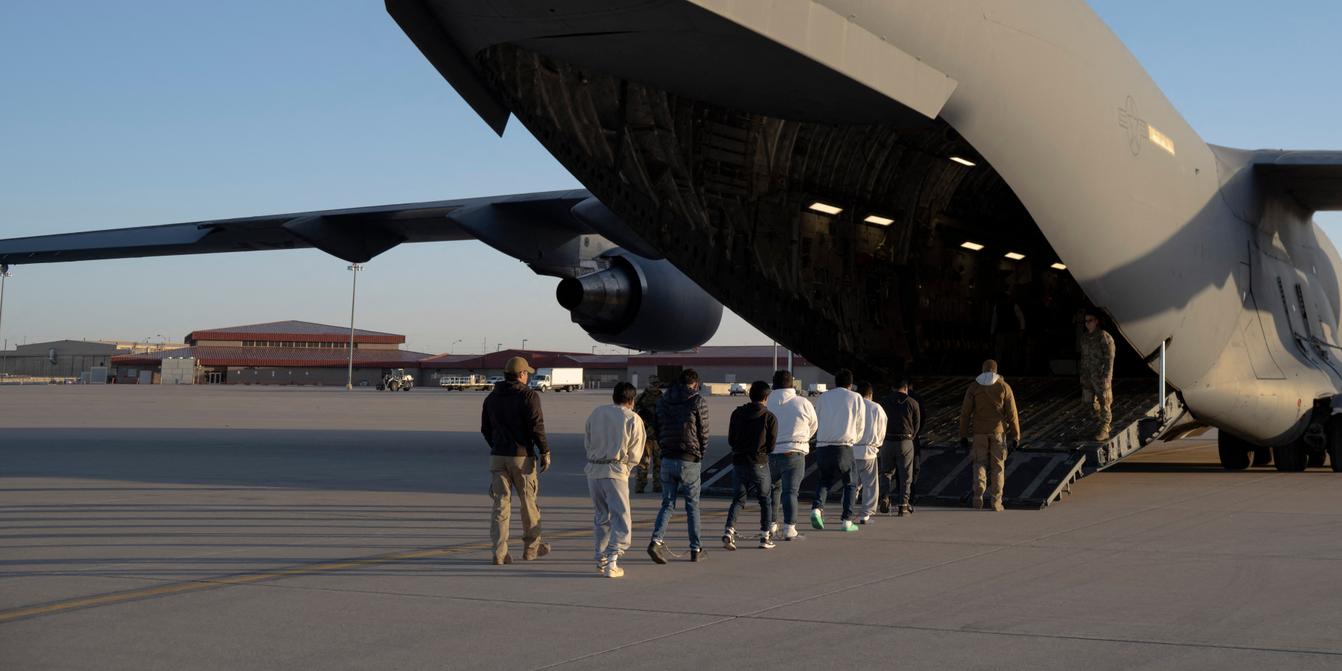
Secret agreements accelerate ICE deportations to Africa The Trump administration paid cash, offered aid and visas to African governments to secure rapid removal of undocumented migrants [1]. ICE operated two flights on 15 January and 16 February 2026, delivering 15 migrants directly to Yaoundé, Cameroon [1]. The New York Times identified nine of those migrants as handcuffed and chained, flown from an Alexandria, Virginia detention center without disclosed destination [1].
Cameroon arrests journalists and detains migrants Cameroonian police detained four reporters in Yaoundé for several hours and seized their equipment after they investigated the 15‑person deportation [1]. Lawyer Joseph Fru Awah reported police intimidation and warned that investigators could not speak freely [1]. The Yaoundé detention center now holds the 15 deportees, many of whom arrived from the United States under the secret agreements [1].
Farah’s protection order ignored during illegal transfer Farah, a 21‑year‑old gay Moroccan woman, received a U.S. immigration judge’s protection order in August 2025 that barred her removal to Morocco [2]. Three days before a scheduled hearing, ICE officers handcuffed her, flew her to Cameroon, placed her in the same Yaoundé center, and then transferred her to Morocco despite the order [2]. Her case illustrates a broader pattern of dozens of migrants being sent to third‑country destinations in violation of judicial orders [2].
U.S. agencies claim legality while NGOs demand transparency DHS asserted that it “applies the law as written” and that third‑country agreements provide due process, while the State Department declined comment [2]. The International Organization for Migration said it only tracks voluntary returns and has limited knowledge of the removals [2]. Critics note that the secret deals and lack of destination disclosure undermine oversight and raise human‑rights concerns [1][2].
Sources
-
1.
Le Monde: US‑Trump Deals with African Nations Fuel Secret Migrant Deportations: reports cash payments, aid, visas, ICE flights, journalist arrests, and lawyer Awah’s warnings, emphasizing the covert nature of the agreements .
-
2.
AP: Gay asylum‑seeker deported to Morocco after illegal third‑country transfer: details Farah’s protection order, her handcuffed transfer through Cameroon, and U.S. agencies’ legal justification, highlighting the loophole used for dozens of similar deportations .
Related Tickers
Timeline
Jan 2025 – Farah, a 21‑year‑old gay Moroccan woman, flees family violence, traverses six countries and reaches the U.S. border to seek asylum after obtaining Brazilian visas [1].
Mid‑2025 – ICE detains Farah for several months in Arizona and Louisiana, denies her asylum claim, but an immigration judge later issues a protection order that bars her deportation to Morocco [1].
Aug 2025 – The immigration judge formally grants Farah a protection order, preventing any removal to Morocco while her case proceeds [1].
Jul 2025 – South Sudan becomes the first African nation to receive U.S. third‑country deportees, accepting eight men who had been held at a U.S. base in Djibouti [2].
Sep 2025 – Mexican deportee Jesús Muñoz‑Gutierrez is repatriated from South Sudan back to Mexico, while South Sudanese national Dian Peter Domach is released locally [2].
Dec 2025 – The United States warns South Sudan it may cut aid, accusing the government of imposing fees on humanitarian agencies and obstructing aid operations [2].
15 Jan 2026 – ICE conducts a covert flight that transfers 15 African migrants directly from a Virginia detention center to Yaoundé, Cameroon, under a secret third‑country agreement [3].
14 Feb 2026 – The New York Times reports that nine of those migrants arrive in Cameroon handcuffed and chained, highlighting the lack of transparency about their destination [3].
16 Feb 2026 – A second ICE flight repeats the operation, delivering additional migrants to Cameroon without informing detainees of the final location [3].
17 Feb 2026 – Cameroonian lawyer Joseph Fru Awah whispers to Le Monde, “La police nous a interpellés. Je ne peux pas parler,” after police briefly detain four journalists probing the deportations [3].
22 Feb 2026 – ICE handcuffs Farah, flies her to Cameroon three days before her scheduled hearing, places her in a Yaoundé detention center, and then returns her to Morocco despite the August protection order [1].
22 Feb 2026 – DHS states it “applies the law as written” and that third‑country agreements ensure due process, while the International Organization for Migration says it only provides information on voluntary returns [1].
2017‑2021 (Trump era) – The Trump administration establishes cash‑backed, aid‑linked “loopholes” with African governments to accelerate undocumented migrant expulsions, a practice that underlies the 2026 deportations [3][1].