Trump Grants FEMA Aid to Address Massive Potomac Sewage Spill After Political Standoff
Updated (6 articles)
-
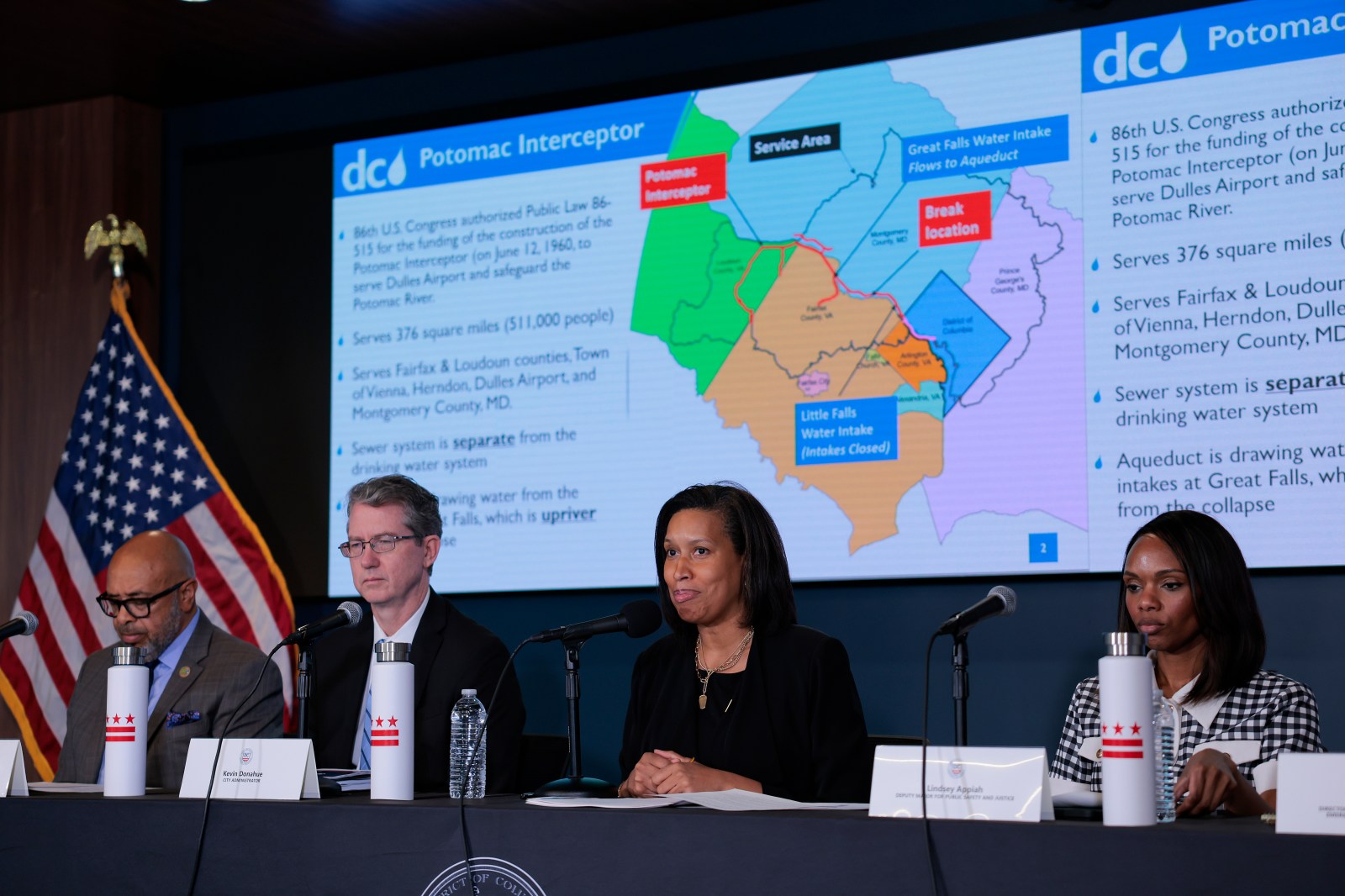 Image: NewsweekWASHINGTON DC – FEBRUARY 20: Washington, DC Mayor Muriel Bowser speaks at a news conference offering an update on the Potomac Interceptor break on February 20, 2026 in Washington, DC. This week District of Columbia Mayor Muriel Bowser declared a public emergency for the sewage spill in the Potomac River, 30 days after a section of a major pipe collapsed, unleashing millions of gallons of untreated sewage into the river. (Photo by Heather Diehl/Getty Images) Source Full size
 -
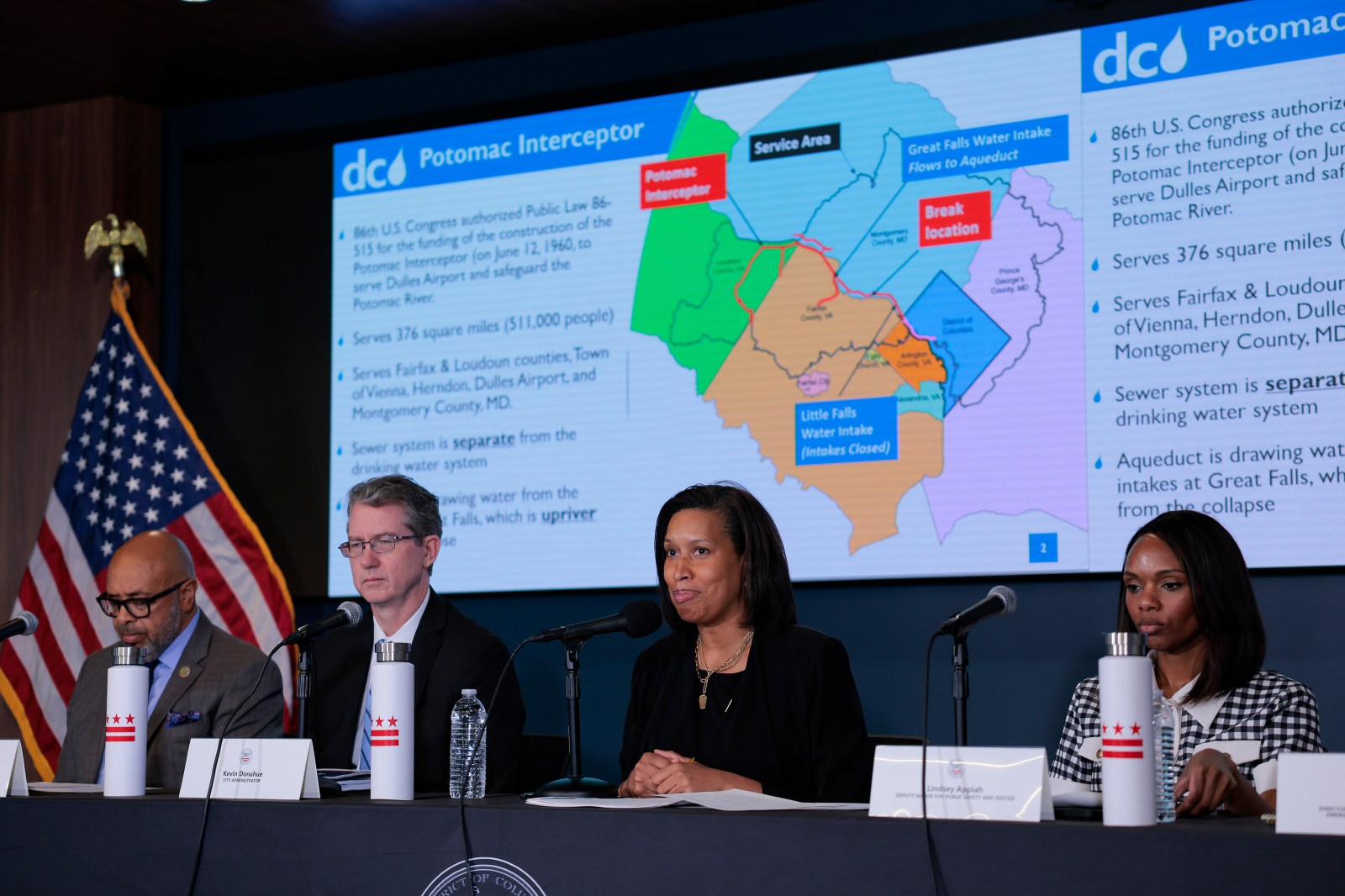 Image: NewsweekWASHINGTON DC – FEBRUARY 20: Washington, DC Mayor Muriel Bowser speaks at a news conference offering an update on the Potomac Interceptor break on February 20, 2026 in Washington, DC. This week District of Columbia Mayor Muriel Bowser declared a public emergency for the sewage spill in the Potomac River, 30 days after a section of a major pipe collapsed, unleashing millions of gallons of untreated sewage into the river. (Photo by Heather Diehl/Getty Images) Source Full size
Federal Emergency Aid Authorized Following Mayor’s Request President Donald Trump signed off on emergency FEMA assistance on Feb 22, after D.C. Mayor Muriel Bowser declared a state of emergency and formally asked for federal help [1][2]. The aid enables FEMA to supply equipment and resources to contain the Jan 19 sewage leak and support ongoing response operations [1]. This approval follows Trump’s earlier public criticism of Maryland officials before conceding to the request [1][2].
Pipe Rupture Dumped Roughly 250 Million Gallons of Raw Wastewater 72‑inch Potomac Interceptor pipe burst on Jan 19 in Montgomery County, Maryland, releasing at least 250 million gallons of untreated sewage into the Potomac River [1][2][3]. The spill, described as an ecological emergency, occurred on federal land and prompted an emergency bypass that limited further discharge [2][3]. Estimates from DC Water place the overflow at 243 million gallons by early February [2].
Testing Shows Elevated Bacteria but No Drinking‑Water Contamination DC Water reported increased E. coli and other pathogens downstream, with bacterial levels rising up to nine miles from the breach [2][3]. Officials confirmed that the city’s potable‑water system remained unaffected and that drinking‑water safety tests continue to meet standards [2][3]. Health agencies advise the public to avoid direct river contact while monitoring continues [1].
Trump and Maryland Governor Wes Moore Trade Blame Over Responsibility Trump publicly blamed Governor Wes Moore for the “massive ecological disaster,” accusing local leaders of incompetence [1][2]. Moore countered that the Interceptor sits on federal land, has been managed by federal agencies for a century, and that Maryland officials responded promptly [2][3]. The dispute highlights partisan tensions, with Trump demanding a formal request before federal aid and Moore urging the president to fulfill his duties [3].
Repair, Monitoring and Funding Challenges Extend Timeline The EPA and DC Water are leading pipe repairs and environmental monitoring, but full restoration is projected to take several months [1][3]. FEMA’s role is limited to monitoring due to a funding shutdown, which officials say Democrats halted, further complicating response efforts [3]. Homeland Security Secretary Kristi Noem and EPA Administrator Lee Zeldin noted readiness to act once proper requests are received [3].
Sources
-
1.
AP: Trump Approves Emergency Aid for DC Sewage Spill Cleanup: Details Trump’s Feb 22 approval of FEMA aid, the 250 million‑gallon leak, Bowser’s emergency request, and EPA/DC Water repair efforts, emphasizing political criticism before assistance .
-
2.
Newsweek: Trump Approves Federal Assistance After Potomac Sewage Spill: Highlights the same aid approval, adds FEMA coordination details, names Federal Coordinating Officer Mark K. O’Hanlon, and outlines Governor Moore’s rebuttal asserting federal ownership of the pipe .
-
3.
CNN: Trump‑Moore Standoff Over Potomac Sewage Spill: Focuses on the political clash, Trump’s demand for polite requests before aid, Moore’s refusal, and the impact of a FEMA funding shutdown on spill monitoring .
Related Tickers
Timeline
Sep 2025 – DC Water finishes rehabilitation of a quarter‑mile segment of the 1960s‑era Potomac Interceptor, part of a broader upgrade plan for the aging sewer system [2].
Jan 19, 2026 – A 72‑inch Potomac Interceptor pipe ruptures near Clara Barton Parkway in Montgomery County, Maryland, spilling raw sewage into the Potomac River; DC Water estimates the overflow at about 40 million gallons per day, roughly 66 Olympic‑size swimming pools [2][4][6].
Jan 19‑23, 2026 – DC Water installs high‑capacity pumps and removes lock gates on the C&O Canal to divert wastewater around the breach, targeting completion of the emergency bypass by Monday despite an approaching winter storm [2][4][6].
Jan 23‑24, 2026 – EPA’s mid‑Atlantic office coordinates with DC Water, Maryland officials, and other agencies, issuing daily updates and citing a 2022 EPA survey that projects $1.33 billion in District sewer upgrades over the next 20 years [2].
Jan 23‑24, 2026 – American Rivers senior director Gary Belan warns that deferred maintenance drives massive sewage releases, highlighting a national funding shortfall for water infrastructure [2].
Jan 23‑24, 2026 – A major winter storm threatens to overwhelm the diversion pumps and freeze sections of the canal, complicating containment efforts [4].
Feb 20, 2026 – DC Mayor Muriel Bowser declares a state of emergency and formally requests federal reimbursement, an Army Corps assessment, and long‑term treatment upgrades [1].
Feb 20, 2026 – President Trump posts on Truth Social that Maryland and Virginia must “call, be polite and respectful” to request federal aid and warns they will be billed later; his press secretary cites the 1974 Stafford Act, which requires a governor’s request before federal action [1].
Feb 20, 2026 – Gov. Wes Moore rebuffs Trump’s demand, telling CNN’s Kasie Hunt to “do your job,” stressing the pipe belongs to DC Water on federal land and noting federal agencies have managed it for a century [1].
Feb 20, 2026 – FEMA, hampered by a congressional funding shutdown, limits its role to monitoring the spill while officials claim Democrats halted its budget; Homeland Security Secretary Kristi Noem and EPA Administrator Lee Zeldin comment on the shutdown [1].
Feb 20, 2026 – Testing shows elevated E. coli and other pathogens up to nine miles downstream, though drinking‑water supplies remain unaffected [1].
Feb 21, 2026 – President Trump authorizes FEMA disaster assistance for the Potomac cleanup and names Mark K. O’Hanlon as Federal Coordinating Officer [3].
Feb 21, 2026 – Trump blames “incompetent Local and State Management” and specifically Governor Wes Moore for the “massive Ecological Disaster” on Truth Social [3].
Feb 21, 2026 – Governor Moore responds on X, asserting the Interceptor sits on federal land, federal agencies have overseen it for a century, and Maryland officials were on‑site within hours [3].
Feb 22, 2026 – At a White House governors’ dinner, Trump says, “We have to clean up some mess that Maryland and Virginia have left us…It’s unbelievable what they can do with incompetence” [5].
Feb 22, 2026 – Officials state that full pipe repair may take several months, underscoring the scale of the infrastructure challenge [5].
2026 onward – DC Water and the EPA continue monitoring river impacts and plan to complete the pipe rehabilitation over the coming months, with long‑term upgrades still required to prevent future failures [5].
All related articles (6 articles)
-
AP: Trump Approves Emergency Aid for DC Sewage Spill Cleanup
-
Newsweek: Trump Approves Federal Assistance After Potomac Sewage Spill
-
CNN: Trump‑Moore Standoff Over Potomac Sewage Spill
-
CNN: Massive Sewage Pipe Rupture Sends Millions of Gallons Into Potomac River
-
AP: Massive Sewer Pipe Rupture Sends Millions of Gallons of Wastewater into Potomac River
-
Newsweek: Massive sewer pipe rupture dumps millions of gallons into Potomac River near DC as containment efforts begin
External resources (8 links)
- https://governor.maryland.gov/news/press/pages/western-maryland-flood-survivors-left-without-federal-disaster-aid-after-trump-administration-denies-appeal.aspx (cited 1 times)
- https://mayor.dc.gov/release/mayor-bowser-requests-federal-support-region-continues-respond-potomac-interceptor-break (cited 1 times)
- https://www.epa.gov/newsreleases/president-trump-and-administrator-zeldin-deliver-single-largest-deregulatory-action-us (cited 1 times)
- https://truthsocial.com/@realDonaldTrump/posts/116086782319939311 (cited 1 times)
- https://x.com/GovWesMoore/status/2024169758476673293 (cited 1 times)
- https://x.com/epaleezeldin/status/2023870910365941812 (cited 1 times)