Bangladesh’s Feb 12 Election Set Amid Power Shift to BNP and Jamaat
Updated (9 articles)
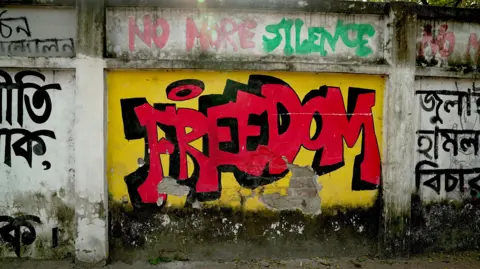
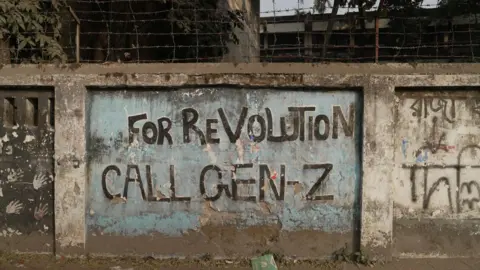
Election Timeline and Exclusion of Awami League The national vote is slated for Feb 12, 2026, proceeding without the ruling Awami League, which has been banned by the interim authorities [1]. The interim government, formed after Prime Minister Sheikh Hasina fled into exile, oversees the election process and has barred Awami League candidates from running [1]. Hundreds of candidates from the Bangladesh Nationalist Party (BNP) and Jamaat‑e‑Islami have already filed nominations [1].
BNP Returns Under Tarique Rahman After Long Exile Tarique Rahman, son of former Prime Minister Khaleda Zia, re‑entered Bangladesh politics in early January after 17 years of self‑imposed exile [1]. He now leads the BNP’s campaign, promising anti‑corruption reforms and greater youth participation [1]. The party fields a full slate of candidates across the country, positioning itself as the main opposition to Jamaat‑e‑Islami [1].
Jamaat‑e‑Islami Gains Institutional Power Through Student Union Victory Jamaat‑e‑Islami secured control of Dhaka University’s student union in September 2025, marking its first win in that body since independence [1]. Backed by its student wing, the party leveraged an alliance with the student‑led National Citizen Party (NCP) to broaden its grassroots appeal [1]. This victory signals Jamaat’s expanding influence beyond its traditional Islamist base [1].
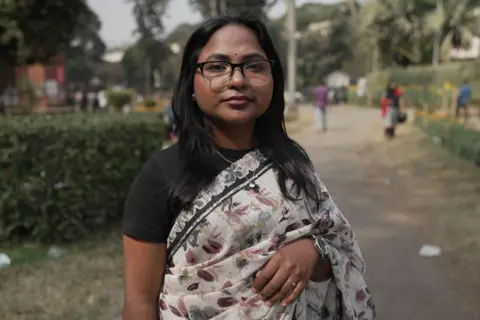
Women Activists Shift Support to BNP Over NCP Marginalisation Prominent women activists such as Shima Akhter and Tasnim Jara have accused the NCP of sidelining female candidates and resigned from its ranks [1]. Their departure has bolstered the BNP, which is perceived to field a higher proportion of women candidates [1]. The shift underscores gender‑based tensions within the emerging opposition coalition [1].
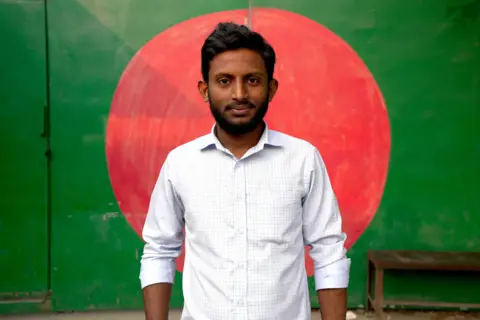
Legacy of July 2024 Crackdown Fuels Ongoing Unrest UN‑reported security crackdown in July 2024 killed approximately 1,400 protesters and forced Prime Minister Sheikh Hasina to flee the country [1]. Rahat Hossain survived a police shooting while attempting to rescue a friend, and his viral footage amplified public outrage [1]. The crackdown’s aftermath continues to shape the political landscape and voter sentiment ahead of the Feb 12 election [1].
Videos (1)
Timeline
1970 – The denial of the democratic verdict in the 1970 election fuels Bengali nationalism and later drives the independence movement, a historic backdrop for today’s political turmoil[5].
1971 – Bangladesh’s liberation after a brutal civil war establishes a winner‑takes‑all constitutional design that concentrates executive power and shapes contemporary power struggles[5].
July 17, 2024 – Student activist Abu Sayeed is shot dead, becoming the first martyr of the quota‑reform uprising and turning campus protests into a nationwide anti‑government movement[8].
July 20, 2024 – Rahat Hossain survives a police shooting while rescuing a friend; his viral video “highlights the brutality that sparked nationwide protests”[1].
July 2024 – August 2024 – A security crackdown kills an estimated 1,400 protesters, prompting Prime Minister Sheikh Hasina to flee and an interim army government to assume power[1].
August 5, 2024 – The Hasina government collapses as student‑led protests intensify; the army installs an interim administration and the Chhatra League disappears the day before a major Dhaka march[8].
September 2024 – Jamaat‑e‑Islami wins control of Dhaka University’s student union for the first time since independence, signalling its growing grassroots appeal[1].
October 2024 – The interim authorities ban the Awami League’s student wing, Chhatra League, further fragmenting the party’s organisational base[3].
May 11, 2025 – The interim government formally bars the Awami League from political activity, marking the first time since 1971 the party is excluded from elections[3].
Nov 17, 2025 – The International Crimes Tribunal hands death sentences to Sheikh Hasina and former Home Minister Asaduzzaman Khan Kamal, reshaping the electoral landscape[3].
Dec 11, 2025 – The election is announced for Feb 12, 2026; the BNP plans Tarique Rahman’s return from 17 years exile and Jamaat‑e‑Islami prepares to field hundreds of candidates[4].
Dec 10, 2025 – Advisers Mahfuj Alam and Asif Mahmud Shojib Bhuiyan resign from the Yunus interim cabinet, reducing student representation ahead of the poll schedule announcement[9].
Dec 21, 2025 – Press adviser Shafiqul Alam states “no party is being favored or pressured,” while discussing a possible referendum on the July Charter “before or alongside the elections”[7].
Dec 21, 2025 – Rumours of “burying the Constitution” and rising attacks on religious minorities deepen uncertainty about a democratic transition[6].
Dec 22, 2025 – Youth leader Sharif Osman Hadi is shot and later dies in Singapore, prompting India to call the act a “horrendous violation” and the UN to demand a transparent investigation[4].
Jan 22, 2026 – Campaigning opens nationwide; interim leader Muhammad Yunus pledges the vote will be “free and fair,” while Tarique Rahman launches the BNP campaign in Sylhet and the NCP‑Jamaat alliance rallies in Dhaka[2].
Feb 5, 2026 – The Feb 12 election proceeds without the Awami League; the BNP and Jamaat‑e‑Islami compete, the NCP remains fractured but allied with Jamaat, women activists shift support to the BNP over marginalisation, and “the vote will decide the future of Bangladesh’s Gen‑Z revolution”[1].
All related articles (9 articles)
-
BBC: Bangladesh’s Gen‑Z Revolution Faces New Power Struggle Ahead of Feb 12 Election
-
AP: Bangladesh Campaigning Opens Ahead of Feb. 12 National Election
-
The Hindu: Interim government bars Awami League from Bangladesh election
-
The Hindu: Bangladesh on edge as elections loom and protests escalate
-
The Hindu: Interim Bangladesh government under Yunus faces election questions ahead of 2026
-
The Hindu: Interim Bangladesh adviser says no party favored, signals referendum ahead of elections
-
The Hindu: Student-led quota reform upends Hasina government and reshapes Bangladesh politics
-
The Hindu: Bangladesh at a critical juncture calls for constitutional reform
-
The Hindu: Two student advisers to Bangladesh’s interim government resign ahead of poll schedule announcement
External resources (3 links)
- https://learningcorner.epaper.thehindu.com/reader?book=https%3A%2F%2Ffirebasestorage.googleapis.com%2Fv0%2Fb%2Fthe-hindu-epaper-ea846.firebasestorage.app%2Fo%2Freader%252FBangladesh_Ahead_of_Elections_2026_N.epub (cited 1 times)
- https://www.thedailystar.net/news/bangladesh/crime-justice/news/tayims-killing-ict-2-presses-charges-against-11-former-cops (cited 1 times)