Trump’s Board of Peace Holds First Meeting, Announces $7 Billion Gaza Relief Pledge
Updated (22 articles)
Inaugural Board Convenes in Washington on Feb 19 On Thursday, Feb 19 2026, the newly created Board of Peace met in Washington for its inaugural session, drawing officials from nearly 50 nations and observers such as the European Union. Twenty‑seven countries formally joined the board, while additional states attended in observer capacity, reflecting broad international interest. The meeting featured high‑profile speakers including President Donald Trump, Secretary of State Marco Rubio, former British Prime Minister Tony Blair, and UN ambassador Mike Waltz [1][3].
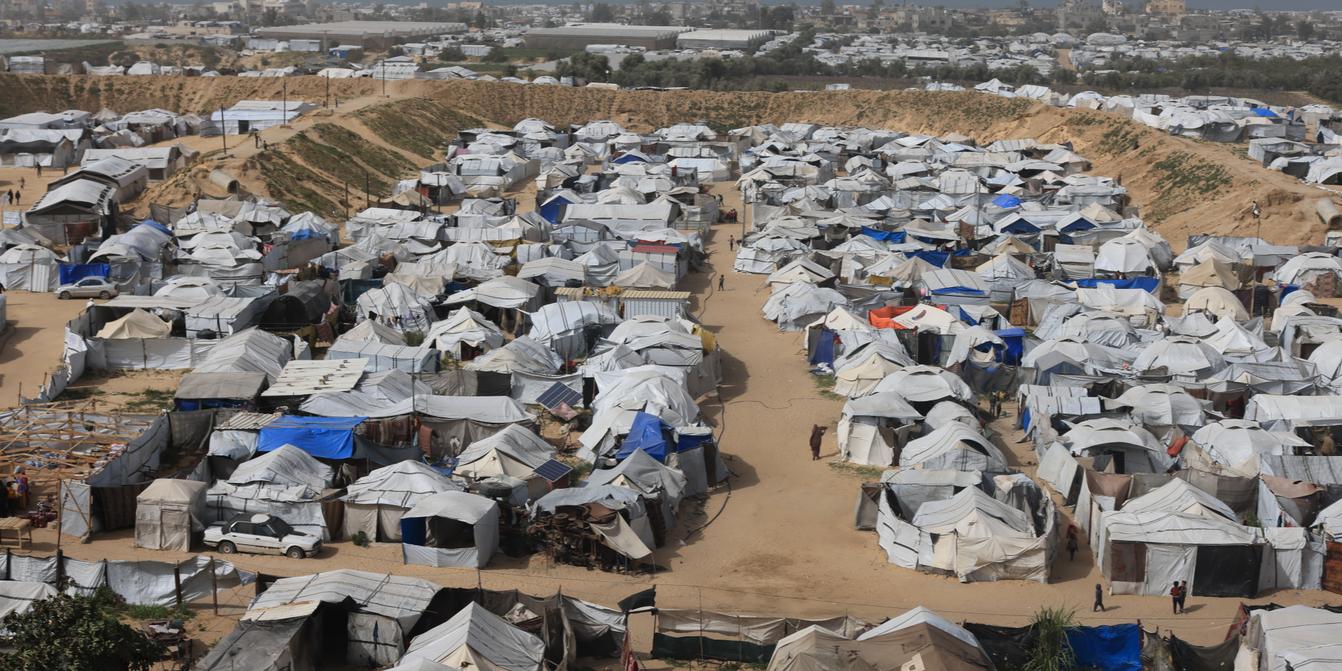
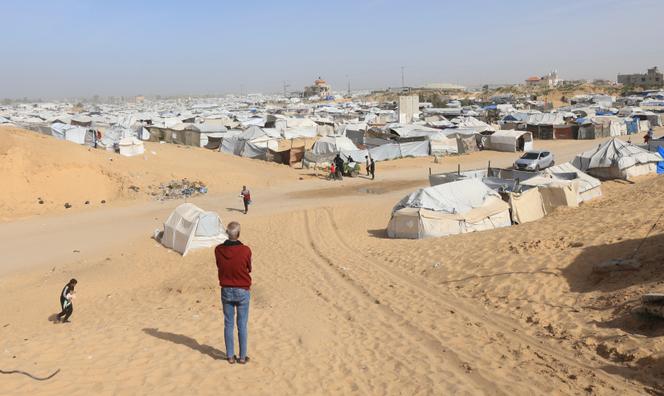
Funding Pledges Vary Between $5 Billion and $7 Billion President Trump announced that nine board members collectively pledged $7 billion for Gaza relief, a figure highlighted in the AP report on the same day. Earlier AP coverage and the UN Security Council briefing reported a total of $5 billion pledged by members, noting the amount falls far short of the roughly $70 billion needed for full reconstruction. The discrepancy underscores differing statements from the administration and member states about the exact funding level [1][3][4][5].
Indonesia Leads Troop Commitment for Stabilization Force Indonesia emerged as the sole nation to commit troops for the proposed International Stabilization Force, training up to 8,000 soldiers for deployment by June. Other countries have not yet offered personnel, and the United States has discussed contributing thousands but has not disclosed final numbers. The force is intended to support a nascent Palestinian police body and help secure reconstruction sites [3][4][6].
UN Deputy Fletcher Defends UN Role Amid New Board UN Deputy Secretary‑General Tom Fletcher, who oversees OCHA, visited Paris on Feb 19 and said the Board’s activities complement rather than replace UN efforts, emphasizing the UN’s 193‑member authority. He noted the UN resolution defining the Board’s mandate focuses on Gaza and that the international community will monitor its evolution. Fletcher also referenced discussions at Davos where White House officials assured the Board would not supplant the UN [2][4].
Key Allies Decline Membership, Vatican Voices Criticism Several traditional allies, including France, Germany, Norway, and Sweden, declined to join the Board, preferring to work through the United Nations framework. The Vatican’s Cardinal Pietro Parolin urged the UN to lead crisis management, while White House press secretary Karoline Leavitt defended the Board as a legitimate organization with tens of member countries. High‑profile speakers such as Jared Kushner and special envoy Steve Witkoff highlighted the administration’s push for rapid reconstruction and security coordination [3][5][6].
Sources
-
1.
AP: Trump’s Board of Peace Holds First Meeting, Announces $7 Billion Gaza Relief Pledge: reports the Feb 19 inaugural meeting, 27 member nations, EU observer, and Trump’s $7 billion pledge, emphasizing the board’s broad diplomatic attendance .
-
2.
Le Monde: UN Deputy Secretary‑General Tom Fletcher Defends UN Role Amid Trump Peace Council Meeting: features Fletcher’s Paris visit, his defense of the UN’s central role, and comments that the Board is complementary, not a replacement, citing Davos assurances .
-
3.
AP: Trump Holds First Board of Peace Meeting on Gaza Reconstruction: details the meeting’s focus on Gaza rebuilding, a $5 billion member pledge, Indonesia’s troop offer, Vatican criticism, and the roster of high‑profile speakers .
-
4.
AP: UN Security Council Calls for Permanent Gaza Ceasefire as Trump’s Board of Peace Meets: describes the UN Security Council’s accelerated session, calls for a permanent ceasefire, Pakistan’s condemnation of West Bank settlements, and notes the $5 billion pledge and potential Indonesian troop deployment .
-
5.
CNN: Trump convenes inaugural Board of Peace meeting, pledges billions for Gaza reconstruction: outlines the mixed membership, 90‑second speaking slots, multi‑billion‑dollar funding announcement, and concerns that the board could act as a UN counterweight, with references to broader regional tensions .
-
6.
AP: Trump’s Board of Peace convenes as Gaza truce faces hurdles: highlights the board’s early test, Trump’s vision for a high‑tech Gaza, ongoing Israeli strikes, the refusal of several Western allies, and Indonesia’s training of up to 8,000 soldiers for a stabilization force .
Timeline
Oct 2023 – Hamas launches a large‑scale attack on Israel, igniting the Gaza war that later underpins Trump’s 20‑point peace plan [9].
Oct 2025 – The first stage of Trump’s plan takes effect as a ceasefire holds across Gaza, creating a fragile peace foundation for subsequent initiatives [9].
Jan 17, 2026 – Trump expands the Board of Peace into a global conflict‑resolution body, sending invitation letters to leaders such as Argentina’s Javier Milei and Paraguay’s Santiago Peña and describing a “new International Organization and Transitional Governing Administration” [21].
Jan 18, 2026 – Trump publicly invites world leaders to join the Board of Peace, outlining a National Committee for the Administration of Gaza (NCAG) led by Ali Shaath and a Gaza Executive Board to oversee reconstruction, while noting the ceasefire has been in place since Oct 2025 [9].
Jan 19, 2026 – The Kremlin confirms that President Vladimir Putin receives an invitation to the U.S.–led Gaza Peace Board and is reviewing the proposal’s details [8].
Jan 20, 2026 – Nations worldwide weigh joining the Board; France declines over UN concerns, while the White House plans to announce the official member list at the World Economic Forum in Davos [7].
Jan 20, 2026 – The draft charter widens the Board’s remit beyond Gaza, granting Trump direct control over membership, voting and structure, and inviting dozens of states including the UAE, Morocco and Vietnam [18].
Jan 20, 2026 – Israel receives an invitation to the Board, alongside Russia, Belarus and the EU, sparking Israeli objections that the proposal was not coordinated with its government [19].
Jan 21, 2026 – Muslim‑majority countries (Egypt, Indonesia, Jordan, Pakistan, Qatar, Saudi Arabia, UAE) pledge to join, while Western Europe balks; Netanyahu announces Israel will join, and Trump hints the Board “might” replace the United Nations [17].
Jan 22, 2026 – Trump pushes the Board beyond Gaza, securing acceptance from eight Muslim states, while France rejects the invitation and Russia, China and Britain remain undecided [16].
Jan 22, 2026 – Critics warn the newly launched Board could duplicate U.S. diplomatic structures, lacks enforcement power, and may undermine existing UN mechanisms [6].
Jan 27, 2026 – The Board expands to about two dozen founding members, adding Egypt, Indonesia, Jordan, Pakistan, Qatar, Saudi Arabia, Turkey, the UAE, Bahrain, Kazakhstan, Morocco, Uzbekistan and Israel, while traditional European allies continue to decline [5].
Jan 29, 2026 – Belarus formally joins the Board as a founding member, confirming its acceptance of the invitation [4].
Jan 29, 2026 – The Board’s scope broadens to “eclipse the Security Council,” prompting UN Secretary‑General Guterres to reaffirm the UN’s primacy and highlighting a charter provision that gives Trump indefinite chairmanship and veto power [14].
Feb 18, 2026 – The UN Security Council moves up a session to urge a permanent Gaza ceasefire; board members pledge $5 billion for reconstruction and Indonesia prepares up to 8,000 troops for an International Stabilization Force by June [13].
Feb 18, 2026 – The inaugural Board meeting is scheduled in Washington, with Trump envisioning a high‑tech “futuristic metropolis” for Gaza and noting ongoing Israeli strikes and Hamas’s refusal to disarm [12].
Feb 19, 2026 – Trump convenes the inaugural Board of Peace meeting, pledging multi‑billion‑dollar funding for Gaza reconstruction and announcing a potential U.S. contribution of up to 20,000 soldiers for an International Stabilization Force [1].
Feb 19, 2026 – Board members collectively pledge $5 billion (later reported as $7 billion) for Gaza relief and commit thousands of personnel for stabilization, while over 40 nations and the EU attend as observers [10][11].
Feb 19, 2026 – UN Deputy Secretary‑General Tom Fletcher, speaking from Paris, says the Board’s mandate complements rather than replaces UN efforts and stresses the UN’s broader authority with 193 members [22].
All related articles (22 articles)
-
AP: Trump’s Board of Peace Holds First Meeting, Announces $7 Billion Gaza Relief Pledge
-
Le Monde: UN Deputy Secretary‑General Tom Fletcher Defends UN Role Amid Trump Peace Council Meeting
-
AP: Trump Holds First Board of Peace Meeting on Gaza Reconstruction
-
AP: UN Security Council Calls for Permanent Gaza Ceasefire as Trump’s Board of Peace Meets
-
CNN: Trump convenes inaugural Board of Peace meeting, pledges billions for Gaza reconstruction
-
AP: Trump’s Board of Peace convenes as Gaza truce faces hurdles
-
AP: Trump’s Board of Peace faces global rejection and UN pushback
-
Newsweek: Belarus Joins Donald Trump’s Board of Peace
-
Newsweek: Trump’s Board of Peace Gains Global Membership Amid UN‑Challenge Debate
-
Newsweek: Trump's Board of Peace faces structural flaws and ally skepticism
-
AP: Trump's Board of Peace expands invites as some European nations decline
-
AP: Trump pushes Board of Peace, challenging UN Security Council
-
AP: Trump's Board of Peace faces Western pushback and Muslim-majority backing
-
CNN: Trump says Board of Peace could replace UN in Gaza reconstruction
-
AP: Trump's Board of Peace expands beyond Gaza with global invitations
-
Newsweek: Nations weigh joining Trump's Board of Peace as France declines.
-
AP: Israel invited to join Trump's Board of Peace as invitations extend to Putin, Lukashenko and others
-
CNN: Putin invited to join Trump's Gaza Board of Peace, Kremlin says
-
Newsweek: Putin invited to join Gaza Peace Board, Kremlin confirms
-
AP: Eight-plus countries invited to join Trump's Board of Peace on Gaza plan
-
Newsweek: Trump invites world leaders to join Board of Peace for Gaza plan
-
AP: Trump's Board of Peace expands beyond Gaza to broader global ambitions
External resources (4 links)
- https://www.whitehouse.gov/briefings-statements/2026/01/statement-on-president-trumps-comprehensive-plan-to-end-the-gaza-conflict/ (cited 1 times)
- https://x.com/santipenap/status/2012528217521836420?s=46 (cited 2 times)
- https://t.co/4mHTZw7Uvi (cited 1 times)
- https://x.com/jmilei/status/2012495664546992638?s=46 (cited 1 times)