Spain’s Parliament to Ban Social Media for Under‑16s, Expand Executive Criminal Liability
Updated (2 articles)
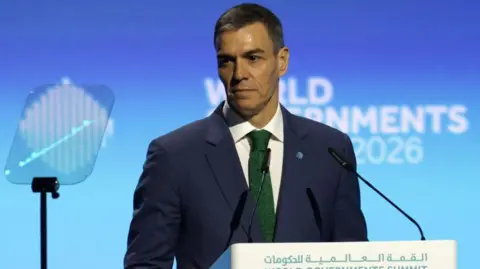
Sánchez Announces Ban at Dubai Summit On 3 February 2026, Prime Minister Pedro Sánchez revealed Spain’s draft law to prohibit anyone under 16 from accessing social‑media platforms. The announcement came during the World Governments Summit in Dubai, where he framed the measure as protection against addiction, pornography, manipulation and violence online. The proposal requires platforms to deploy robust age‑verification systems rather than simple check‑boxes, citing Australian children bypassing current checks. [1][2]
Criminal Responsibility Extended to Platform Executives The draft legislation creates a new criminal offense for social‑media executives who fail to remove illegal or hateful content. It also penalises the algorithmic amplification of such material, introducing a “hate and polarization footprint” to monitor platform influence. Sánchez warned that current safeguards are insufficient and that personal liability will deter negligent behavior. [1][2]
Investigations Target AI Tool Grok and Major Platforms Spain’s plan includes probes into the AI chatbot Grok and major services such as TikTok and Instagram for potential crimes linked to illegal content. The European Commission and the UK’s Information Commissioner’s Office have already opened separate investigations into Grok, highlighting cross‑border regulatory interest. These inquiries complement the domestic legal reforms aimed at curbing harmful digital practices. [1]
International Context and Domestic Political Reaction Australia introduced a similar under‑16 ban in December 2025, while France, Denmark, Austria and the UK are considering comparable limits, indicating a broader European trend. Within Spain, the centre‑right People’s Party supports the ban, whereas the far‑right Vox opposes it; X owner Elon Musk labeled Sánchez a “tyrant and traitor.” Platforms have not yet issued official statements on the forthcoming law. [1][2]
Sources
-
1.
BBC: Spain moves to ban social media for under‑16s: outlines Sánchez’s Dubai announcement, robust age‑verification, criminal liability for executives, investigations into Grok, and mixed political and industry reactions, noting Australia’s precedent and other European considerations.
-
2.
CNN: Spain Moves to Ban Social Media for Under‑16s, Expands Criminal Liability for Platforms: emphasizes the ban, strict age checks, personal liability for executives, algorithmic amplification offense, upcoming parliamentary process, hate‑footprint system, and compares Australia’s ban with European under‑15 limits.
Timeline
Dec 2025 – Australia bans users under 16 from ten major social‑media platforms, becoming the first country to enforce a nationwide age‑restriction and prompting other European states to consider similar measures[2].
2025 – France and Denmark announce plans to restrict access for users under 15, signalling a broader European shift toward tighter age‑gate policies on digital services[2].
Feb 3 2026 – At the World Governments Summit in Dubai, Prime Minister Pedro Sánchez unveils Spain’s draft law to prohibit under‑16s from social media, mandate robust age‑verification tools, and hold platform executives criminally liable for illegal or harmful content[1][2].
Feb 3 2026 – Sánchez warns that children “face addiction, abuse, pornography, manipulation and violence online,” describing the current environment as a “digital Wild West” and pledging to shield minors from such harms[2].
Feb 3 2026 – The proposal creates a new offense for “algorithmic manipulation and amplification of illegal content,” and introduces a “hate and polarization footprint” to quantify how platforms fuel division and spread hate[2].
Feb 3 2026 – Spain launches investigations into AI tool Grok and major platforms TikTok and Instagram for alleged crimes linked to harmful content, joining separate probes by the European Commission and the UK’s ICO[1].
Feb 3 2026 – X owner Elon Musk reacts on social media, calling Sánchez a “tyrant and traitor,” highlighting the contentious political and industry response to the ban[1].
Mid‑Feb 2026 (next week) – The Spanish parliamentary process on the under‑16 ban begins, moving the draft law toward a vote and potential enactment later in the year[2].
Late 2026 (if passed) – The law would bar users younger than 16 from accessing social‑media platforms, enforce strict age‑verification, and impose criminal penalties on platform leaders who ignore illegal or hateful material[1][2].