CBS Moves Texas Candidate Interview to YouTube After FCC Equal‑Time Warning
Updated (3 articles)
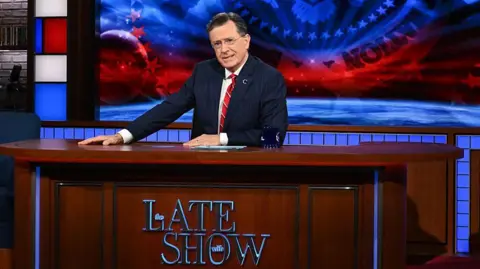
FCC Guidance Forces Networks to Re‑Evaluate Equal‑Time Risks The Federal Communications Commission’s chair, Brendan Carr, issued new guidance in January stating that late‑night and daytime talk shows no longer qualify for the “bona‑fide news” exemption, meaning any candidate interview could trigger equal‑time obligations [1][2]. CBS lawyers warned “The Late Show” staff that airing Texas Rep. James Talarico’s interview might obligate the network to provide comparable airtime to other Senate primary candidates [1][2]. Colbert disclosed the dispute on‑air, saying the network’s legal counsel blocked the broadcast to avoid potential FCC retaliation [1][2].
CBS Shifts Interview to YouTube to Circumvent Broadcast Rules Rather than cancel the segment, CBS posted the full conversation on the show’s YouTube channel, a platform exempt from the FCC’s equal‑time rule [1][2]. The network promoted the online exclusive during the televised program, offering viewers a way to watch the interview without violating the new guidance [1][2]. CBS later clarified that it was not “barred” from airing the piece but simply followed legal advice to prevent a broadcast‑level equal‑time requirement [1][2].
Democratic Commissioner Anna Gomez Rejects FCC’s New Stance Commissioner Anna Gomez publicly condemned the FCC’s interpretation, asserting that the commission has not adopted any policy change to alter the exemption for talk shows [1][2]. She labeled the investigation into the interview a “sham” intended to intimidate broadcasters and defended the First Amendment right to free speech [1][2]. Gomez’s criticism highlights partisan disagreement over the FCC’s authority in this area [1][2].
Interview Generates Over Two Million Views and Aids Talarico’s Campaign The YouTube upload quickly amassed more than 2 million views, providing significant exposure for Talarico ahead of the March 3 Democratic Senate primary [2]. Talarico’s campaign framed the incident as an attempt by the Trump‑aligned administration to suppress his message, using the viral clip to rally supporters [2]. The surge in online attention has been credited with boosting his poll numbers in the tightly contested race [2].
Paramount Settlement Mentioned Only in BBC Report The BBC article notes that Paramount Global, CBS’s parent company, paid a $16 million settlement related to a Kamala Harris interview, a move viewed as protecting its pending merger with Skydance Media from possible FCC intervention [1]. The CNN piece does not reference this settlement, indicating a discrepancy in coverage regarding corporate‑level ramifications of the FCC dispute [2].
Sources
-
1.
BBC: Colbert Claims CBS Blocked Texas Lawmaker Interview Over FCC Concerns: Details CBS’s legal caution, the YouTube workaround, FCC chair Carr’s guidance, Anna Gomez’s condemnation, and Paramount’s $16 million settlement linked to merger concerns .
-
2.
CNN: Colbert Claims CBS Blocked Texas Senate Candidate Interview Amid FCC Pressure: Emphasizes the legal advice, YouTube‑only release, Carr’s reinterpretation of the exemption, Gomez’s dispute of FCC policy, and the interview’s 2 million‑view impact on Talarico’s primary campaign .
Videos (1)
Timeline
Jan 26, 2025 – KCBS‑AM airs a brief report that immigration agents in unmarked vehicles are operating six days into President Trump’s term, sparking outrage from conservative influencers and prompting a wave of listener complaints that mark the start of the station’s regulatory troubles[3].
Feb 2025 – FCC Chair Brendan Carr launches an inquiry into KCBS, accusing the station of failing to serve the public interest and signaling a broader willingness to scrutinize media beyond the major networks[3].
Feb 2025 – The White House blocks AP access to events after the wire service continues using the “Gulf of Mexico” name; a federal judge orders the restriction lifted, but the order is stayed pending appeal, further heightening tensions between the administration and news outlets[3].
Oct 2025 – KCBS assigns a reporter to cover the No Kings Day protests, a move staff describe as a “welcome change” that restores some political coverage after months of self‑censorship[3].
Jan 2026 – FCC Chair Brendan Carr issues new guidance stating that legacy TV networks can no longer assume late‑night or daytime talk shows qualify as “bona fide news,” effectively extending the equal‑time rule to programs like The Late Show[1].
Feb 17, 2026 – Stephen Colbert announces on air that CBS lawyers have halted the broadcast of Texas Rep. James Talarico’s interview, warning that airing it could trigger the FCC’s equal‑time obligations[2].
Feb 17, 2026 – CBS clarifies it was not barred but received legal advice that broadcasting the segment might obligate the network to provide equal airtime to other candidates, so it opts to release the interview exclusively on YouTube while promoting it on‑air[1].
Feb 17, 2026 – Democratic FCC commissioner Anna Gómez condemns the network’s move as “corporate capitulation” and calls the FCC’s investigation a “sham,” asserting the commission has no authority to pressure broadcasters[1].
Feb 18, 2026 – The full Talarico interview posts to The Late Show’s YouTube channel, where the equal‑time rule does not apply; the clip quickly exceeds 2 million views, boosting the candidate’s visibility ahead of the March 3 primary[1].
2026 (date unspecified) – Paramount Global settles a $16 million dispute over a Kamala Harris interview, a payment viewed as protecting its planned merger with Skydance Media from possible Trump‑led FCC intervention[1].
Mar 3, 2026 – James Talarico appears on the ballot in the Texas Democratic Senate primary, a contest that his YouTube interview exposure has helped shape[2].
All related articles (3 articles)
External resources (1 links)
- https://www.youtube.com/watch?v=oiTJ7Pz_59A&t=1s (cited 1 times)