Trump Warns Khamenei as US‑Iran Nuclear Talks Scheduled for Friday in Oman
Updated (3 articles)
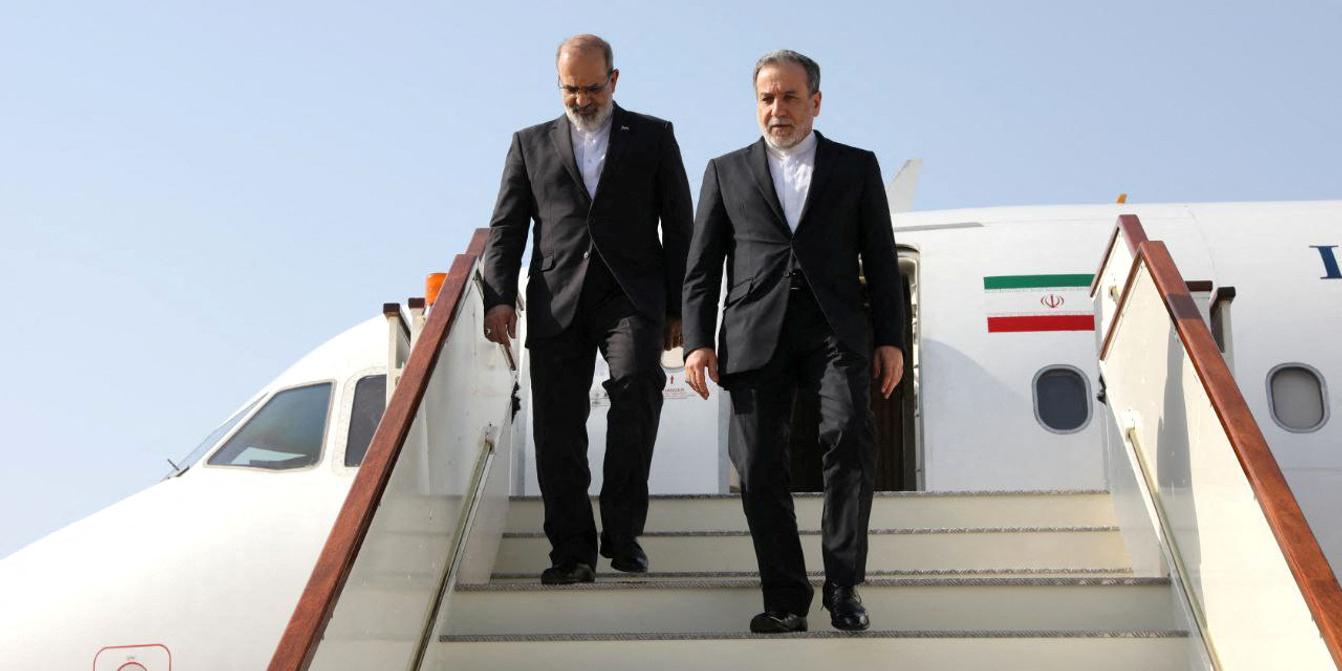
Talks Confirmed for Friday in Muscat Iranian Foreign Minister Abbas Araghchi announced that U.S. and Iranian delegations will meet on Friday at 10 a.m. in Muscat, with Oman acting as host after earlier uncertainty about the venue [1][2]. The meeting aims to address Iran’s nuclear program and follows a series of diplomatic overtures after January’s protest crackdown [1][2].
Trump Issues Direct Warning to Iran’s Supreme Leader In an NBC interview aired Feb 4, President Donald Trump told Ayatollah Ali Khamenei he should be “very worried” and warned of “very hard” retaliation if Tehran continues its nuclear activities [1][2]. Trump’s remarks intensified rhetoric just days before the scheduled talks [1][2].
US Shifts Venue to Oman After Arab Pressure The White House moved the negotiations from Turkey to Oman following appeals from Arab and Muslim leaders urging continued engagement with Tehran [1][2]. No formal public announcement has been made, but officials confirm the venue change reflects regional diplomatic pressure [1][2].
Broader Agenda Raised by US Officials Secretary of State Marco Rubio stated that any agreement must also cover Iran’s ballistic‑missile program, support for regional militant groups, and human‑rights concerns [1][2]. Vice President JD Vance noted Khamenei’s refusal to speak directly with Trump, while Turkey’s President Erdogan called for a diplomatic resolution [2].
Military Posture Remains Aggressive Amid Tensions The White House reported a substantial air‑and‑naval strike force positioned near Iran, ready to act if Tehran rejects U.S. demands [1]. The force was also deployed after an Iranian drone approached a U.S. carrier in the Arabian Sea [1].
Background of Previous Oman Talks Collapse Last year’s Oman negotiations fell apart after Israel’s 12‑day war with Iran and subsequent U.S. strikes on Iranian nuclear facilities, underscoring the fragility of the diplomatic track [2].
Sources
-
1.
Le Monde: Trump warns Iran’s Supreme Leader as US‑Iran talks loom in Oman: details Trump’s warning, confirms Friday talks in Muscat, explains venue shift, highlights Rubio’s broader agenda and U.S. military readiness, and notes ongoing protest crackdown .
-
2.
Associated Press: Iran‑U.S. Nuclear Talks Set for Friday in Oman Amid Heightened Tensions: reports Araghchi’s announcement, Trump’s warning, Iran’s preference for a nuclear‑only format, background of last year’s collapse, and mixed regional support with U.S. skepticism .
Timeline
2025 – Israel fights a 12‑day war with Iran, after which the United States carries out airstrikes on Iranian nuclear facilities, causing the June 2025 Oman nuclear talks to collapse [1].
Early Jan 2026 – Nationwide protests erupt across Iran demanding political reforms; security forces launch a violent crackdown that activists estimate kills at least 646 demonstrators [2].
Jan 6‑7, 2026 – Oman’s foreign minister travels to Tehran for a mediation visit, signaling continued diplomatic engagement between Washington and Tehran despite the unrest [2].
Jan 12, 2026 – President Donald Trump tells reporters that Iran “wants to negotiate” with the United States, while weighing options such as cyber‑attacks or direct strikes in response to Tehran’s crackdown [2].
Jan 12, 2026 – Iranian Foreign Minister Abbas Araghchi declares the domestic situation “under total control” and blames Israel and the United States for the violence, framing the protests as a pretext for foreign intervention [2].
Jan 12, 2026 – Iranian Foreign Ministry spokesman Esmail Baghaei states that a diplomatic channel to the United States remains open, but insists talks must be based on mutual interests and not dictated unilaterally [2].
Jan 12, 2026 – Iran’s attorney general warns that participants in the protests could face “enemy of God” charges, intensifying the legal threat to dissenters [2].
Feb 4, 2026 – In an NBC interview, President Donald Trump warns Ayatollah Ali Khamenei that the United States is “very worried” and threatens “very hard” retaliation if Tehran proceeds with a new nuclear site [3][1].
Feb 4, 2026 – Secretary of State Marco Rubio says any meaningful agreement must address Iran’s ballistic‑missile program, regional militant support, and human‑rights concerns, rejecting a narrow nuclear‑only focus [3].
Feb 4, 2026 – The White House moves the planned U.S.–Iran talks from Turkey to Oman after appeals from Arab leaders, though it offers no formal announcement of the venue change [3].
Feb 4, 2026 – The administration positions a substantial air‑and‑naval strike force near Iran and readies it for use after a recent Iranian drone approaches a U.S. carrier in the Arabian Sea [3].
Feb 5, 2026 – Iranian Foreign Minister Abbas Araghchi confirms that U.S.–Iran nuclear negotiations will begin at 10 a.m. on Friday in Muscat, thanking Oman for facilitating the meeting [1][3].
Feb 5, 2026 – The scheduled nuclear talks take place in Muscat, with Iran pushing for a “different” format that limits discussion to its nuclear program, while U.S. officials, including Vice President JD Vance and Secretary Rubio, seek to include missiles and human‑rights issues [1][3].
Feb 5, 2026 – Regional leaders voice mixed reactions: Iran’s reformist President Masoud Pezeshkian calls for “fair and equitable” talks; Turkey’s President Recep Tayyip Erdogan urges a diplomatic resolution and opposes foreign intervention; Vice President JD Vance notes Khamenei’s refusal to speak directly with Trump [1].