NASA Targets March 6 Artemis II Launch After Wet‑Dress Rehearsal Success
Updated (4 articles)
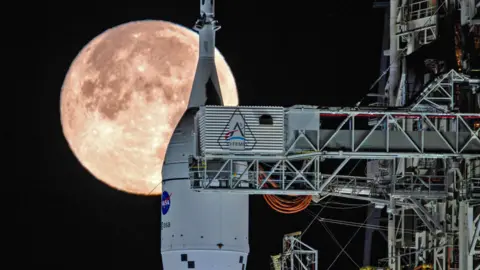
Wet‑Dress Rehearsal Resolves Hydrogen Leak Issues The Thursday evening test at Kennedy Space Center fully tanked the Space Launch System, completed the countdown sequence, and confirmed that the hydrogen leak identified on Feb 3 had been repaired. The rehearsal marked the second full‑scale wet‑dress rehearsal and demonstrated launch‑pad readiness. NASA officials called the test a “big step in earning our right to fly” and highlighted major progress between the two rehearsals. [1][2][3]
NASA Announces Earliest Launch Window of March 6 NASA set March 6 as the earliest possible liftoff, the first day of a five‑day launch window in early March before a pause until April. The window provides only five days to launch before weather and orbital constraints force a delay. Agency leaders, including Administrator Jared Isaacman, emphasized that the schedule depends on final safety reviews and weather conditions. [1][2][3]
Four‑Astronaut Crew Begins Two‑Week Quarantine The crew—Commander Reid Wiseman, Pilot Victor Glover, Mission Specialist Christina Koch, and Canadian astronaut Jeremy Hansen—will start a mandatory two‑week health quarantine on Friday night. Quarantine timing aligns with the narrow launch window, giving the team five days in March to launch after isolation. NASA’s health protocols aim to ensure crew safety for the ten‑day lunar loop mission. [1][2][3]
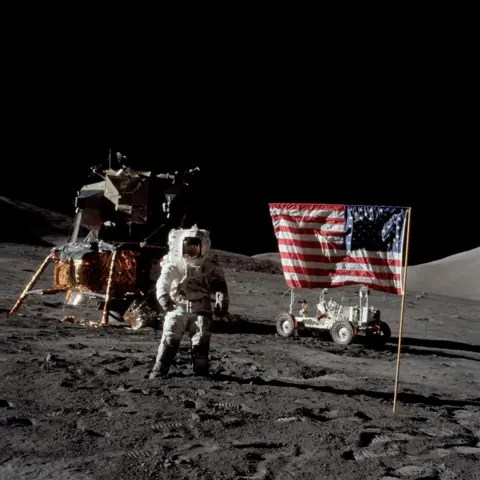
Mission Profile Targets Orion and SLS Validation Artemis II will fly a ten‑day trajectory that includes two days of Orion checkout in Earth orbit, a four‑day transit to the Moon, a flyby of the far side at an altitude of 4,000‑6,000 miles, and a Pacific splash‑down. The flight will be the first crewed lunar flyby since Apollo 17 in 1972 and will validate Orion’s systems and the Space Launch System’s performance in deep space. Success is required to clear the path for Artemis III’s planned 2028 Moon landing using a SpaceX‑built lander. [1][2][3]
Sources
-
1.
WBNS: NASA Targets March 6 Artemis II Launch After Successful Wet Dress Rehearsal: Reports NASA’s March 6 earliest launch target, details hydrogen leak fixes, quotes from Isaacman and Blackwell‑Thompson, and outlines crew quarantine and mission goals.
-
2.
King5: Artemis II May Launch March 6 After Successful Wet‑Dress Rehearsal: Highlights same launch date, emphasizes crew composition (three Americans, one Canadian), and stresses mission as first crewed lunar flight since Apollo 17.
-
3.
BBC: NASA Sets Early March Launch for Artemis II Lunar Flyby: Focuses on mission profile, lunar altitude details, quotes from Lori Glaze, and links Artemis II success to Artemis III competition with Blue Origin and China.
Related Tickers
Videos (1)
Timeline
1972 – Apollo 17 completes the last crewed lunar mission, establishing a 54‑year gap before humans return to the Moon’s vicinity, a benchmark that Artemis II aims to surpass [3].
Jan 21, 2026 – The Artemis II crew begins a mandatory health quarantine, a prerequisite for deep‑space flight, before being released and later re‑entering quarantine two weeks prior to the launch window [2].
Feb 3, 2026 – NASA conducts the first full‑scale wet‑dress rehearsal of the Space Launch System, encountering hydrogen leaks and a five‑minute countdown abort, which pushes the early‑February launch goal back [3].
Feb 20, 2026 – NASA completes a second wet‑dress rehearsal, fully tanking the SLS and confirming launch readiness after fixing the hydrogen‑leak issue identified on Feb 3 [1][3][4].
Feb 20, 2026 – NASA announces the earliest possible Artemis II launch date as March 6 (March 7 UK), setting a five‑day launch window before a pause until April [1][3][4].
Feb 20, 2026 – Administrator Jared Isaacman declares “major progress” between rehearsals, while launch director Charlie Blackwell‑Thompson calls the test “a big step in earning our right to fly” [3][4].
Feb 20, 2026 – NASA’s Lori Glaze states the crew is “excited” and that “every night I look up at the Moon… we’re ready,” underscoring high morale ahead of the mission [1].
Mar 6‑11, 2026 – NASA lists March 6, 7, 8, 9 and 11 as viable lift‑off dates for Artemis II, with the crew entering a two‑week quarantine on the night of Feb 20 to meet the window [2].
Apr 2026 (post‑window) – If the March launch does not occur, NASA pauses Artemis II operations until after April, pending final safety, operations and weather clearances [3].
2028 – A successful Artemis II flight clears the path for Artemis III, which targets a crewed Moon landing using a SpaceX‑built Starship‑launched lander [1].
2030 – China announces a goal to land astronauts on the lunar south pole, intensifying international competition for deep‑space exploration [1].
All related articles (4 articles)
-
WBNS (Columbus, OH): NASA Targets March 6 Artemis II Launch After Successful Wet Dress Rehearsal
-
King5 (Seattle, WA): Artemis II May Launch March 6 After Successful Wet‑Dress Rehearsal
-
BBC: NASA Sets Early March Launch for Artemis II Lunar Flyby
-
CNN: NASA Targets March Launch for Artemis II After Wet Dress Rehearsal Issues
External resources (7 links)
- https://www.youtube.com/watch?v=rayK1pwhzEs (cited 2 times)
- https://www.nasa.gov/blogs/missions/2026/02/03/nasa-conducts-artemis-ii-fuel-test-eyes-march-for-launch-opportunity/ (cited 2 times)
- https://www.nasa.gov/humans-in-space/astronauts/christina-koch/ (cited 2 times)
- https://www.nasa.gov/humans-in-space/astronauts/g-reid-wiseman/ (cited 2 times)
- https://www.nasa.gov/humans-in-space/astronauts/victor-j-glover/ (cited 2 times)
- https://x.com/NASAAdmin/status/2018578937115271660 (cited 1 times)