Opposition Leader Demands Separate Probes as Military Scandals Prompt Sweeping Dismissals
Updated (32 articles)


Jang Dong‑hyeok Calls for Three Distinct Special‑Counsel Inquiries In a National Assembly speech on Feb 4, 2026, People Power Party leader Jang Dong‑hyeok demanded separate investigations into alleged Unification Church funding of Democratic Party lawmakers, nomination‑related bribery, and other DP scandals, rejecting the ruling party’s plan to merge the probes [1]. He argued earlier special‑counsel inquiries into opposition figures “fizzled out” and warned the combined approach would dilute accountability [1]. Jang’s eight‑day hunger strike last month pressured the DP to accept independent counsel, and he also sought a one‑on‑one meeting with President Lee to discuss inflation, a weak won, and housing costs [1].
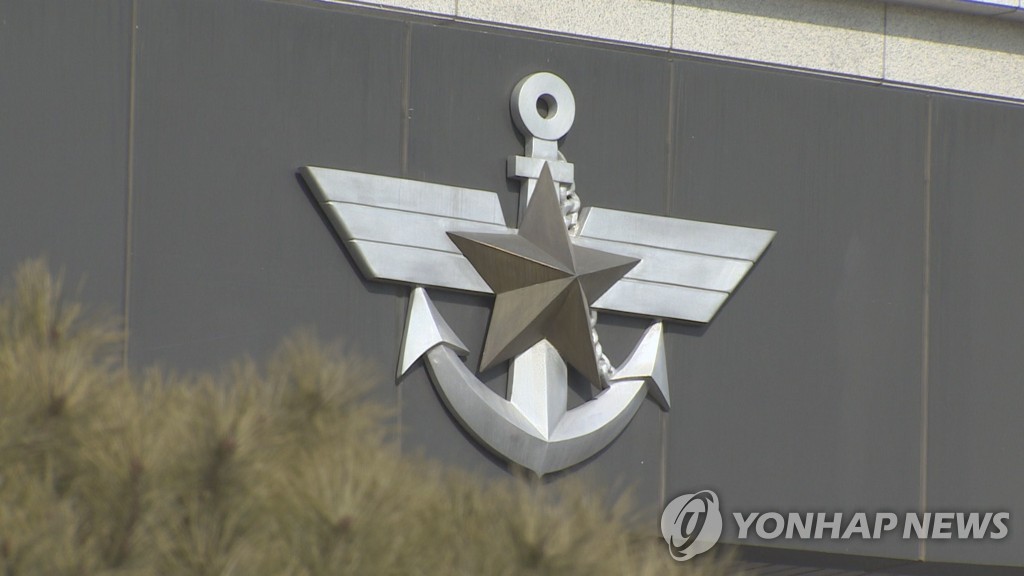
Defense Ministry Launches Blacklist Probe Targeting Counterintelligence Command On Feb 3, 2026, the Defense Ministry announced an investigation into the Defense Counterintelligence Command for compiling a “blacklist” of roughly 30 officers allegedly linked to former Democratic lawmaker Choe Kang‑wook [2]. The list reportedly included judge advocates’ service records and post‑discharge activities, and authorities suspect it guided personnel shuffles [2]. The Defense Special Investigation Headquarters now leads the case, tasked with determining disciplinary measures, after the command transferred implicated staff following an intensive inspection last year [2].
Senior Officers Dismissed for 2024 Martial‑Law Infiltration The military removed Brig. Gen. Lee Sang‑hyun and Rear Adm. Kim Dae‑woo on Jan 30, 2026, for leading troops into the National Assembly to block a vote on a martial‑law decree in late 2024, and both face criminal trials [3]. Earlier, on Jan 29, 2026, Colonel Kim Hyun‑tae and three other colonels were stripped of their posts for directing the same illegal breach, marking the most severe disciplinary action taken against senior officers [4]. The Defense Ministry described these sanctions as “heavy” and noted a disciplinary committee had also considered sanctions against two additional officers [3][4].
Broad Crackdown Reflects Political Turmoil Ahead of Local Elections The series of investigations and dismissals follows the brief, failed martial‑law attempt in December 2024 and coincides with mounting political pressure before June’s local elections [1][3]. Under Korean law, special‑counsel probes require legislative approval and a presidential appointment, a process Jang hopes to accelerate amid accusations of partisan motives [1]. The overlapping military and political probes illustrate deepening mistrust between the ruling Democratic Party and the opposition, as well as heightened scrutiny of the armed forces’ role in domestic politics [2][4].
Sources
-
1.
Yonhap: Opposition Leader Calls for Separate Special Counsel Probes into Ruling Party Allegations – Details Jang Dong‑hyeok’s demand for three independent investigations, his criticism of the DP’s combined plan, and his recent hunger strike to force accountability .
-
2.
Yonhap: Defense Ministry Probes Counterintelligence Command Over Alleged “Blacklist” – Reports the ministry’s inquiry into a blacklist of ~30 officers tied to ex‑lawyer Choe Kang‑wook, the list’s content, and the role of the Defense Special Investigation Headquarters .
-
3.
Yonhap: South Korean Military Dismisses Two Senior Officers for 2024 Martial Law Infiltration – Covers the dismissal and trial of Brig. Gen. Lee Sang‑hyun and Rear Adm. Kim Dae‑woo for storming the National Assembly during the 2024 martial‑law bid .
-
4.
Yonhap: Former Special Forces Commander Removed Over 2024 Martial Law Assault – Describes Colonel Kim Hyun‑tae’s removal alongside three other colonels, the disciplinary committee’s actions, and the ongoing insurrection‑related trial .
Timeline
Oct 2023 – A special‑counsel investigation later finds that President Yoon Suk‑yeol begins covert preparations for a martial‑law declaration, laying the groundwork for the December 2024 attempt [24].
Dec 3, 2024 – President Yoon declares martial law, orders troops to the National Assembly and the National Election Commission, and directs soldiers to block lawmakers from voting down the decree, an action that triggers immediate public backlash and later trials of senior generals [28][30].
Dec 2024 (late) – Brig. Gen. Lee Sang‑hyun leads troops into the Assembly chamber, while Rear Adm. Kim Dae‑woo dispatches an arrest team, constituting an illegal infiltration that later leads to their dismissal and criminal trials [3][4].
Dec 2024 – About 34 officers board a “martial‑law bus” from Gyeryong to Seoul after the Assembly lifts the decree, only to return 30 minutes later, a maneuver that becomes a focal point of subsequent disciplinary reviews [15][18].
Oct 2023 – Dec 2024 – The Defense Counterintelligence Command allegedly drafts a blacklist of roughly 30 officers linked to former lawmaker Choe Kang‑wook, later prompting a ministry probe in February 2026 [2].
Dec 1, 2025 – Defense Minister Ahn Gyu‑back posts a Facebook apology, acknowledging the military’s role in the 2024 martial‑law breach and pledging civilian‑led reforms [28].
Dec 1, 2025 – Acting Police Commissioner General Yoo Jae‑seong apologizes for police actions that sealed off the Assembly on Dec 3, 2024, and vows to protect constitutional order [30].
Dec 2, 2025 – Democratic Party chairman Jung Chung‑rae urges the National Assembly to create a second comprehensive special‑counsel probe to address unresolved matters from the Marine, martial‑law, and Kim Keon Hee investigations [29].
Dec 3, 2025 – Minister Ahn convenes about 150 senior commanders to plan a “military rebuilding” agenda that includes restructuring the armed forces by 2040 and restoring civilian control [27].
Dec 9, 2025 – The defense ministry announces a new special investigation unit, composed of military police and prosecutors, to continue probing martial‑law allegations as the existing special‑counsel mandate ends [26].
Dec 11, 2025 – The ministry confirms the 40‑member investigative team will launch the following week, focusing on the Defense Intelligence Command and the military propaganda unit [25].
Dec 14, 2025 – The investigative unit begins operations, deploying 119 officials to examine the Defense Intelligence Command’s alleged deployment to the Election Commission and a propaganda unit’s anti‑Pyongyang leaflets [24].
Dec 16, 2025 – Sixteen military‑police officials from the Criminal Investigation Command are suspended for attempting to detain lawmakers during the 2024 martial‑law night [23].
Dec 18, 2025 – Former President Yoon appears as a witness at the military court, apologizes to commanders on trial, and claims the short‑lived martial law was meant only to “raise an alarm bell” against the opposition [22].
Dec 22, 2025 – An inter‑agency task force, created at the prime minister’s request, seeks disciplinary action against roughly a dozen senior Army officers implicated in the martial‑law bid [21].
Dec 26, 2025 – The defense ministry dismisses Brig. Gen. Lee Jae‑sik, the former planning chief of the martial‑law command, marking a high‑profile accountability move [20].
Dec 29, 2025 – The ministry imposes severe discipline on five senior officers, including former heads of the Counterintelligence, Capital Defense, and Special Warfare Commands, signaling a decisive push for top‑rank accountability [19].
Jan 5, 2026 – A disciplinary panel convenes to decide penalties for seven generals tied to the failed martial‑law bid, part of a broader reform drive after the Dec 3, 2024 incident [18].
Jan 7, 2026 – Four senior Army officers receive three‑month suspensions for their roles in the martial‑law bus operation, while two additional officers await disciplinary outcomes [15][16].
Jan 8, 2026 – The defense ministry announces plans to dismantle the 49‑year‑old Defense Counterintelligence Command, aiming to complete the restructuring and create a new Defense Security Intelligence Agency by year‑end [12][13][14].
Jan 12, 2026 – Two two‑star generals are dismissed for participation in the Dec 2024 martial‑law command, adding to a series of senior‑officer removals [11].
Jan 15, 2026 – The National Assembly introduces a bill to launch a second comprehensive special‑counsel probe into former President Yoon’s martial‑law decree, the 2023 Marine death, and allegations against his wife [10].
Jan 16, 2026 – The Assembly passes the probe bill 172‑2 after ending a 24‑hour filibuster; People Power Party leader Jang Dong‑hyeok begins an eight‑day hunger strike demanding separate investigations into Unification‑Church‑related bribery [8][9][10].
Jan 23, 2026 – A disciplinary committee meets to rule on six officers charged with insurrection for the Dec 2024 martial‑law attempt, signaling continued accountability within the armed forces [6].
Jan 27, 2026 – A special‑counsel team requests the transfer of the martial‑law case of six officers to the civilian Seoul Central District Court, marking a rare civilian‑jurisdiction intervention [5].
Jan 29, 2026 – Colonel Kim Hyun‑tae, former head of the 707th Special Mission Group, is removed from duty after being charged with directing troops into the Assembly during the night‑time martial‑law assault [4].
Jan 30, 2026 – Two senior officers—Brig. Gen. Lee Sang‑hyun and Rear Adm. Kim Dae‑woo—are dismissed and face criminal trials for leading the illegal National Assembly infiltration in late 2024 [3].
Feb 3, 2026 – The defense ministry opens a probe into the Counterintelligence Command’s alleged 2023 “blacklist” of officers tied to former lawmaker Choe Kang‑wook, assigning the case to the Defense Special Investigation Headquarters [2].
Feb 4, 2026 – Opposition leader Jang Dong‑hyeok calls for three separate special‑counsel investigations into alleged Unification‑Church funding, DP‑lawyer bribery, and the Yoon martial‑law case, and demands a one‑on‑one meeting with President Lee Jae‑myung [1].
Dive deeper (7 sub-stories)
-
Opposition Leader Jang Demands Separate Special‑Counsel Probes Amid Hunger‑Strike Pressure
(5 articles)
-
Yonhap: Defense Ministry Probes Counterintelligence Command Over Alleged “Blacklist”
-
South Korean Military Dismisses Senior Officers and Shifts Martial‑Law Trial to Civilian Court
(13 articles)
-
South Korean Defense Minister Ahn Gyu‑back Orders Drone Probe and Intelligence Overhaul
(4 articles)
-
Defense Ministry Refers Ten Officers to Special Investigative Unit Over Martial Law Plot
(4 articles)
-
Ex-President Yoon Apologizes to Military Commanders While Testifying at Martial Law Trial
(4 articles)
-
Yonhap: Lee set to receive policy briefings from defense ministry
All related articles (32 articles)
-
Yonhap: Opposition Leader Calls for Separate Special Counsel Probes into Ruling Party Allegations
-
Yonhap: Defense Ministry Probes Counterintelligence Command Over Alleged “Blacklist”
-
Yonhap: South Korean Military Dismisses Two Senior Officers for 2024 Martial Law Infiltration
-
Yonhap: Former Special Forces Commander Removed Over 2024 Martial Law Assault
-
Yonhap: Martial law trial of six officers moved to Seoul Central District Court
-
Yonhap: Disciplinary committee to rule on six officers tied to failed martial law bid
-
Yonhap: Defense minister calls for sweeping reform of military intelligence after martial law bid
-
Yonhap: National Assembly passes new special probe bill against ex-President Yoon and wife
-
Yonhap: National Assembly poised to vote on second special probe into former President Yoon Suk Yeol and wife
-
Yonhap: National Assembly set to vote on second special counsel probe into Yoon era
-
Yonhap: Two two-star generals dismissed over martial law bid
-
Yonhap: Defense Counterintelligence Command to be dismantled after 2024 martial law bid
-
Yonhap: Defense ministry moves to dismantle counterintelligence command tied to 2024 martial law bid
-
Yonhap: South Korea to disband Defense Counterintelligence Command over role in 2024 martial law bid
-
Yonhap: Four senior Army officers suspended three months over role in Yoon's Dec. 3 martial law effort
-
Yonhap: Defense ministry suspends four senior Army officers three months over role in Dec. 3, 2024 martial law bid
-
Yonhap: About 10 officers referred to defense special investigative unit over martial law bid
-
Yonhap: Disciplinary panel to probe seven generals tied to martial law bid
-
Yonhap: Defense ministry imposes severe discipline on five senior Army officers over martial-law bid
-
Yonhap: Defense ministry dismisses brigadier general over martial law involvement
-
Yonhap: Interagency task force to seek disciplinary actions against Army officers over martial law involvement
-
Yonhap: Ex-President Yoon apologizes to commanders during trial over martial law bid
-
Yonhap: Defense ministry to convene disciplinary committee on eight generals tied to martial law bid
-
Yonhap: Lee set to receive policy briefings from defense ministry
-
Yonhap: 16 military police officials suspended over attempt to detain politicians under martial law
-
Yonhap: Defense ministry launches investigative unit for martial law probe
-
Yonhap: Defense ministry to launch investigative unit for martial law probe next week
-
Yonhap: Defense ministry to set up investigation unit to continue martial law probe as special counsel ends
-
Yonhap: Defense Minister Ahn Gyu-back to Convene Commanders on Military Rebuilding After Martial Law Incident
-
Yonhap: Defense Minister Ahn Apologizes for Military’s Role in Yoon’s 2024 Martial Law Attempt
-
Yonhap: Jung Chung‑rae Calls for Second Special Counsel Investigation Amid Martial Law Anniversary
-
Yonhap: Acting police chief apologizes to nation over police action during martial law declaration