House Speaker Johnson Echoes Trump’s Fraud Claim While Unable to Prove California Ballot Issues
Updated (10 articles)

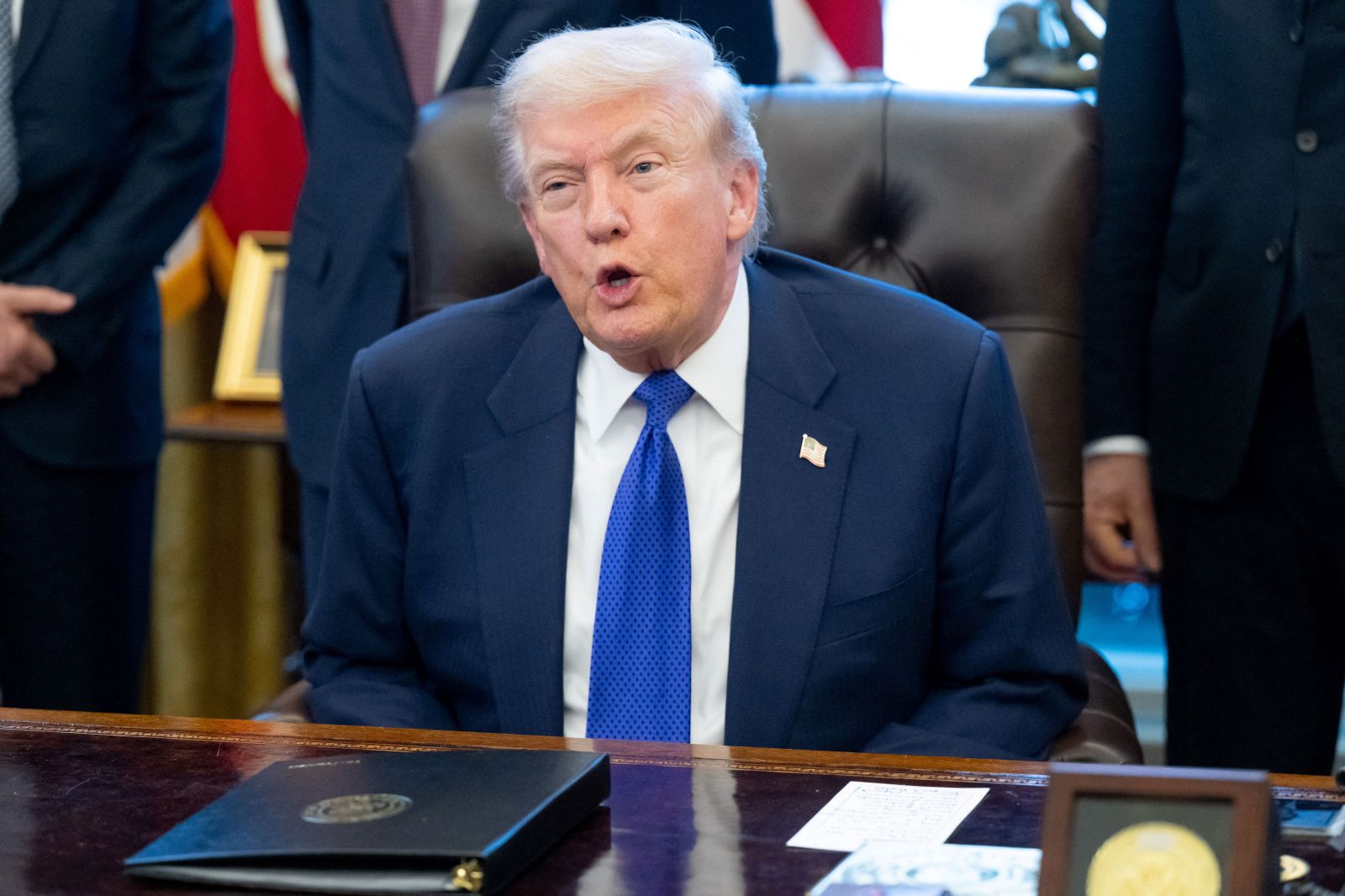

Johnson Repeats Trump’s California Claim and Admits No Evidence On Feb. 4, 2026, House Speaker Mike Johnson told reporters that “some states – like California – keep elections open for weeks after Election Day,” mirroring former President Donald Trump’s allegation that later‑counted ballots erased early Republican leads, and he acknowledged he cannot substantiate any fraud because it occurred “upstream” [1][2].
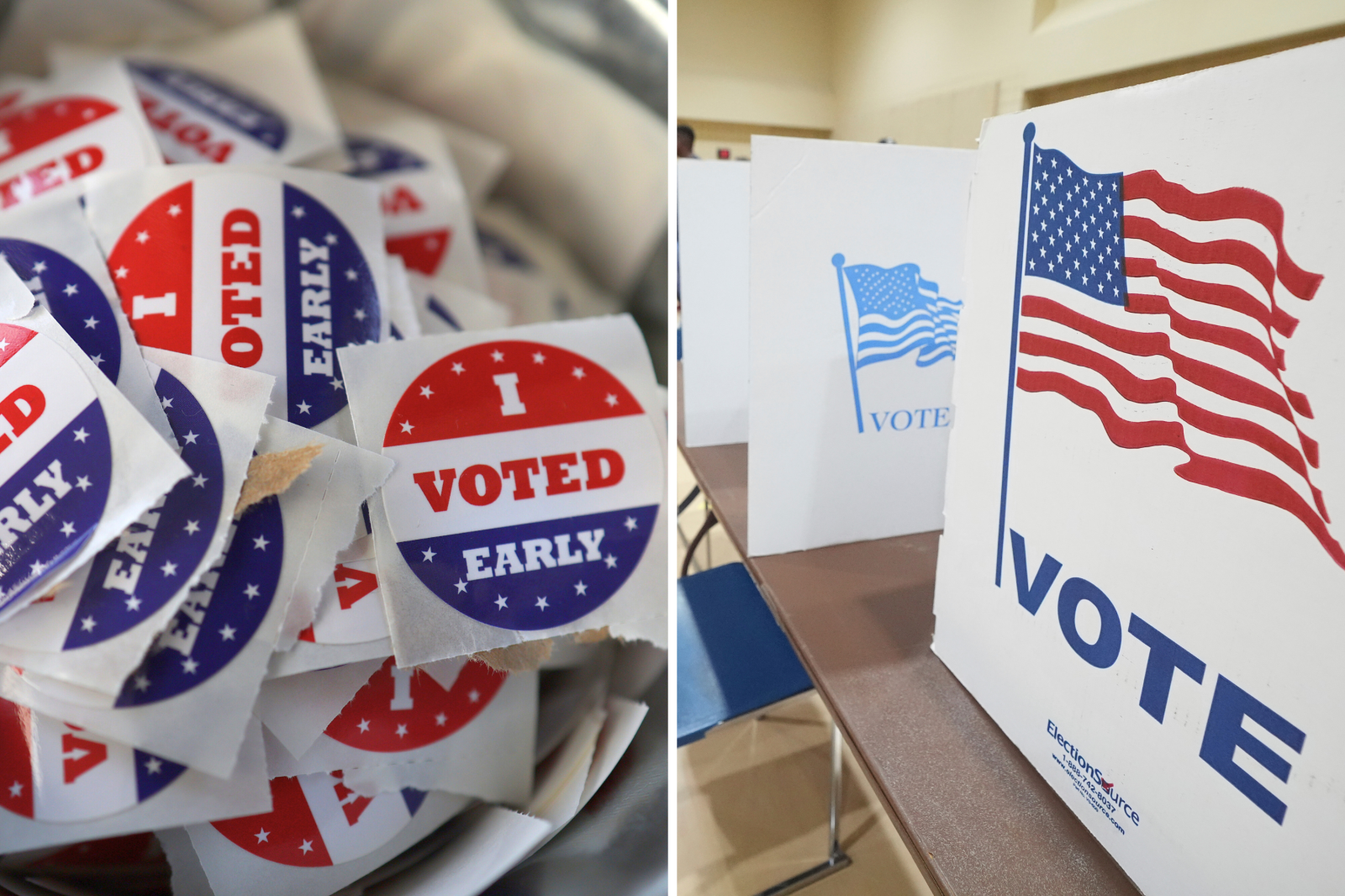
California’s Mail‑In Timeline Explains Slower Tallies California law permits mail‑in ballots postmarked by Election Day to be received up to seven days later, resulting in the state processing about 13 million of roughly 16.1 million 2024 votes after Election Day; a 2025 law signed by Gov. Gavin Newsom merely accelerates county tabulation without altering the voting deadline [1]; Merced County registrar Mel Levey confirmed the 2024 close race was fairly canvassed and invited Johnson to observe, noting no recount was requested [1].
Trump Calls for “Nationalized” Elections Tied to SAVE Act In a Feb. 3, 2026 interview with Dan Bongino, Trump urged Republicans to “take over the voting” in at least 15 jurisdictions, linking the push to the Safeguard American Voter Eligibility (SAVE) Act, which would require documentary proof of citizenship and a national voter‑ID standard; the White House framed his remarks as support for the SAVE proposal rather than a presidential power grab [3][5][6][9].
Constitutional Scholars Declare Federal Takeover Unlawful Legal experts and former judges cited Article I, §4 of the Constitution, which assigns election administration to state legislatures, concluding that a presidential directive to “nationalize” voting lacks any legal basis and would require congressional action to amend [3][4][6][9].
Republicans Advance the MEGA Act Aligning with Trump’s Agenda Rep. Bryan Steil introduced the Make Elections Great Again (MEGA) Act (H.R. 7300) on Feb. 3, 2026, proposing nationwide photo‑ID, citizenship verification, bans on universal vote‑by‑mail and ranked‑choice voting, and mandatory paper ballots; the bill gathered 38 Republican co‑sponsors after Trump’s nationalization plea, while Democrats and Senate leader Chuck Schumer denounced it as unconstitutional and likely to suppress voter participation [7][8][10].
Sources
-
1.
CNN: House Speaker Mike Johnson Echoes Trump’s Election‑Fraud Claim About California Vote Counting: Johnson repeats Trump’s claim about California’s extended ballot count, admits he cannot prove fraud, and cites Merced County registrar’s invitation to observe the process .
-
2.
Newsweek: House Speaker Mike Johnson Says He Cannot Prove Election Fraud Claims: Johnson acknowledges his inability to substantiate fraud allegations and contextualizes them within Trump’s push to nationalize voting and mixed Republican reform positions .
-
3.
CNN: Trump Calls for “Nationalized” Elections Amid Constitutional Pushback: Trump urges a federal takeover of voting in at least 15 places, while scholars cite the Elections Clause to argue the proposal is constitutionally barred .
-
4.
CNN: Trump Calls for Federal Takeover of State‑Run Elections: Trump labels states as federal agents in elections, references the FBI raid on Fulton County, and ties his remarks to the SAVE Act’s voter‑ID provisions .
-
5.
BBC: Trump urges GOP to “nationalise” voting and repeats 2020 fraud claims: Trump repeats unsubstantiated 2020 fraud allegations, links nationalization to deportation of undocumented immigrants, and connects his stance to the SAVE Act .
-
6.
Newsweek: Trump’s Call to “Nationalize” Voting Meets Constitutional Pushback: Lawyers explain the constitutional impossibility of presidential election control and describe the SAVE Act’s voter‑ID and ballot‑handling provisions .
-
7.
Newsweek: Republican‑Led MEGA Act Proposes Federal Voting Rules Amid Congressional Divide: The Make Elections Great Again Act, authored by Rep. Bryan Steil, seeks nationwide voter‑ID, citizenship verification, and bans on certain voting methods, mirroring Trump’s nationalization agenda .
-
8.
Newsweek: GOP Election Bill Gains Momentum After Trump Calls for “Nationalize” Voting: After Trump’s plea, the MEGA Act gains 14 new Republican co‑sponsors, totaling 38, while Senate Minority Leader Chuck Schumer condemns the proposal as illegal .
-
9.
Newsweek: Trump urges Republicans to “nationalize” voting, sparking constitutional backlash: Trump’s nationalization proposal triggers criticism from Democrats and former judges, with Republican lawmakers like Rep. Don Bacon publicly rejecting the idea .
-
10.
AP: House Republicans Unveil “Make Elections Great Again Act” Ahead of Midterms: The 120‑page MEGA Act outlines photo‑ID, citizenship proof, and paper‑ballot mandates, drawing Democratic opposition over potential disenfranchisement .
Timeline
Jan 30, 2026 – Republicans unveil the 120‑page “Make Elections Great Again Act,” which would require voter photo ID, citizenship verification at registration, ban universal vote‑by‑mail and ranked‑choice voting, and set a 2027 implementation timeline; Rep. Bryan Steil says the bill will give Americans confidence that elections are run with integrity [10].
Jan 2026 – Federal agents execute a court‑authorized search of Fulton County, Georgia’s election hub as part of a 2020‑election probe, prompting Trump to label Atlanta “horrible corruption on elections” [4].
Feb 2, 2026 – On “The Dan Bongino Show,” Trump urges Republicans to “nationalize” elections, telling them to “take over the voting in at least 15 jurisdictions” and repeats unsubstantiated claims of widespread 2020 fraud [9].
Feb 3, 2026 – Trump repeats his nationalization call in a Dan Bongino interview, proposing a federal takeover of voting; constitutional scholars note the Elections Clause bars presidential authority to dictate election procedures [3].
Feb 3, 2026 – After Trump’s plea, 14 additional Republicans sign onto the Make Elections Great Again Act, raising its co‑sponsor count to 38 and signaling growing legislative momentum [8].
Feb 3, 2026 – Lawyers and former judge declare Trump’s proposal “blatantly unconstitutional,” while Senate Minority Leader Chuck Schumer calls it “outlandishly illegal” and warns it would violate the Constitution [7].
Feb 3, 2026 – House Administration Committee Chairman Rep. Bryan Steil files H.R. 7300 (the MEGA Act) during a pro‑forma session, seeking nationwide voter‑ID, citizenship‑verification, and mail‑ballot deadline standards [6].
Feb 4, 2026 – House Speaker Mike Johnson tells reporters California “holds elections open for weeks after Election Day,” echoing Trump’s fraud narrative, and admits he cannot prove the alleged fraud [2][5].
Feb 4, 2026 – Trump ties his nationalization remarks to the Safeguard American Voter Eligibility (SAVE) Act, and White House press secretary Karoline Leavitt frames his comments as support for a federal voter‑ID and citizenship‑proof bill [1][4].
Feb 4, 2026 – California’s 2025 law speeds county tabulation but does not change voting deadlines; the state still allows mail‑in ballots postmarked by Election Day to be counted up to seven days later [2].
Feb 4, 2026 – DOJ lawsuits seek voter rolls from Democratic states while Democrats flip a Texas Senate seat, intensifying the election‑security debate ahead of the November 2026 midterms [3].
Feb 4, 2026 – The MEGA Act would take effect in 2027, mandating voter photo ID, citizenship verification, auditable paper ballots, and banning universal vote‑by‑mail and ranked‑choice voting nationwide [6][8].
Feb 4, 2026 – The administration launches a rare mid‑decade redistricting campaign aimed at gaining additional House seats before the 2026 midterms, linking the effort to its broader election‑reform agenda [4].
Feb 4, 2026 – Senate Majority Leader John Thune backs voter‑ID measures but opposes any federal takeover of elections, highlighting a split within GOP leadership over the proposal [5].
Feb 4, 2026 – Election scholars warn that a federal takeover would disrupt the decentralized system designed to prevent fraud and likely violate the Constitution, making congressional action unlikely [3].
Feb 4, 2026 – The looming November 2026 midterm elections provide the backdrop for GOP pushes to pass the SAVE Act and MEGA Act, framing the reforms as essential to protecting Republican majorities [7].
External resources (23 links)
- https://www.youtube.com/watch?si=PzxiieZ42iZ-bi3t&t=376&v=aFPwK3BtVlw&feature=youtu.be (cited 1 times)
- http://www.congress.gov/bill/119th-congress/house-bill/7300?s=1&r=5 (cited 1 times)
- https://cha.house.gov/press-releases?id=460DC098-9C01-4F60-8BA5-E795D1501893 (cited 1 times)
- https://constitution.congress.gov/browse/article-1/section-4/ (cited 1 times)
- https://constitution.congress.gov/browse/article-1/section-4/clause-1/ (cited 1 times)
- https://steil.house.gov/media/press-releases/steil-introduces-election-reform-package (cited 1 times)
- https://steil.house.gov/sites/evo-subsites/steil.house.gov/files/evo-media-document/final-make-elections-great-again-act.pdf (cited 1 times)
- https://www.congress.gov/bill/119th-congress/house-bill/7300/cosponsors?s=1&r=1&q=%7B%22search%22%3A%22make+elections+great+again%22%7D (cited 1 times)
- https://www.congress.gov/bill/119th-congress/house-bill/7300/cosponsors?s=1&r=5 (cited 1 times)
- https://www.sos.ca.gov/administration/news-releases-and-advisories/2024-news-releases-and-advisories/secretary-state-shirley-n-weber-phd-has-certified-results-california-november-5-2024-general-election (cited 1 times)
- https://www.sos.ca.gov/elections/historical-absentee (cited 1 times)
- https://www.sos.ca.gov/elections/upcoming-elections/vote-counting-process (cited 1 times)
- https://www.sos.ca.gov/elections/voter-registration/vote-mail (cited 1 times)
- https://www.sos.ca.gov/elections/voter-registration/vote-mail/usps-frequently-asked-questions-faqs (cited 1 times)
- https://x.com/ECaliberSeven/status/1861565305224372535 (cited 1 times)
- https://x.com/stephen_richer/status/2018794161911267331 (cited 1 times)
- https://laist.com/news/politics/california-voters-could-see-faster-election-results-under-new-state-law (cited 1 times)
- https://www.countyofmerced.com/directory.aspx?EID=696 (cited 1 times)
- https://www.ncsl.org/elections-and-campaigns/election-administration-at-state-and-local-levels (cited 1 times)
- https://www.ncsl.org/elections-and-campaigns/table-11-receipt-and-postmark-deadlines-for-absentee-mail-ballots (cited 1 times)
- https://www.ncsl.org/elections-and-campaigns/table-15-states-with-signature-cure-processes (cited 1 times)
- https://www.ncsl.org/elections-and-campaigns/table-16-when-absentee-mail-ballot-processing-and-counting-can-begin (cited 1 times)