Trump Poised to Decide Iran Strike as US Carriers Deploy and Iran‑Russia Drills Intensify
Updated (9 articles)
-
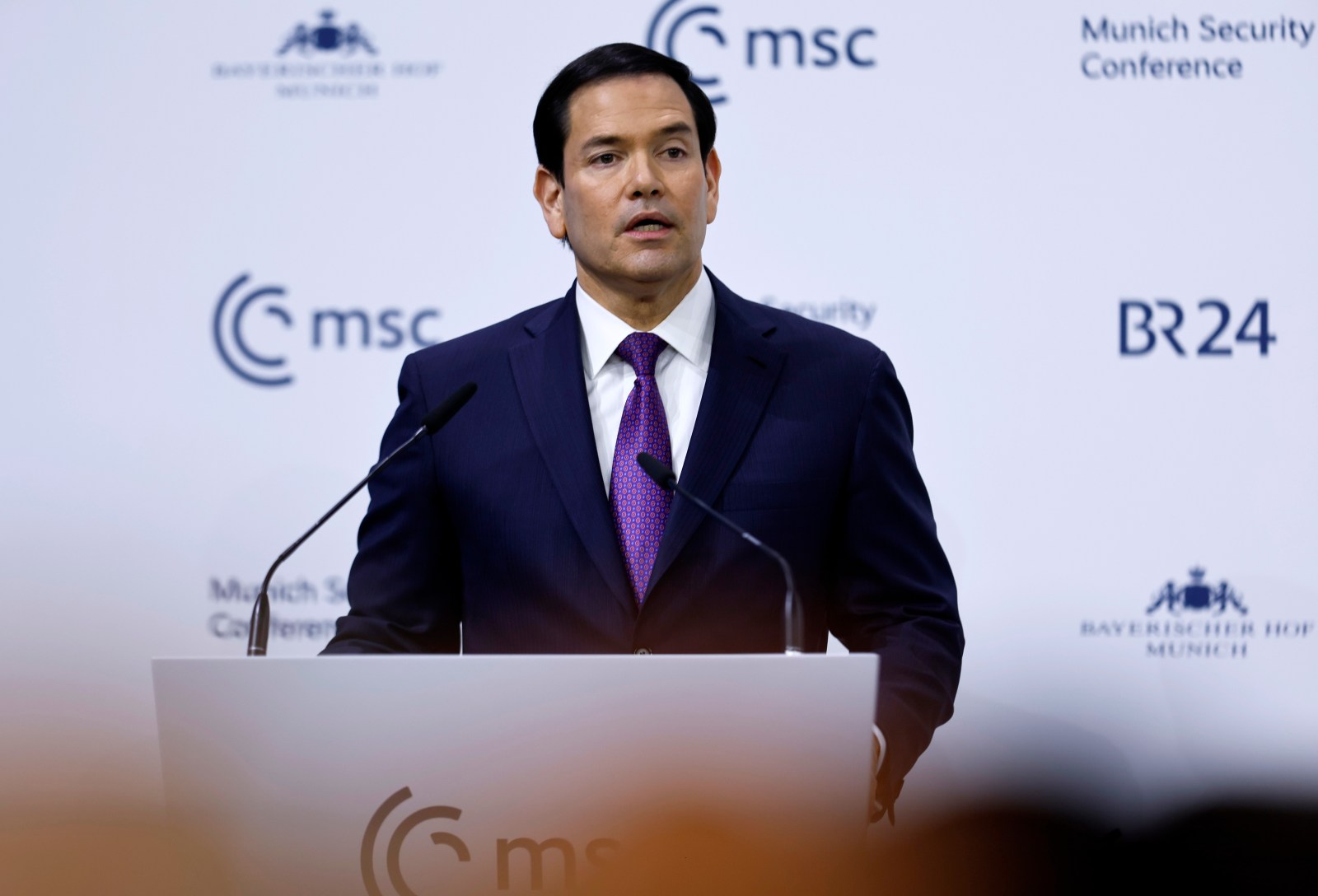 Image: NewsweekMUNICH, GERMANY – FEBRUARY 14: U.S. Secretary of State Marco Rubio delivers a key note speech at the 62nd Munich Security Conference on February 14, 2026 in Munich, Germany. The conference, which brings together government leaders, security experts and defence ministers, is taking place at a time when the traditional western political and military alliance is facing rupture due to the policies of U.S. President Donald Trump. (Photo by Johannes Simon/Getty Images) Source Full size
 -
Image: NewsweekMUNICH, GERMANY – FEBRUARY 14: U.S. Secretary of State Marco Rubio delivers a key note speech at the 62nd Munich Security Conference on February 14, 2026 in Munich, Germany. The conference, which brings together government leaders, security experts and defence ministers, is taking place at a time when the traditional western political and military alliance is facing rupture due to the policies of U.S. President Donald Trump. (Photo by Johannes Simon/Getty Images) Source Full size
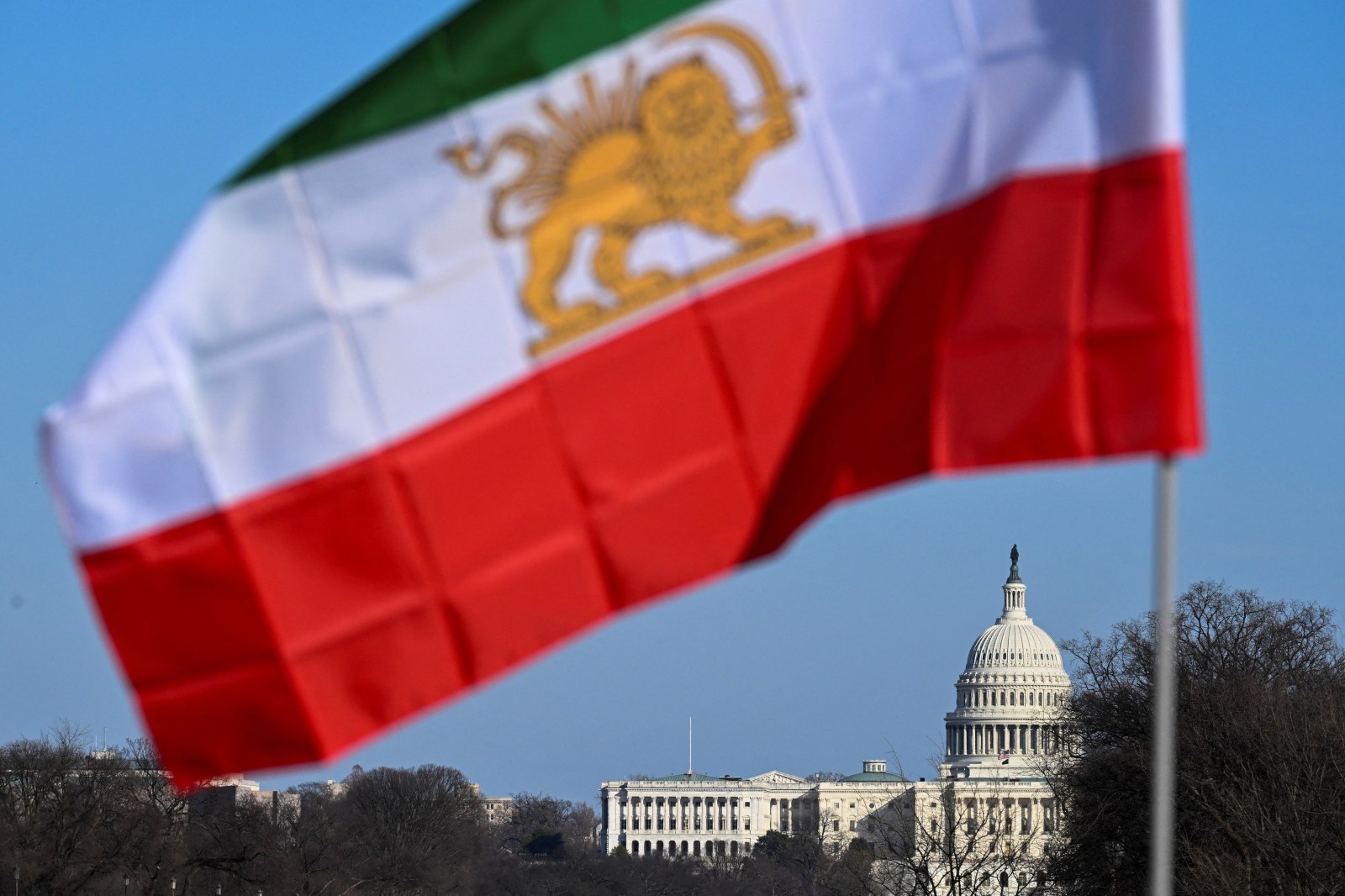
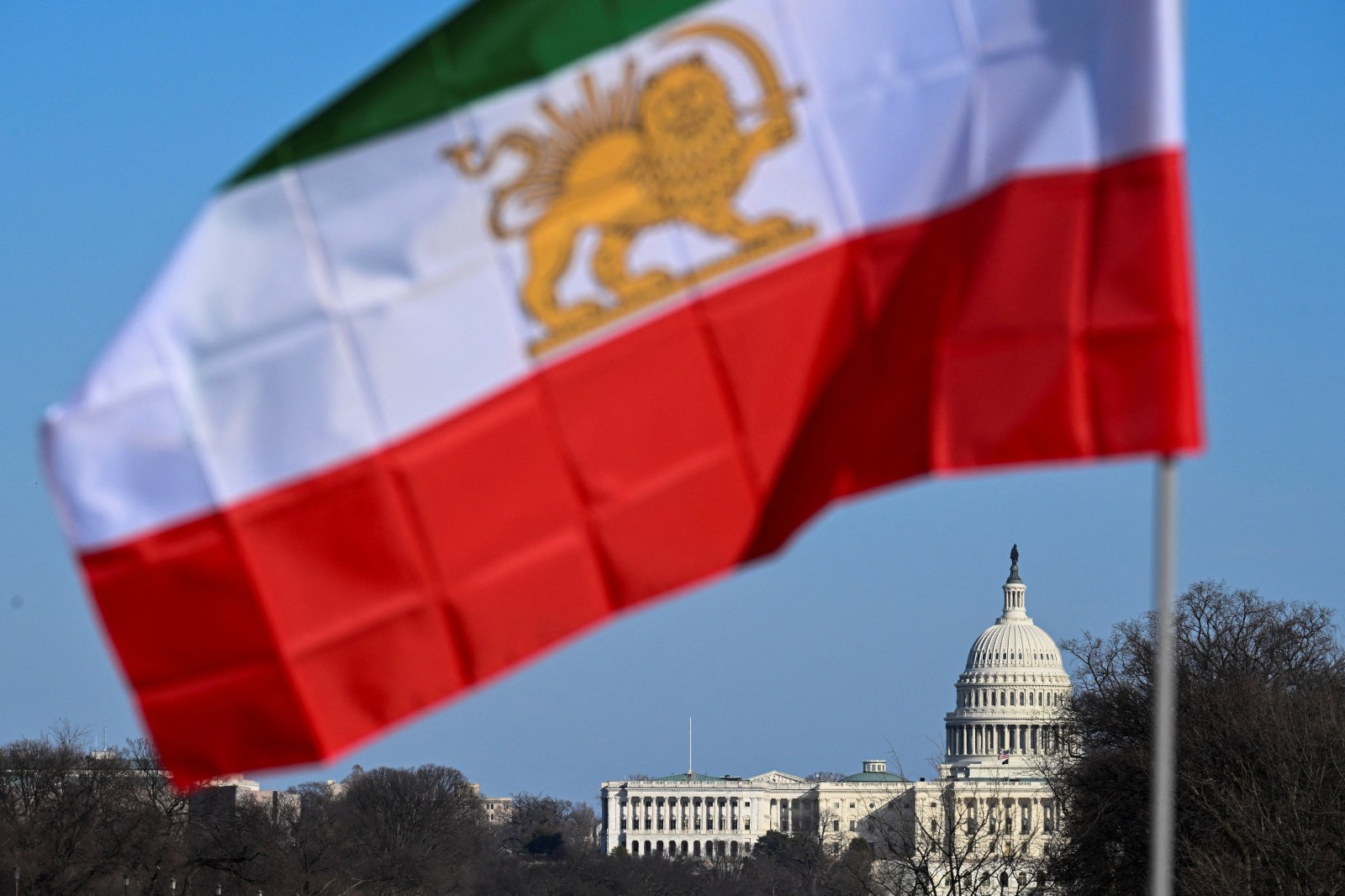
U.S. carrier fleet expands while Trump weighs strike decision President Donald Trump is expected to decide over the weekend whether to order an attack on Iran, after U.S. officials announced the deployment of the nuclear‑powered carrier USS Gerald R. Ford alongside USS Abraham Lincoln and dozens of fighter jets, guided‑missile destroyers, fuel tankers and missile‑defence systems to the region; a second carrier will join in the Mediterranean next week [1][2][3]. The buildup signals Washington’s readiness for a large‑scale operation rather than a limited strike [3]. White House press secretary Karoline Leavitt reiterated that Trump has not yet authorized a strike, emphasizing a diplomatic preference despite the military posture [2].
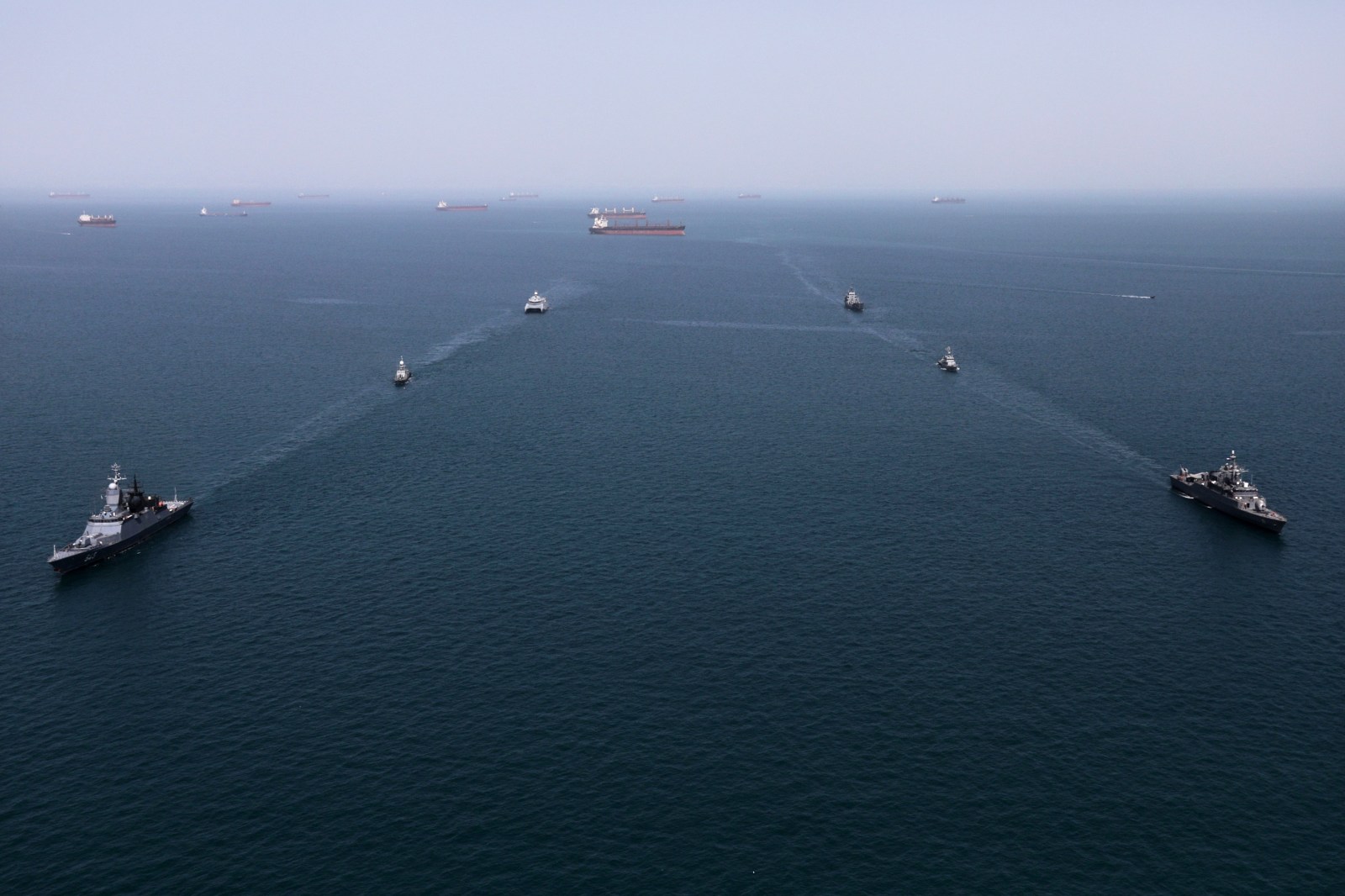
Iran‑Russia naval drills simulate hijacked‑ship rescue and close Hormuz The Islamic Revolutionary Guard Corps and the Russian navy conducted a live‑fire exercise near Bandar Abbas, using an Iranian destroyer, helicopters and special‑operations teams to practice rescuing a hijacked vessel, marking the second joint drill since tensions rose [1][2]. Earlier in the week Iran briefly shut parts of the Strait of Hormuz, the first such closure since the 1980s, disrupting a chokepoint that carries about 20 % of global oil shipments [2][4][3]. The drills featured missile‑launching warships and reinforced Iran’s message of naval capability [2].
Geneva talks produce mixed signals while negotiation scope diverges Iran’s foreign minister Abbas Araghi described the Feb 17 Geneva meeting as “progress” and said the parties agreed on guiding principles for future talks [1]; U.S. Vice‑President J.D. Vance warned that “gaps remain” between the sides [1]. Washington insists the talks must address Iran’s missile programme and support for regional non‑state actors, whereas Tehran limits the agenda to its nuclear programme [1]. Secretary of State Marco Rubio added that Iran’s clerical leadership hampers “real deals,” underscoring internal political obstacles [5].
Iranian leadership issues warnings and reaffirms enrichment rights Supreme Leader Ayatollah Ali Khamenei posted a Quranic verse urging resistance and warned that any U.S. force could be hit so hard it “cannot even get back on its feet” [1][4]. Atomic chief Mohammad Eslami defended Iran’s right to peaceful enrichment, claimed full domestic nuclear self‑sufficiency and asserted compliance with IAEA rules [1]. Deputy foreign minister Majid Takht‑Ravanchi offered to dilute 60 % enriched uranium if the United States provides sanctions relief, indicating a limited concession amid heightened rhetoric [5].
Multiple indicators point to an imminent, broader conflict Leaked briefings describe a potential week‑long, all‑out U.S. campaign rather than precision strikes [3]. Commercial satellite imagery shows new roofs, concealment structures and reinforced tunnels at Natanz, Isfahan and other nuclear sites, suggesting preparation for extended hostilities [3]. Prediction‑market odds place the chance of a U.S. or Israeli strike by June 30 at roughly 71 %, while economic strain and domestic unrest increase Tehran’s external pressure [3].
Sources
-
1.
The Hindu: Iran‑U.S. military tension rises as talks stall and drills intensify: details Trump’s pending strike decision, carrier deployments, joint Iran‑Russia drills, Khamenei’s Quranic warning, Geneva talk gaps, and Iran’s nuclear defences .
-
2.
Newsweek: Iran and Russia Conduct Joint Naval Drills Amid Growing U.S. Military Presence: focuses on the live‑fire drill’s hijacked‑ship scenario, brief Hormuz closure, U.S. carrier movements, Trump’s diplomatic stance, and Russian cautions about escalation .
-
3.
Newsweek: Six Indicators Suggest Imminent US‑Iran Conflict: outlines leaked briefing on a week‑long operation, satellite evidence of fortified nuclear sites, economic pressures, and high strike probability in prediction markets .
-
4.
AP: Iran’s Temporary Closure of the Strait of Hormuz Raises Global Oil Concerns: reports the Hormuz shutdown’s impact on oil flow, historical context, CENTCOM’s safety warning, drone shoot‑down incident, and Khamenei’s threat to U.S. forces .
-
5.
Newsweek: Rubio warns Iran “difficult” ahead of Geneva talks: highlights Rubio’s comment on clerical obstacles, second carrier addition, Iran’s offer to dilute enriched uranium, Revolutionary Guard drills in Hormuz, and Israeli‑U.S. support for strikes .
Related Tickers
Timeline
June 2025 – The United States carries out F‑35 strikes on Iranian nuclear facilities at Natanz, Isfahan and Fordow, prompting Tehran to condemn the attacks as violations of sovereignty and to vow retaliation, establishing a recent precedent for heightened U.S.–Iran confrontation [6].
Dec 5, 2025 – The Islamic Revolutionary Guard Corps launches the two‑day Shahid Mohammad Nazeri naval drill across the Persian Gulf, Strait of Hormuz and Sea of Oman, warning nearby U.S. warships to stay away and threatening decisive action if interfered, while a Gulf Cooperation Council summit backs UAE claims to disputed islands, further inflaming regional tensions [6].
Dec 28, 2025 – Massive protests erupt across Iran demanding political reforms; Iranian security forces detain over 49,500 people and record at least 6,713 deaths, while the government labels many demonstrators “terrorists,” intensifying domestic unrest that fuels Tehran’s external posturing [8].
Jan 28, 2026 – U.S. Air Forces Central Command begins multi‑day drills to sharpen rapid deployment and dispersed operations, and President Donald Trump posts “Time is running out” on Truth Social, warning an “armada” is heading toward Iran and promising a strike “far worse than the 2025 strikes” if Tehran does not negotiate a fair nuclear deal [1].
Jan 31, 2026 – CENTCOM issues an explicit warning that any unsafe IRGC behavior near U.S. forces in the Strait of Hormuz could trigger escalation, while Iran schedules a two‑day live‑fire naval exercise in the waterway that sees roughly 100 merchant ships daily, and IRGC chief Amir Hatami affirms high defensive readiness, with Foreign Minister Abbas Araghchi urging the U.S. to “set aside their threats” [5].
Feb 1, 2026 – Supreme Leader Ayatollah Ali Khamenei tells a Tehran crowd that any U.S. attack would spark a regional war and that Iran will deliver a “heavy blow,” while the European Union moves to label the IRGC as a terrorist organization and Iran’s parliament speaker retaliates by declaring all EU militaries terrorist, escalating diplomatic hostility [8].
Feb 2026 (early) – EU ministers convene in Brussels to debate designating the IRGC as a terrorist group, with France, Italy and Israel pushing the designation, a step that could tighten economic pressure on Tehran ahead of potential conflict [1].
Feb 16, 2026 – Secretary of State Marco Rubio says Iran’s “radical Shia clerics” make real deals “very difficult,” the United States sails the nuclear‑powered carrier USS Gerald R. Ford from the Caribbean to join USS Abraham Lincoln as a contingency, and Deputy Foreign Minister Majid Takht‑Ravanchi offers to dilute Iran’s 60 % enriched uranium if the U.S. provides sanctions relief, while the IRGC conducts drills in the Strait of Hormuz [4].
Feb 18, 2026 – Analysts cite six indicators of imminent war: the U.S. deploys the Gerald R. Ford alongside Abraham Lincoln and shoots down an Iranian drone; satellite images show Iran adding roofs and reinforced tunnels at Natanz, Isfahan and other sites; Iran closes the Strait of Hormuz for the first time since the 1980s, firing live missiles and halting traffic for several hours; and prediction markets assign a 71 % chance of a U.S. or Israeli strike by June 30 [3].
Feb 19, 2026 – Iran and Russia conduct joint naval drills in the Persian Gulf, simulating a hijacked‑ship rescue with missile‑launching warships and special‑forces teams, while the U.S. positions the carriers Gerald R. Ford and Abraham Lincoln and dozens of warships nearby; Russian Foreign Minister Sergey Lavrov warns the situation is “playing with fire,” and Geneva diplomatic talks stall as White House Press Secretary Karoline Leavitt says President Trump has not yet authorized a strike [2].
Feb 19, 2026 – President Trump prepares to decide over the weekend whether to order an attack on Iran, with a second carrier slated to arrive in the Mediterranean next week; Supreme Leader Khamenei posts a Quranic verse, “So should anyone aggress against you, assail him in the manner he assailed you,” signaling readiness for retaliation; Geneva talks on Feb 17 yield “progress” but U.S. Vice‑President J.D. Vance warns “gaps remain,” and Iran’s atomic chief Mohammad Eslami asserts Iran’s nuclear program complies with IAEA rules and that no nation can deny Iran peaceful nuclear benefits [9].
All related articles (9 articles)
-
The Hindu: Iran‑U.S. military tension rises as talks stall and drills intensify
-
Newsweek: Iran and Russia Conduct Joint Naval Drills Amid Growing U.S. Military Presence
-
Newsweek: Six Indicators Suggest Imminent US‑Iran Conflict
-
AP: Iran’s Temporary Closure of the Strait of Hormuz Raises Global Oil Concerns
-
Newsweek: Rubio warns Iran “difficult” ahead of Geneva talks
-
AP: Iran’s Supreme Leader Threatens Regional War Over Possible U.S. Attack
-
Newsweek: U.S. Warns Iran’s IRGC Over Live‑Fire Drills in Strait of Hormuz
-
CNN: US Air Drills Intensify as Trump Threatens Iran Over Protest Crackdown
-
Newsweek: Iran Issues Final Warning to U.S. Warships as Naval Drill Concludes
External resources (6 links)
- https://www.iranintl.com/en/liveblog/202601258930 (cited 1 times)
- https://x.com/IranObserver0/status/1996871455900946913 (cited 1 times)
- https://x.com/araghchi (cited 1 times)