Eastern Cuba Blackout Escalates Amid U.S. Tariffs and Fuel Shortages
Updated (2 articles)
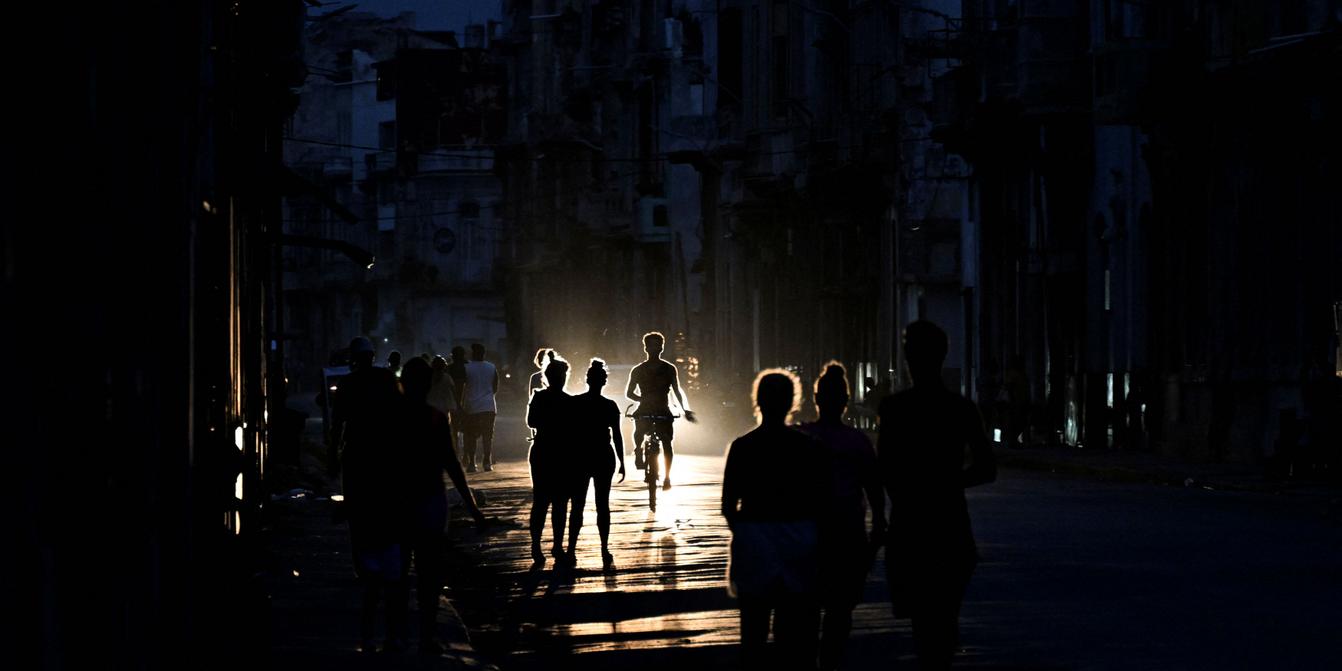
Eastern Grid Collapse Triggers Island‑Wide Blackout At 20:54 GMT on 4 Feb 2026 a fault at the Holguin 220 kV substation caused the eastern transmission network to fail, cutting power partially in Holguin province and completely in Granma, Santiago de Cuba and Guantánamo, affecting roughly one‑quarter of Cuba’s fifteen provinces [1]. The outage left residents such as 28‑year‑old Isabel in Santiago de Cuba without electricity after 5 p.m., though she retained limited internet access [1]. This incident follows five nationwide blackouts recorded since late 2024, reflecting a pattern of deteriorating grid reliability [1].
U.S. Tariff Decree Deepens Fuel and Oil Crisis President Donald Trump’s executive order, signed in early January 2026, authorizes tariffs on nations that supply oil to Cuba and coincides with Mexico’s announcement to halt oil deliveries [1][2]. The measure compounds a fuel shortage that has already forced Cuban tractors, garbage trucks and other equipment to idle for lack of spare parts, prompting long queues at gasoline pumps [2]. Mexico’s President Claudia Sheinbaum pledged humanitarian assistance while attempting to keep oil flowing, but UN Secretary‑General Antonio Guterres warned the combined sanctions could trigger a humanitarian collapse [1].
Cubans Turn to Firewood, Solar Panels and Scavenging With electricity unreliable, households across Havana and the eastern provinces increasingly burn firewood or charcoal for cooking and heating, echoing practices from the 1990s “Special Period” [2]. Those able to afford solar installations are installing panels, while many residents scavenge in garbage piles for reusable items such as plastic lids, a symptom of broken waste‑management equipment due to spare‑part shortages [2]. The convergence of power loss, fuel scarcity and waste accumulation has left office buildings without basic supplies like toilet paper and water cut off by mid‑afternoon [2].
Economists Cite Chronic Under‑Investment Over Sanctions Cuban officials attribute the outages to U.S. sanctions that block repairs to the island’s eight aging thermoelectric plants, most built in the 1980s‑1990s [1]. Independent economists, however, argue that decades of state under‑investment, insufficient fuel imports and lack of modernization are the primary drivers of the recurring blackouts [1]. The dispute underscores a broader debate about whether external pressure or internal policy failures are responsible for the current energy emergency [1].
Sources
-
1.
Le Monde: Massive Power Outage Darkens Eastern Cuba Amid Growing Energy Crisis: reports the Feb 4 substation fault that blacked out a quarter of the island, links the outage to five recent nationwide blackouts, details U.S. tariff decree, Mexico’s aid pledge, and contrasts official blame with economists’ under‑investment analysis .
-
2.
Associated Press: Cuba Faces Deepening Scarcity as U.S. Tariffs Loom: describes garbage accumulation, fuel and spare‑part shortages crippling transport, chronic power cuts, households reverting to firewood, solar panels and self‑sufficiency, and highlights U.S. officials’ harsh rhetoric toward the Cuban regime .
Timeline
1990s – Cuba endures the “Special Period,” a severe post‑Soviet economic crisis that forces households to rely on firewood, charcoal and solar panels, a coping strategy that re‑emerges in 2026 as citizens again turn to self‑sufficiency amid new shortages[1].
Late 2024 – Cuba experiences five nation‑wide blackouts, marking the start of chronic load‑shedding that worsens after external oil supplies dwindle[2].
Early Jan 2026 – Venezuela halts oil shipments to Cuba, cutting a critical fuel source and deepening the island’s energy shortfall[2].
Jan 30, 2026 – President Donald Trump signs an executive order imposing tariffs on goods from countries that supply oil to Cuba, prompting Deputy Secretary of State Christopher Landau to declare “the Castro regime is tottering…after 67 years of a failed revolution” and Secretary of State Marco Rubio to call Cuba “backward with no functional economy”[1].
Jan 31, 2026 – Reporters document Havana’s deepening scarcity: broken garbage trucks, empty fuel pumps, chronic blackouts that plunge neighborhoods into darkness, and residents burning firewood, charcoal or installing solar panels to cook and power homes, echoing the 1990s crisis[1].
Feb 4, 2026 20:54 – A fault at the Holguín 220 kV substation collapses the eastern grid, cutting power completely in Granma, Santiago de Cuba and Guantánamo and partially in Holguín, affecting about one‑quarter of Cuba’s provinces; Isabel, a 28‑year‑old mother, tells AFP the outage leaves her “in the dark, with only internet working”[2].
Feb 5, 2026 – UN Secretary‑General Antonio Guterres warns that U.S. tariff decree and Mexico’s cessation of oil deliveries could trigger a humanitarian collapse, while President Claudia Sheinbaum pledges Mexican humanitarian aid to Cuba despite the new restrictions[2].