Trump Escalates Iran Threat as North Korea Leverages Nuclear Deterrent
Updated (10 articles)
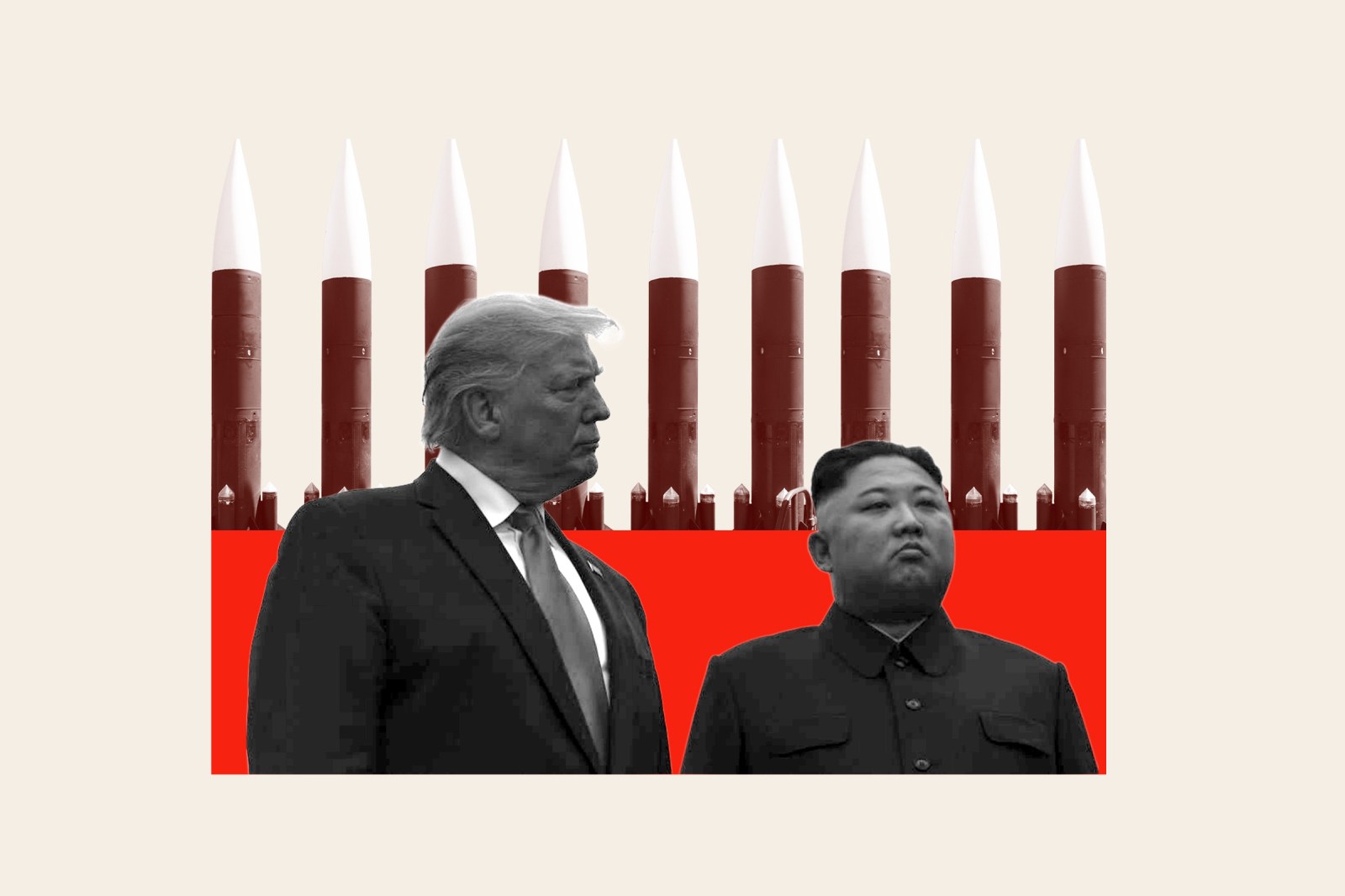
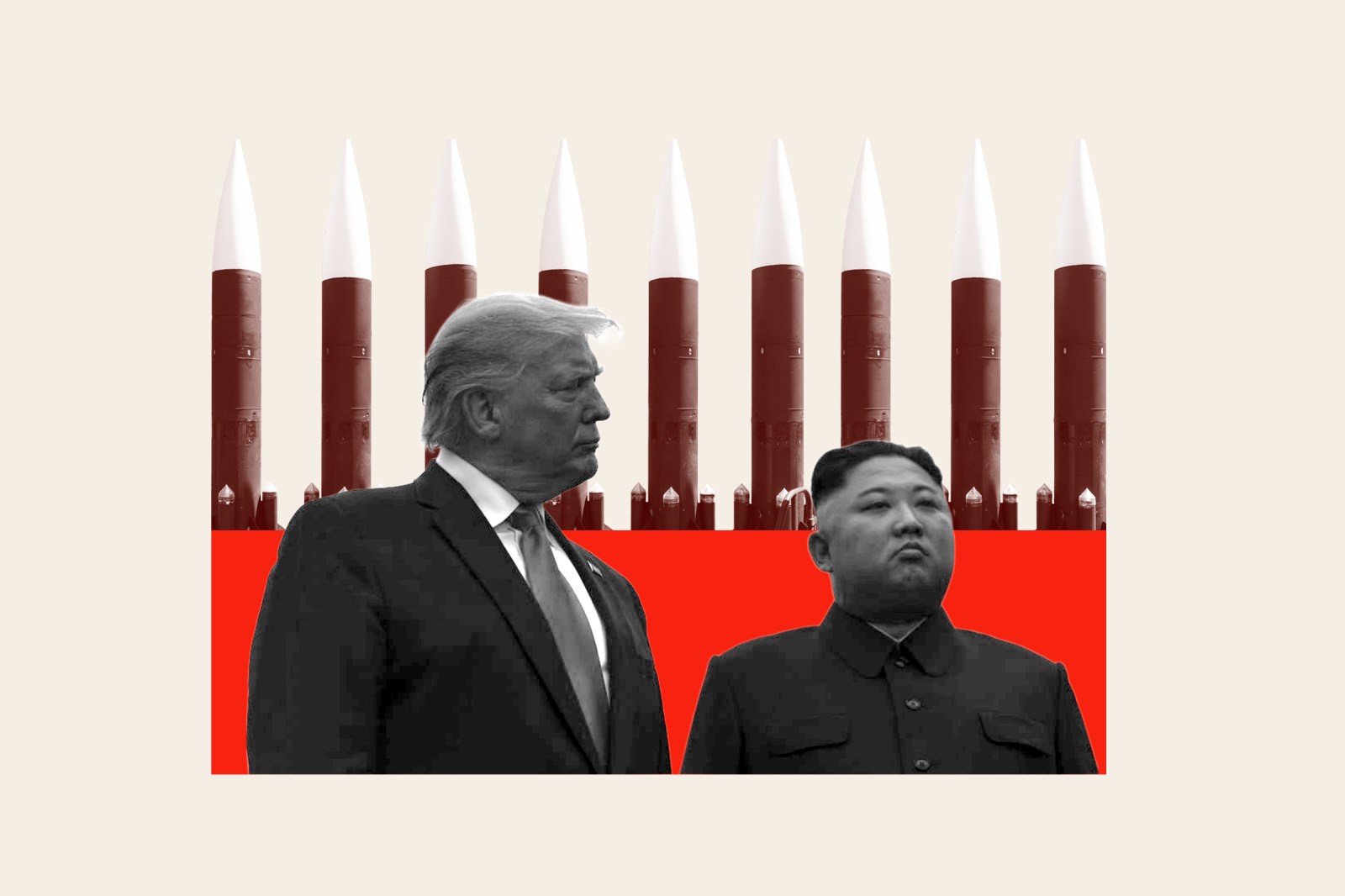
Trump Intensifies Military Pressure on Iran President Donald Trump announced a new wave of military pressure on Iran, hinting at possible action on earlier threats and following recent U.S. strikes on Iranian nuclear facilities [1]. The administration also publicized a Delta Force raid that captured Venezuelan President Nicolás Maduro, underscoring a broader aggressive posture [1]. Analysts note that Trump’s public remarks on Iran have become more frequent, though direct diplomatic outreach remains limited [1].
North Korea’s Nuclear Arsenal Reaches Great‑Power Parity North Korea now fields missiles capable of striking the United States, placing its nuclear deterrent on a level accepted de facto by China and Russia [1]. Senior fellow Ankit Panda argues this capability validates Kim Jong Un’s regime and deters U.S. actions after the recent Iranian strikes [1]. The article emphasizes that the arsenal’s growth began with the first test two decades ago and has accelerated under Kim’s leadership [1].
Pyongyang Deepens Military Cooperation With Russia Moscow and Pyongyang have reinforced ties, signing a mutual defense pact in June 2024—the first formal agreement since the 1961 China treaty [1]. An estimated 10,000 Korean People’s Army personnel are reported fighting in Ukraine alongside Russian forces [1]. This cooperation signals a strategic alignment that further solidifies North Korea’s security posture [1].
Sanctions Fail to Curb North Korean Revenue Streams Former State Department official Joel Wit contends that sanctions have limited impact on North Korea’s economy [1]. The regime generates substantial revenue through an extensive overseas smuggling network and increasingly lucrative cybercrime operations [1]. These illicit activities fund the nuclear program and sustain the country’s military ambitions despite international pressure [1].
U.S. Denuclearization Policy Persists Amid Trump’s Limited Diplomacy The State Department continues to reaffirm its commitment to complete denuclearization of the Korean Peninsula [1]. Analysts Joseph DeTrani and Thomas Countryman suggest a direct meeting between Trump and Kim could reduce escalation, yet current U.S. policy favors pressure over diplomatic engagement [1]. Trump’s sparse public remarks on North Korea reflect a broader strategy of limited outreach while maintaining a hardline stance [1].
Timeline
2006 – North Korea conducts its first nuclear test, launching a two‑decade development path that yields missiles capable of striking the United States and earns de facto nuclear status accepted by China and Russia[1].
June 2024 – Russia and North Korea sign a mutual‑defense pact, the first formal agreement since the 1961 China‑North Korea treaty, and later deploy an estimated 10,000 Korean People’s Army troops to fight in Ukraine, deepening their strategic partnership[1].
2024 – U.S. Delta Force operators capture Venezuelan President Nicolás Maduro in a covert raid, and U.S. forces strike Iranian nuclear sites, actions that heighten Tehran’s perception of American aggression and reshape regional security dynamics[1].
Dec 5, 2025 – The United States releases its new National Security Strategy, and the 29‑page document contains no reference to North Korea or its nuclear program, marking a departure from prior strategies that highlighted denuclearization as a core objective[10].
Dec 7, 2025 – Analysts note that China’s November 27 security white paper also drops language on Korean‑peninsula denuclearization, prompting concerns that both great powers are reshaping policy focus away from Pyongyang[10].
Dec 9, 2025 – Commentators warn that the U.S. NSS omission could enable a “Korea bypass” scenario, urging Seoul to accelerate its nuclear‑submarine program and redesign its deterrence architecture while a possible Trump‑Kim summit looms as a quick, transactional deal option[9].
Dec 17, 2025 – The pro‑Pyongyang newspaper Choson Sinbo publishes an editorial calling the NSS’s silence on North Korea “the most notable part” of the document and accusing Washington of shifting toward an isolationist “Fortress America” stance; North Korean state media has not yet responded[6].
Jan 4, 2026 – Kim Jong Un declares that North Korea must advance its nuclear capabilities to counter a “geopolitical crisis,” framing the buildup as essential for national security and signaling a sharpened deterrent posture[5].
Jan 24, 2026 – The U.S. Department of Defense’s latest strategy omits any goal of North Korean denuclearization, breaking from earlier documents that listed it as a central aim[3].
Jan 24, 2026 – The same defense assessment characterizes North Korea’s nuclear forces as a “clear and present danger” to the American mainland, underscoring heightened U.S. concern over potential attacks[4].
Feb 6, 2026 – The State Department reaffirms its extended nuclear umbrella for South Korea; Deputy Spokesperson Mignon Houston calls President Trump a “president of peace” who helped end “nearly eight wars” in the past year and warns that North Korean missile development threatens regional stability[2].
Feb 6, 2026 – Houston also flags Trump’s threat to raise South Korean tariffs to 25 % on autos, lumber and pharmaceuticals if trade talks stall, while noting Seoul’s $350 billion investment pledge and its upcoming chairmanship of the U.S.–led FORGE critical‑minerals initiative[2].
Feb 20, 2026 – President Trump intensifies military pressure on Iran, including recent strikes on Iranian nuclear sites, while North Korean leader Kim Jong Un watches from behind a nuclear shield that now rivals the arsenals of China and Russia[1].
Feb 20, 2026 – Carnegie senior fellow Ankit Panda argues that North Korea’s nuclear deterrent validates Kim’s regime after the U.S. actions in Iran and the Delta Force raid that captured Venezuelan President Maduro[1].
Feb 20, 2026 – Moscow and Pyongyang deepen cooperation: a mutual‑defense pact signed in June 2024 and an estimated 10,000 Korean troops fighting in Ukraine cement a formal alliance absent since the 1961 China treaty[1].
Feb 20, 2026 – Former State Department official Joel Wit observes that sanctions have limited impact on North Korea, which now funds its program through a global smuggling network and increasingly lucrative cybercrime operations[1].
Feb 20, 2026 – The State Department reiterates its commitment to complete denuclearization of North Korea, while analysts Joseph DeTrani and Thomas Countryman suggest a direct U.S.–Kim meeting could defuse escalation, though current policy favors pressure over diplomacy[1].
All related articles (10 articles)
-
Newsweek: Trump’s Iran Pressure Meets North Korea’s Nuclear Shield
-
Yonhap: U.S. State Department Reaffirms Nuclear Deterrence for South Korea Amid Trade Tensions
-
Yonhap: U.S. Defense Strategy Omits North Korea Denuclearization Goal
-
Yonhap: North Korea’s Nuclear Forces Deemed “Clear and Present” Threat to U.S. Homeland
-
Yonhap: Kim says need to advance North Korea's nuclear capabilities amid geopolitical crisis
-
Yonhap: Pro-Pyongyang paper flags omission of North Korea in US security strategy
-
Yonhap: Pro-Pyongyang paper notes North Korea omission from US security strategy
-
Yonhap: North Korea denuclearization omitted from U.S. NSS prompts Seoul to recalibrate strategy
-
Yonhap: Nuclear void: US and China bypass denuclearization on Korea, Seoul urged to rethink deterrence
-
Yonhap: North Korea denuclearization language vanishes from US, Chinese security documents