World Taekwondo Lifts Flag Ban While IOC Keeps Russian Athletes Neutral for 2026 Winter Games
Updated (8 articles)

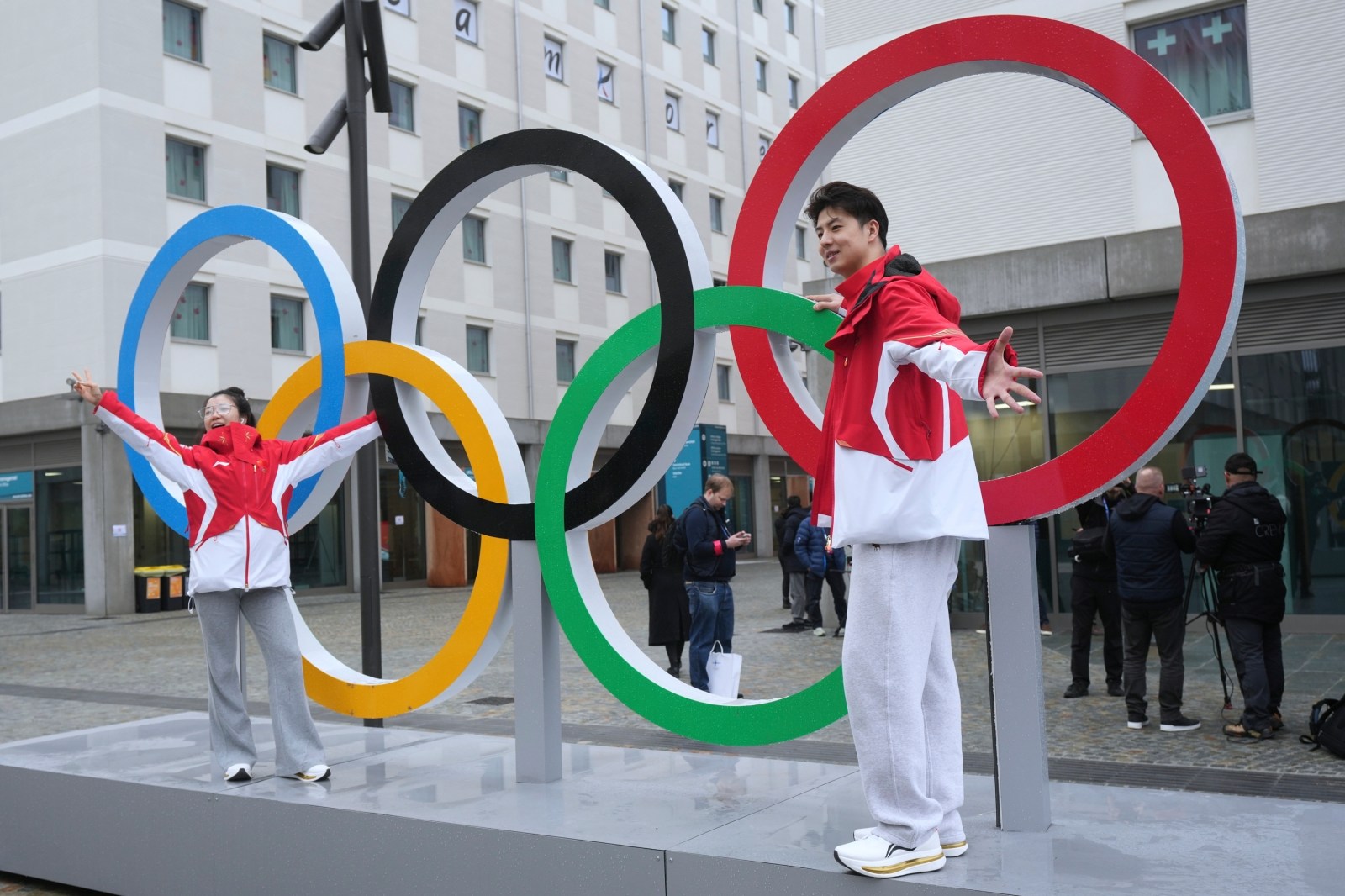
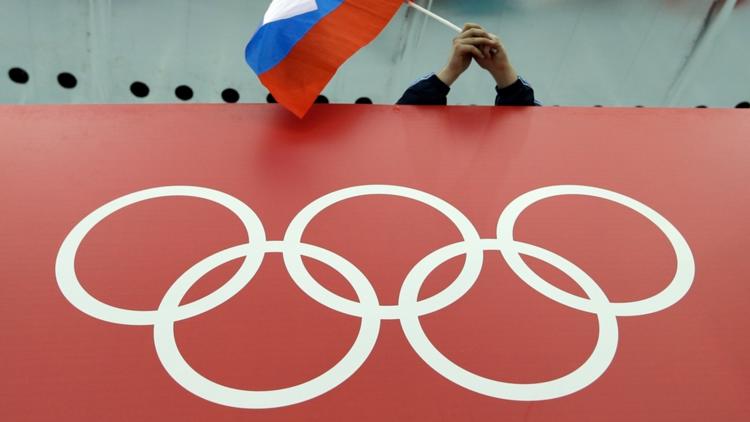
IOC Maintains Ban on National Teams The International Olympic Committee barred Russia and Belarus from entering the Milan‑Cortina 2026 Winter Games as national delegations, extending the same restriction applied at Paris 2024 because of the 2022 invasion of Ukraine and Belarus’s support [1][2][3]. The ban follows the IOC’s October 2023 suspension of the Russian Olympic Committee, which removed its right to send teams and cut funding [3]. No changes to this policy were announced for the upcoming Games, confirming that only individual athletes may be considered.
Athletes May Compete as Individual Neutrals Thirteen Russian and seven Belarusian athletes have accepted invitations to compete as “Individual Neutral Athletes,” covering alpine skiing, figure skating, speed skating and other disciplines [1][2]. Prospective participants undergo a two‑step review proving they have not publicly supported the invasion, have no ties to military or security agencies, and meet standard anti‑doping and qualification standards [1][2]. Those who qualify will compete without national flags, anthems, or colors, continuing the neutral format used in recent Olympics.
Neutral Participation Mirrors Past Olympic Precedents Russian competitors previously entered the Games as “Olympic Athletes from Russia” in 2018, under the “Russian Olympic Committee” banner in Tokyo 2021 and Beijing 2022, and as neutrals at Paris 2024, where fifteen Russians qualified [1][2][3]. These designations stem from doping‑related sanctions and political exclusions, establishing a consistent framework for allowing athletes while penalizing national bodies. The 2026 neutral roster therefore follows an established pattern dating back to the 2018 Winter Games.
World Taekwondo Allows Flagged Participation On 1 February 2026, World Taekwondo announced that Russian and Belarusian taekwondo athletes may compete in international tournaments under their own national flags, a decision approved at an extraordinary council meeting in Fujairah, UAE, on 31 January 2026 [4]. The federation retained existing sanctions that prohibit Russia from hosting events and deny accreditation to Russian government officials, aligning its athlete‑participation rule with the IOC’s allowance for youth‑Olympic competitors in Dakar 2024 [4]. This marks a departure from the IOC’s neutral‑only stance for the Winter Games.
Discrepancy Between IOC and WT Policies While the IOC continues to require Russian and Belarusian athletes to compete without national symbols at Milan‑Cortina 2026, World Taekwondo permits them to display their flags in its sport, illustrating divergent approaches among international governing bodies [3][4]. The IOC’s policy is rooted in the broader Olympic Charter peace principle and the 2023 ROC suspension, whereas WT cites the IOC’s youth‑Olympic precedent as justification for its more permissive stance. This contrast underscores ongoing debate over the balance between political sanctions and athletes’ rights.
Sources
-
1.
WBNS: Russia’s Athletes to Compete as Neutrals at 2026 Milan‑Cortina Winter Games – details the 20‑athlete neutral roster, IOC ban, and strict vetting criteria.
-
2.
King5: Russia’s Neutral Athletes to Appear at 2026 Milan‑Cortina Winter Games – repeats the neutral‑athlete count and emphasizes continuation from Paris, adding sport‑specific breakdowns.
-
3.
Newsweek: Russia and Belarus Barred from 2026 Winter Olympics, Possible Neutral Participation – places the ban in a geopolitical context, cites the 2023 ROC suspension and historical Olympic exclusions.
-
4.
Yonhap: World Taekwondo Allows Russian and Belarusian Athletes to Compete Under National Flags – reports WT’s February 1 decision permitting flagged participation while maintaining event‑hosting bans.
Timeline
2018 – Russian athletes compete at the PyeongChang Winter Games as “Olympic Athletes from Russia,” marking the first IOC‑mandated neutral participation after the state‑doping scandal [6][7].
2022 – Russia returns to the Winter Olympics under the “Russian Olympic Committee” banner, wins 32 medals (including three golds by Alexander Bolshunov), but remains under a doping‑related sanction that later fuels neutral‑status debates [5].
Oct 2023 – The IOC suspends the Russian Olympic Committee, strips it of delegation rights and funding, and sets the legal foundation for the 2026 exclusion of Russian and Belarusian national teams [1].
2024 (Paris Summer Games) – Russia and Belarus are barred from competing under national symbols; fifteen Russian athletes qualify as “Individual Neutral Athletes,” establishing a recent precedent for the 2026 Winter Games [6][7].
Dec 2 2025 – The Court of Arbitration for Sport overturns the International Ski and Snowboard Federation’s blanket ban, allowing Russian skiers and snowboarders to apply for neutral status ahead of Milan‑Cortina; athletes must submit applications by Jan 18, and the Russian sports minister forecasts about 15 qualifiers [5].
Dec 12 2025 – Six Russian lugers obtain U.S. visas and prepare to race as neutrals at the Lake Placid World Cup, the first World Cup appearance since the 2022 invasion; Ukrainian slider Anton Dukach protests, calling the move “support for war” [4].
Jan 9 2026 – Russian ski‑mountaineer Nikita Filippov declares, “Competing without the flag sharpens my edge,” as he joins a small, still‑uncertain Russian contingent competing as Individual Neutral Athletes at Milan‑Cortina [3].
Jan 16 2026 – The government‑run Sports Ski Base in Chernihiv trains roughly 350 Ukrainian youths amid drone attacks; biathlete Khrystyna Dmytrenko, a trainee there, secures a spot for Ukraine at Milan‑Cortina, while a limited group of Russian biathletes also prepares to compete under IOC restrictions [2].
Jan 29 2026 – Thirteen Russian and seven Belarusian athletes accept invitations to compete as Individual Neutral Athletes at Milan‑Cortina, spanning skiing, figure skating, luge and speed skating [6][7].
Jan 31 2026 – World Taekwondo holds an extraordinary council in Fujairah and votes to let Russian and Belarusian athletes compete under their national flags in international tournaments, citing the IOC’s youth‑Olympic precedent [8].
Feb 1 2026 – World Taekwondo publicly announces the policy change, confirming that Russian and Belarusian taekwondo competitors may now enter events with their own flags while Russia remains barred from hosting competitions [8].
Feb 4 2026 – The IOC officially bars Russia and Belarus from entering the Milan‑Cortina Games as national teams because of the 2022 invasion, but opens an Individual Neutral Athlete Eligibility Review Panel for passport‑holding competitors; the opening ceremony is slated for Feb 6 in Milan’s San Siro [1].
Feb 5 2026 – The IOC confirms that Russian athletes will appear without flag or anthem at Milan‑Cortina, reiterates the two‑step vetting (no public support for the invasion, anti‑doping compliance), and notes the Games will run Feb 6‑22 [6][7].
Feb 6 2026 – Milan‑Cortina hosts the opening ceremony of the 2026 Winter Olympics, launching competitions across eight sports and 15 disciplines while Russian and Belarusian athletes compete solely as Individual Neutral Athletes [1].
All related articles (8 articles)
-
WBNS (Columbus, OH): Russia’s Athletes to Compete as Neutrals at 2026 Milan‑Cortina Winter Games
-
King5 (Seattle, WA): Russia’s Neutral Athletes to Appear at 2026 Milan‑Cortina Winter Games
-
Newsweek: Russia and Belarus Barred from 2026 Winter Olympics, Possible Neutral Participation
-
Yonhap: World Taekwondo Allows Russian and Belarusian Athletes to Compete Under National Flags
-
AP: Chernihiv ski base trains Ukraine’s next generation amid war, eyeing Milan Cortina
-
AP: Russia competes as neutral athletes at Milan Cortina with limited participation
-
AP: Russian lugers set to compete in Lake Placid, sparking Ukrainian protest
-
AP: Russian Skiers and Snowboarders Granted Neutral Status for Milan Cortina Winter Olympics
External resources (5 links)
- https://www.olympics.com/ioc/milano-cortina-2026-individual-neutral-athletes (cited 4 times)
- https://assets.fis-ski.com/f/252177/x/706dbb7765/individual-neutral-athlete-policy.pdf# (cited 1 times)
- https://www.google.com/url?sa=i&source=web&rct=j&url=https://www.olympics.com/ioc/peace-and-development%23:~:text%3DThe%2520United%2520Nations%2520(UN)%2520has,Thomas%2520BachIOC%2520President&ved=2ahUKEwiOo6jtr76SAxV0WEEAHZypG6YQqYcPegQIBhAC&opi=89978449&cd&psig=AOvVaw1g5Ui7vwbdBgRFx1337yHr&ust=1770244246958000 (cited 1 times)
- https://www.olympics.com/en/sports/winter-olympics (cited 1 times)
- https://www.tas-cas.org/fileadmin/user_upload/CAS_Media_Release_11915_11931.pdf (cited 1 times)