UK Government Overhauls Police Oversight After Botched Maccabi Fan Ban
Updated (4 articles)
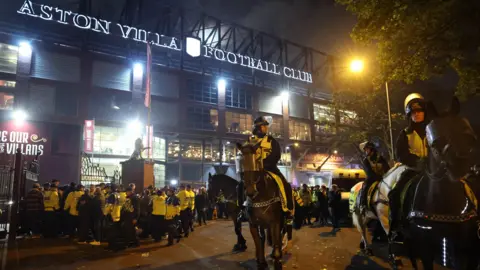
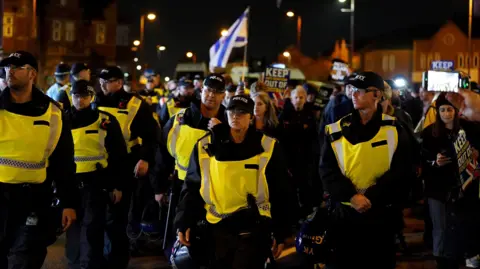

Home Affairs Committee Criticizes Government Response The Home Affairs Committee described the government’s attempt to overturn the ban on Maccabi Tel Aviv supporters at the Aston Villa match as “late and clumsy,” saying it heightened public discord and failed to provide a workable solution. The committee’s findings were released on 22 February 2026, reflecting broad parliamentary concern over the handling of the incident. Multiple MPs echoed the sentiment that the reversal lacked clear planning and exacerbated tensions. [1]
Police Intelligence Errors Undermined Ban Justification Birmingham’s Safety Advisory Group (SAG) barred fans based on West Midlands Police intelligence that later admitted to exaggerating risk and relying on unverified data. The report highlighted that AI‑generated police tools produced false narratives, including a fabricated fixture between Maccabi Tel Aviv and West Ham, which weakened the ban’s legal basis. These intelligence flaws were central to the committee’s criticism of the police’s role in the controversy. [1]
Leadership Changes Follow Scandal Former West Midlands Police chief constable Craig Guildford announced his retirement on 16 January 2026 after acknowledging errors in the evidence presented to the committee. The Home Secretary subsequently withdrew confidence in Guildford and signalled plans to restore the power to dismiss police chiefs, citing a “serious failure of leadership.” These moves aim to rebuild public trust in policing oversight. [1]
Council Influence and Independent Review Initiated Councillor Mumtaz Hussain failed to declare a campaign stance on the fan ban and later recused herself, while the late Councillor Waseem Zaffar openly opposed the decision. In response, the council ordered an independent review and recommended removing elected officials from advisory groups like SAG to prevent future conflicts of interest. The review seeks to ensure transparent decision‑making for public safety matters. [1]
Related Tickers
Timeline
Oct 2025 – West Midlands Police and Birmingham’s Safety Advisory Group decide to ban Maccabi Tel Aviv supporters from the Aston Villa match, labeling the fixture “high risk” on the basis of alleged unrest at previous games despite limited intelligence [3].
Nov 6, 2025 – The Aston Villa vs Maccabi Tel Aviv match proceeds without away fans; over 700 officers police the event, eight men and two women are detained on suspicion of violent disorder, and the game ends with limited disorder [4].
Dec 2025 – West Midlands Police issue a clarification after ACC Mike O’Hara’s parliamentary testimony, stating he did not intend to imply explicit support from the Jewish community for the fan ban and sends a letter of apology [4].
Dec 2025 – A Dutch police inspectorate letter, obtained by the BBC, rejects West Midlands Police’s claims of large‑scale clashes in Amsterdam, undermining a key justification for the ban [3].
Jan 6, 2026 – The Home Affairs Select Committee summons Chief Constable Craig Guildford and Birmingham Council leader John Cotton to give evidence on the fan‑ban decision, intensifying parliamentary scrutiny [3].
Jan 16, 2026 – Craig Guildford retires as West Midlands Police chief after Downing Street and Home Secretary Shabana Mahmood lose confidence in his leadership; he says the retirement is “in the best interests of the organisation, himself and his family” [2].
Jan 16, 2026 – A preliminary HMICFRS review finds confirmation bias and inaccurate intelligence—including a fabricated Maccabi‑West Ham fixture—in the briefing that led to the ban, and links the erroneous data to the AI tool Microsoft Copilot [2].
Jan 16, 2026 – Deputy Chief Constable Scott Green assumes acting chief constable duties and Jen Mattinson becomes acting deputy, while the Independent Office for Police Conduct announces it will continue examining the force’s actions [2].
Jan 2026 (ongoing) – Campaign Against Antisemitism chief Gideon Falter calls for the resignation of council leader Simon Foster, and Independent MP Ayoub Khan describes the episode as “a dark and shameful chapter,” urging broader accountability [2].
Feb 22, 2026 – The Home Affairs Committee concludes the government’s attempt to overturn the fan ban is “late and clumsy,” saying it inflames tensions and fails to restore public confidence [1].
Feb 22, 2026 – The Home Office announces plans to restore the power to dismiss police chiefs, signalling forthcoming reforms after what it calls a “serious failure of leadership” by West Midlands Police [1].
All related articles (4 articles)
-
BBC: Government intervention over Maccabi Tel Aviv fan ban deemed “late and clumsy” by MPs
-
BBC: West Midlands Police chief retires after Israeli fans ban row
-
BBC: MPs to question West Midlands Police and Birmingham leader over ban on Maccabi Tel Aviv fans
-
BBC: Police clarify wording after Jewish community implied stance on Maccabi ban
External resources (5 links)
- https://www.thetimes.com/article/12b7729e-b618-492f-8fbb-f98d07878f5b?shareToken=21a8f00a6e5d1c29e2d187942ef036e5 (cited 1 times)
- https://www.thetimes.com/uk/politics/article/police-drew-up-false-evidence-after-decision-to-ban-maccabi-tel-aviv-fans-9m6pw5qbd?gaa_at=eafs&gaa_n=AWEtsqdvqjLaNaDT3LtS8gEI8gUWZ69uF8rVAnX4F5CIHV8ZHUL7BAL132cjunbu8FE%3D&gaa_ts=695c0401&gaa_sig=BUeZ6xuQSb6BSDEydMqYC9GunBR2EDK77joX1RlYmcdC_LqIqD1D3Seh-udDoqGS1kDJVSQFSlTl0an5KvqysA%3D%3D (cited 1 times)
- https://twitter.com/bbcmtd (cited 2 times)
- https://www.facebook.com/BirminghamBBC (cited 2 times)
- https://www.instagram.com/bbcbirmingham/ (cited 2 times)