Pakistan Airstrikes Hit Kabul as Afghan Forces Claim Massive Cross‑Border Counterattacks
Updated (3 articles)
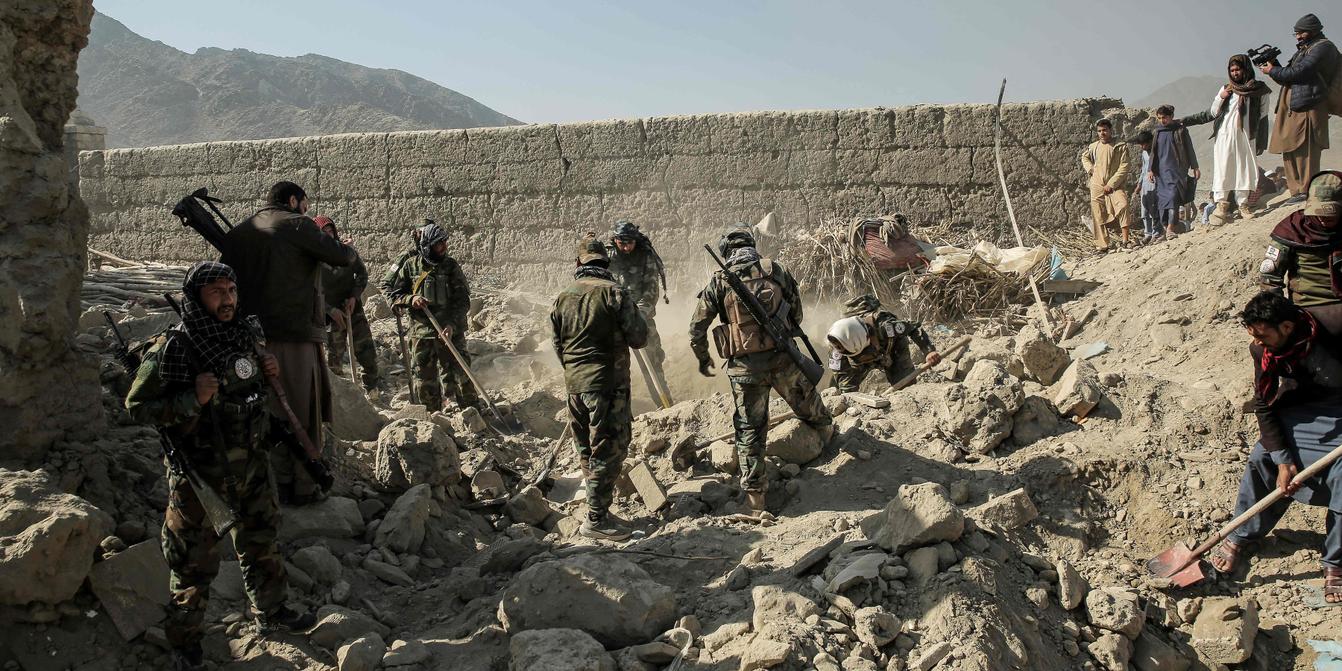
Airstrikes Launched Across Afghanistan on Friday Pakistan’s air force struck Kabul, Kandahar and Paktia early on Feb 27, targeting Afghan military facilities and reportedly destroying two brigade‑level bases [1][2]. Explosions were heard in Kabul but no immediate casualty figures were released by Afghan authorities [1]. The United Nations called for strict protection of civilians as refugee camps were evacuated following a missile strike that wounded civilians [1].
Casualty Figures Diverge Sharply Between Kabul and Islamabad Pakistan’s information minister said two of its soldiers died and three were wounded while 36 Afghan fighters were killed [1][2]. Afghanistan’s defense ministry reported eight soldiers dead, 11 injured and 13 civilians wounded in a refugee‑camp strike, and claimed 55 Pakistani soldiers killed [1][2]. Both sides released vastly different numbers, reflecting a propaganda battle alongside the fighting [1][2].
Afghan Forces Announce Large‑Scale Retaliation and Outpost Seizures Kabul’s army announced massive cross‑border attacks on Pakistani posts in Nangarhar and Paktia on Feb 26, saying fifteen forward posts were captured and several Pakistani soldiers killed or taken prisoner [3]. Taliban deputy spokesperson Hamdullah Fitrat echoed the claim, describing the operations as “massive” and emphasizing the seizure of outposts [3]. Pakistan’s information minister countered that Afghan troops opened fire unilaterally, prompting the airstrikes [3].
Ceasefire Fragility and International Concern The October‑initiated Qatar‑mediated ceasefire is under severe strain, with Pakistan’s defense minister warning that “our patience has run out” and describing the situation as an open war [2]. The UN urged adherence to international law and civilian protection amid escalating clashes [1]. Both governments accuse the other of harboring militants, complicating diplomatic efforts to de‑escalate [3].
Sources
-
1.
AP: Pakistan Airstrikes Hit Kabul Amid Escalating Afghanistan‑Pakistan Conflict: Reports Pakistan’s Feb 27 airstrikes in Kabul, Kandahar, Paktia, claims destruction of two Afghan brigade bases, divergent casualty numbers, and UN calls for civilian protection.
-
2.
CNN: Afghanistan‑Pakistan Border Strikes Escalate Amid Fragile Ceasefire: Details the same airstrikes, Taliban’s “cowardly” condemnation, stark casualty discrepancies, and warns the cease‑fire since October is at risk.
-
3.
Le Monde: Afghan Forces Claim Massive Cross‑Border Attacks on Pakistan After Airstrikes: Highlights Afghan army’s claim of massive retaliatory attacks, seizure of 15 Pakistani outposts, and context of prior border clashes and TTP attacks.
Related Tickers
Timeline
2021 – The Afghan Taliban seize Kabul and establish the Islamic Emirate, creating a new regime that later becomes the focal point of Afghanistan‑Pakistan tensions [3].
Oct 2025 – A Qatar‑mediated cease‑fire between Afghanistan and Pakistan takes effect, aiming to halt cross‑border hostilities but leaving underlying disputes unresolved [1][2].
Early Feb 2026 – Tehrik‑e‑Taliban Pakistan (TTP) attacks in north‑west Pakistan kill 19 police officers and civilians over two days, intensifying security pressures on Islamabad and prompting accusations that Afghan territory shelters militants [3].
Feb 22, 2026 – Afghan and Pakistani forces exchange fire along the Khyber Pakhtunkhwa border, each side blaming the other for the escalation and setting the stage for larger confrontations [3].
Weekend of Feb 23‑24, 2026 – Pakistan conducts airstrikes on Afghan border areas, reportedly killing at least 18 people, which Kabul later cites as the trigger for its own cross‑border retaliation [1].
Feb 26, 2026 (Thursday) – Afghan forces launch a massive cross‑border offensive, claiming to have killed 55 Pakistani soldiers, captured troops and seized 15 Pakistani outposts in Nangarhar and Paktia, while Taliban spokesman Zabiullah Mujahid denounces the earlier Pakistani strikes as “cowardly” [3][1].
Feb 26, 2026 (Thursday night) – Afghanistan’s military conducts night‑time vehicle movements and heavy gunfire in retaliation for the weekend Pakistani airstrikes, releasing video footage of the operation [1].
Feb 26, 2026 – Afghanistan’s defense ministry reports eight of its soldiers killed, 11 injured, and 13 civilians wounded in a missile strike on a Torkham refugee camp, while also claiming destruction of 19 Pakistani posts and two brigade‑level bases [2].
Feb 27, 2026 (Friday) – Pakistan launches airstrikes in Kabul, Kandahar and Paktia, targeting Afghan military facilities; Pakistan claims 133 Taliban fighters killed and dozens of posts destroyed, whereas Afghanistan reports eight soldiers dead, 11 wounded and 13 civilians injured [1][2].
Feb 27, 2026 (Friday) – UN Secretary‑General António Guterres, via spokesperson Stéphane Dujarric, urges both sides to protect civilians and adhere to international law as refugee camps are evacuated amid the fighting [2].
Feb 27, 2026 (Friday) – Pakistan’s Defense Minister Khawaja Asif warns “our patience has run out” and declares an open war, signalling that the October cease‑fire is in jeopardy [1].