Supreme Court Grants Emergency Approval for California’s Democratic‑Favored Map, Enabling Five Potential Seat Gains
Updated (6 articles)

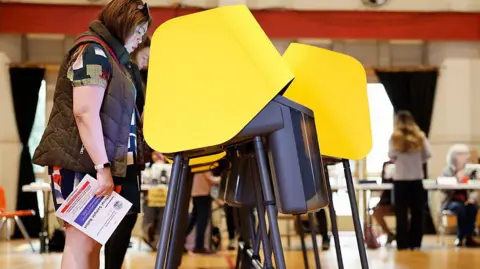
Supreme Court Issues Unexplained Emergency Order On February 4 2026 the U.S. Supreme Court issued an unsigned emergency order that cleared the way for California’s newly drawn congressional map to be used in the 2026 midterm elections, providing no rationale and rejecting last‑minute challenges from California Republicans and the Trump administration [1][2][3][4]. The order follows a lower‑court 2‑1 decision that found the map was not racially gerrymandered [4].
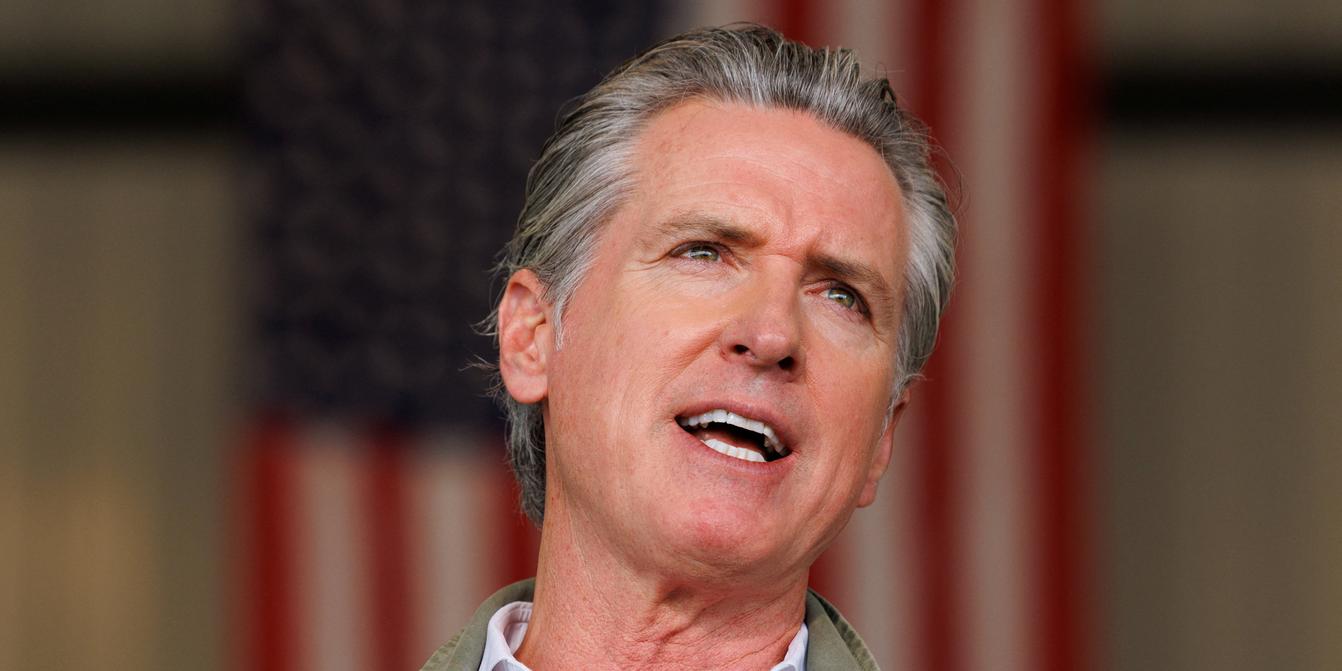
Map Approved by Voters and Designed to Add Democratic Seats California voters adopted the map in a November 2025 referendum (Proposition 50) with roughly 64 % support, mandating new districts for the 2026, 2028 and 2030 elections [3]. The plan creates up to five new districts that favor Democrats, potentially turning five Republican‑held seats Democratic and shifting the state’s House delegation to 43 Democrats, eight Republicans and one vacancy out of 52 seats [2][4]. Governor Gavin Newsom promoted the referendum as retaliation against a Republican‑led Texas map and accused former President Trump of sparking the “redistricting war” [1][2].
Political Reactions Highlight Partisan Clash Newsom used X to claim Trump “lost” the redistricting battle and will lose again in November, framing the California map as a counter‑measure [1][2]. Attorney General Pam Bondi called the move a “brazen” power grab, while former California GOP executive director Jon Fleishman warned the new lines will further shrink the Republican delegation [3][4]. Justice Alito, in a December filing, noted both California and Texas are redrawing maps for partisan advantage, underscoring the Court’s reluctance to intervene on purely political grounds [4].
Election Timeline Moves Forward After Court Ruling The Supreme Court’s order clears the path for candidate filing, which opens on February 9 2026, allowing campaigns to launch under the new district boundaries [3][4]. The decision removes the legal obstacle just weeks before the primary filing deadline, setting the stage for the 2026 congressional races to be contested on the newly drawn lines [1]. No dissenting opinions were filed, reflecting the Court’s typical handling of emergency motions [4].
Sources
-
1.
Le Monde: Supreme Court Clears California’s New Electoral Map Ahead of 2026 Midterms: Details the Feb 4 emergency order, the map’s goal of five extra Democratic seats, and Newsom’s accusation against Trump, noting Republicans did not comment .
-
2.
BBC: Supreme Court Clears Way for California’s New Democratic‑Favored Map: Highlights the unsigned order, the rejected Republican/Trump emergency request, and the partisan framing by Newsom and Bondi .
-
3.
Newsweek: Supreme Court Clears Way for California’s New Democratic‑Favored Congressional Map: Emphasizes the lower‑court 2‑1 ruling, the 64 % voter approval of Proposition 50, and upcoming candidate filing on Feb 9 with GOP warnings .
-
4.
AP: Supreme Court Clears Democratic‑Favored California Map for 2026 Elections: Focuses on the unsigned order, Justice Alito’s comment on partisan redistricting, and the immediate impact on primary filing deadlines .
Timeline
2024 – The 2024 Census releases new population data, triggering the decennial redistricting cycle that prompts states to redraw congressional districts for the 2026 elections. [6]
Aug 2025 – Governor Gavin Newsom launches a statewide campaign to suspend California’s independent redistricting maps as retaliation against a Republican‑backed Texas redistricting plan. [1]
Nov 4, 2025 – Voters approve Proposition 50 with 64% support, authorizing a new California congressional map for the 2026‑2030 elections and aiming to give Democrats up to five additional House seats. [3][1]
Dec 2025 – The U.S. Supreme Court upholds Texas’s mid‑decade Republican‑favored map, rejecting racial‑bias claims and setting a precedent that partisan redistricting is not a federal‑court issue. [6]
Jan 14, 2026 – A three‑judge federal panel in Los Angeles rules 2‑1 to allow California’s voter‑approved map to be used in future elections, rejecting emergency requests from state Republicans and the Justice Department. [2][5]
Feb 4, 2026 – The Supreme Court issues an unsigned emergency order rejecting a last‑minute Republican/Trump challenge, clearing the way for California’s Democratic‑favored map; Newsom declares “Trump lost the redistricting war and will lose again in November,” while Attorney General Pam Bondi calls Newsom’s move a “brazen” power grab. [1][4][6]
Feb 9, 2026 – Candidate filing opens for California’s 2026 congressional primaries under the new district lines, prompting GOP leaders to warn the Republican delegation will shrink further. [3]
Nov 2026 – The midterm elections approach, with the new map positioned to flip up to five Republican‑held seats and potentially shift the House majority toward Democrats. [1][4][6]
2028 – Governor Newsom signals an eye toward a 2028 presidential run, framing California’s redistricting strategy as part of his broader national political ambitions. [5]
All related articles (6 articles)
-
Le Monde: Supreme Court Clears California’s New Electoral Map Ahead of 2026 Midterms
-
BBC: Supreme Court Clears Way for California’s New Democratic‑Favored Map
-
Newsweek: Supreme Court Clears Way for California’s New Democratic‑Favored Congressional Map
-
AP: Supreme Court Clears Democratic‑Favored California Map for 2026 Elections
-
CNN: Federal judges allow California to use new Democrat-friendly map ahead of 2026 election
-
AP: Federal panel allows California's voter-approved House map for 2026 midterms