Trump Orders Massive U.S. Naval and Air Buildup Near Iran After Geneva Talks
Updated (3 articles)
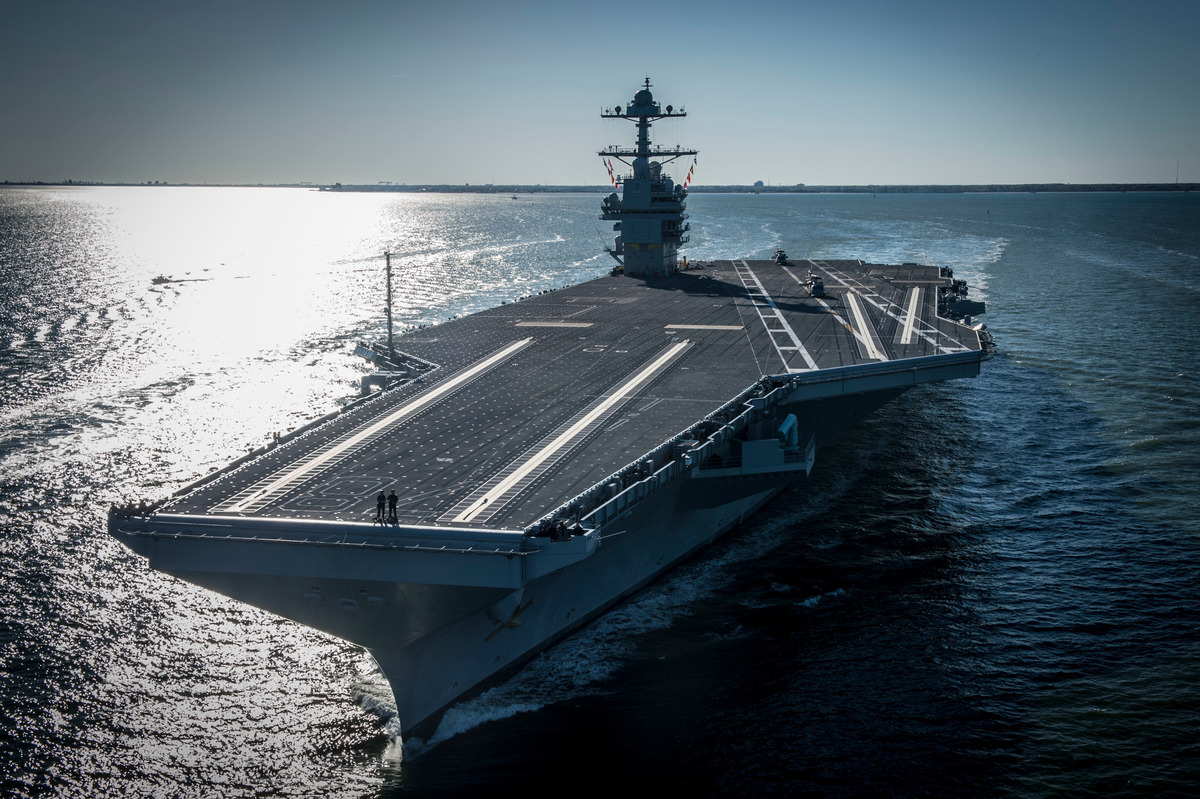
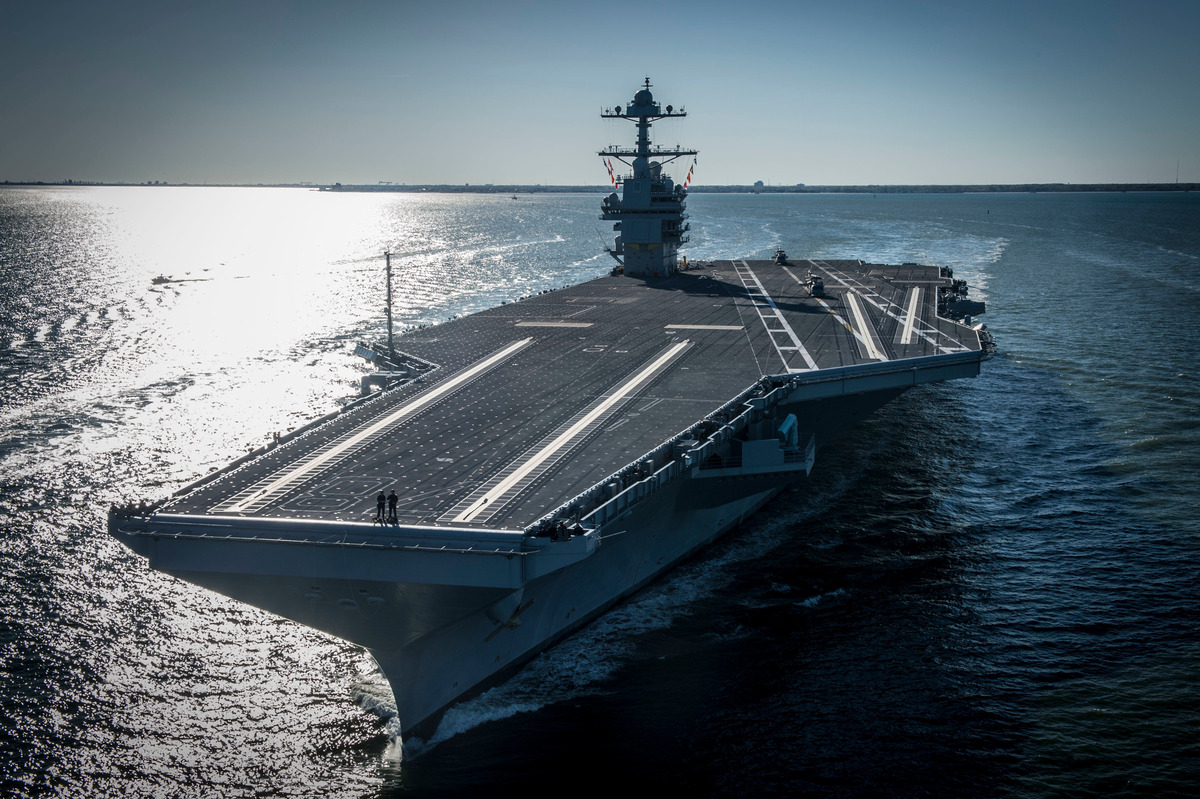
Two Supercarriers Sail Toward the Strait of Gibraltar The world’s largest carrier USS Gerald R. Ford left the Caribbean on Feb 18, 2026, and is transiting toward the Strait of Gibraltar to join USS Abraham Lincoln, which is already operating in West Asia; together they form a rare dual‑carrier presence in the region [1][2]. Both strike groups include guided‑missile destroyers such as USS McFaul and USS Mitscher, a refueling vessel, a cargo ship, and at least one nuclear‑powered submarine [1]. U.S. officials reported a total of 13 warships, including nine destroyers and three littoral combat ships, now positioned to support a sustained campaign [2].
Air Wing Expands to Over 150 Combat Aircraft Approximately 100 aircraft are stationed at Qatar’s Al Udeid Air Base, with an additional 50 fifth‑generation fighters—F‑22 Raptors from Virginia and F‑35A stealth jets moving to Jordan—deployed in the same timeframe [1]. Open‑source flight‑tracker data on Feb 18 showed F‑22, F‑15, and F‑16 fighters, KC‑135 tankers, E‑3 Sentry AWACS, and cargo planes operating over West Asia [2]. The surge in air power positions the United States to conduct rapid strike missions while providing aerial refueling and surveillance support for naval forces [1][2].
Missile Defense Systems and Tens of Thousands of Troops Deployed Patriot and THAAD ground‑based missile interceptors are being shipped to regional bases to protect U.S. forces from ballistic and cruise threats [1]. Tens of thousands of U.S. troops are already stationed across West Asian bases, adding a vulnerable but essential ground component to the naval and air buildup [2]. The combined presence of advanced air defenses, warships, and ground forces markedly raises the risk of Iranian retaliation against U.S. installations [1][2].
Diplomacy Persists Amid Direct Threats and Iranian Retaliation Warnings Geneva talks on Feb 17 produced “guiding principles” but left U.S. red‑line concerns unresolved, prompting Vice‑President J.D. Vance to state Tehran has not accepted all conditions [2]. President Trump repeatedly warned Iran of imminent military action, posted that the Diego Garcia airfield and RAF Fairford could be used for strikes, and urged Tehran to seize state institutions [1][2]. Iran’s Supreme Leader Ayatollah Ali Khamenei warned that even the world’s strongest military could be hit so hard it cannot recover, signaling a willingness to target U.S. bases if attacked [1].
Sources
-
1.
Newsweek: Trump Expands U.S. Military Build‑Up Near Iran: Details the carrier groups, added jets, missile defenses, and Trump's public warning about using Diego Garcia and RAF Fairford, emphasizing imminent strike risk.
-
2.
The Hindu: U.S. Deploys Two Aircraft Carriers and Dozens of Warplanes to West Asia Amid Iran Tensions: Highlights the simultaneous presence of two carriers, open‑source flight data, and the diplomatic backdrop of Geneva talks and U.S. red‑line concerns.
Timeline
Oct 2025 – The USS Gerald R. Ford moves to the Caribbean for a Venezuela operation, leaving CENTCOM without a carrier and prompting the United States to later redeploy it toward the Middle East [2].
Jan 28, 2026 – The nuclear‑powered USS Abraham Lincoln arrives in the Middle East, becoming the first U.S. carrier in CENTCOM since the Gerald Ford’s October move, and brings dozens of fighter jets, roughly 5,000 sailors, and guided‑missile destroyers [2].
Jan 28, 2026 – President Trump praises the carrier group as a “beautiful armada” at an Iowa rally, saying it will force a deal on Iran’s nuclear program, while Saudi Arabia and the United Arab Emirates announce they will not allow their airspace to be used for attacks on Iran [2].
Jan 28, 2026 – Lieutenant General Derek France announces a multi‑day CENTCOM air‑power readiness exercise with regional allies, including a Bahrain scenario to shoot down drones, as a show of strength after the carrier deployment [2].
Jan 28, 2026 – Iranian officials, including Abbas Kaabi of the Assembly of Experts and MP Mohammad Seraj, warn of “unimaginable consequences” and claim Iran could sink U.S. vessels if the United States attacks Iran or Supreme Leader Khamenei [2].
Feb 17, 2026 – Geneva talks produce “guiding principles” intended to avoid conflict, but the United States maintains red‑line concerns; Vice‑President J.D. Vance says Tehran has not yet accepted all U.S. conditions [3].
Feb 18, 2026 – The USS Gerald R. Ford transits toward West Asia with three destroyers, creating a rare simultaneous presence of two U.S. carriers (Ford and Abraham Lincoln) in the region [3].
Feb 18, 2026 – Open‑source tracking shows F‑22, F‑15 and F‑16 fighters, KC‑135 tankers, E‑3 Sentry AWACS and cargo aircraft operating over West Asia, supporting the expanded air presence [3].
Feb 18, 2026 – President Trump repeatedly threatens Iran with military intervention, urges Iranians to seize state institutions and declares “help is on the way,” while noting that Iran halted more than 800 executions under U.S. pressure [3].
Feb 19, 2026 – The United States ships Patriot and THAAD ground‑based missile‑intercept systems to the Middle East to protect regional forces against ballistic and cruise threats [1].
Feb 19, 2026 – Roughly 100 aircraft operate from Qatar’s Al Udeid base, with an added fleet of 50 fifth‑generation fighters (F‑22s and F‑35As) deployed, while F‑22s depart Virginia and F‑35As move to Jordan, dramatically boosting air power near Iran [1].
Feb 19, 2026 – White House Press Secretary Karoline Leavitt says President Trump still prefers a diplomatic deal but acknowledges “many reasons… for a strike,” and Trump posts that the U.S. may need to use Diego Garcia and RAF Fairford to strike Iran if a deal fails [1].
Feb 19, 2026 – Supreme Leader Ayatollah Ali Khamenei warns that even the world’s “strongest military” could be hit so hard it cannot recover, and Iran says U.S. bases in the region would be in its crosshairs if an attack occurs [1].
Feb 19, 2026 – Carrier strike groups led by USS Gerald R. Ford and USS Abraham Lincoln, accompanied by guided‑missile destroyers, a refueling ship, a cargo ship and at least one nuclear submarine, position for a sustained campaign against Iran, bringing the total to 13 warships in West Asia [3][1].
Feb 19, 2026 – The United States plans further drills with allies focusing on drone‑countermeasures, while Saudi Arabia and the UAE continue to bar use of their airspace for attacks on Iran, limiting operational options for any strike [2].