Record Adult Re‑Enrollment and Fed’s AI Debate Shape 2026 Economic Outlook
Updated (8 articles)
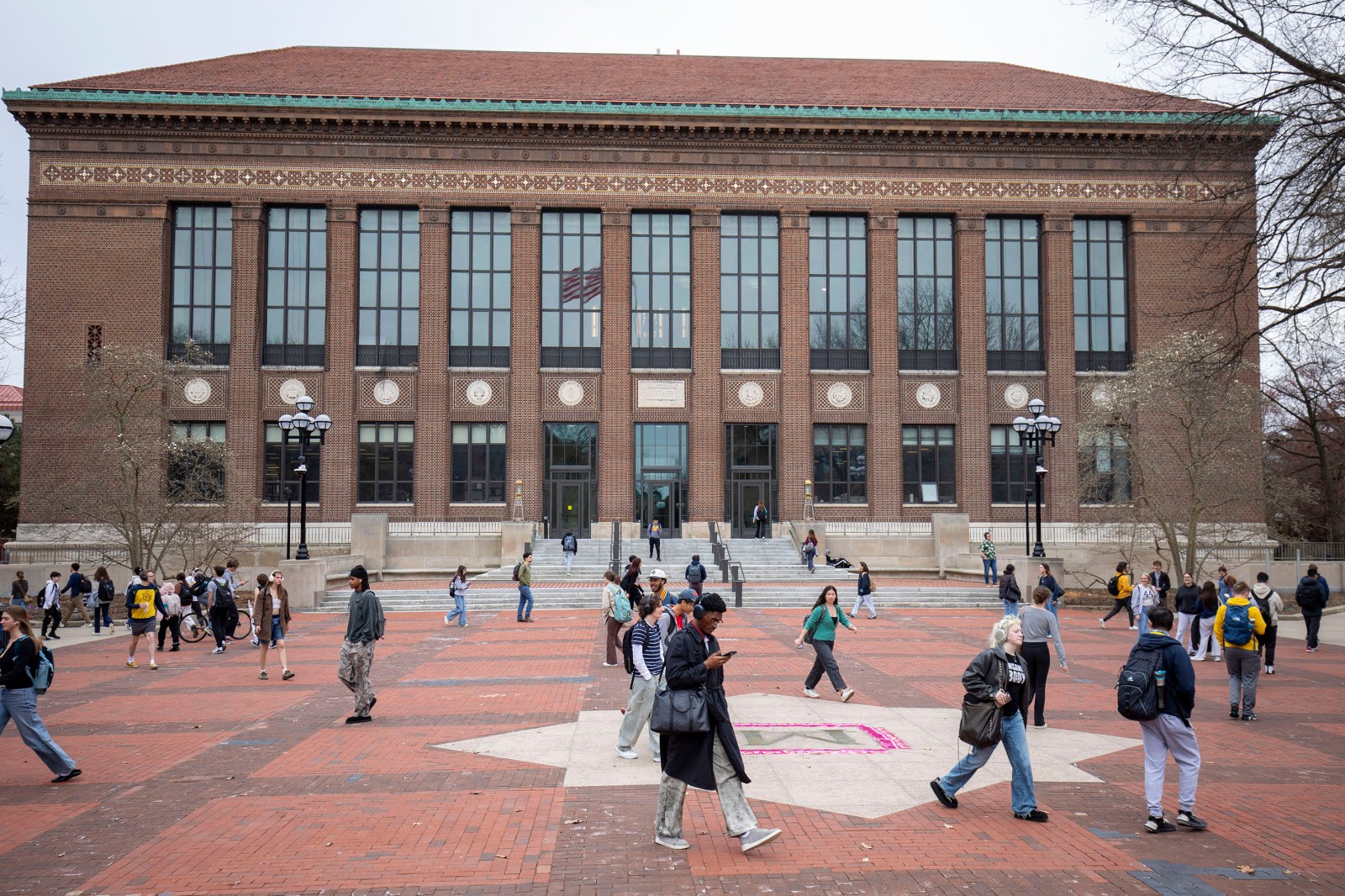
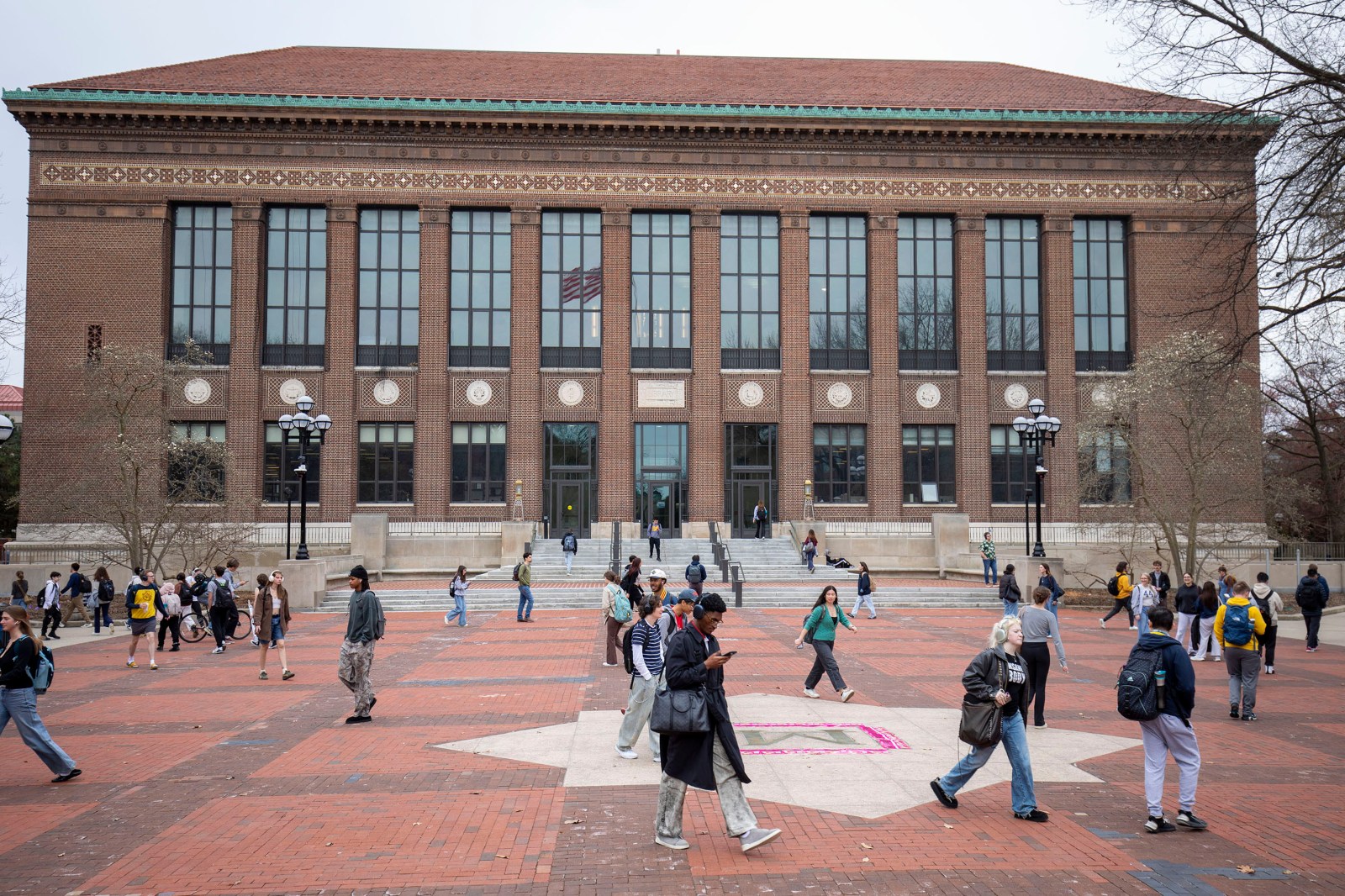
Adult Re‑Enrollment Surges Amid Job‑Market Anxiety January poll of 726 U.S. adults found 60 % returned to school to increase earnings and 20 % did so for job‑stability reasons, while 34 % cited fear of AI‑driven replacement, rising to 43 % among business owners and 42 % among managers [1]. Hiring data released by the Department of Labor showed 2026 hiring began stronger than expected but overall conditions remain fragile, prompting analysts to monitor upcoming employment reports [1]. Digital fluency and AI competencies now top skill priorities for 87 % of job seekers, underscoring the link between education choices and perceived automation risk [1].
AI Adoption Drives Labor‑Market Uncertainty Fed Governor Michael Barr described AI’s impact on employment as “gradual and mixed,” expecting some displacement but also new job creation, with short‑term disruptions that Congress must address [2]. The same AI concerns motivate a third of adult returnees to seek new qualifications, reflecting a broader societal anxiety about automation’s pace [1]. Both sources note that while AI could boost productivity, its immediate labor‑market effects remain uncertain, influencing personal and policy decisions alike [1][2].
Fed Officials Diverge on AI’s Effect on Interest Rates Barr argued AI is unlikely to trigger near‑term rate cuts and may even raise the neutral rate by increasing business‑investment demand and lowering the savings rate [2]. In contrast, Trump‑nominated Kevin Warsh contends AI could justify cheaper borrowing, viewing it as a “productivity‑enhancing wave” that supports rate reductions [2]. Cleveland Fed President Beth Hammack echoed concerns that AI‑driven productivity could bias the neutral rate upward, highlighting internal debate among the 12 voting Fed members [2].
Policy Outlook Hinges on Upcoming Labor Data and Rate Decisions Analysts will watch the next wave of labor statistics after a year of weak hiring to gauge whether re‑enrollment trends translate into stronger wage growth [1]. The Fed’s internal split means any shift toward rate cuts will require Warsh to persuade a majority of colleagues before the next eight‑meeting schedule [2]. Together, rising adult education enrollment and divergent Fed views on AI illustrate how automation concerns are reshaping both workforce strategies and monetary policy in early 2026 [1][2].
Sources
-
1.
Newsweek: Americans Return to School Amid Labor‑Market Uncertainty – Highlights a “career reset” with 60 % seeking higher pay, AI fear driving 34 % of returns, and mixed hiring signals prompting close labor‑data monitoring .
-
2.
CNN: Fed Governor Says AI Won’t Prompt Immediate Rate Cuts, Sparking Internal Debate – Details Governor Michael Barr’s stance that AI won’t lower rates, nominee Kevin Warsh’s opposing view, and broader Fed concerns about AI raising the neutral rate .
Related Tickers
Videos (2)
Timeline
Dec 18, 2025 – Vanguard’s analysis shows AI‑exposed occupations add workers at a 1.7 % annual rate (mid‑2023 to mid‑2025), outpacing the 1 % pre‑COVID growth, while real wages in those roles jump to 3.8 % post‑COVID, and senior economist Adam Schickling tells CNN there is “no evidence of employment decline” in AI‑heavy jobs, contradicting broader slowdown narratives [4].
Dec 19, 2025 – Bank of England Governor Andrew Bailey warns on BBC Radio 4 that AI could displace workers “similarly to the Industrial Revolution,” stressing the need for training and noting the unemployment rate at 5.1 % with a rise of 85,000 among 18‑24‑year‑olds, the largest since Nov 2022; he adds AI “is the most likely source of the next leg up for UK productivity and growth” [1].
Dec 23, 2025 – U.S. employers announce 71,321 layoffs in November, pushing total 2025 cuts to ~1.2 million (≈54 % up from 2024), while analysts warn tariffs and AI could keep hiring weak in 2026; Eric Woodard predicts repetitive cognitive white‑collar jobs will be hardest hit [8].
Dec 24, 2025 – Commerce data reveal U.S. GDP expands 4.3 % annualised, the strongest in years, even as monthly job creation stalls at ~51,000, highlighting a “great decoupling” where automation and AI‑driven capital spending lift output but not employment, a shift economists say may become structural [6].
Dec 24, 2025 – The White House urges a pivot to blue‑collar work, with adviser Peter Navarro telling CNBC that “white‑collar jobs are disappearing quickly” in the AI era and promoting trade‑school funding; the administration also commits billions to AI and energy, while a Senate report warns AI could eliminate nearly 100 million U.S. jobs within a decade [7].
Jan 23, 2026 – Trump economic adviser Kevin Hassett tells CNBC the next Fed chair should “run the Alan Greenspan playbook” and keep rates low, arguing that AI‑driven productivity and data‑center investment are sustaining a 4.4 % Q3 GDP growth, even as the benefits remain K‑shaped with the top 20 % accounting for 59 % of consumer spending [3].
Feb 17, 2026 – Fed Governor Michael Barr says the AI boom “is unlikely to be a reason for lowering policy rates,” arguing that AI‑driven productivity could actually raise the neutral rate by boosting investment demand and lowering the savings rate; Cleveland Fed President Beth Hammack echoes the view that the neutral rate may become “more upward biased” [2].
Feb 18, 2026 – A “career reset” surge sees 60 % of adult re‑enrollees seeking school to raise pay and 34 % citing fear of AI replacement; CompTIA research shows 87 % of job seekers prioritize digital fluency and AI skills, and analysts say upcoming labor‑market reports will be scrutinized after a year of weak hiring [5].
Early 2026 (expected) – The Supreme Court is slated to decide on President Trump’s tariff regime, a ruling that could “cause economic disruption and require refunds to importers,” underscoring the administration’s simultaneous push for AI investment and trade‑school funding as a hedge against automation‑driven job loss [7].
All related articles (8 articles)
-
Newsweek: Americans Return to School Amid Labor‑Market Uncertainty
-
CNN: Fed Governor Says AI Won’t Prompt Immediate Rate Cuts, Sparking Internal Debate
-
CNN: Trump's run it hot plan could lift growth but cost workers
-
Newsweek: US economy grows 4.3% as hiring lags, signaling a shift to capital-heavy growth
-
Newsweek: White House urges focus on blue-collar jobs amid AI disruption
-
Newsweek: US job market seen facing ongoing layoffs in 2026 as tariffs and AI loom
-
BBC: BoE governor says AI could displace jobs; calls for training and notes impact on younger workers
-
CNN: AI‑Exposed Jobs Grow Faster Than Expected, Study Finds
External resources (11 links)
- https://www.youtube.com/watch?v=0RkNkGihrvc (cited 1 times)
- https://www.youtube.com/watch?v=uUrINjXiuS4 (cited 1 times)
- https://ace.edu/blog/going-back-to-school-2026/ (cited 1 times)
- https://corporate.vanguard.com/content/dam/corp/research/pdf/isg_vemo_2026.pdf (cited 1 times)
- https://parwcc.com/parwcc-2026-u-s-job-market-outlook-stability-skills-and-sector-splits-ahead/#:~:text=A%20Cooling%20but%20Resilient%20Labor%20Economy%3A%20The%202026%20Baseline&text=Employment%2C%20wages%2C%20and%20productivity%20are,remain%20low%20by%20historical%20standards. (cited 1 times)
- https://www.challengergray.com/blog/challenger-report-71321-job-cuts-on-restructurings-closings-economy/ (cited 1 times)
- https://www.comptia.org/en-us/resources/research/job-seeker-trends/ (cited 1 times)
- https://www.ft.com/content/2a29cbc9-7183-4f68-a1d2-bc88189672e6 (cited 1 times)
- https://www.hiringlab.org/2025/11/20/indeed-2026-us-jobs-hiring-trends-report/#:~:text=A%20series%20of%20new%20economic,remain%20positive%2C%20but%20somewhat%20anemic. (cited 1 times)