China Strips Nine Senior PLA Officers From NPC List Ahead of March Two Sessions
Updated (8 articles)
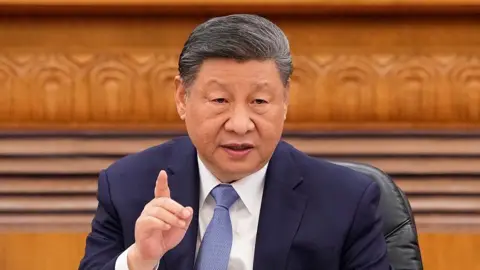
Mass Removal of Lawmakers and Military Officials Announced The National People's Congress Standing Committee announced on 27 February that 19 officials, including nine senior People’s Liberation Army officers, were removed from the NPC delegate roster ahead of the upcoming Two Sessions in early March [1]. The purge affects high‑ranking commanders such as Ground Force chief Li Qiaoming and former navy chief Shen Jinlong, as well as provincial figures like former Inner Mongolia party chief Sun Shaochong [1]. No official explanation was provided, underscoring the opaque nature of the decision [1].
Timing Mirrors Recent High‑Profile Anti‑Corruption Campaign The dismissals come weeks after President Xi Jinping ousted his top general Zhang Youxia for “serious violations of discipline and law,” signaling a continuation of the anti‑corruption drive that intensified in October 2025 [1]. That earlier crackdown removed nine senior generals, establishing a pattern of using disciplinary charges to sideline potential rivals [1]. Observers note that the current removals reinforce Xi’s “tigers and flies” strategy targeting both senior and junior officials [1].
Implications for the March Two Sessions Agenda The Two Sessions, scheduled for March 4‑11, will convene thousands of delegates to set China’s next five‑year plan and annual growth targets [1]. Removing influential military delegates may streamline party control over policy discussions and reduce dissent within the armed forces’ political representation [1]. Analysts suggest the move could signal tighter civilian oversight of the PLA as economic and security priorities converge [1].
Xi’s Anti‑Corruption Narrative Remains Central to Governance Since assuming power in 2013, Xi Jinping has framed corruption as the Party’s greatest threat, launching campaigns that target “tigers” (high‑level officials) and “flies” (low‑level cadres) alike [1]. The recent removals reaffirm that narrative, with Xi recently warning that the battle against corruption “remains grave and complex” [1]. The lack of public justification for the nine military dismissals highlights the continued use of disciplinary mechanisms to consolidate authority [1].
Timeline
2012 – Xi Jinping launches a sweeping anti‑corruption campaign, calling corruption “the biggest threat” to the Party and targeting both high‑level “tigers” and low‑level “flies,” a tool that later underpins the military purges. [1][4][7][8]
2023 – More than twenty senior PLA officers are investigated or expelled in a series of purges, marking the start of a decade‑and‑a‑half crackdown that dramatically shrinks the senior military leadership. [4]
2024 – Two former defence ministers are expelled on corruption charges, extending the anti‑graft drive into the highest echelons of China’s defence establishment. [8]
Oct 2025 – A wave of anti‑corruption actions removes nine top generals in the PLA, the largest public crackdown on the military in decades, and sees the expulsion of CMC vice‑chair He Weidong, signaling an intensifying purge of senior commanders. [1][3][7]
Jan 24, 2026 – The Ministry of National Defence announces that General Zhang Youxia, senior vice‑chair of the Central Military Commission, and Joint Staff Chief Liu Zhenli are under investigation for “serious violations of discipline and law,” adding to a string of recent probes of senior officers. [3][8]
Jan 26, 2026 – A defence‑ministry video and PLA Daily editorial declare that Zhang and Liu “seriously trample on and undermine the system of ultimate responsibility resting with the CMC chairman,” framing the probe as a defence of Xi’s authority; the Wall Street Journal reports allegations that Zhang leaked nuclear data to the United States. [4][6]
Jan 26, 2026 – With Zhang removed, the Central Military Commission is reduced to only President Xi and General Zhang Shengmin, a concentration of power not seen since Mao’s era and a clear signal of Xi’s unchallenged control over the armed forces. [2][6][7]
Jan 27, 2026 – Analysts warn that the loss of senior combat‑experienced leaders like Zhang creates uncertainty within the PLA, potentially impairing command‑and‑control and raising divergent assessments of the risk of a Taiwan conflict. [5][6]
Feb 27, 2026 – The NPC Standing Committee removes 19 officials, including nine senior PLA officers such as Ground Force commander Li Qiaoming and former Navy chief Shen Jinlong, ahead of the upcoming Two Sessions, with no official explanation, echoing the October 2025 crackdown. [1]
Mar 4‑11, 2026 – The National People’s Congress and Chinese People’s Political Consultative Conference convene for the Two Sessions, where China will unveil its next five‑year plan and annual growth targets, a political backdrop for the recent military reshuffle. [1]
Apr 2026 – President Donald Trump is scheduled to visit China, a high‑profile diplomatic event that coincides with the internal military purge and may influence Beijing’s strategic calculations. [6]
2027 – The Communist Party is expected to select a new Central Committee, at which point vacant seats on the Central Military Commission may be filled, offering a possible avenue for restoring senior military leadership. [7]
2028 – Taiwan’s presidential election approaches, a timeline that analysts link to Xi’s current purge as a window to consolidate control without jeopardizing Beijing’s long‑term ambitions toward the island. [4]
All related articles (8 articles)
-
BBC: China Removes Nine Military Officials Ahead of Two Sessions
-
Newsweek: Xi’s Latest Military Purge Shrinks China’s Top Command
-
BBC: China’s PLA Leadership Crisis Deepens After Top General’s Purge
-
Newsweek: Xi’s Crackdown on Top General Sparks Coup Speculation
-
AP: China Investigates Top General Zhang Youxia, Shaking Military Leadership
-
CNN: Xi Jinping Investigates Top Generals, Consolidates Military Control
-
BBC: China probes top military leaders amid anti‑corruption drive
-
AP: China’s top military general investigated amid ongoing purge