Snow Moon Peaks Sunday as Artemis II Prepares for February Launch
Updated (8 articles)
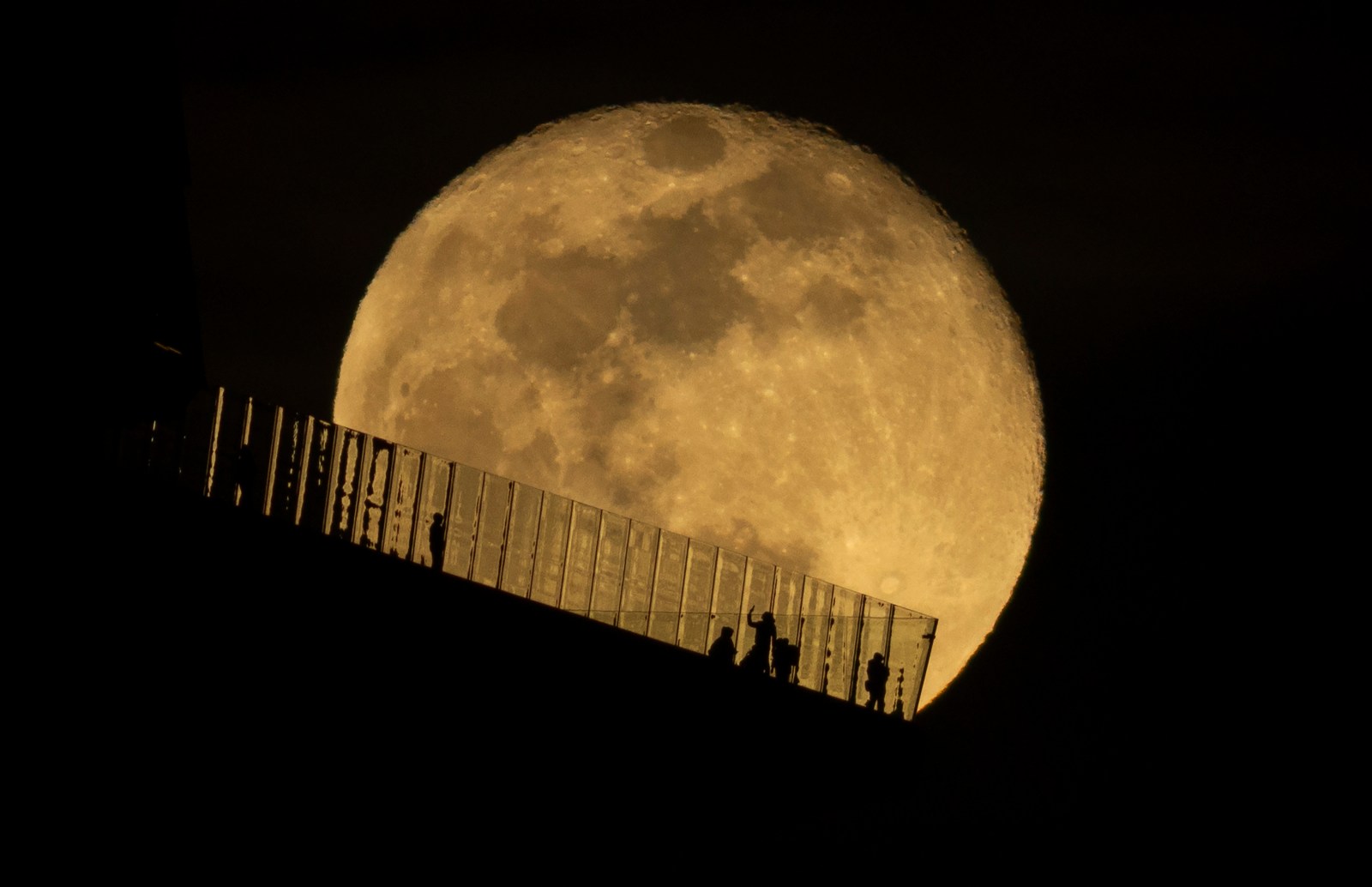
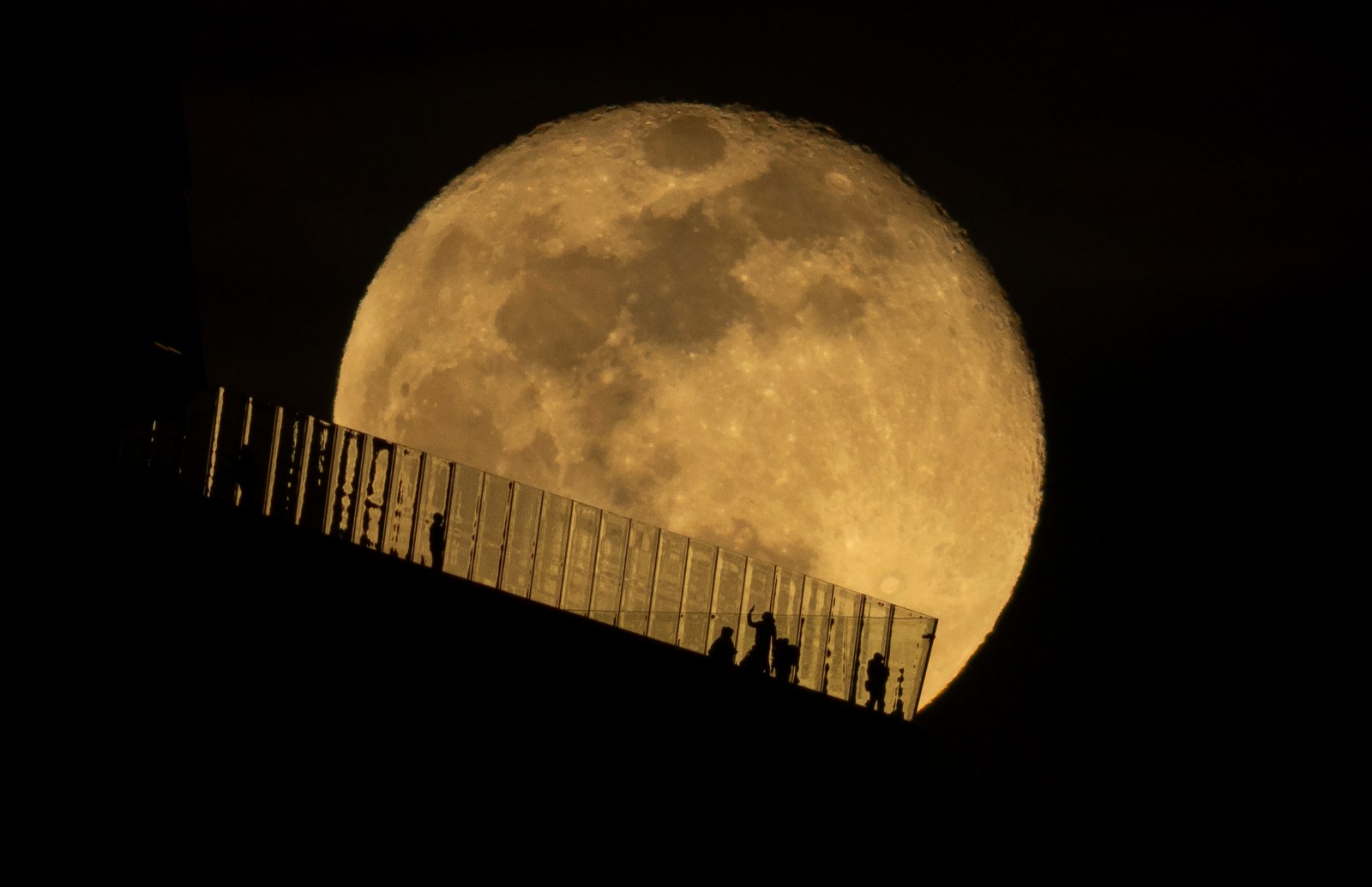
Full‑Moon Timing and Visibility Confirmed Across Sources The February full moon reaches peak illumination at 5:09 p.m. Eastern Time on Sunday, February 1, appearing low in the eastern sky near sunset and remaining full through Saturday and Monday [1][2]. Observers should look eastward at the horizon, where the moon’s “moon illusion” can make it seem larger [2]. The event will be visible across North America, with the moon rising shortly after sunset and setting after midnight [1].
Cultural Naming and Historical Roots Detailed The almanac designates this phase the “Snow Moon,” a name derived from heavy snowfall typical in North America during February [1][2]. Indigenous groups used alternate names: the Comanche called it the “sleet moon,” the Creek the “wind moon,” and the Shawnee the “crow moon” [1]. Early settler records, such as those by Captain Jonathan Carver in the 1760s, note the name reflects the month’s frequent snowfalls [2].
Artemis Program Connection and Viewing Guidance Highlighted NASA’s Artemis II crewed lunar flyby is slated for a possible February launch, prompting scientists to encourage public study of lunar geography ahead of Artemis III’s planned south‑pole landing [1]. NASA advises viewing the moon during non‑full phases for better crater contrast, though the full Snow Moon offers a striking visual for casual observers [2]. Light‑polluted areas should be avoided, and observers are reminded that the full‑moon lighting can wash out surface detail [2].
Sources
-
1.
CNN: Snow Moon Peaks Sunday as Artemis Missions Loom: Details peak illumination time, cultural names, upcoming supermoons, and links the event to Artemis II launch preparations
-
2.
Newsweek: Snow Moon 2026: Full Moon to Appear Feb 1 with Peak Illumination at 5:09 p.m. ET: Provides rise time, historical naming origin, orbital geometry explanation, and practical viewing tips emphasizing dark skies
Timeline
Nov 28, 2025 – NASA defines the Cold Moon on Dec 4 as the final 2025 supermoon, occurring when the Moon reaches perigee within 90 % of its closest approach, enhancing its apparent size and brightness [6].
Dec 1, 2025 – The last supermoon of 2025 rises on Dec 6, offering observers a subtle size increase and a modest tidal boost, though the effect remains minor [7].
Dec 3, 2025 – The December supermoon peaks at 6:14 p.m. ET, marking the final of three consecutive 2025 supermoons and coinciding with the winter‑solstice period; NASA notes this “cold moon” appears larger due to perigee [2].
Dec 3, 2025 – NASA’s Artemis II crewed lunar fly‑by is slated for a launch window between February and April 2026, positioning the mission as the next step after the December supermoon visual cue [2].
Dec 4, 2025 – The Cold Moon supermoon illuminates U.S. skies, appearing slightly larger and brighter; observers are advised to view it away from city lights for optimal detail [5].
Dec 6, 2025 – The final 2025 supermoon rises, delivering a modest “moon illusion” enlargement near the horizon and a slight increase in tidal range, though the difference is not significant [7].
Jan 3, 2026 – The Wolf Moon, the first full moon of 2026, is scheduled to rise, continuing the series of named moons that guide seasonal skywatching [5].
Jan 31, 2026 – NASA scientist Noah Petro urges the public to study lunar geography ahead of Artemis III, noting that four astronauts will embark on a historic lunar fly‑by with Artemis II possibly launching in February [1].
Feb 1, 2026 – The Snow Moon reaches peak illumination at 5:09 p.m. ET, offering a clear view of the full lunar disc low in the eastern sky; its name traces back to 1760s observations of heavy snowfall (the “Snow Moon”) [3].
Feb – Apr 2026 – Artemis II prepares for a possible February launch, marking the first crewed mission of NASA’s Artemis program and setting the stage for Artemis III’s planned south‑pole landing later in the year [1][2].
Mar 3, 2026 – A total lunar eclipse becomes visible across Asia, Australia, the Pacific and the Americas, providing a rare opportunity to observe Earth’s shadow on the Moon [1].
Aug 27‑28, 2026 – A partial lunar eclipse will be observable across the Americas, Europe, Africa and Western Asia, adding another notable lunar event to the 2026 sky calendar [1].
Nov – Dec 2026 – Two supermoons occur, with the December supermoon reaching a distance of 221,667 mi (356,740 km), the closest of 2026, making it appear brighter and larger than a typical full moon [1].
Late 2026 – Artemis III aims to land astronauts near the lunar south pole, building on the data gathered from Artemis II’s fly‑by and the increased public interest sparked by the 2026 Snow Moon observations [1].
All related articles (8 articles)
-
CNN: February Snow Moon Peaks Sunday as Artemis Missions Loom
-
Newsweek: Snow Moon 2026: Full Moon to Appear Feb 1 with Peak Illumination at 5:09 p.m. ET
-
Newsweek: Wolf Moon 2025: How to best view January’s supermoon
-
Newsweek: Cold Moon Supermoon Lights Up U.S. Skies on Dec 4, 2025
-
CNN: December Supermoon, the Year’s Final Supermoon, Peaks Thursday at 6:14 p.m. ET
-
King5 (Seattle, WA): December 2025 Cold Moon: Full Illumination and Supermoon Status
-
AP: Last 2025 Supermoon to Appear in December Skies
-
Newsweek: Cold Moon 2025: Last Supermoon to Appear December 4
External resources (12 links)
- https://www.nasa.gov/mission/artemis-ii/ (cited 1 times)
- https://astro101.wwu.edu/indianmoons.html (cited 2 times)
- https://www.almanac.com/full-moon-december (cited 2 times)
- https://earthsky.org/astronomy-essentials/earthskys-meteor-shower-guide/ (cited 1 times)
- https://earthsky.org/astronomy-essentials/what-is-a-supermoon/#:~:text=Jan%203:%20225%2C130%20miles%20(362%2C312,238%2C900%20miles%20(384%2C472%20km). (cited 1 times)
- https://earthsky.org/tonight/december-full-moon-mimics-the-june-sun/ (cited 1 times)
- https://earthsky.org/tonight/february-full-moon/ (cited 1 times)
- https://www.almanac.com/content/full-moon-october (cited 1 times)
- https://www.amsmeteors.org/meteor-showers/meteor-shower-calendar/ (cited 1 times)
- https://www.farmersalmanac.com/february-full-snow-moon (cited 1 times)
- https://www.farmersalmanac.com/full-moon-dates-and-times (cited 1 times)
- https://www.timeanddate.com/eclipse/2026 (cited 1 times)