U.S. Envoy Declares Meaningful Progress as Geneva Talks Enter Second Day
Updated (24 articles)
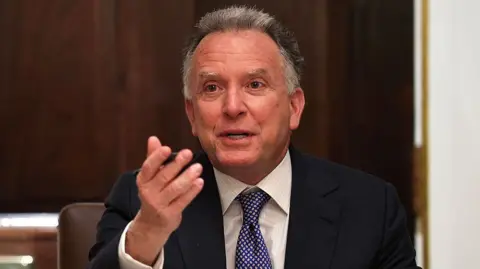
Geneva Negotiations Resume With U.S. Mediation and Russian Representation The second day of Geneva peace talks began on 18 February 2026, a week before the fourth anniversary of Russia’s full‑scale invasion. U.S. special envoy Steve Witkoff announced “meaningful progress” after the opening session, praising President Trump’s involvement and urging continuation on Wednesday [1]. Mediators include Witkoff and former president’s son‑in‑law Jared Kushner, while Russia is represented by top negotiator Vladimir Medinsky [1]. The talks feature bilateral and trilateral formats under intense diplomatic scrutiny [1].
Ukraine Demands Security Guarantees While Russia Insists on Full Territory Kyiv insists that any settlement must be preceded by robust security guarantees from the West, emphasizing protection against future aggression [1]. Moscow maintains a maximalist position, demanding control over all Ukrainian territory, including the remainder of the Donbas region [1]. Both sides present non‑negotiable core demands, complicating the path to a comprehensive agreement [1]. The divergent stances underscore the difficulty of reconciling sovereignty with security assurances [1].
Drone Activity Intensifies Over Both Nations Amid Talks The Russian defence ministry reported that 43 Ukrainian drones were shot down over Russian regions and Crimea during the negotiations [1]. Conversely, Ukraine’s air force logged 126 Russian attack drones launched, intercepting roughly 100 before they could strike [1]. These figures illustrate a parallel escalation in aerial hostilities even as diplomatic channels remain open [1]. The drone activity adds pressure on negotiators to address immediate security concerns [1].
Zelensky Criticizes Trump’s Push for Ukrainian Compromise President Volodymyr Zelensky rebuked President Donald Trump’s repeated calls for Ukraine to compromise, calling the demand “not fair” [1]. He warned that peace would be impossible if victory were handed to Russia without Ukrainian consent [1]. Zelensky’s stance reflects domestic political pressure to safeguard national dignity and territorial integrity [1]. The criticism highlights tension between Ukrainian leadership and external diplomatic pressures [1].
Opening Session Focused on Practical Issues and Tense Atmosphere The six‑hour opening session dealt with “practical issues and the mechanics of possible solutions,” according to Ukrainian negotiator Dmytro Umerov [1]. Russia’s RIA agency described the talks as tense, noting the use of both bilateral and trilateral discussion formats [1]. The focus on concrete implementation details signals a shift from rhetorical positions to actionable proposals [1]. Nevertheless, the tense atmosphere underscores lingering mistrust between the parties [1].
Timeline
Feb 24 2022 – Russia launches a full‑scale invasion of Ukraine, setting off a war that drives all subsequent diplomatic efforts and will reach its fourth anniversary in February 2026 [1].
July 2024 – The last direct Ukraine‑Russia peace talks take place in Istanbul, resulting only in prisoner swaps and no substantive progress [24].
Dec 1 2025 – President Volodymyr Zelensky says “the territorial question is the most difficult” and vows Ukraine will not cede any Donbas areas, posting the remark on X [6].
Dec 1 2025 – U.S. special envoy Steve Witkoff prepares to meet President Vladimir Putin in Moscow, with former President Donald Trump’s son‑in‑law Jared Kushner also slated to attend, following two days of Florida talks to revise a draft peace plan [6].
Dec 1 2025 – A Russian missile strike on Dnipro kills four people and injures 40, underscoring the battlefield pressure that shapes the negotiations [6].
Dec 1 2025 – Ukrainian chief of staff Andriy Yermak resigns amid a corruption probe, adding a domestic political shock to the diplomatic landscape [6].
Dec 1 2025 – President Donald Trump dispatches Witkoff and Kushner to Moscow to push a Ukraine peace deal, noting their prior role in brokering the 2025 Gaza‑Hamas ceasefire and a controversial 28‑point draft criticized as a capitulation to Russia [8].
Nov 30 2025 – Trump tells reporters “there’s a good chance” a deal will end the war after the Miami talks, while Secretary of State Marco Rubio calls the session “delicate, complicated” and notes Russia will play a central role [9].
Nov 30 2025 – Witkoff is scheduled to meet Putin on Monday (Dec 2) in Moscow, and Ukrainian negotiator Rustem Umerov describes the Miami talks as “productive and successful” [9].
Nov 30 2025 – Zelensky calls the Miami session “very constructive” and says his delegation will meet in Paris the next day to discuss outcomes [9].
Dec 2 2025 – President Putin meets U.S. envoy Witkoff in Moscow; Kushner is expected to attend, the White House says it is “very optimistic” about a peace deal, and Russia claims capture of Pokrovsk and Vovchansk—claims Kyiv disputes [5].
Dec 2 2025 – Kremlin sovereign‑wealth fund head Kirill Dmitriev calls the Putin‑U.S. talks “productive,” while Russia again announces seizure of Pokrovsk, and Witkoff/Kushner are slated to meet Zelensky on Dec 3 [14].
Dec 2 2025 – U.S.‑Russia talks described by Kremlin adviser Yuri Ushakov as “useful and constructive,” yet no territorial compromise emerges; parallel Florida talks with Ukraine are “cautiously optimistic,” and the Pokrovsk claim is labeled propaganda [20].
Dec 3 2025 – After a five‑hour Moscow session, Kremlin aide Ushakov states “no compromise version has yet been found,” highlighting a stalemate on peace terms and noting Putin’s uncompromising rhetoric and mounting economic strains [4].
Dec 3 2025 – Witkoff travels to Miami on Thursday to meet Ukrainian negotiator Umerov; the preceding Moscow talks produced “not too much progress,” Trump calls them “reasonably good,” and Putin demands a Ukrainian withdrawal from Donbas [3].
Dec 6‑7 2025 – Miami negotiations end with “difficult issues” on territory and security guarantees; Ukraine insists on robust guarantees and no further land concessions, while Putin declares Russia will seize Donbas “by any means,” and Zelensky plans follow‑up meetings in London with European leaders [7].
Dec 8 2025 – U.S. peace push stalls as Russia insists on recognition of its annexations and a Ukrainian abandonment of NATO, while Kyiv offers only a ceasefire along current front lines; Trump publicly urges Zelensky to accept a territorial compromise [19].
Dec 15 2025 – Moscow signals it could allow Ukraine’s EU accession as part of a settlement; U.S. envoys meet Zelensky and European leaders in Berlin to discuss a 20‑point framework, with Ukraine reporting “real progress” but the Donetsk question remaining the chief obstacle [13].
Dec 18 2025 – Kremlin envoy Kirill Dmitriev is scheduled to meet U.S. envoys in Miami on Dec 20 after Berlin talks set the agenda; Putin reiterates demands for Crimea, occupied regions, and a Ukrainian NATO abandonment, while Zelensky rejects any constitutional change on NATO [18].
Dec 21 2025 – The Kremlin denies that trilateral Ukraine‑Russia‑U.S. talks are being prepared, stating “there are no trilateral talks,” even as Dmitriev arrives in Miami and Zelensky notes rapid diplomatic progress but doubts a three‑way format will yield results [24].
Dec 21 2025 – Jared Kushner re‑enters diplomacy, co‑leading Miami talks with Witkoff on Ukraine and Gaza, meeting Russian negotiator Dmitriev and drawing scrutiny over his business ties [16].
Dec 21 2025 – U.S. envoy Witkoff reports the Florida talks as “constructive,” Dmitriev says the discussions began earlier, Zelensky declares diplomacy is “moving quickly,” and the EU pledges €90 billion while debating the use of frozen Russian assets for a loan [17].
Dec 22 2025 – Miami talks are described as “productive but no breakthrough,” focusing on a 20‑point plan and security frameworks; separate U.S.–Russia talks with Dmitriev continue, a leaked 28‑point plan fuels weeks of diplomacy, Putin warns “no more wars” if Russia isn’t respected, and a Ukrainian drone attack damages vessels in Russia’s Krasnodar region [2].
Jan 17 2026 – A Ukrainian delegation led by Bohdan Budanov lands in the United States to discuss peace documents that could be signed at Davos next week if approved; Zelensky warns that Russian strikes on Kyiv and Odesa’s power grid “are eroding any diplomatic openings” [15].
Jan 21 2026 – At Davos, Trump declares “Russia and Ukraine are close to a peace deal,” pledging that delaying a settlement will cause more deaths, while noting he will meet Zelensky and that Putin is set to meet Witkoff and Kushner in Moscow [12].
Jan 21 2026 – Witkoff tells CNBC that recent talks have shown “significant progress” and are bringing the parties “closer to a possible announcement,” even as disputes over territory, the Zaporizhzhia plant, and security guarantees persist [12].
Jan 22 2026 – Speaking at Davos, Witkoff says “there is one issue and that it is solvable,” praising Ukraine’s “amazing negotiating team,” while noting Russia’s demand that Ukraine cede the Donbas [11].
Jan 22 2026 – Trump doubts Zelensky will accept any deal, warning “they would be stupid not to reach a peace agreement,” as Kremlin spokesman Dmitry Peskov downplays current negotiations ahead of Witkoff’s Moscow visit [11].
Jan 23 2026 – After four hours of talks in Moscow, Kremlin adviser Ushakov calls the discussions “exceptionally substantive,” and Russia reiterates that the war will continue until its goals are met; Witkoff and Kushner depart for Abu Dhabi to pursue a trilateral working group, while Zelensky meets Trump at Davos and urges a swift settlement [10].
Feb 18 2026 – On the second day of Geneva talks, U.S. envoy Steve Witkoff declares the opening session “brought about meaningful progress,” while President Zelensky rebukes Trump’s push for Ukrainian compromise as “not fair,” and both sides report heavy drone activity as talks occur a week before the fourth anniversary of Russia’s full‑scale invasion [1].
Dive deeper (22 sub-stories)
-
BBC: US envoy claims “meaningful progress” as Ukraine‑Russia talks enter second day in Geneva
-
Newsweek: Russia vows Ukraine war will continue until goals are met after Putin talks with Trump envoys
-
Newsweek: U.S. envoy Witkoff says end of Russia-Ukraine war down to one issue
-
Newsweek: Trump says Russia and Ukraine near end of war as Davos talks unfold
-
AP: Ukrainian delegation arrives in US for peace talks as Russia targets Ukraine's power grid
-
BBC: Miami talks yield productive discussions but no breakthrough in Ukraine war diplomacy
-
AP: Kushner re-enters diplomacy as Miami talks push Gaza and Ukraine deals
-
Florida Talks Yield Constructive Progress While EU Funds Await Asset Solution
(2 articles)
-
The Hindu: Kremlin denies three-way talks with U.S., Ukraine as Miami negotiations unfold
-
AP: Kremlin Envoy to Meet U.S. Team in Miami Amid Ongoing Ukraine Peace Efforts
-
Newsweek: Russia Signals Openness to Ukraine EU Membership in Peace Talks
-
AP: Talks to End Russia‑Ukraine War Reach Stalemate
-
CNN: Ukraine peace talks in Miami end with lingering questions over security guarantees and territory
-
U.S. Envoy Meets Ukrainian Security Chief in Miami After Unproductive Moscow Talks
(2 articles)
-
BBC: What the latest Ukraine talks reveal about Putin’s state of mind
-
AP: Key Negotiators in Ukraine Peace Talks Intensify Efforts
-
Newsweek: Putin Meets US Envoy, Claims Pokrovsk, and Warns Europe
-
AP: US Envoy Witkoff Meets Putin as Zelenskyy Tours Europe
-
AP: Zelenskyy Says Revised Trump Peace Plan Looks Better, Work Continues
-
BBC: Putin and Trump’s envoy set for key Ukraine talks in Moscow
-
CNN: Trump dispatches former associates to Moscow for Ukraine talks
-
BBC: Zelensky Highlights Territorial Issue as US Envoy Prepares to Meet Putin
All related articles (24 articles)
-
BBC: US envoy claims “meaningful progress” as Ukraine‑Russia talks enter second day in Geneva
-
Newsweek: Russia vows Ukraine war will continue until goals are met after Putin talks with Trump envoys
-
Newsweek: U.S. envoy Witkoff says end of Russia-Ukraine war down to one issue
-
Newsweek: Trump says Russia and Ukraine near end of war as Davos talks unfold
-
AP: Ukrainian delegation arrives in US for peace talks as Russia targets Ukraine's power grid
-
BBC: Miami talks yield productive discussions but no breakthrough in Ukraine war diplomacy
-
AP: Kushner re-enters diplomacy as Miami talks push Gaza and Ukraine deals
-
AP: US says talks with Ukraine, Europe on ending war with Russia constructive
-
The Hindu: Kremlin denies three-way talks with U.S., Ukraine as Miami negotiations unfold
-
AP: Kremlin Envoy to Meet U.S. Team in Miami Amid Ongoing Ukraine Peace Efforts
-
Newsweek: Russia Signals Openness to Ukraine EU Membership in Peace Talks
-
AP: Talks to End Russia‑Ukraine War Reach Stalemate
-
CNN: Ukraine peace talks in Miami end with lingering questions over security guarantees and territory
-
BBC: US and Ukraine Negotiators to Meet in Miami After Moscow Talks
-
BBC: What the latest Ukraine talks reveal about Putin’s state of mind
-
AP: US‑Russia talks on Ukraine remain constructive but no breakthrough
-
AP: Key Negotiators in Ukraine Peace Talks Intensify Efforts
-
Newsweek: Putin Meets US Envoy, Claims Pokrovsk, and Warns Europe
-
AP: US Envoy Witkoff Meets Putin as Zelenskyy Tours Europe
-
AP: Zelenskyy Says Revised Trump Peace Plan Looks Better, Work Continues
-
BBC: Putin and Trump’s envoy set for key Ukraine talks in Moscow
-
CNN: Trump dispatches former associates to Moscow for Ukraine talks
-
BBC: Zelensky Highlights Territorial Issue as US Envoy Prepares to Meet Putin
-
CNN: Trump Optimistic About Ending Ukraine War After Miami Talks
External resources (2 links)
- https://bidenwhitehouse.archives.gov/wp-content/uploads/2022/10/Biden-Harris-Administrations-National-Security-Strategy-10.2022.pdf (cited 1 times)