Ethiopian Prime Minister Confirms Eritrean Troops’ 2020 Aksum Massacre
Updated (2 articles)
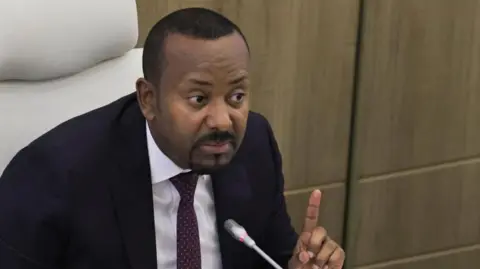
Admission Overturns Earlier Denial In a February 3, 2026 parliamentary address, Prime Minister Abiy Ahmed acknowledged that Eritrean soldiers carried out mass killings in Aksum on 28‑29 November 2020, reversing his November 30, 2020 statement that “not a single civilian was killed” [1]. He detailed that the killings targeted civilians, including many boys and men, during house‑to‑house raids. The admission marks the first official Ethiopian acknowledgment of Eritrean‑linked atrocities in the two‑year Tigray conflict.
Witness Testimony Details Scale of Violence Survivors described Eritrean forces entering homes, shooting unarmed civilians, and killing hundreds over the two‑day period [1]. Witness accounts emphasized that victims were primarily civilians, contradicting earlier claims of combatant casualties. The testimonies corroborate satellite and NGO reports of large‑scale violence in the historic city.
Broader Atrocities Across Northern Towns Abiy added that Eritrean troops also razed homes, looted machinery, and damaged industry in Adwa, Adigrat, Shire, and other locations [1]. He said Ethiopian envoys were dispatched to demand an end to these abuses. The broader pattern of destruction underscores the extensive impact of foreign forces beyond Aksum.
Peace Deal Excluded Eritrea, Tensions Persist The 2022 Pretoria Agreement, brokered by the African Union, halted fighting between Ethiopia’s government and the Tigray People’s Liberation Front but did not include Eritrea, which opposed the truce [1]. Eritrea’s continued presence has kept bilateral relations volatile. Passenger flights between Addis Ababa and Tigray resumed after a five‑day suspension linked to renewed clashes in western Tigray.
Timeline
Early 1990s – Eritrea gains independence from Ethiopia after a 30‑year war, establishing a sovereign state that later becomes a regional rival. [2]
1998‑2000 – Eritrea and Ethiopia fight a brutal border war, causing tens of thousands of deaths and deepening mutual distrust. [2]
2018 – Ethiopia and Eritrea sign a historic peace accord, normalizing diplomatic ties and ending decades of hostility. [2]
Nov 28‑29, 2020 – Eritrean soldiers massacre hundreds of unarmed civilians in Aksum, conducting house‑to‑house raids, shooting men and boys, and looting property. [1]
Nov 30, 2020 – Prime Minister Abiy Ahmed tells parliament that “not a single civilian was killed,” a claim he later overturns. [1]
2022 – The African Union‑brokered Pretoria Agreement ends the Tigray war between Ethiopia’s government and the TPLF, but Eritrea does not sign and remains excluded from the truce. [1]
Jan 2026 – Ethiopian police seize more than 56,000 rounds of ammunition in the Amhara region and arrest two suspects, alleging the stock was shipped from Eritrea’s ruling Shabiya government to arm Fano rebels. [2]
Jan 15, 2026 – Eritrea’s Information Minister denies the allegation, calling it a false‑flag operation by Ethiopia’s Prosperity Party and accusing Addis Ababa of seeking a pretext for attack. [2]
Jan 15, 2026 – Eritrean President Isaias Afwerki states Eritrea “does not want war but will defend its nation when pressed.” [2]
Feb 3, 2026 – Prime Minister Abiy Ahmed publicly acknowledges Eritrean forces’ role in the Aksum massacre, condemning the killings, the razing of homes and looting in Adwa, Adigrat, Shire and other towns, and overturning his 2020 denial. [1]
Feb 3, 2026 – Ethiopian envoys travel to Eritrea to demand an end to abuses, and passenger flights between Addis Ababa and Tigray resume after a five‑day suspension caused by clashes in western Tigray. [1]
All related articles (2 articles)
External resources (4 links)
- http://bbcafrica.com/ (cited 1 times)
- https://twitter.com/BBCAfrica (cited 1 times)
- https://www.facebook.com/BBCnewsafrica/ (cited 1 times)
- https://www.instagram.com/bbcafrica/ (cited 1 times)