Olympic Hockey Shifts to NHL‑Style 3‑on‑3 Overtime for Gold Medal
Updated (2 articles)
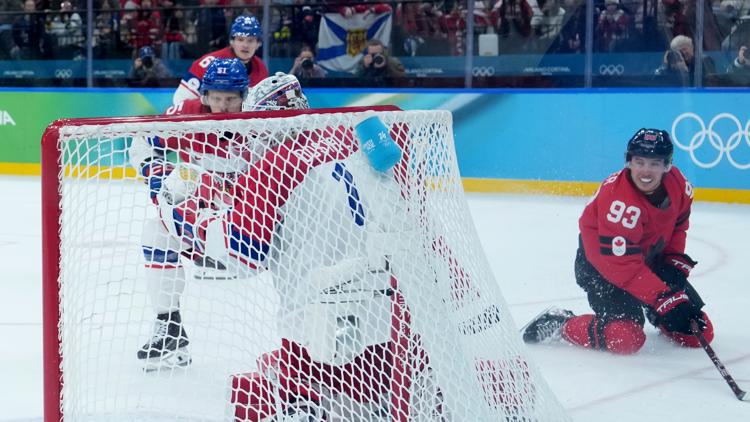
Overtime and Shootout Structure Across All Stages Round‑robin games employ a five‑minute 3‑on‑3 overtime followed by a shootout that must include at least five shooters, mirroring NHL practice while extending the shootout length[1][2]. In the knockout phase, the overtime period lengthens to ten minutes of sudden‑death 3‑on‑3 before the same five‑shooter shootout is used[2]. The gold‑medal final will use continuous sudden‑death 3‑on‑3 overtime until a goal is scored, aligning the championship with current NHL overtime rules[1][2].
Three Quarterfinals Decided in Overtime Canada defeated Czechia 82 seconds into 3‑on‑3 overtime, marking the fastest quarterfinal finish[1][2]. Finland required just over three minutes of overtime to overcome Switzerland, while the United States answered a late third‑period goal with Quinn Hughes scoring the winning overtime marker[1][2]. All three matches occurred during Wednesday’s quarterfinal round, highlighting the impact of the new overtime format[1][2].
U.S. Staff Prepared for New Formats With Video Sessions Head coach Mike Sullivan explained that his coaching team reviewed overtime scenarios in a video session before the tournament began, anticipating the rule changes[1][2]. Forward Tom Wilson added that the specific format—whether 5‑on‑5 or 3‑on‑3—does not alter his commitment to win, underscoring player adaptation to the revised rules[2]. Both comments illustrate the United States’ proactive approach to the evolving overtime and shootout structure[1][2].
Shootout Minimum Expanded to Five Shooters Olympic shootouts now require a minimum of five shooters, unlike the NHL’s three‑shooter format, applying to both round‑robin and knockout stages[1][2]. The article references historic shootouts such as T.J. Oshie’s 2014 victory over Russia and Dominik Hasek’s 1998 heroics, using them as benchmarks for the longer, more decisive shootout era[1].
Sources
-
1.
WBNS: Olympic Hockey Overtime and Shootout Rules Evolve During Tournament: Details the 5‑minute 3‑on‑3 round‑robin OT, 10‑minute knockout OT, five‑shooter shootout requirement, quarterfinal OT outcomes, and U.S. coaching video preparation, plus historical shootout references.
-
2.
King5: Olympic Hockey Overtime and Shootout Formats Evolve Through Tournament: Mirrors the rule changes, emphasizes the shift to 10‑minute knockout OT, reports the same quarterfinal OT victories, includes player perspective on format neutrality, and confirms the gold‑medal game’s sudden‑death 3‑on‑3 overtime.
Related Tickers
Timeline
1998 – The NHL begins participating in Olympic hockey, and goaltender Dominik Hasek delivers a heroic performance that becomes a benchmark for future Olympic shootouts [1].
2014 – American forward T.J. Oshie scores the winning shootout goal against Russia, creating a memorable moment that the 2026 tournament later cites as historic [1].
Early Feb 2026 – All men’s and women’s round‑robin games adopt a 5‑minute 3‑on‑3 overtime followed by a minimum five‑shooter shootout, mirroring NHL style but extending the shootout length [1][2].
Feb 18, 2026 – In the quarterfinals, Canada defeats Czechia 82 seconds into 3‑on‑3 overtime, Finland beats Switzerland after more than three minutes, and the United States wins on Quinn Hughes’s overtime marker after a late third‑period goal, highlighting the impact of the new knockout overtime format [1][2].
Feb 18, 2026 – U.S. head coach Mike Sullivan explains that his staff prepared for overtime with a dedicated video session at the tournament’s start, emphasizing proactive tactical planning [1][2].
Feb 18, 2026 – Forward Tom Wilson remarks that the specific overtime format—whether 5‑on‑5 or 3‑on‑3—does not alter his commitment to win, underscoring player focus despite rule changes [2].
Feb 2026 (gold‑medal game) – The Olympic final will use continuous sudden‑death 3‑on‑3 overtime until a goal is scored, aligning the championship with NHL practice while diverging from the 5‑on‑5 format of the Stanley Cup playoffs [1][2].
Throughout 2026 tournament – Shootouts in both round‑robin and knockout stages require at least five shooters, a departure from the NHL’s three‑shooter format, ensuring a longer decisive phase [1][2].