Ukraine Rejects FIFA President’s Push to Lift Russia Ban After Invasion
Updated (2 articles)
-
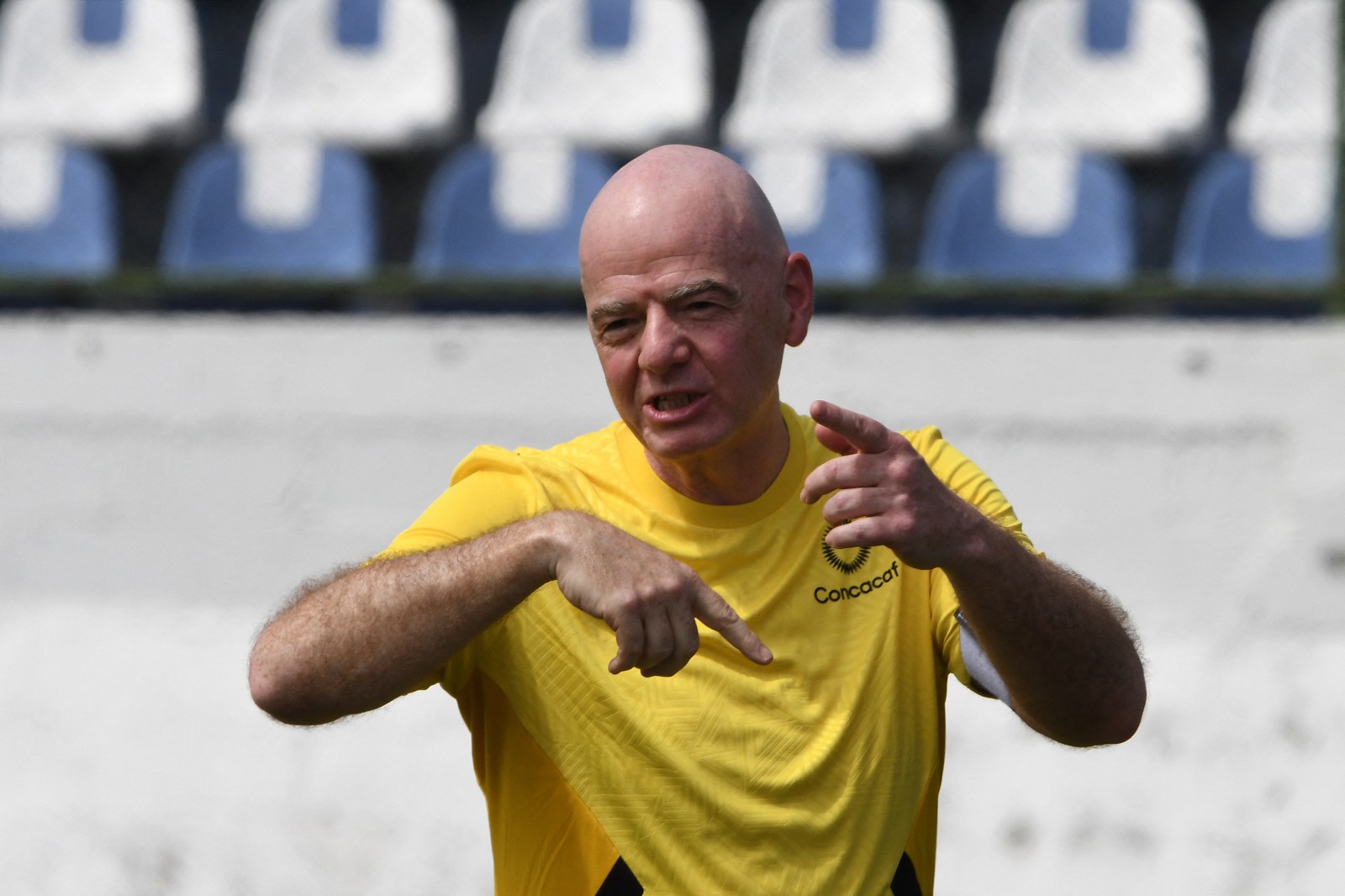 Image: NewsweekFIFA President Gianni Infantino gestures during a football with members of the CONCACAF committee in Managua on January 31, 2026. Infantino will take part in the 41st CONCACAF Congress, to be held on Sunday, February 1, with representatives from 41 member federations participating. (Photo by AFP via Getty Images) Source Full size
-
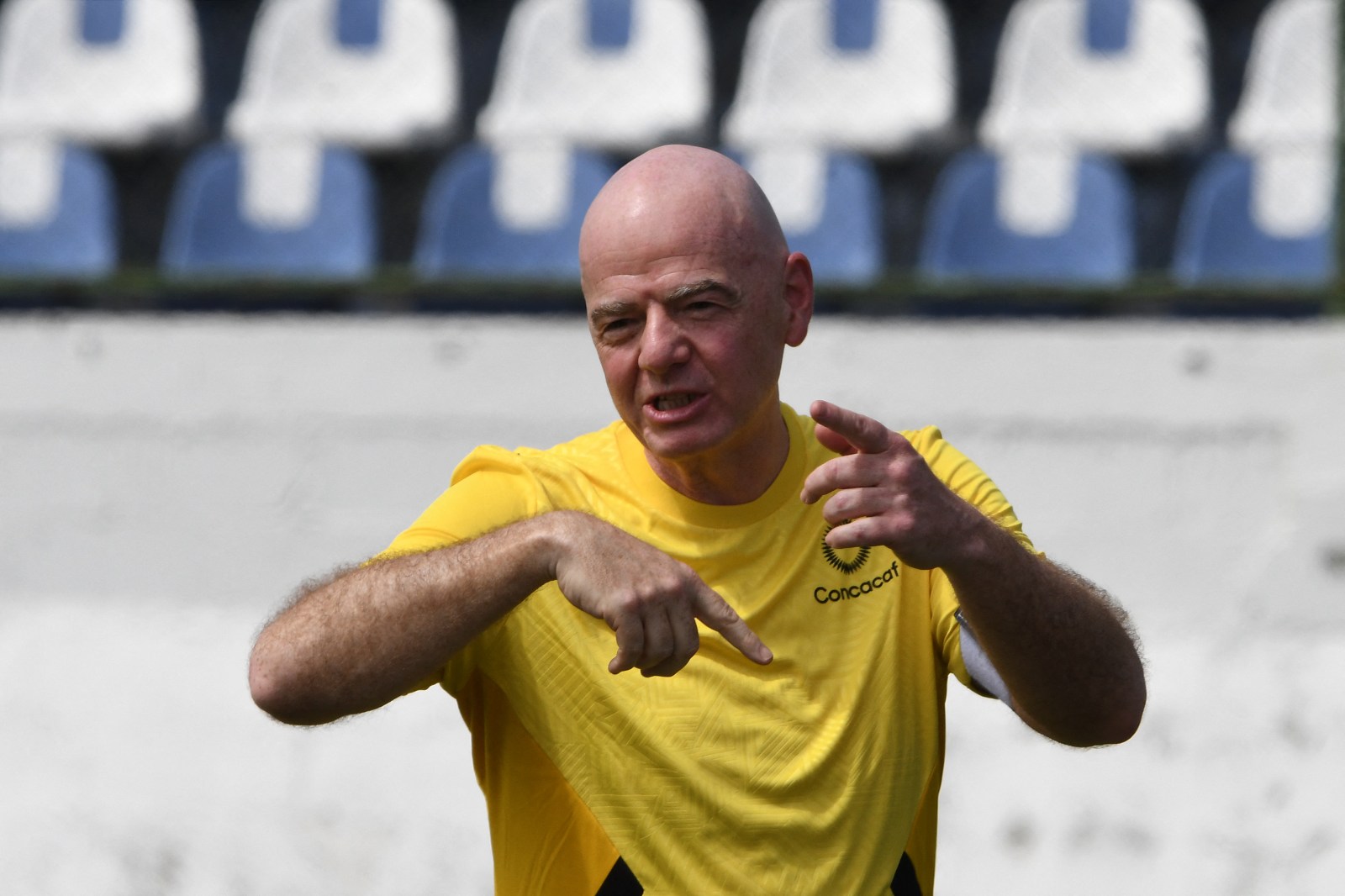 Image: NewsweekFIFA President Gianni Infantino gestures during a football with members of the CONCACAF committee in Managua on January 31, 2026. Infantino will take part in the 41st CONCACAF Congress, to be held on Sunday, February 1, with representatives from 41 member federations participating. (Photo by AFP via Getty Images) Source Full size
Infantino Urges Reversal of Russia’s FIFA Suspension Gianni Infantino publicly called for ending the suspension imposed on Russia following its 2022 invasion of Ukraine, emphasizing the need to allow Russian participation in youth competitions and arguing that sport should stay apolitical [1]. He suggested that the ban harms young athletes worldwide and that reinstatement would promote reconciliation [1]. Critics note the timing coincides with the upcoming 2026 World Cup, raising concerns about political motivations [1].
Kyiv Cites Child Casualties to Defend Ban Ukrainian Foreign Minister Andrii Sybiha posted on X that 679 Ukrainian children have been killed, arguing the ban protects future generations from further harm [1]. He framed the suspension as a moral imperative, warning that lifting it would legitimize Russia’s aggression [1]. Ukrainian officials echoed this sentiment, describing the ban as a safeguard for the nation’s youth [1].
Past FIFA Missteps Heighten Ukrainian Anger FIFA briefly allowed Russian under‑17 players to compete in 2023 before reversing the decision after backlash [1]. The federation’s 2026 World Cup draw omitted Crimea from its map, prompting accusations of political bias [1]. Additionally, investigations revealed FIFA pressured clubs to pay transfer fees to sanctioned Russian teams, deepening mistrust [1].
U.S. Lawmaker Joins Call to Keep Russia Excluded Nebraska Republican Rep. Don Bacon tweeted support for maintaining Russia’s exclusion from FIFA, labeling Putin’s regime “barbaric” and urging the international community to treat him as a pariah [1]. Bacon’s statement aligns with broader Western political pressure to retain sanctions on Russian sport [1]. The endorsement underscores bipartisan consensus in the U.S. against normalizing Russia’s actions through sport [1].
Timeline
2014 – Russia annexes Crimea, separating Ukrainian families and later facilitating forced deportations of children from occupied territories, a grievance cited in the 2025 UN draft resolution on child returns [2].
Feb 2022 – Russia launches a full‑scale invasion of Ukraine, prompting international sanctions and the suspension of Russian football teams from FIFA competitions, a ban that persists into 2026 [1].
Mar 2023 – The International Criminal Court issues an arrest warrant for President Vladimir Putin, accusing him of war crimes including the abduction of Ukrainian children, underscoring the legal dimension of the child‑deportation issue [2].
2023 – FIFA briefly permits Russian under‑17 players to compete in youth tournaments, then reverses the decision after backlash, highlighting ongoing controversy over the sports ban [1].
Mar 2025 – FIFA conducts the 2026 World Cup draw and displays a map that omits Crimea, provoking criticism from Ukraine and others as a political slight [1].
Dec 2025 – A UN draft resolution backed by 91 countries calls for the immediate, safe, unconditional return of all Ukrainian children forcibly transferred or deported, reflecting broad diplomatic pressure on Russia [2].
Dec 2025 – Ukrainian authorities estimate that about 20,000 children have been deported to Russia and Belarus since the 2022 invasion, illustrating the scale of the humanitarian crisis [2].
Dec 2025 – First Lady Olena Zelenska reports that 1,859 abducted children have been recovered, while former First Lady Melania Trump notes a new group of seven children reunited with relatives, showing ongoing repatriation efforts [2].
Dec 2025 – Negotiators emphasize that any U.S.-brokered peace plan must include guarantees for the protection and return of forcibly deported Ukrainian children, linking child welfare to future diplomatic outcomes [2].
Feb 3, 2026 – Ukrainian Foreign Minister Andrii Sybiha posts on X that “679 Ukrainian girls and boys will never be able to play football — Russia killed them,” arguing the sports ban shields future generations [1].
Feb 3, 2026 – Kyiv denounces FIFA President Gianni Infantino’s call to lift Russia’s suspension, calling the proposal “complete and total moral rot” and urging the ban to remain in place [1].
Feb 3, 2026 – A Ukrainian X user from Kharkiv warns that ending the suspension “forces Ukraine and the world to treat state‑sponsored murder as part of the game,” reflecting public outrage [1].
Feb 3, 2026 – Nebraska Republican Rep. Don Bacon tweets that Russia should stay banned from FIFA while its “barbaric invasion” continues, joining international calls to keep Russia isolated in sport [1].