LIHI’s Glassyard Commons RV Safe‑Parking Site Set to Open Mid‑June 2026
Updated (2 articles)
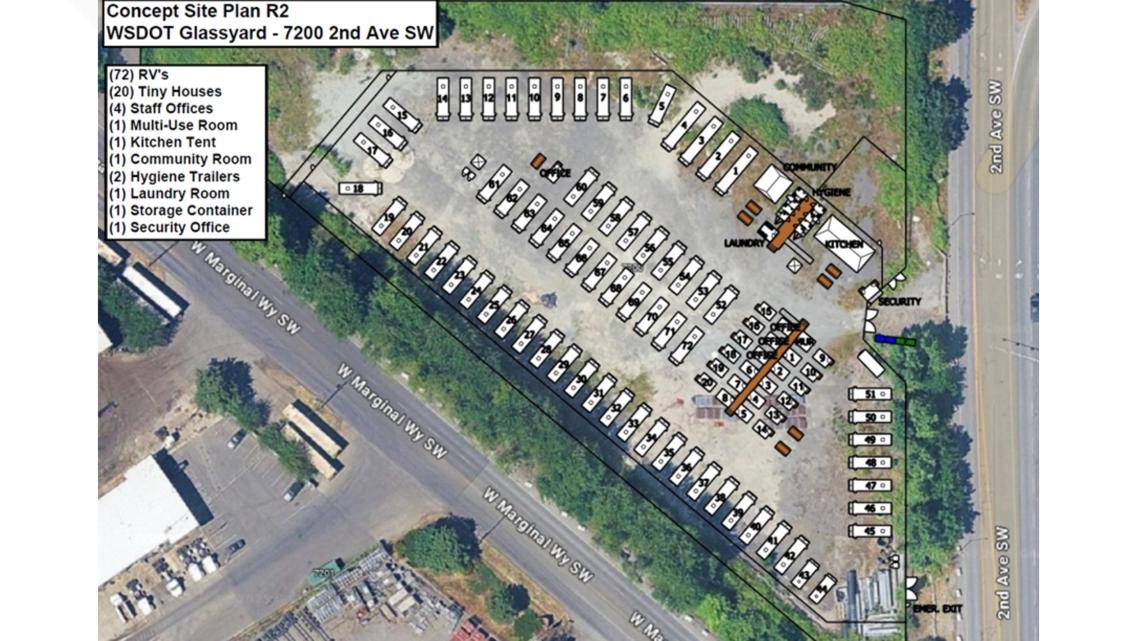
Project Overview and Timeline: The Low Income Housing Institute will launch Glassyard Commons, a 72‑space RV safe‑parking facility at 7200 2nd Ave SW in Seattle’s South Park, with operations slated to begin in mid‑June 2026 [1]. The development also includes 20 tiny houses and shared community amenities such as a kitchen, dining area, showers, laundry, and case‑management offices [1]. LIHI’s model emphasizes transitioning occupants from vehicles to permanent housing while removing dilapidated RVs from the streets [1].
Site Size, Ownership, and Lease Terms: The project occupies a 3.9‑acre parcel owned by the Washington State Department of Transportation, valued at $9.76 million in 2025 [1]. LIHI will secure a long‑term lease from the state to operate the safe‑parking lot and associated housing [1]. The land’s location near West Marginal Way SW provides easy access for residents and service providers [1].
Target Population and Services Provided: Glassyard Commons is designed for homeless individuals living in aging or unsafe RVs, prioritizing District 1 residents where RV concentrations are highest [1]. The site offers 24/7 on‑site services through a partnership with the University of Washington’s U‑Heights outreach program, delivering case management, health referrals, and basic necessities [1]. Controlled‑access fencing and a community advisory committee aim to maintain safety and resident engagement [1].
Local Government Support and Need: Seattle City Councilmember Rob Saka highlighted the urgent need for additional safe‑parking spaces, noting South Park and Georgetown host some of the city’s largest lived‑in RV populations [1]. A 2025 quarterly report recorded 172 RVs at active city sites, with 94 located in the southwest sector, underscoring the shortage [1]. LIHI plans a community meeting within the next month to gather input and finalize operational details [1].
Timeline
2008 – The city evaluates the 7201 Second Ave SW parcel as a potential site for a municipal jail, marking the first major proposal to repurpose the industrial lot [2].
2016 – Former Mayor Ed Murray re‑proposes the same parcel as a safe‑parking lot for RVs, indicating longstanding interest in addressing homelessness on the site [2].
2025 – Seattle’s quarterly homeless‑services report records 172 RVs at active safe‑parking sites citywide, with 94 located in the southwest sector, underscoring a critical shortage of parking options [1].
Jan 16, 2026 – Filings submit a plan for 20 tiny homes and 72 RV spaces on 7201 Second Ave SW, designating the development as a religious‑controlled emergency transitional housing project to relieve pressure from West Seattle’s dense RV encampments [2].
Jan 29, 2026 – City records confirm the lot remains empty, fenced, and marked “Do Not Enter,” while Seattle’s Department of Construction and Inspections notes no formal permit has been filed, leaving the project in pre‑application status [2].
Feb 2026 – Councilmember Rob Saka states his district contains roughly three times more RV encampments than any other council district and calls the proposed tiny‑home/RV site a “common‑sense solution” to the crisis [2].
Feb 2026 – Councilmember Rob Saka adds that the upcoming South Park safe‑parking site will prioritize District 1 RV residents, citing the high concentrations of lived‑in RVs in South Park and Georgetown [1].
Feb 2026 – The Low Income Housing Institute partners with the University of Washington’s U‑Heights program to conduct city‑wide outreach and will staff the Glassyard Commons with 24/7 on‑site services, including case‑management, kitchen, showers, laundry, and a dining area [1].
Feb 18, 2026 – LIHI announces plans to hold a community meeting and form an advisory committee within the next month to gather resident input on the Glassyard Commons development [1].
Mid‑June 2026 – LIHI opens Glassyard Commons at 7200 2nd Ave SW, a 72‑space RV safe‑parking facility with 20 tiny houses and shared amenities on a 3.9‑acre state‑owned parcel leased long‑term from WSDOT, aiming to transition occupants into permanent housing and remove dilapidated RVs from circulation [1].