Serbia Advances Nuclear Deal While Croatia Sets 30% Goal and Slovenia Plans New Krško Unit
Updated (5 articles)
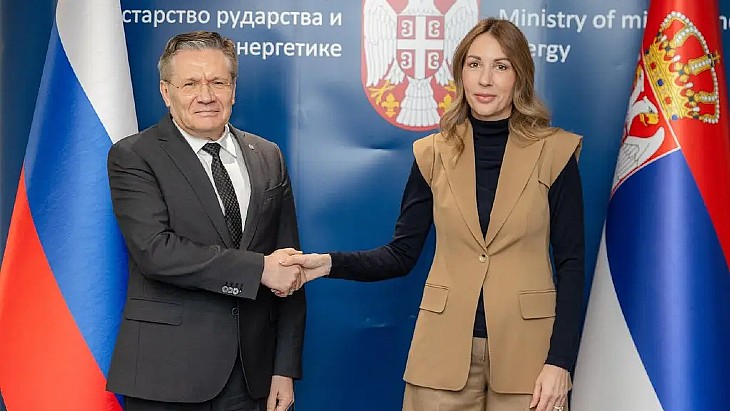
Serbia Negotiates First Nuclear Plant with Rosatom On 23 February 2026 Serbian Energy Minister Dubravka Đedović Handanović met Rosatom chief Alexei Likhachev to discuss joint nuclear projects, including Serbia’s first power plant and future small modular reactors (SMRs) [1]. The minister said the government will approve the National Nuclear Programme Implementation Organisation before month‑end, a prerequisite for the first and second programme phases slated for completion by 2032 [1]. Serbia lifted its 35‑year legal ban on nuclear plants in December 2024, enabling contracts such as the October 2024 EDF technical study and opening the path for Russian cooperation [1]. President Aleksandar Vučić aims for 1,200 MW of SMR capacity with international financing, planning construction after 2040 once regulatory and staffing frameworks mature [1].
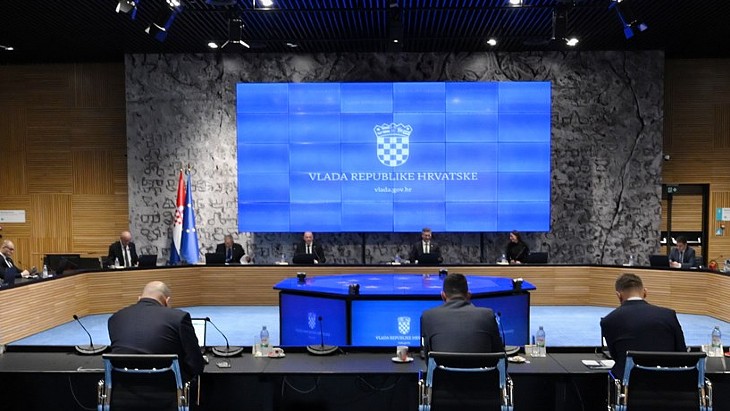
Croatia Drafts Law to Reach 30% Nuclear by 2040 The Croatian government submitted a draft nuclear‑energy law to parliament on 19 February 2026, setting a target that nuclear power supply at least 30 % of the national electricity mix by 2040 [3]. The legislation obliges the responsible minister to start civil‑nuclear planning within six months and to present a full development plan within a year, citing rising demand and energy‑security concerns [3]. Croatia already co‑owns the Krško plant with Slovenia, which provides roughly 16 % of its electricity, and a Working Group established in 2023 is evaluating SMR versus large‑reactor options for new domestic capacity [3]. Discussions continue on a possible joint second reactor at Krško, with a Slovenian referendum on expansion scheduled for late 2027‑early 2028 [3].
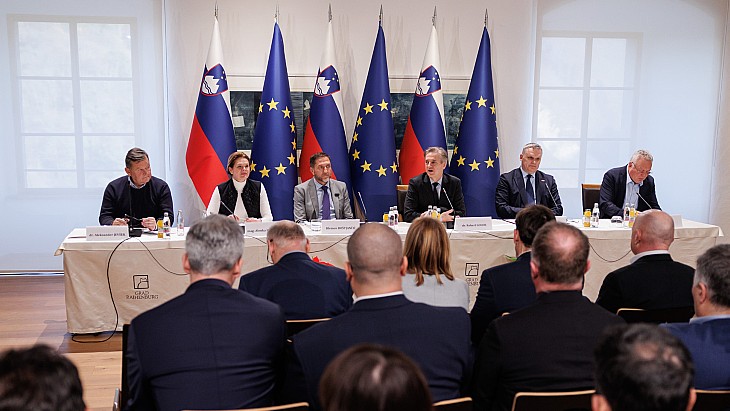
Slovenia Sets Timeline for New Krško Unit Prime Minister Robert Golob announced on 18 February 2026 that the site, price and reactor technology for a new unit at the Krško Nuclear Power Plant will be fixed before the postponed public referendum, which is now slated for late 2027 or early 2028 [4]. The government has launched a National Spatial Plan after a four‑month public consultation, with a final decision expected in autumn 2028 [4]. The JEK2 project envisions one or two reactors up to 2,400 MW alongside the existing 696 MWe unit, targeting a Final Investment Decision in 2029, construction start in 2033 and operation by 2041 [4]. Financing is highlighted as critical, with estimates of €9.3 billion for a 1,000 MW unit and €15.4 billion for a 1,650 MW unit; Westinghouse AP1000 and EDF EPR/EPR1200 are the preferred reactor models [4].
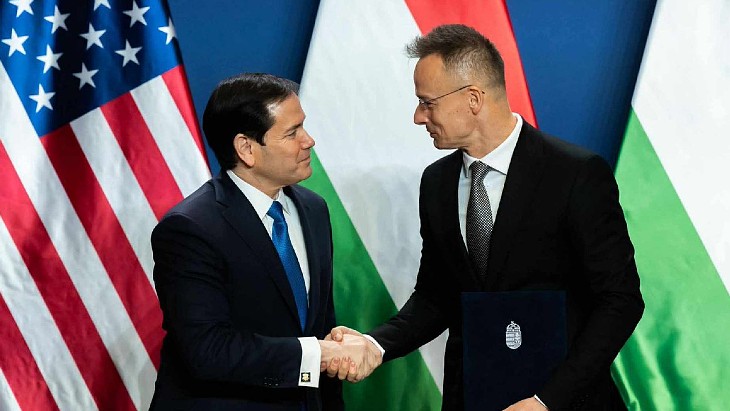
US Boosts Central European Nuclear Projects in Slovakia, Hungary On 19 February 2026 Secretary of State Marco Rubio unveiled U.S. support for nuclear projects in Slovakia and Hungary, linking the assistance to U.S. technology deployment [2]. An intergovernmental pact will fund a Front‑End Engineering and Design study for a Westinghouse large‑reactor at Slovakia’s Bohunice site, with the DOE projecting a 1,200 MWe unit to create thousands of U.S. jobs and be commissioned by 2040‑41 [2]. The U.S.–Hungary civil‑nuclear agreement designates Hungary as a regional SMR hub, encouraging selection of U.S. SMR designs and outlining a potential deployment of up to ten BWRX‑300 units worth about $20 billion, with Holtec International ready to supply dry‑cask spent‑fuel storage pending parliamentary approval [2].
Sources
-
1.
World Nuclear News: Serbia and Russia Advance Nuclear Energy Talks – Details the 23 Feb 2026 meeting between Serbia’s energy minister and Rosatom chief, Serbia’s plan to approve its nuclear programme body, SMR outlook, and the lifting of the 2024 nuclear‑plant ban .
-
2.
World Nuclear News: US pushes nuclear cooperation with Slovakia and Hungary – Describes Secretary Rubio’s 19 Feb 2026 announcement of U.S. backing, the FEED study for a Westinghouse reactor at Bohunice, job creation estimates, and Hungary’s SMR hub ambitions .
-
3.
World Nuclear News: Croatia pushes nuclear law to hit 30% of power mix by 2040 – Reports the 19 Feb 2026 draft law setting a 30 % nuclear target, planning timelines, reliance on Krško, and the SMR versus large‑reactor evaluation .
-
4.
World Nuclear News: Slovenia Advances Planning for New Krško Nuclear Unit – Covers the 18 Feb 2026 announcement of site, cost and technology decisions before a 2027‑28 referendum, financing concerns, and the JEK2 project schedule and cost estimates .
Related Tickers
Timeline
2021 – Poland enforces a near‑total abortion ban, cementing its socially conservative stance that shapes subsequent policy debates [1].
2023 – Croatia establishes a Working Group for Nuclear Energy to evaluate small modular reactors versus large reactors, laying groundwork for its future nuclear law [5].
Dec 2024 – Serbia’s National Assembly lifts a 35‑year prohibition on nuclear power plants, opening the legal path for foreign nuclear partnerships [2].
Oct 2024 – France’s EDF and engineering firm Egis complete a technical study for Serbia’s prospective nuclear project, providing the first detailed feasibility analysis [2].
Early 2025 – Poland’s unemployment falls to roughly 2.6 % while defense spending exceeds 4 % of GDP, surpassing NATO’s 2 % target and underscoring a robust military budget [1].
2025 – The IMF projects Poland’s purchasing‑power parity per‑capita at about $55,000, a level poised to outpace Japan by 2026 and signal rapid economic growth [1].
2025 – President Donald Trump tells Politico that Europe is “decaying” and its leaders “weak,” prompting defensive responses from European officials [1].
Dec 9, 2025 – The European Commission approves state aid for Poland’s first nuclear plant using Westinghouse AP1000 reactors, and construction is slated to begin immediately [1].
Dec 2025 – Poland completes a 5.5‑meter steel wall on the Belarus border and a 130‑mile electronic barrier, claiming to have halted Muslim migration and to have integrated nearly one million Ukrainian refugees since Russia’s invasion [1].
Dec 2025 – Intel announces a multibillion‑dollar campus near Wrocław, reinforcing Poland’s appeal as a high‑tech investment hub [1].
Dec 2025 – Poland raises the child benefit to PLN 800 (≈$220) per child per month, reflecting its commitment to family‑support policies [1].
Feb 18, 2026 – Slovenia’s government launches the National Spatial Plan for a new Krško nuclear unit, aiming to define site, price and reactor type before a postponed referendum [4].
Feb 18, 2026 – Slovenia schedules a public referendum on the new Krško unit for late 2027 or early 2028, linking the vote to detailed project specifications [4].
Feb 18, 2026 – Slovenia outlines the JEK2 project timeline: Final Investment Decision in 2029, construction start in 2033 and operation by 2041, with options ranging from a 1,000 MW to a 1,650 MW reactor [4].
Feb 19, 2026 – U.S. Secretary of State Marco Rubio announces American backing for nuclear projects in Slovakia and Hungary, signaling a strategic push in Central Europe [3].
Feb 19, 2026 – The United States and Slovakia sign an intergovernmental pact to fund a Front‑End Engineering and Design study for a Westinghouse large‑reactor at Bohunice [3].
Feb 19, 2026 – The U.S. Department of Energy projects that a new 1,200 MWe unit at Slovakia’s Bohunice plant will create thousands of American jobs and strengthen U.S. supply chains [3].
Feb 19, 2026 – Slovakia sets a target to commission the Westinghouse‑based reactor by 2040‑41, establishing a long‑term schedule for the project [3].
Feb 19, 2026 – The United States and Hungary sign a civil nuclear agreement to develop SMRs and a dry‑cask spent‑fuel storage system, positioning Hungary as a regional SMR hub [3].
Feb 19, 2026 – Hungary pursues up to ten BWRX‑300 SMRs, a potential $20 bn investment that could accelerate its low‑carbon transition [3].
Feb 19, 2026 – Croatia forwards a draft nuclear law to parliament, setting a target for nuclear power to supply at least 30 % of the country’s electricity mix by 2040 [5].
Feb 19, 2026 – The Croatian law mandates that nuclear planning begin within six months of adoption and that a comprehensive development plan be delivered within a year, establishing a clear implementation timetable [5].
Feb 19, 2026 – Croatia notes that it co‑owns the Krško plant, which currently provides about 16 % of its electricity, highlighting existing reliance on cross‑border nuclear generation [5].
Feb 19, 2026 – Croatia’s Working Group for Nuclear Energy continues evaluating SMR versus large‑reactor options to determine the optimal path for new domestic capacity [5].
Feb 19, 2026 – Croatia discusses a joint second reactor at Krško, with the referendum on the project aligned to Slovenia’s 2027‑28 vote [5].
Feb 23, 2026 – Serbian Energy Minister Dubravka Đedović Handanović meets Rosatom chief Alexei Likhachev to explore joint nuclear projects, including Serbia’s first nuclear power plant [2].
Feb 23, 2026 – Serbia plans to approve the National Nuclear Programme Implementation Organisation by month‑end, a prerequisite for advancing its nuclear phases slated for completion by 2032 [2].
Feb 23, 2026 – Serbia targets the first and second phases of its nuclear programme for completion by 2032, with construction of a new plant expected after 2040 once small modular reactor technology matures [2].
Feb 23, 2026 – Rosatom commits to providing full‑range nuclear project support, training Serbian engineers at Russian universities and integrating Serbian firms into its global ventures [2].
Feb 23, 2026 – Serbia seeks 1,200 MW of SMR capacity with international aid, expressing interest in acquiring 5‑10 % of Hungary’s Paks plant and pursuing cooperation with France’s AfD [2].
All related articles (5 articles)
-
World Nuclear News: Serbia and Russia Advance Nuclear Energy Talks
-
World Nuclear News: US pushes nuclear cooperation with Slovakia and Hungary
-
World Nuclear News: Croatia pushes nuclear law to hit 30% of power mix by 2040
-
World Nuclear News: Slovenia Advances Planning for New Krško Nuclear Unit
-
Newsweek: Poland Emerges as Trump‑Favored European Counterpoint